
Which Whole House Dehumidifier Type Is Best in 2026?

Time:2026-10-28 Author:Mason
0%

Choosing the best whole house dehumidifier in 2026 starts with the house, not the product label. A damp basement, a tightly sealed home, and a large house with uneven humidity may need different approaches. The main options include systems connected to existing HVAC ductwork and dedicated ducted units with their own air paths. Some models draw air through a furnace or air handler; others operate more independently.

Neither type is automatically better. It depends on duct access, equipment capacity, airflow, and where moisture collects. A return grille near a humid basement may not solve a problem upstairs. A poorly planned drain can also turn a useful installation into a maintenance headache. Small details matter.

This guide compares the main system types, their strengths, and their trade-offs. It also explains what to check before choosing: measured indoor humidity, manufacturer sizing guidance, drainage options, filter access, and compatibility with existing HVAC equipment. A qualified HVAC professional can assess those details, especially when duct changes are involved. Product specifications are useful, but they cannot account for every home’s layout or climate.

There is no universal winner. Claims about “whole-home” coverage can sound simpler than real installations are. The right choice should control humidity consistently without creating unnecessary noise, energy use, or service demands. Even then, the answer may need revisiting after a season of use.
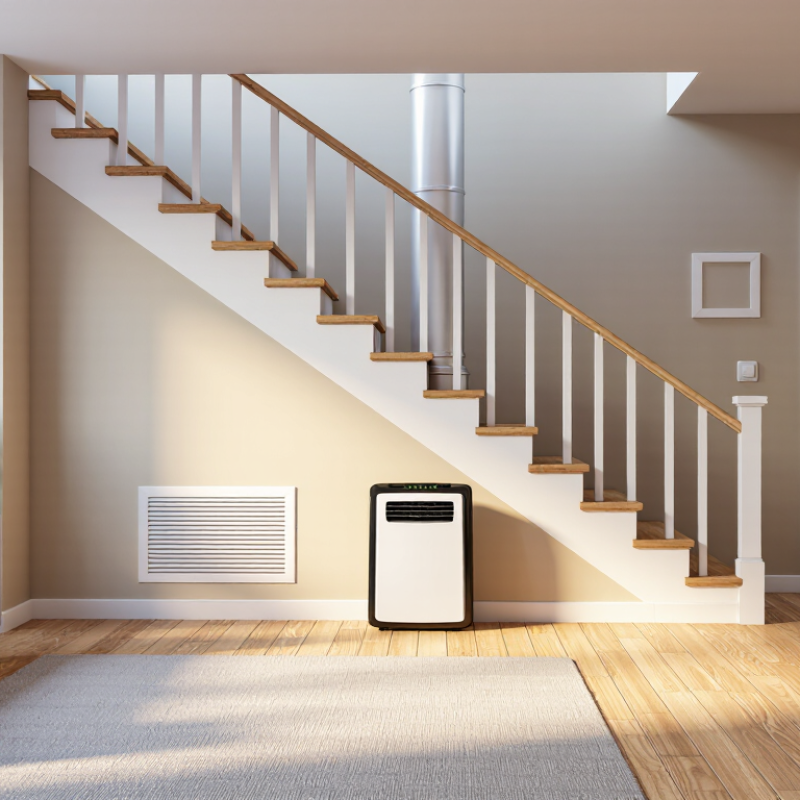
Which Whole House Dehumidifier Type Is Best in 2026?

How Whole-House Dehumidifiers Control Indoor Moisture

A whole-house dehumidifier lowers moisture across several rooms by treating air as it moves through a home. Many models connect to the HVAC ductwork, drawing humid air from return ducts and sending drier air back through supply ducts. A humidistat measures relative humidity and switches the unit on when levels rise above its setting. The goal is steady control, not desert-dry air.

Most systems use a refrigerated coil. Moist air passes over the cool surface, where water condenses and drains through a hose or floor drain. Some designs use a moisture-absorbing material instead, which can work differently in cooler spaces. Duct placement matters: poor airflow may leave a damp basement or closed bedroom untouched. That sounds simple. It isn’t always.

A correctly sized unit can help limit clammy surfaces, musty odors, and conditions that encourage mold growth. But it cannot fix every moisture source. Leaky plumbing, wet crawlspaces, and unvented bathrooms need attention too. Homeowners can check a separate hygrometer in multiple rooms and inspect the drain line for blockages.

A setting near 45–50% relative humidity is a common starting point, though climate and comfort vary. I’d be cautious about chasing one perfect number; a sensor near the machine may not reflect the air beside a cool exterior wall.

The Main Types of Whole-House Dehumidifiers in 2026

Whole-house dehumidifiers mainly use refrigerant or desiccant technology. Refrigerant models cool incoming air so moisture condenses and drains away. They tend to work efficiently in warm, humid homes, such as a basement that smells musty after a rainy week. In cooler spaces, their moisture removal can slow. That detail matters.

Desiccant models use a moisture-absorbing material and heat to release collected water. They can perform better in cooler conditions, including chilly basements or seasonal homes. However, they may use more energy, and their operating needs vary by design. Check the rated capacity and operating temperature range, not just the headline number. A unit rated for warm air may disappoint in a cold utility room.

There is also a difference between ducted and stand-alone installation. A ducted unit connects to a home’s air system, helping manage humidity across several rooms. A stand-alone unit with dedicated ductwork can target a particular zone, such as a basement, without treating every floor equally. The awkward part is sizing: oversized equipment may cycle poorly, while an undersized unit can run constantly. Measure the area, consider air leakage, and confirm where condensate will drain before choosing.

How to Compare Capacity, Efficiency, and Operating Conditions

Which Whole House Dehumidifier Type Is Best in 2026?

How to Compare Capacity, Efficiency, and Operating Conditions

The best type depends on the air it must dry, not just the floor area. Ducted refrigerant dehumidifiers suit many homes with warm, humid basements or central HVAC. In cooler spaces, their moisture removal can fall; desiccant systems may perform better, though regeneration heat can increase energy use. Check capacity at the stated test conditions, not only the largest number on a product sheet. The U.S. Department of Energy’s dehumidifier test procedure standardizes efficiency measurements, but ratings may not map directly to every whole-house installation. Compare units using the same rating method where possible.

Look for moisture-removal capacity, energy use, airflow, and the external static pressure the unit can handle. A restrictive filter or long, narrow duct run can reduce delivered airflow. The U.S. Environmental Protection Agency advises keeping indoor relative humidity below 60%, ideally between 30% and 50%. That range is a useful operating target, not a promise that one machine will hold it in every season. ASHRAE guidance also recognizes that humidity control depends on climate and building conditions.

Tips: Measure humidity in the dampest room. Check the unit’s published capacity at your expected temperature, then confirm duct and drain requirements. Leave some capacity margin; real homes are rarely tidy test rooms.

Which Dehumidifier Type Fits Different Homes and Climates

The best whole-house dehumidifier depends on your home’s layout, not just its square footage. In a house with forced-air heating and cooling, a ducted refrigerant unit can connect to existing ductwork and draw moisture from several rooms. It suits warm, humid summers, especially when indoor humidity stays high despite air conditioning. Ask an HVAC professional to check airflow and drainage; a poor installation can leave distant rooms damp.

Homes without central ducts need a different plan. A dedicated ducted unit can serve a smaller network of ducts, but installation may require space for equipment and new vents. Ductwork matters. In a compact home, that expense may outweigh the comfort gain. A basement unit with short duct runs can work, though it may not control upstairs humidity evenly.

In cooler regions, refrigerant units can lose efficiency as temperatures fall. Desiccant systems can perform better in cool conditions, but they may use more energy and are less common in whole-house setups. In mixed climates, compare seasonal performance, service access, condensate disposal, and your home’s air leakage. A leaky older house can undermine even a capable unit. That’s a real trade-off. I would also recheck humidity after installation; one sensor in a hallway may not reflect a chilly basement or a closed bedroom.

Which Whole-House Dehumidifier Type Fits Your Home in 2026?

General fit by climate and operating conditions. Ratings are qualitative guidance, not standardized performance-test results.

How to read this: Ducted refrigerant units are generally a good match for warm, humid homes. Desiccant units can be a better fit for cooler, damp conditions, though they may use more energy and add heat indoors. An HVAC cooling coil removes moisture while the air conditioner runs, but it may not control humidity when cooling is not needed. Choose based on your climate, ductwork, and whether humidity persists outside the cooling season.

Installation and Maintenance Factors That Affect Performance

Whole-house dehumidifier performance depends on where air enters, how it leaves, and whether moisture drains reliably. Small details matter. A ducted unit should match the home’s airflow and moisture load; poorly sealed connections can send treated air into an attic or crawlspace instead. Keep the return grille clear, and check that the condensate line slopes continuously toward a drain. A sagging hose can hold water and cause shutdowns. EPA guidance recommends keeping indoor relative humidity below 60%, ideally between 30% and 50% (A Brief Guide to Mold, Moisture and Your Home). A simple hygrometer in a distant bedroom can reveal whether the system is reaching beyond the mechanical room.

Maintenance affects performance just as much. Clean or replace filters on the schedule in the installation manual, and inspect the drain pan and outlet for slime or debris. Dust on a coil restricts airflow, while a clogged drain can trigger a safety cutoff. ENERGY STAR’s dehumidifier criteria use integrated energy factor, a measure of moisture removed per unit of energy; real-world results still depend on airflow and upkeep. I would not assume a strong rating guarantees comfort in every room. Have a qualified HVAC technician verify duct balance and drainage after installation, then recheck humidity during the dampest weeks.

FAQS

What should I consider when choosing a whole-house dehumidifier?

Match the unit to your home’s temperature, humidity, layout, and ductwork. Floor area alone can mislead.

When does a refrigerant dehumidifier work well?

It often suits warm, humid homes with central HVAC. It can remove less moisture in cooler spaces.

Are desiccant systems better for cool homes?

They may perform better at lower temperatures. Regeneration heat can increase energy use, so compare seasonal performance.

What if my home has no central ducts?

A dedicated duct system can serve several rooms, but may need new vents and equipment space. In a compact home, the cost may outweigh the comfort gain.

Which product details should I compare?

Compare moisture-removal capacity, energy use, airflow, and supported external static pressure. Check capacity at temperatures close to your home’s conditions.

What indoor humidity should I aim for?

A useful target is 30% to 50% relative humidity, and generally below 60%. It is not a guarantee for every season.

Why might distant rooms remain damp?

Long, narrow ducts or restrictive filters can reduce airflow. Poor drainage or installation can also affect performance. Ductwork matters.

How can I check whether the system is working after installation?

Measure humidity in the dampest room, such as a basement or closed bedroom. One hallway sensor may miss the problem. I would check again in different weather.

Conclusion

Choosing the best whole house dehumidifier in 2026 starts with understanding how it removes moisture and how your home is configured. Different types use different methods to collect or discharge water, so their performance can vary with temperature, humidity, airflow, and installation conditions. Comparing moisture-removal capacity alongside energy use and operating range helps narrow the options beyond headline specifications.

The right choice depends on your home’s size, climate, existing heating and cooling system, and the areas that need moisture control. A unit that suits a warm, humid region may not perform as well in cooler conditions, while installation access and drainage can affect day-to-day operation. Regular filter checks, cleaning, and system inspections also help maintain airflow and efficiency. Consider these factors together to find a solution that fits your home and can be maintained reliably over time.

Mason

Mason

Mason is a seasoned marketing professional with a deep expertise in the company's offerings and a passion for driving brand awareness. With a strong background in digital marketing strategies, he has an innate ability to connect with diverse audiences and effectively communicate product benefits.......