
Choosing a desiccant dehumidification system starts with the moisture problem, not the equipment brochure. A warehouse storing hygroscopic materials has different needs from a food-processing room or a cold production line. Target humidity, temperature, airflow, and operating hours all affect system performance. Small details matter. An open loading door can add a surprising amount of moisture.
This guide explains how to match desiccant dehumidification equipment to real operating conditions. It looks at process requirements, room size, moisture load, and the desired dew point. It also compares rotor materials, regeneration heat sources, controls, and installation constraints. A system may perform well on paper but struggle when the incoming air changes throughout the day. That possibility deserves attention.
Capacity is important, but it is not the only measure. Buyers should consider energy use, maintenance access, replacement parts, and the cost of handling regeneration air. Ask suppliers to state their assumptions and provide performance data at conditions close to yours. Check whether those figures include fans and regeneration energy. They may not.
A careful selection process reduces the risk of undersizing, unnecessary energy use, or unstable humidity. Still, no calculation captures every site condition. Verify key assumptions with measurements, and revisit them after installation. The best choice is the one that meets the required moisture control reliably, without adding complexity the operation cannot support.
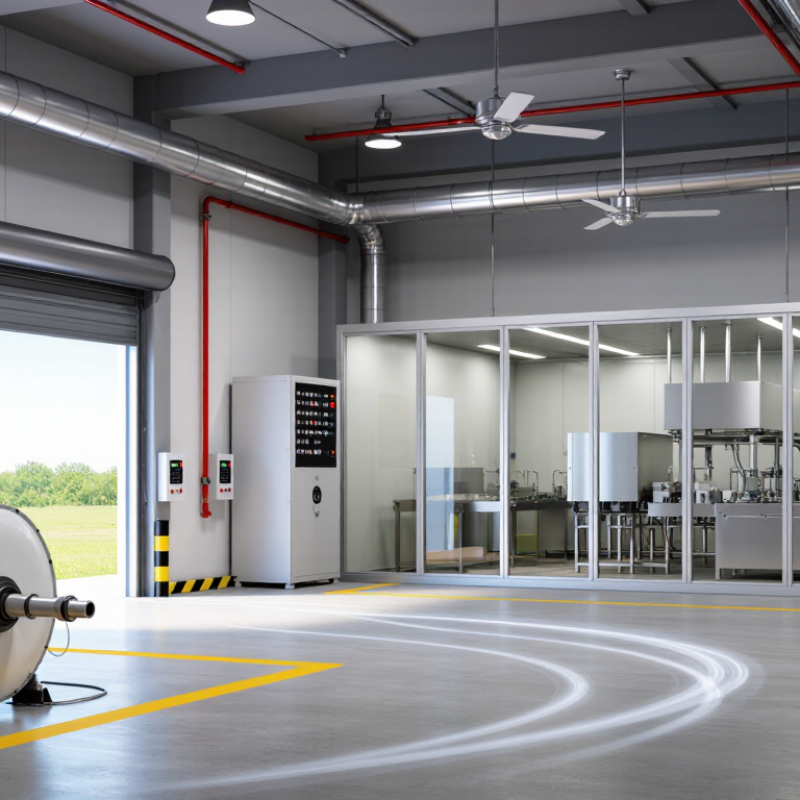
Identify the moisture-control requirement before comparing desiccant dehumidification systems. Define the target using relative humidity or dew point, whichever best protects the process. A packaging room may need stable humidity to prevent powder from clumping, while a cold storage area may need a very low dew point to limit frost. Set measurable limits, then record current conditions with calibrated sensors.
Moisture loads matter as much as the target. Note wet materials, washdown schedules, people, open doors, and outside air entering through gaps. Measure temperature and humidity across several shifts, not just during a quiet morning. Seasonal changes can alter the load. One reading is not the full picture. If the space has uneven conditions, map readings near doors, equipment, and product storage. This can reveal where moisture enters and whether the requirement is room-wide or process-specific. Be cautious about guessed loads; real operating patterns are often messier than design notes suggest.
Tips: Keep a simple log of temperature, humidity, door openings, and production activity. Confirm sensor placement and calibration. Share the data and required dew point with a qualified engineer before sizing equipment.
Solid and liquid desiccants suit different moisture loads. A rotating solid wheel, often using silica gel or molecular sieve, works well when air needs a low dew point and steady, high-volume treatment. Liquid systems absorb moisture into a circulating solution and may fit sites with available low-grade waste heat. Neither choice is automatically more efficient. The airflow, leakage control, and regeneration heat source can change the result.
Check the actual operating envelope. ASHRAE’s Handbook—HVAC Systems and Equipment describes regeneration temperatures that vary by material and application, with many systems operating around 120–250°F (49–121°C). Compare that range with the heat available at your site, not just the equipment brochure. A wheel may need more regeneration heat as the target dew point falls. Liquid systems can use lower-temperature heat in some designs, but pumps, solution management, and corrosion-resistant materials add practical considerations. Small details matter.
Read performance data at the intended inlet temperature and humidity. AHRI Standard 910 provides rating procedures for desiccant dehumidifiers; use rated capacity and power data to compare like with like. Ask for pressure-drop figures, regeneration airflow, and performance at part load. A system sized around a single peak condition may disappoint during mild, humid weather. That is easy to miss. I would also verify whether the stated capacity assumes clean filters and balanced airflow; real buildings are rarely that tidy.
| How to Choose a Desiccant Dehumidification System - Compare Desiccant Types and Operating Conditions | ||||
|---|---|---|---|---|
| Comparison Factor | Silica Gel | Molecular Sieve | Activated Alumina | Liquid Lithium Chloride |
| Desiccant form | Porous solid, commonly used in rotating desiccant wheels and fixed beds. | Crystalline porous solid with uniform pore openings; used in beds and specialized rotor media. | Porous solid, commonly supplied as beads or pellets for fixed-bed applications. | A hygroscopic salt solution circulated through a contactor and regeneration system. |
| Moisture-control capability | Versatile moisture adsorption; suitable for many general low-humidity applications. | Can achieve very low moisture levels, particularly at low humidity and low dew points. | Useful for drying air and gases; performance depends on the grade and system design. | Absorbs water vapor into the solution; achievable outlet conditions depend on concentration, temperature, and contact area. |
| Typical operating conditions | Works across a broad range of inlet humidity. A rotor system typically uses separate process-air and regeneration-air streams. | Often selected when the process requires very dry air. Inlet temperature, humidity, and regeneration conditions strongly affect performance. | Typically used in dry-air or gas-treatment systems where a packed-bed arrangement is practical. | Can be applied in systems using liquid-to-air contact. Solution concentration and temperature must be controlled to limit carryover and maintain absorption capacity. |
| Typical regeneration approach | Heated purge or regeneration air. Many rotor systems operate with regeneration air around 120–180°C, subject to media and equipment limits. | Heated purge or vacuum-assisted regeneration. Regeneration may require higher temperatures, often around 180–300°C depending on the material and application. | Heated purge or other specified regeneration procedures; some applications use temperatures around 150–250°C, depending on grade and cycle. | Water is removed from the diluted solution in a regenerator. Required heat input and temperature depend on the system configuration and solution concentration. |
| Strengths | Widely applicable; commonly available in rotor configurations; suitable for continuous drying duty. | Can provide very low outlet moisture when properly selected and regenerated. | Mechanically robust in suitable packed beds and useful for a range of drying duties. | Can transfer moisture through a liquid circuit and may permit heat recovery within a well-designed system. |
| Design considerations | Check regeneration energy, process-air pressure drop, rotor speed, sealing, and the required supply-air dew point. | Check the required regeneration temperature, cycle time, purge demand, and sensitivity to contaminants or liquid water. | Check bed size, pressure drop, cycle duration, dust generation, and the supplier's regeneration and cooling procedure. | Account for solution corrosion compatibility, concentration control, droplet carryover prevention, and solution handling. |
| Common application fit | Commercial and industrial humidity control, including storage, manufacturing, and process-air treatment. | Very dry process air, specialty manufacturing, and applications with demanding moisture specifications. | Air or gas drying in fixed-bed systems where the required operating cycle suits the medium. | Industrial humidity-control applications designed for liquid-desiccant circulation and regeneration. |
| Best selection questions | What are the required supply-air dew point, seasonal inlet conditions, and available regeneration heat source? | How low must the moisture level be, and can the site provide the required regeneration conditions? | Is a fixed-bed cycle suitable for the airflow and duty, and what are the acceptable pressure drop and changeout intervals? | Can the site support solution management, corrosion-resistant materials, and effective control of solution concentration? |
| Note: Temperature ranges and application descriptions are indicative, not universal equipment specifications. Actual performance depends on desiccant grade, system design, airflow, inlet-air temperature and humidity, cycle strategy, and manufacturer limits. Confirm design conditions and energy use with a qualified system designer. | ||||
Size the rotor around the water that must be removed, not the room’s floor area. Start with dry-air flow, entering humidity ratio, and the required leaving condition. ASHRAE Handbook—Fundamentals (2021) psychrometric data puts air at 75°F and 50% relative humidity near 65 grains of moisture per pound of dry air. A 40-grain target creates a 25-grain-per-pound difference.
For a preliminary example, 10,000 cfm at roughly 0.075 pound of dry air per cubic foot equals about 45,000 pounds of dry air per hour. Multiplying by the humidity-ratio difference gives a removal load near 161 pounds of water per hour. That is only the air-stream load. Add moisture from outdoor-air leakage, wet products, people, door openings, and process exhaust; measure these sources where practical. Small details matter. I would not treat this estimate as final.
Check the desiccant unit’s rated capacity at the actual inlet temperature, airflow, and regeneration conditions. Capacity can shift when regeneration air is cooler or process air is wetter than the rating basis. Include a reasonable operating margin, but avoid oversized equipment: it may cycle poorly or consume excess regeneration energy. ASHRAE’s HVAC Systems and Equipment guidance treats process and regeneration conditions as core selection inputs. Verify the final load with site measurements, especially during humid weather.
Evaluate the whole air-treatment process, not just the desiccant wheel. The U.S. Energy Information Administration’s 2018 Commercial Buildings Energy Consumption Survey reports that space cooling accounts for about 10% of commercial-building site energy use. That figure is a useful reminder: added regeneration heat and fan power matter. Ask suppliers to report both electricity and thermal energy under your actual airflow, humidity, and operating schedule. Compare energy per kilogram of water removed. One rating point is not enough.
Configuration changes the result. ASHRAE’s 2024 Handbook—HVAC Systems and Equipment describes desiccant systems alongside conventional cooling, with design choices shaped by the required humidity and available heat. A pre-cooling coil can lower inlet temperature; a post-cooling coil can control supply-air temperature after regeneration. Check wheel speed, purge airflow, pressure drop, and heat recovery.
Small details add up. A waste-heat source may reduce purchased fuel, but only when its temperature and schedule match the regeneration demand. This is easy to overlook.
Ask for part-load data, then verify it after commissioning with temperature, humidity, and energy readings. Real buildings rarely behave exactly like design-day calculations.
How to Choose a Desiccant Dehumidification System
Check Installation, Controls, and Maintenance Needs
A capable unit can still perform poorly if its installation is cramped or airflow is restricted. Check the available floor space, duct routes, electrical supply, and access for future service. Leave room to remove filters and inspect the desiccant rotor. Small details matter. A sharp duct bend or blocked intake can affect airflow and system performance.
Controls should match the room’s actual needs. Ask whether the system can respond to humidity readings from representative locations, not just a sensor beside the unit. Review setpoints, alarms, and how the equipment behaves when conditions change. For example, a storage area may need steady humidity, while a production space sees frequent door openings. Simple controls are not always enough.
Plan maintenance before choosing. Filters need regular inspection, and rotor seals, drive components, and sensors may need attention over time. Ask for the recommended service intervals and the skills required for routine checks. Keep a record of readings and repairs; patterns can reveal a problem early. One oversight is easy: maintenance access may look adequate on a drawing but feel awkward beside real pipes and walls. Check it on site.
Compare installation, controls, and maintenance before selecting a system.
How to read this: Scores are a qualitative planning guide, not measured product performance. Check available space and duct routes, integration with sensors and building controls, and access for filter changes and rotor servicing. Confirm requirements for your site with the system designer.
Choose a measurable relative humidity or dew-point limit. A powder packaging room may need stable humidity, while cold storage may need a very low dew point.
Record temperature and humidity with calibrated sensors across several shifts. One reading isn't enough. Include busy production periods.
Track wet materials, washdowns, people, open doors, and outside air entering through gaps. Seasonal changes can also alter moisture loads.
Check conditions near doors, equipment, and product storage. Uneven readings may reveal moisture entry points or areas needing separate control.
Ask for electricity and thermal-energy data under your airflow, humidity, and operating schedule. Compare energy used per kilogram of water removed.
Review wheel speed, purge airflow, pressure drop, and heat recovery. Pre-cooling and post-cooling coils can also affect system performance.
It may reduce purchased fuel when its temperature and availability match regeneration needs. The timing matters more than it first seems.
Check part-load data, then measure temperature, humidity, and energy use during commissioning. I might be overvaluing a quiet shift, so review normal operations too.
Choosing a desiccant dehumidification system starts with defining the space’s moisture-control requirements. Consider the desired humidity level, temperature range, room size, occupancy, and sources of moisture. These factors help determine whether a solid or liquid desiccant is more suitable and how the system will perform under the site’s operating conditions.
Next, estimate the moisture load so the equipment can be sized to meet demand without unnecessary capacity. Compare energy use and heat or regeneration requirements, and consider how the system will fit with existing ventilation and heating equipment. Before making a decision, review installation constraints, control options, and maintenance needs, including access for inspection and routine servicing. A system chosen with these factors in mind is more likely to provide reliable humidity control and efficient operation over time.
