
Engineered Humidity Control & Process Recovery Systems
Direct-from-factory psychrometric platforms engineered by Hangzhou DryAir Treatment Co., Ltd., built under ISO 9001 and national military GJB quality frameworks for tier-one industrial operations worldwide.
 DP -70°C Guaranteed
DHU Series Ultra-Low Dew Point Desiccant Dehumidifier
Rotary desiccant system delivering deep moisture adsorption for lithium battery assembly, defense materiel, and extreme low-humidity applications.
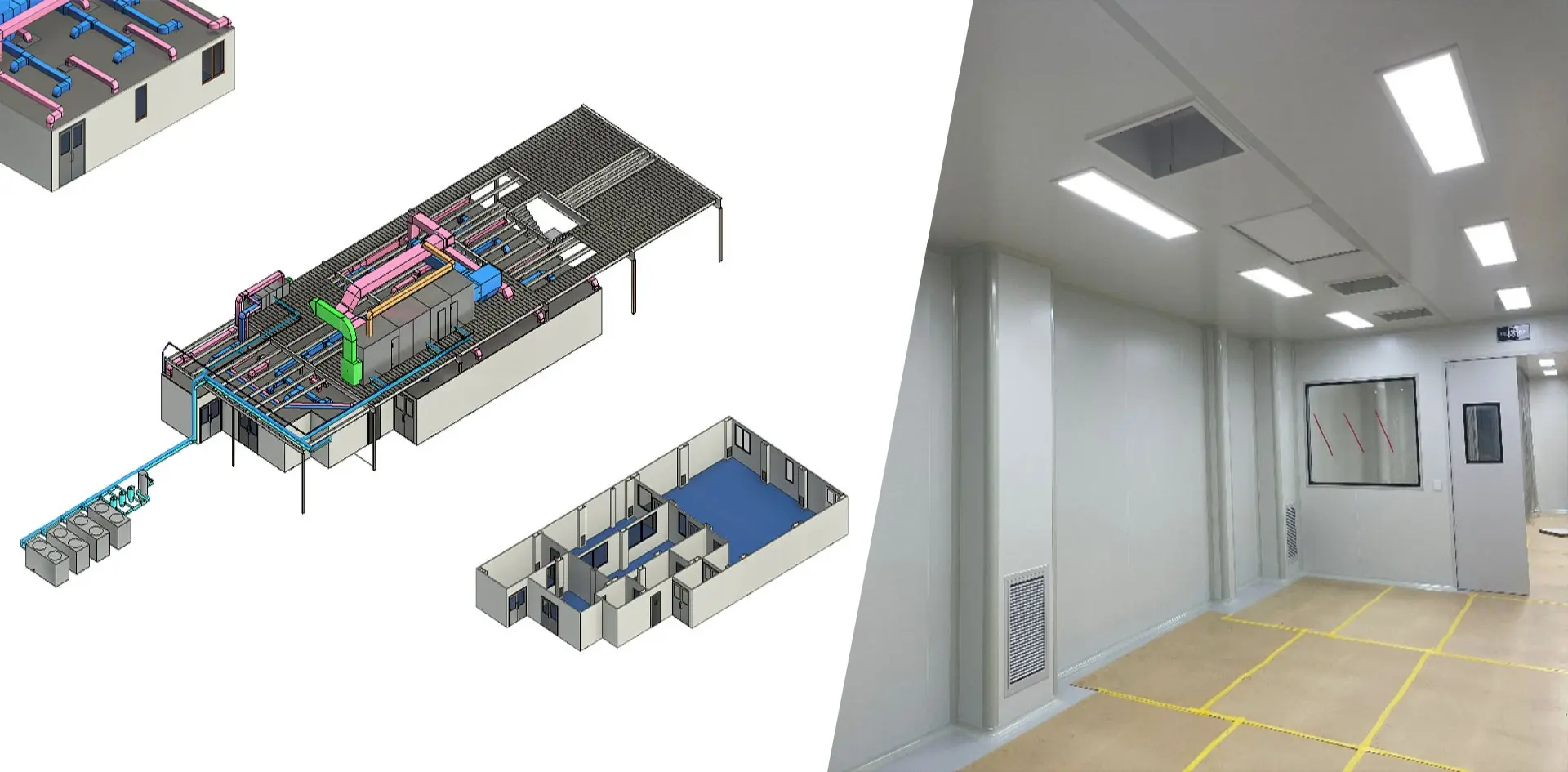
 Turnkey EPC
Turn-key Gigafactory Battery Dry Room System
End-to-end dry room cleanroom enclosures integrating HVAC psychrometrics, Class 1 airtight paneling, and automated dew point validation.
 ≥99% Recovery
ZJRH Series NMP Solvent Condensation & Recovery
High-efficiency closed-loop condensation capturing N-Methyl-2-pyrrolidone from electrode coating lines, slashing plant OPEX and emissions.
 Deep Cooling + RTO
JEN Industrial VOC Thermal Abatement & Destruction
Combined deep refrigeration condensation and regenerative thermal oxidizers (RTO) engineered for VOC tail gas elimination and solvent capture.
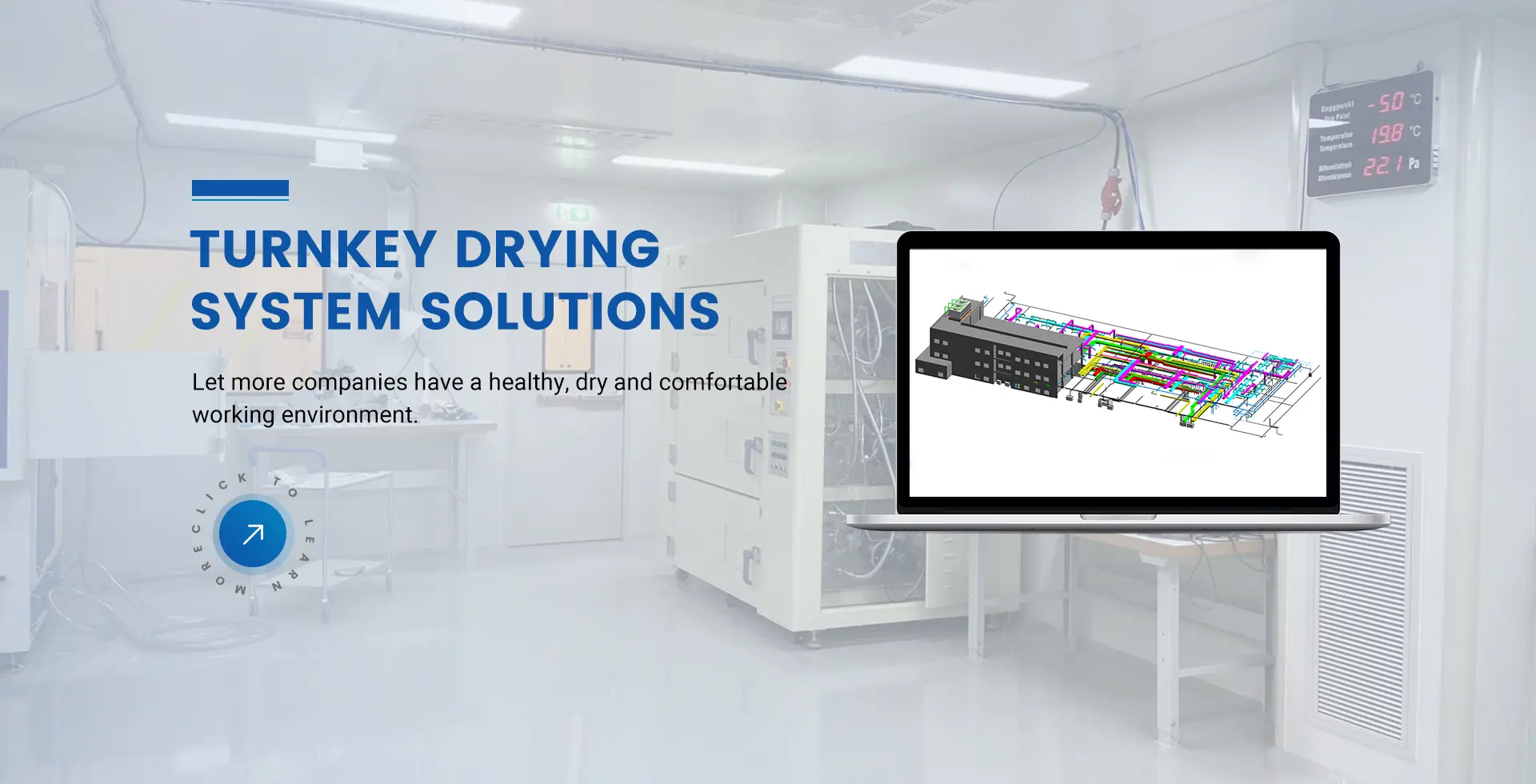 Pre-Cooling Stage
Heavy-Duty Industrial Refrigerative Dehumidifier
Direct-expansion compressor dehumidifiers optimized for high-volume moisture extraction in raw material warehouses and prep conditioning.
 Solid-State Ready
Double-Rotor Deep Dew Point Adsorption Complex
Two-stage cascading rotor architecture achieving extreme negative dew points under stringent atmospheric conditions without frosting.
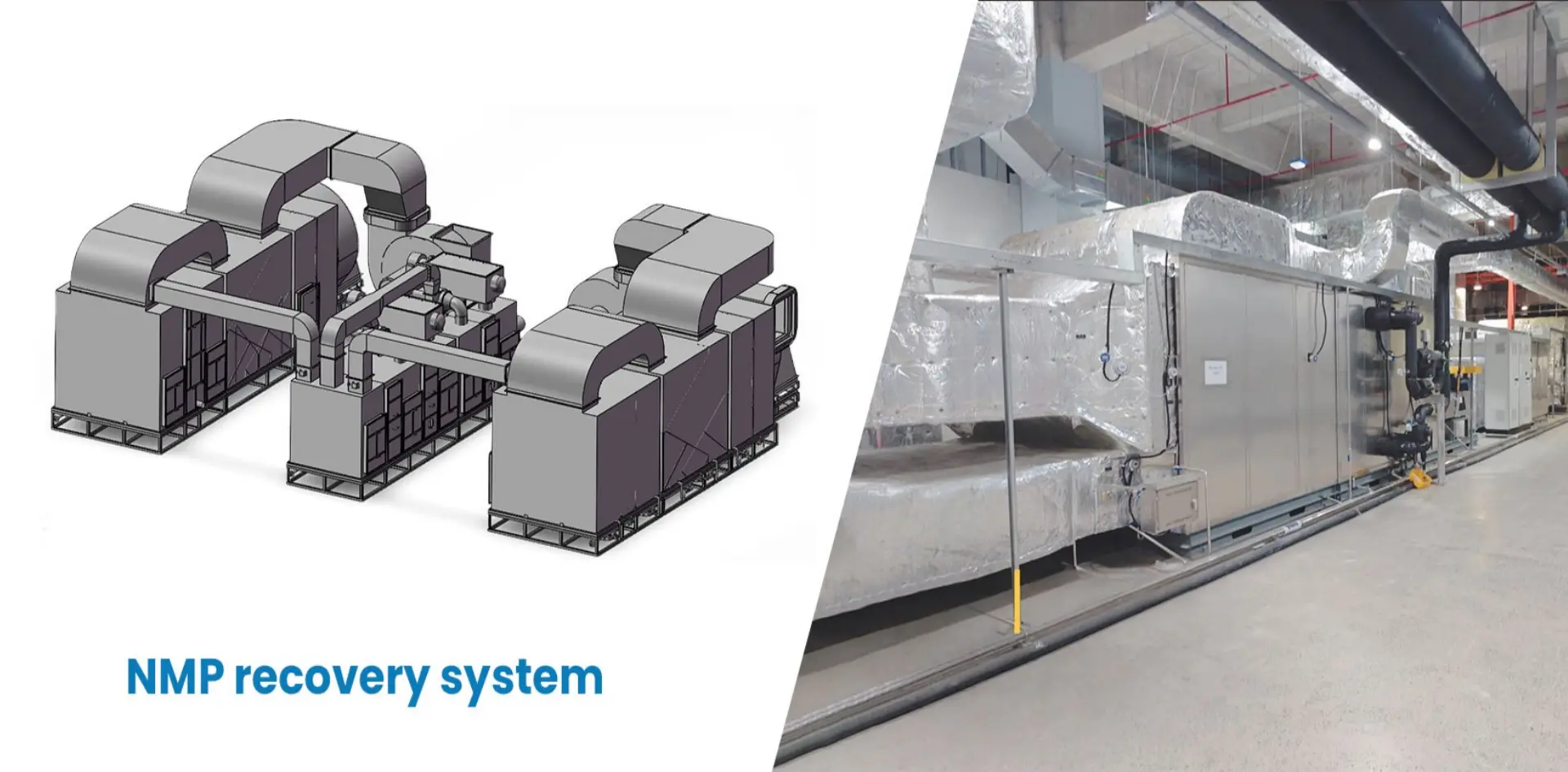
 Cathode Slurry Line
Integrated Coater Air Circulation & Recovery Rig
Coupled drying oven balance system maintaining exact vapor concentrations while recovering NMP at continuous rates exceeding 99%.
 Petrochemical & Chem
Petrochemical Vapor Condensation & Filtration Unit
Captures aggressive hydrocarbons, volatile oils, and toxic solvent vapors from loading stations, tank farms, and synthesis reactors.
The State of Industrial Dehumidification: China & the Global Landscape
Across global industrial manufacturing, microclimate control has shifted from an auxiliary HVAC utility to an indispensable yield-determining manufacturing process. From electric vehicle lithium-ion gigafactories to advanced biopharmaceutical synthesis, moisture is an insidious contaminant. As atmospheric absolute humidity fluctuates with seasonal changes, process environments require mathematically deterministic, ultra-low dew points—often operating at dew point temperatures of -40°C to -70°C.
Global Commercial & Industrial Reality
Historically dominated by legacy European and American HVAC conglomerates, the industrial dehumidification market faced high capital costs, prolonged engineering lead times (often 36 to 52 weeks), and rigid, non-customized chassis designs. Modern fast-track gigafactories and flexible cleanrooms require customized psychrometric skids capable of simultaneous moisture removal and solvent recovery without prohibitive capital expenditure premiums.
China's Domestic HVAC Transformation
Over the past two decades, China has evolved from a manufacturer of basic residential condensation dehumidifiers into a global epicenter for advanced rotary desiccant wheel synthesis, low-leakage thermal air handling enclosures, and integrated thermodynamic solutions. Leveraging intense domestic competition across electric mobility, solar PV, and aerospace, Chinese manufacturers have industrialized ultra-low dew point engineering at unprecedented speed and scale.
Rigorous International Compliance
Top-tier Chinese facilities no longer engineer for regional parameters alone. Systems are purpose-built to bridge transatlantic standardizations, carrying CE machinery directives, UL/CSA electrical panels, ASME-certified pressure vessels, and EAC compliance for Eurasia. This technical maturity allows direct turnkey integration into gigafactories across Germany, Sweden, the United States, Hungary, and Southeast Asia.
China Factory 4.0: Supply Chain Resilience & Efficiency Advantages
Hangzhou DryAir Treatment Co., Ltd., based in Lin'an, Hangzhou, encapsulates the transition of Chinese manufacturing toward fully integrated Industry 4.0 production ecosystems. Operating a 200+ unit per month capacity, our industrial plants leverage high-precision automation, vertical component manufacturing, and rigorous quality audit systems.
Vertical Value Integration
Unlike assemblers who outsource critical components, advanced Chinese factories vertically integrate rotor cassette fabrication, thermal break casing extrusion, automated sheet metal CNC punching, and programmable logic controller (PLC) coding in-house, compressing manufacturing lead times by up to 50%.
GJB & Military Standard Quality
DryAir's manufacturing facilities are dual-audited under civilian ISO 9001 and the stringent Chinese GJB National Military Quality Standard. This ensures structural weld airtightness, vibration dampening, and moisture containment far exceeding conventional commercial HVAC standards.
Thermodynamic Simulation AI
Utilizing proprietary computational psychrometric algorithms, DryAir engineers model multi-zone sensible and latent loads, transient door openings, operator skin transpiration, and infiltration before mechanical cutting, ensuring zero over-specification and minimal lifecycle energy wastage.
Full-Scale Psychrometric Testing
Every DHU unit undergo factory-acceptance testing (FAT) inside an in-house environmental simulation chamber capable of replicating equatorial humidity, sub-zero European winters, or desert environments, validating supply air dew points to -70°C prior to overseas shipping.
Global Enterprise Procurement: Evaluating TCO, Energy & Performance
When global EPC directors and multinational procurement executives evaluate desiccant dehumidifiers and dry room infrastructure, upfront capital expenditure (CAPEX) represents merely 15% to 22% of total 10-year operating costs. The overwhelming financial liability lies in continuous reactivation thermal energy, electrical fan power, and moisture-induced process scrap.
| Evaluation Parameter | Legacy Western Manufacturers | Generic Commodity Suppliers | Advanced China Factory (DryAir Tier-1) |
|---|---|---|---|
| Dew Point Reliability | Stable -40°C to -60°C DP | Inconsistent; prone to seasonal drift | Guaranteed -50°C to -70°C continuous DP |
| Regeneration Energy Method | Electric heating or direct steam | Crude electric resistance elements | Heat-recovery wheel, industrial steam, gas, heat-pump integration |
| Solvent Abatement Integration | Separate sub-contractors required | Not available / unsupported | Native closed-loop NMP recovery (≥99%) + RTO coupling |
| Equipment Lead Time | 32 to 52 Weeks | 12 to 16 Weeks (low QC) | 12 to 18 Weeks (ISO/GJB verified & FAT certified) |
| Total Cost of Ownership (10-Yr) | High (High CAPEX + High Spares) | High (Frequent failure + scrap costs) | Optimized (30-40% lower CAPEX, lowest lifecycle OPEX) |
| Global EPC Execution | Regional branches, expensive call-outs | Export-only; no site installation | Turnkey EPC: design, build, export, on-site install & 2-yr warranty |
Specialized Application Engineering & Mission-Critical Scenarios
Moisture control is rarely a generalized requirement. Each process demands exact psychrometric balancing, airflow distribution modeling, and strict vapor pressure suppression.
Lithium-Ion & Solid State Batteries
Trace water vapor reacts violently with non-aqueous electrolytes ($LiPF_6$), producing hydrofluoric acid ($HF$) which degrades cathode crystal lattices and triggers internal short circuits. DryAir systems maintain large-scale cell winding, stacking, and electrolyte filling cleanrooms at stable dew points between -40°C and -70°C, serving CATL, ATL, BYD, EVE, Tesla, and Northvolt.
Pharma & Bio-Processing GMP
Hygroscopic active pharmaceutical ingredients (APIs), effervescent salts, and soft gelatin capsules degrade rapidly in relative humidity above 20%. DryAir engineered systems provide sterile, low-dew-point supply air complying with FDA cGMP, preventing powder agglomeration, die-clogging during tableting, and microbial proliferation.
Defense, Ordnance & Aerospace
Built to GJB national military standards, specialized deep dehumidifiers preserve propellants, advanced avionics, guided missile guidance packages, and military aviation hangars from electrochemical corrosion, humidity-driven oxidation, and explosive binder breakdown across long-term dormant readiness programs.
Petrochemical & VOC Abatement
Tank farm breathing vapors, fuel transshipment loading racks, and petrochemical process streams release hazardous volatile organic compounds. Our combined cryogenic deep-cooling condensation and regenerative thermal oxidizers (RTO) achieve compliant tail gas abatement with zero uncontrolled atmospheric vent.
Electronics & Semiconductor Cleanrooms
Advanced photolithography, wafer fabrication, and precision optic assemblies demand tight tolerance humidity control (±1% RH) to eliminate electrostatic discharge (ESD) risks, prevent thin-film oxidation, and maintain dimensional stability on micro-circuit substrates.
The Mechanics of Ultra-Low Dew Point Adsorption: Reaching -70°C DP
Refrigerative direct expansion dehumidification reaches an impassable thermodynamic barrier near +3°C to +5°C dew point due to evaporator coil freezing. Achieving moisture concentrations below 0.01 grains/lb of dry air demands rotary adsorption psychrometrics.
Composite Adsorption Wheels
DryAir's rotary desiccant cores feature inorganic ceramic fiberglass honeycomb structures synthetically impregnated with high-density active silica gel or specialized synthetic molecular sieves. The internal micro-porous structure exhibits vast internal surface areas exceeding 800 m²/gram, generating immense moisture suction even at relative humidities below 1%.
Thermodynamic Purge & Reactivation
A rotating desiccant rotor moves continuously through two isolated sectors: the process adsorption sector (typically 75% area) and the counter-flow regeneration sector (25% area). High-temperature air (120°C to 140°C) drives adsorbed moisture out of the matrix into the exhaust stream, while an engineered intermediate purge zone reclaims heat before process re-entry.
Airtight Double-Skin Thermal Break
Attaining -70°C dew point requires air infiltration rates of practically zero. DryAir air handling casings utilize patented aluminum structural profiles with high-density polyurethane injection, double-lipped Viton airtight seals, and heavy-duty eccentric latches, achieving European EN 1886 L1 casing leakage and T2/TB2 thermal transmission ratings.
Frequently Asked Questions: Global Procurement & Engineering
Comprehensive engineering and procurement answers for battery manufacturing directors, HVAC consulting engineers, and plant operations executives shortlisting dehumidification partners.
Specialized Turnkey Cleanroom & Abatement Units
Explore our full line of specialized desiccant platforms, hazardous vapor condensation systems, and turn-key gigafactory air management equipment ready for global export.
 Pharma Cleanroom
Pharma-Grade GMP Sanitary Desiccant System
Stainless steel sanitary air handlers with CIP/WIP washable interior linings, HEPA filtration sections, and antimicrobial wheel surfaces for API packaging.
 GJB Defense Spec
Military & Aerospace Munitions Dry Enclosure
Ruggedized environmental control units built to resist shock, power fluctuations, and extreme outdoor climates for ammunition and avionics preservation.
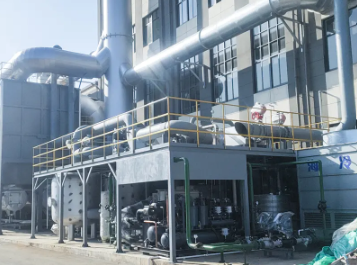 Vapor Recovery
Multi-Stage Hydrocarbon Condensation Skid
Engineered refrigeration loops condensing heavy volatile organic hydrocarbons and hazardous vapors from loading arm exhaust manifolds.
 Electronic Class 100
Optoelectronics Microclimate AHU Rig
Ultra-precise humidity and temperature stabilization skid for wafer stepper cleanrooms, LCD thin film processing, and solar cell metallization lines.
 Factory Acceptance Tested
Custom Modular Dry Room Cleanroom Complex
Pre-fabricated modular wall panels, airlock personnel showers, sealed ducting networks, and integrated desiccant air handling systems delivered in 40ft containers.
 Energy Optimized
Waste Heat Regenerative Rotary Dehumidifier
Dehumidifier engineered to utilize low-grade industrial waste steam, turbine exhaust, or boiler jacket heat to power wheel regeneration.
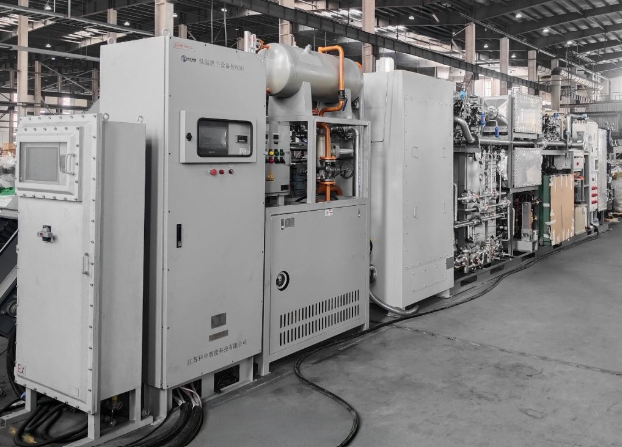 Exhaust Recirculation
Electrode Coater Waste Heat & Solvent Unit
Dual-function environmental skid providing precision solvent air recovery while extracting thermal BTUs from the drying coater oven back into the plant.
Pre-Cooling Refrigerative Water Removal Skid
Primary stage condensation unit removing bulk ambient moisture down to +5°C dew point before desiccant wheel polish in high humidity regions.
Initiate Your Psychrometric Load Calculation with Hangzhou DryAir
Connect directly with our 74 registered HVAC specialists, PhD thermodynamic researchers, and senior cleanroom design engineers. Whether sizing an 80,000 m³/h gigafactory dry room down to -70°C dew point or implementing closed-loop ≥99% NMP solvent recovery, our engineering team returns preliminary airflow simulations, energy consumption models, and budget estimates within one business day.