
Primary Air Drying & Purification Machinery
Continuous-duty industrial systems engineered for deep moisture extraction, thermal regeneration efficiency, and harsh operational requirements.
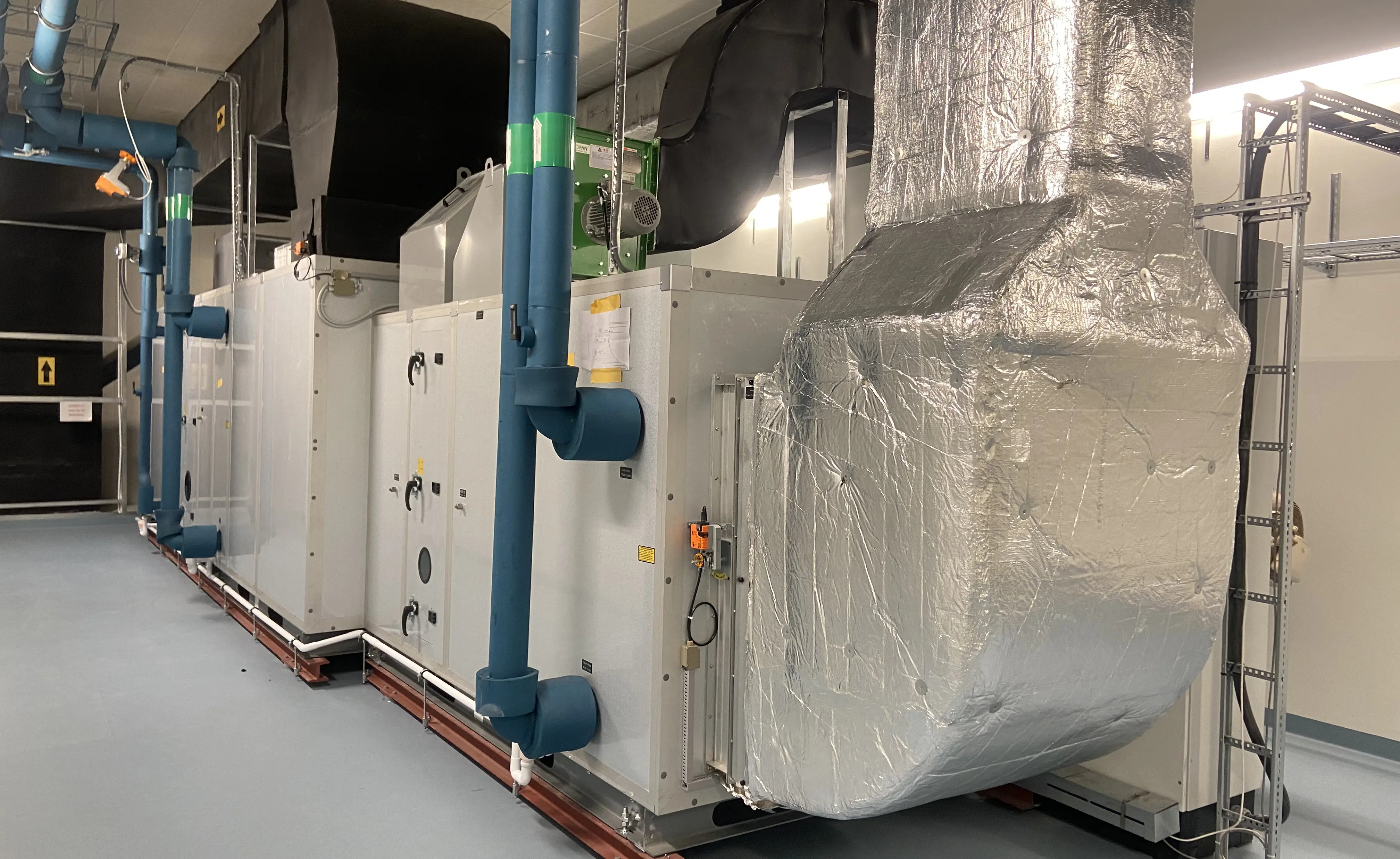 -70°C DP
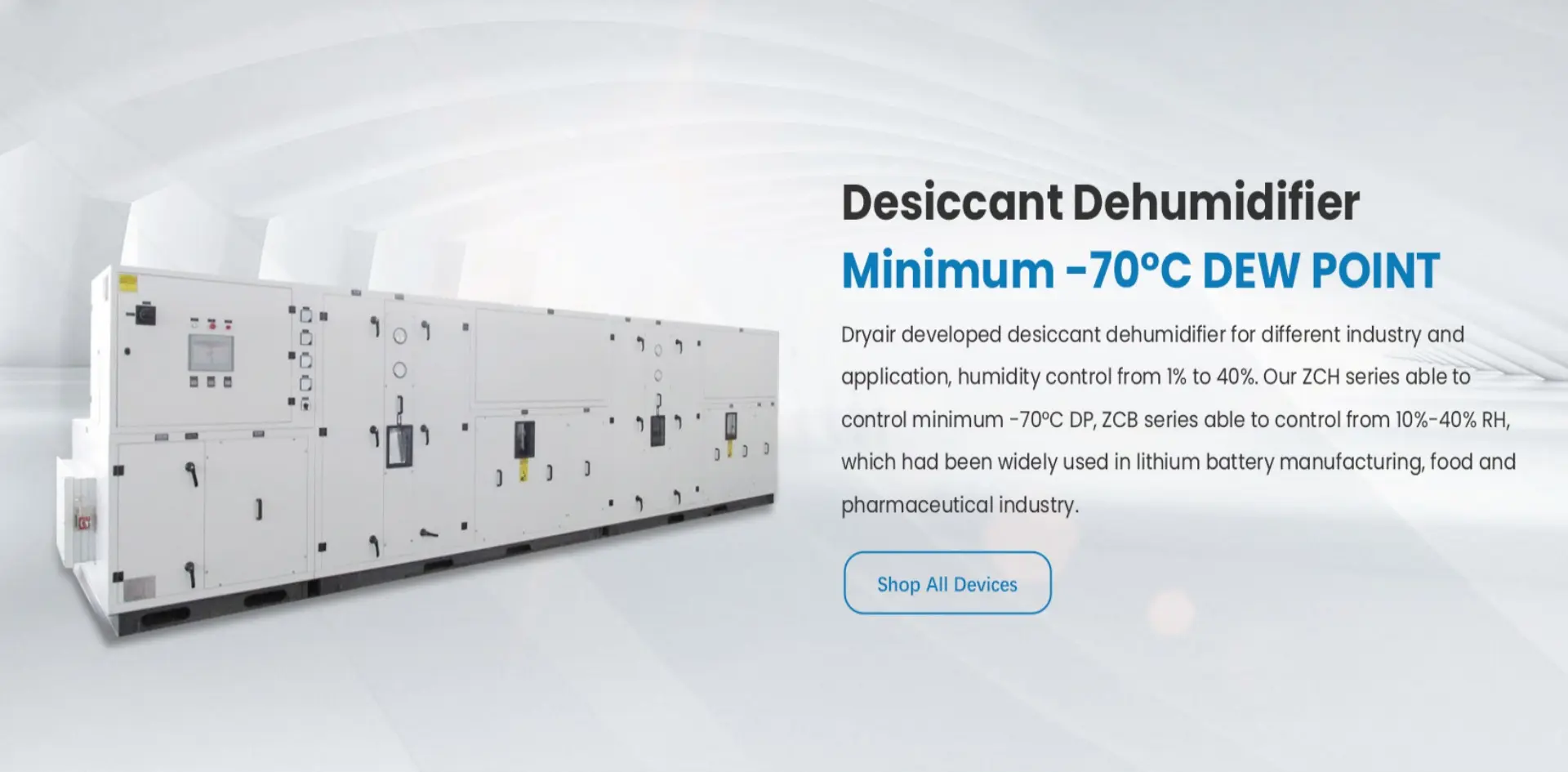
DHU Desiccant Dehumidifier
High-efficiency solid sorption rotor unit with precision reactivation control for mission-critical ultra-dry atmospheres.
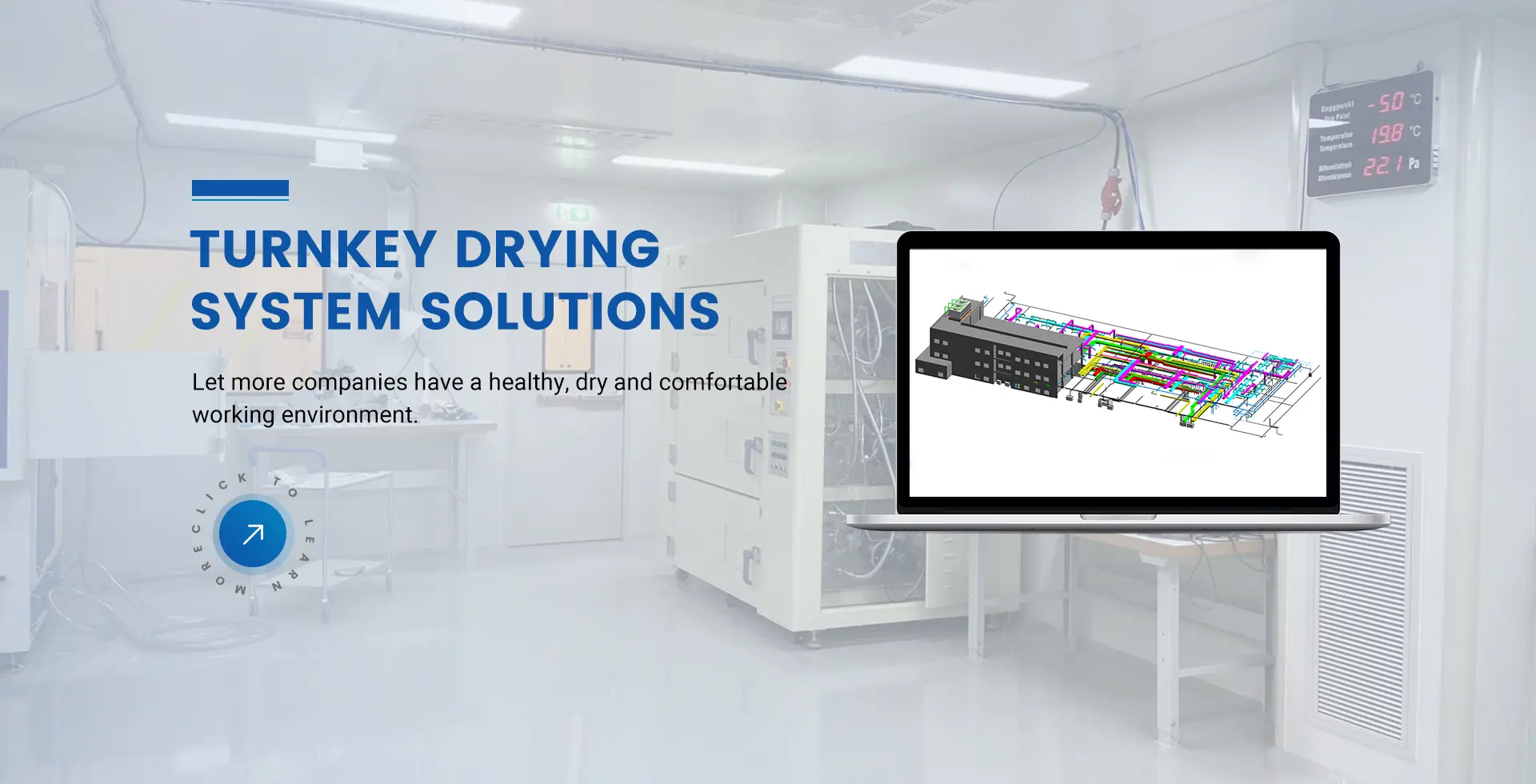
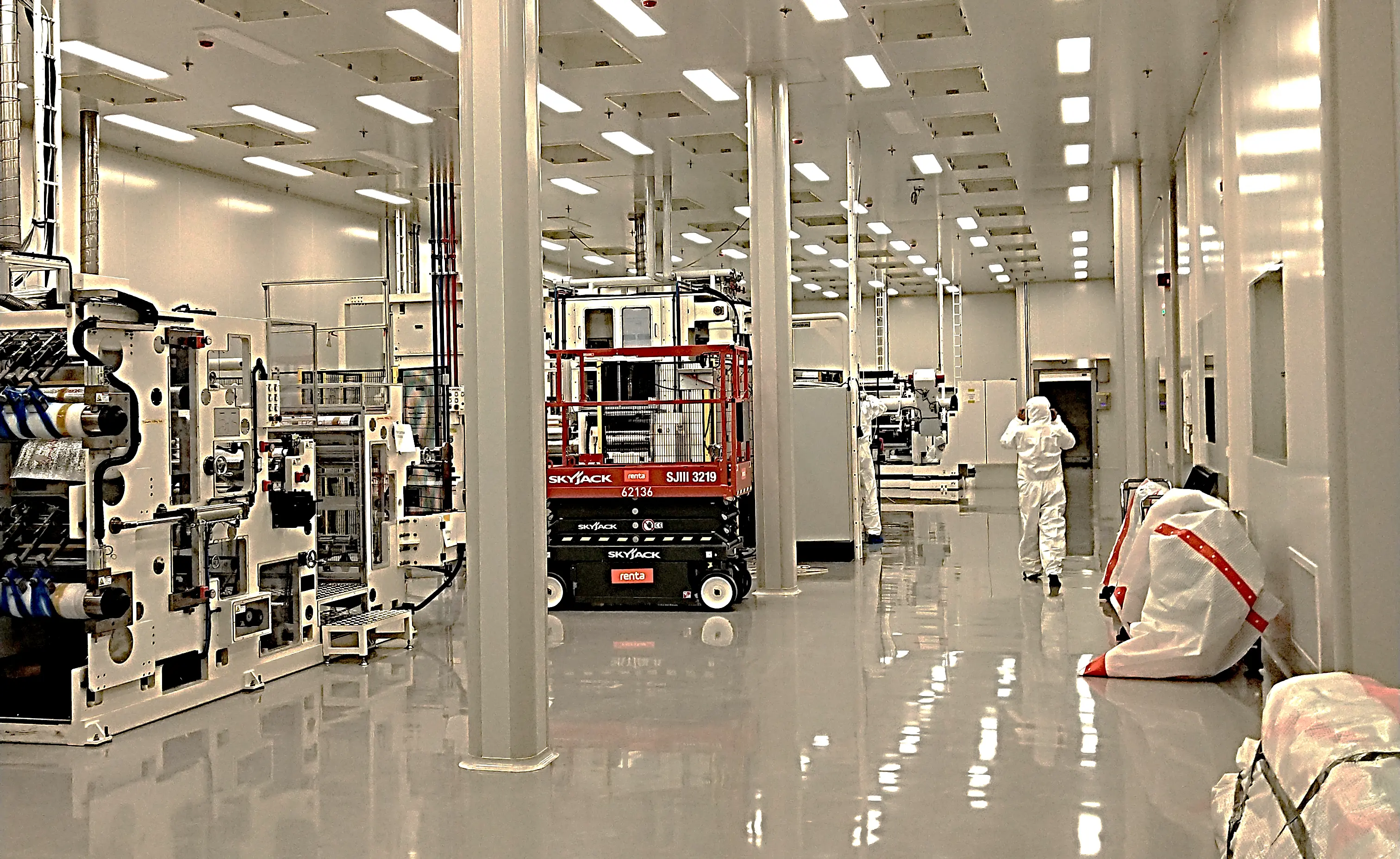 Turnkey EPC
Turn-key Dry Room System
Complete hermetic enclosure, HVAC airflow balancing, and low-dew-point air handling for battery manufacturing lines.
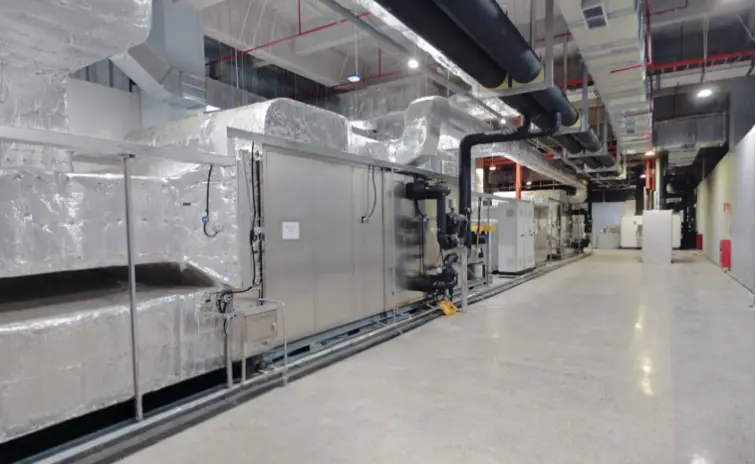 Recovery ≥99%
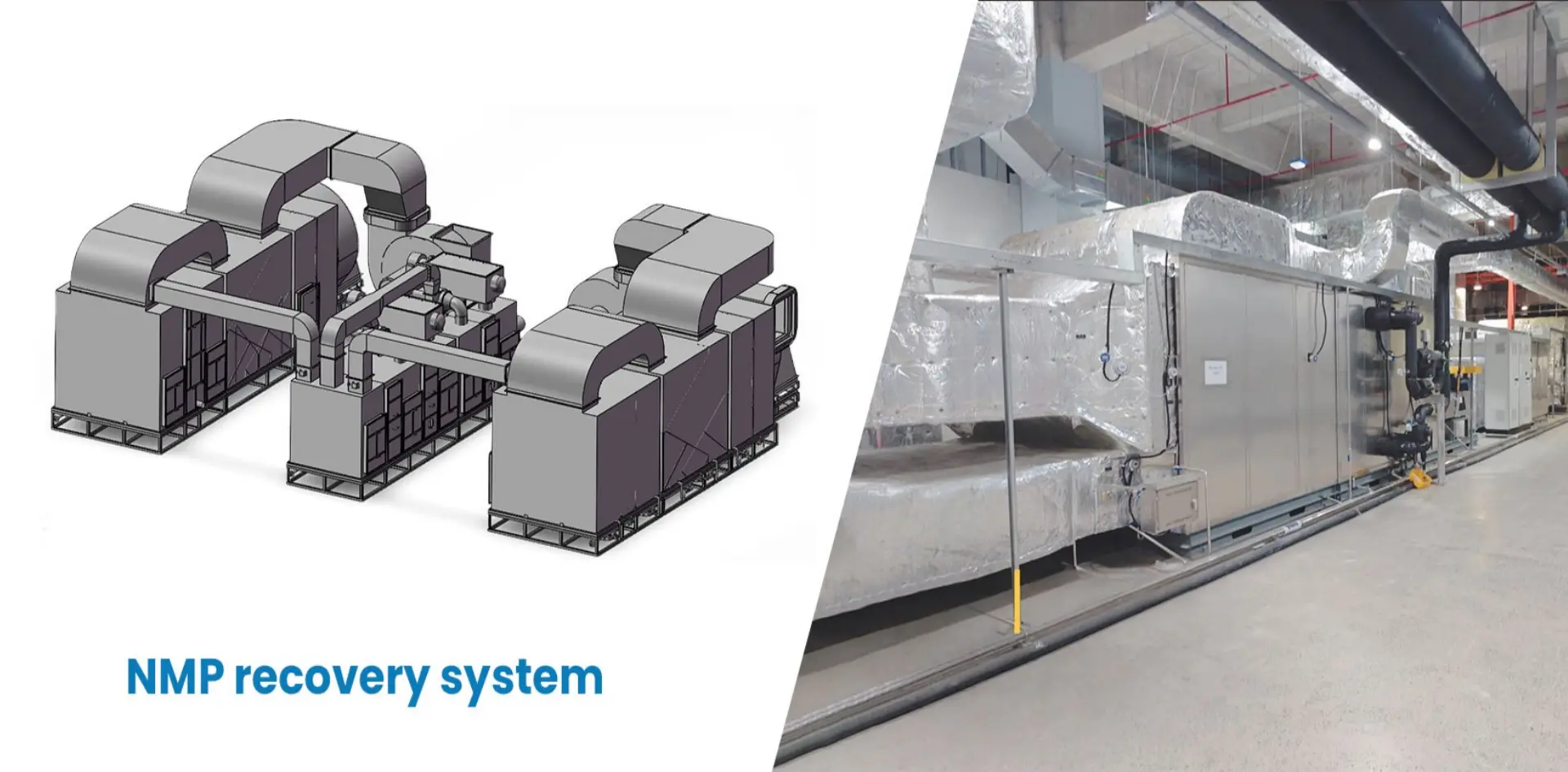
ZJRH NMP Recovery System
Closed-loop condenser and absorption technology capturing N-Methyl-2-pyrrolidone vapors with over 99% reclamation.
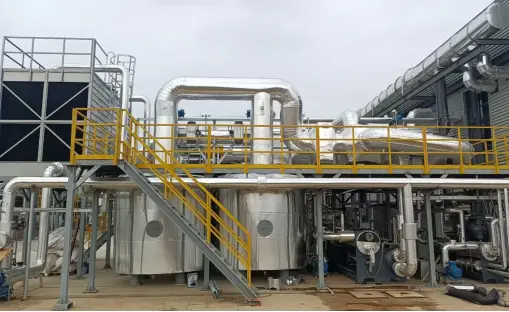 Cooling + RTO
JEN VOC Abatement System
Deep-cooling condensation integrated with regenerative thermal oxidizers to purify hazardous organic waste streams.
 Energy Efficient
Industrial Refrigerative Dehumidifier
High-capacity mechanical refrigeration moisture extraction for pre-cooling stages and large-scale warehouse dry air buffering.
 High Volume CFM
Gigafactory Dry Air Air-Handler
Custom modular air-handling units combining pre-filtration, chemical filtration, dual desiccant wheels, and chiller loops.
 GJB Compliant
Field Defense-Grade Air Dehumidifier
Ruggedized, mobile, and weatherproof desiccant drying purification systems certified under strict national defense standards.
 ATEX / Explosion
Field Vapor & Hydrocarbon Condenser
Field-grade hydrocarbon vapor condenser and purifying skid built for fuel tank terminals, solvent handling, and marine bunkering.
Thermodynamic Principles of Ultra-Low Dew Point Sorption
Examining the vapor pressure differentials, rotor material synthesis, and multi-stage regeneration architecture required to sustain sub-zero dew points at scale.
Vapor Pressure Differentials
Standard cooling coil dehumidification hits physical limitations around 4°C to 6°C dew point due to coil icing. Rotary desiccant technology operates across micro-pore surface adsorption where chemical vapor pressure at the desiccant surface is maintained far below the partial vapor pressure of the process air stream, enabling continuous mass transfer down to -70°C dew point (less than 0.002 g/kg moisture content).
Advanced Honeycomb Matrix
Our rotors synthesize chemically bonded synthesized silica gel or crystalline 4Å/13X molecular sieves onto an inorganic fiber substrate. The microscopic structure delivers a surface area exceeding 800 m²/g. The fluted corrugation guarantees laminar air velocity, minimal pressure drop (<300 Pa across the rotor), and zero dusting—critical for ISO Class 5 and cleaner manufacturing envelopes.
Multi-Stage Thermal Regeneration
Desorption requires driving off adsorbed moisture using counter-flow heated air (120°C–140°C for silica, up to 180°C for molecular sieves). By introducing intermediate purge sectors and sensible heat recovery coils, DryAir systems re-harvest up to 35% of thermal regeneration energy, drastically cutting total kilowatt expenditure during 8,760 hours of annual continuous operation.
The China Manufacturing Advantage in Precision Air Equipment
How Hangzhou DryAir leverages an integrated industrial ecosystem, massive scale production, and aggressive iterative engineering to deliver superior quality and delivery speed.
Cluster Supply Chain Integration
Located in the heart of China's advanced manufacturing corridor in Hangzhou, DryAir sources precision motors, variable-frequency drives, stainless steel sheet metals, and specialty refrigerants within a 100-kilometer radius. This tight localization reduces supply-chain friction, shortens lead times to 6–8 weeks for custom air handlers, and insulates international projects from component bottlenecks.
Massive Scaling Economics
With an active monthly output exceeding 200 heavy-capacity units and commanding over 30% of China's desiccant dehumidifier market, our tooling, die casting, and rotor impregnation lines operate at high baseline throughput. This production density yields significant capital equipment cost savings for international clients compared to European or North American boutique fabricators.
Gigafactory Battle-Tested Quality
China is home to the world's largest concentration of battery gigafactories. DryAir systems have been repeatedly validated on fast-track multi-gigawatt installations for CATL, BYD, EVE Energy, SVOLT, and Envision AESC. Equipment designs are continuously stress-tested under harsh 24/7/365 production schedules, ensuring all field anomalies are identified and engineered out.
Macro Industry Trends: Next-Gen Humidity & VOC Control
Technological transformations reshaping air drying, cleanroom climate management, and volatile compound handling over the coming decade.
Solid-State Battery -70°C Demands
The acceleration of semi-solid and all-solid-state lithium cell chemistry eliminates flammable liquid electrolytes but introduces sulfide-based and metallic lithium components. Sulfide electrolytes react violently with trace airborne moisture to produce toxic, corrosive hydrogen sulfide ($H_2S$) gas. Production demands shifting dew point baselines from -40°C down to strict, uninterrupted -65°C to -70°C control across the entire cell envelope.
AI-Assisted Predictive Psychrometrics
Modern dehumidification plants consume massive amounts of thermal and electrical energy. Next-generation installations integrate machine learning algorithms connected to weather prediction feeds, personnel density RFID sensors, and machine cycle trackers. By forecasting ambient latent loads and production cycles, DryAir smart controllers dynamically modulate rotor speeds, chiller water valves, and heating stages to shave peak energy draw by 18% to 26%.
Zero-Emission Closed-Loop Recovery
Environmental regulatory bodies (US EPA, EU Industrial Emissions Directive, China MEP) are imposing strict volatile organic compound (VOC) limits. Solvent recovery has transitioned from a compliance burden into a vital economic pillar. Modern lithium cathode lines pair high-recovery NMP systems (≥99%) directly with RTO destruction units to ensure zero stack odor, zero solvent waste, and compliance with local municipal boundaries.
Specialized Applications in Industrial Plants and Field Operations
Targeted engineering designs tailored to manage environmental degradation, product degradation, and atmospheric volatility across distinct sectors.
Battery Gigafactory Dry Rooms
Applied in cathode slurry mixing, winding, cell canning, electrolyte filling, and laser sealing. Preventing trace moisture ensures lithium hexafluorophosphate ($LiPF_6$) salts do not hydrolyze into hazardous hydrofluoric acid ($HF$), safeguarding internal cell life and eliminating pack-swelling explosion hazards.
BioPharma & API Formulation
Applied across effervescent tablet compression, gelatin capsule sealing, lyophilization unloading, and pneumatic API transport. Dry desiccant air prevents moisture agglomeration, stops caking during powder milling, and inhibits microbial growth in compliance with FDA 21 CFR and EU GMP Annex 1.
Defense, Naval & Aviation Storage
Configured for tactical long-term preservation of avionics, missile guidance systems, propellant arsenals, and naval hull interiors. Controlled relative humidity (≤35% RH) eliminates galvanic corrosion, mold growth, and electronic pin oxidation without expensive environmental heating.
Field Sandblasting & Marine Tank Coating
Deployed as portable trailer-mounted diesel/electric desiccant systems for shipyard dry docks, oil storage refurbishment, and wind turbine tower coatings. Sustaining air below 40% RH prevents flash rust formation on blasted white-metal surfaces before protective epoxy paint application.
Semiconductor & Display Fabs
Providing air handling units to photolithography bays, reticle storage, and vacuum load locks. Continuous sub-zero dew point and chemical filtration prevent optical hazing, unwanted wafer micro-condensation, and dopant oxidation during sub-5nm lithography operations.
Pipeline Drying & Petrochem Purging
Utilized in field pigging, subsea line commissioning, and cryogenic LNG tank drying. Delivering deep dryness (-50°C DP) eliminates free water and methane-hydrate formation risks before introducing high-pressure natural gas or cryogenic liquid hydrocarbons.
System Engineering Specifications by Manufacturing Class
Target psychrometric baselines, recommended machinery combinations, and operational focus areas across industrial production categories.
| Industrial Process / Application | Target Moisture Spec | Recommended System Architecture | Key Process Hazard / Failure Risk | Primary DryAir Solution |
|---|---|---|---|---|
| Lithium-Ion Cell Assembly & Filling | -40°C to -60°C DP | Turnkey Double-Rotor Desiccant Air Handler | $HF$ Acid Generation, Cell Swelling, Capacity Loss | Turn-key Dry Room |
| Solid-State & Lithium-Metal R&D | -60°C to -70°C DP | Triple-Stage Sorption with Molecular Sieve Rotor | Pyrophoric Oxidation of Metallic Li, $H_2S$ Off-gassing | DHU Desiccant |
| Cathode Slurry Electrode Drying Line | ≥99% Recovery | ZJRH Deep Chilling Condenser + Zeolite Rotor Concentrator | Volatile NMP Atmosphere, High OPEX Solvent Loss | NMP Recovery |
| Effervescent Pharma Packaging | 15% to 25% RH | Hygienic Cleanroom Dehumidifier + HEPA Stage | Premature Reaction of Carbonates, Packaging Rupture | Pharma Desiccant |
| Munition & Avionics Depot Preservation | ≤35% RH | Compact Rotary Sorption Skid (GJB Standard) | Propellant Degradation, Avionics Circuit Corrosion | DHU Units |
| Bulk Logistics & Raw Material Storage | 40% to 50% RH | Industrial Refrigerative Condensing Dehumidifier | Cardboard Softening, Metal Rust, Organic Spoilage | Refrigerative DH |
| Petrochemical Tank Vent Emissions | <20 mg/m³ VOC | Cryogenic Condensation + Multi-Bed RTO System | Environmental Non-Compliance, Explosive Vapor Cloud | VOC Abatement |
Global Enterprise Procurement Requirements
International EPC contractors, Tier-1 cell manufacturers, and pharmaceutical groups require quantifiable verification across structural, thermal, and electrical metrics before awarding major equipment contracts.
-
Casing Structural & Air Leakage Class (EN 1886) Air handlers must achieve Mechanical Strength Class D1 and Casing Air Leakage Class L1 under test pressure (+/- 1000 Pa). Uncontrolled ambient air ingress instantly destabilizes -60°C dry room environments.
-
Thermal Bridging Factor TB1 & TB2 Eliminating thermal bridges via polyamide thermal-break profiles and polyurethane injection prevents exterior casing condensation during high-humidity summer seasons, avoiding electrical hazard risks.
-
International Electrical & Pressure Codes UL 508A (North America), CE Low Voltage & Machinery Directives (Europe), CSA C22.2 (Canada), and ASME Section VIII certification for pressure vessels and heat exchangers ensure smooth local field permitting.
-
Total Cost of Ownership (TCO) Metrics Evaluating kilowatt power per kilogram of water removed ($kWh/kg$). DryAir rotor energy-purge designs systematically reduce long-term regeneration steam or electric heater energy consumption over 10-year lifespans.
Frequently Asked Engineering & Procurement Questions
In-depth technical answers addressing operational mechanics, psychrometric limits, installation validation, and warranty service protocols.
How does DryAir achieve and guarantee a continuous -70°C dew point in high-throughput gigafactories?
We implement a dual-rotor cascade sorption configuration. Fresh makeup and return air first pass across a chilled water coil to condense bulk moisture to a 6°C dew point. The stream then passes through a primary silica gel wheel dropping the air to -30°C dew point, followed immediately by an intermediate cooling coil and a second molecular sieve wheel reaching -70°C. Complete airtight casing construction (EN 1886 L1) and positive room static pressure ensure zero humid infiltration.
What is the specific energy consumption for rotor regeneration, and how do you reduce operational OPEX?
Traditional single-wheel units require 1.2 to 1.8 kW of heating energy per kg of moisture extracted. DryAir minimizes OPEX using our proprietary counter-flow purge zone recovery system: sensible heat from the hot regenerating rotor is transferred to preheat the incoming reactivation stream before reaching the primary heater. We also engineer hot-water, steam, and industrial waste-heat coils that interface directly with facility excess thermal loops.
How does the ZJRH NMP Recovery System guarantee ≥99% recovery without fire or explosion hazards?
N-Methyl-2-pyrrolidone operates with specific lower explosive limits (LEL). DryAir ZJRH units operate dual chilled-water condensation coils in staged temperature drops (20°C and 4°C), precipitating out 90%+ of the liquid solvent. The remaining vapor-laden exhaust enters an automated rotating zeolite concentrator. Continuous LEL hydrocarbon sensors, flame-proof explosion ventilation, and automated $N_2$ inert purge valves keep all concentrations below 25% LEL.
Can DryAir deliver and validate turnkey dry rooms outside of China under local building codes?
Yes. DryAir delivers complete turnkey EPC projects worldwide, including engineering design, structural panel supply, HVAC skids, electrical controls, commissioning, and dew-point validation. We have successfully deployed installations in North America, Europe, and Southeast Asia for international clients such as Tesla, Northvolt, and TTI, fully certified to local UL, CE, CSA, and ASME regulations.
What is the standard life expectancy of desiccant rotors, and what maintenance routines are required?
DryAir synthesized inorganic rotors feature an operational service life of 10 to 12 years under standard clean industrial conditions. Routine maintenance involves inspection of circumferential perimeter seals, drive belt tensioning every 6 months, and checking pre-filters to prevent particulate accumulation. In pharmaceutical or chemical settings, our rotors can be washed with clean water and mild detergents without stripping the chemically bonded desiccant matrix.
What after-sales service and remote monitoring options are available for overseas factories?
Every unit can be configured with an IoT gateway providing secure remote SCADA telemetry. Our factory engineers continuously monitor supply dew point, motor frequency, heater bank status, and pressure differentials. For international projects, we offer an optional two-year on-site comprehensive warranty agreement with dedicated regional field engineers, expedited spare parts dispatch, and complete commissioning support.
Specialized Industrial & Field Production Units
Select from our verified line of industrial desiccant air dryers, turnkey enclosures, solvent purification systems, and harsh-duty portable drying skids.
Lithium Grade
Cascade Ultra-Dry Dehumidifier
Dual-stage sorption rotor system maintaining supply dew points from -50°C to -70°C for advanced cell production.
Complete EPC
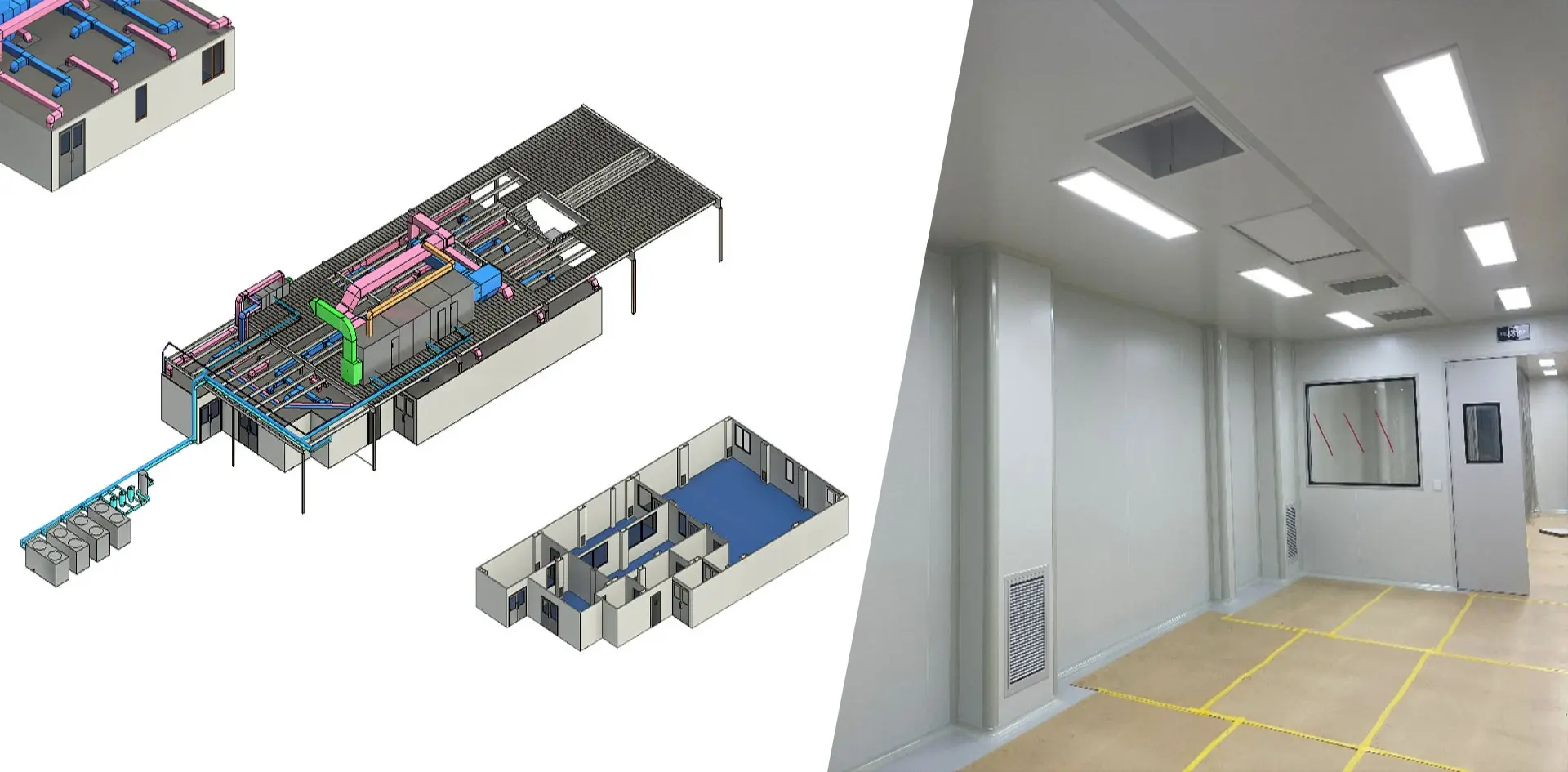
Turnkey Modular Dry Room
Airtight cleanroom envelopes, insulated PIR sandwich wall panels, personnel air locks, and integrated dehumidification.
 Recovery ≥99%
NMP Coater Exhaust Recycler
Staged temperature chilling paired with rotor concentration for high-efficiency NMP liquid solvent reclamation.
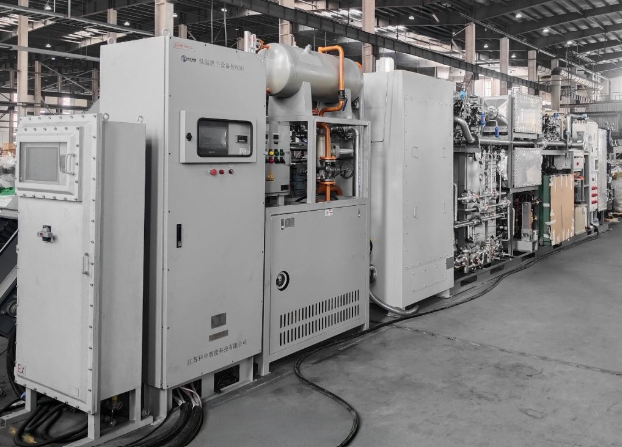
 Thermal RTO
VOC Deep Chilling & RTO Station
Two-in-one emission treatment combining mechanical condensation and regenerative thermal oxidation.
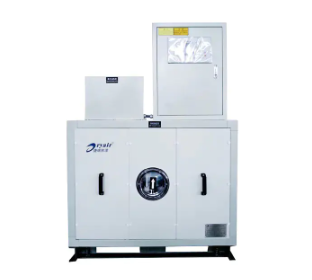 GMP Grade
Pharma Cleanroom Dehumidifier
Sanitary stainless interior, fully washdown-rated desiccant matrix, and HEPA filter modules for active drug processing.
 Warehouse Dry
High-Volume Refrigerative Dehumidifier
Direct-expansion mechanical condensation unit engineered for ambient storage spaces and bulk logistics.
 Field Mobile
Mobile Pipeline & Field Air Dryer
Trailer-mounted, diesel/generator-compatible desiccant drying system built for remote sandblasting and gas pipelines.
 Multi-Stage
Custom Environmental Air-Handling Unit
Engineered AHU architecture housing integrated refrigeration coils, dual-wheel sorption rotors, and heating modules.
Engineer Your Industrial Air Drying & Purification Facility
Submit your room dimensions, airflow CFM, sensible heat loads, and target dew point requirements. Our registered HVAC engineering staff will return psychrometric schematics, energy estimates, and equipment quotations within 24 hours.