
 DP -70°C
Desiccant Dehumidifier
DHU series rotary desiccant dehumidifiers deliver uninterrupted ultra-low dew point air where standard refrigeration systems fail.
Explore DHU SeriesEngineered for extreme reliability, deep dew-point depression, and maximum thermal recovery. Explore our primary equipment lines engineered for critical production facilities.
DP -70°C
DHU series rotary desiccant dehumidifiers deliver uninterrupted ultra-low dew point air where standard refrigeration systems fail.
Explore DHU Series Turnkey EPC
Complete modular dry rooms including architectural panels, advanced air distribution, high-efficiency heat exchangers, and ISO controls.
View Dry Rooms Recovery ≥99%
Recovers N-Methyl-2-pyrrolidone solvent from electrode coater exhaust via multi-stage heat exchanger condensing systems.
Recover NMP Solvent Cooling + RTO
Deep-cooling condensation coupled with Regenerative Thermal Oxidation (RTO) to neutralize hazardous VOC emissions sustainably.
Abatement Details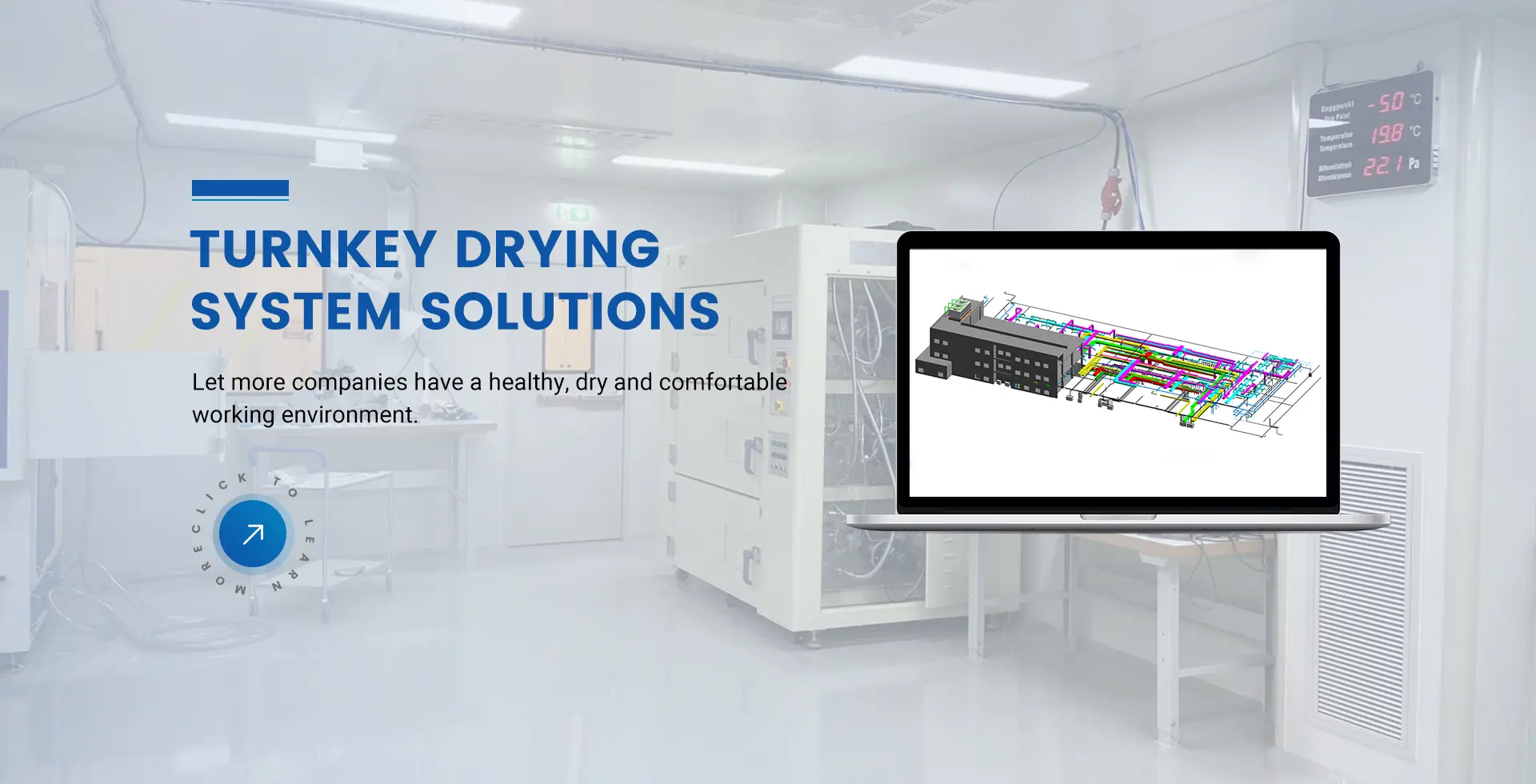 High COP
Cost-efficient mechanical moisture removal for humidity pre-cooling, dry warehouses, and broad-scale plant conditioning.
View Chilled Systems Patented Matrix
High-grade sensible heat exchange wheels reclaiming up to 82% of thermal energy during wheel reactivation cycles.
Exchanger Specs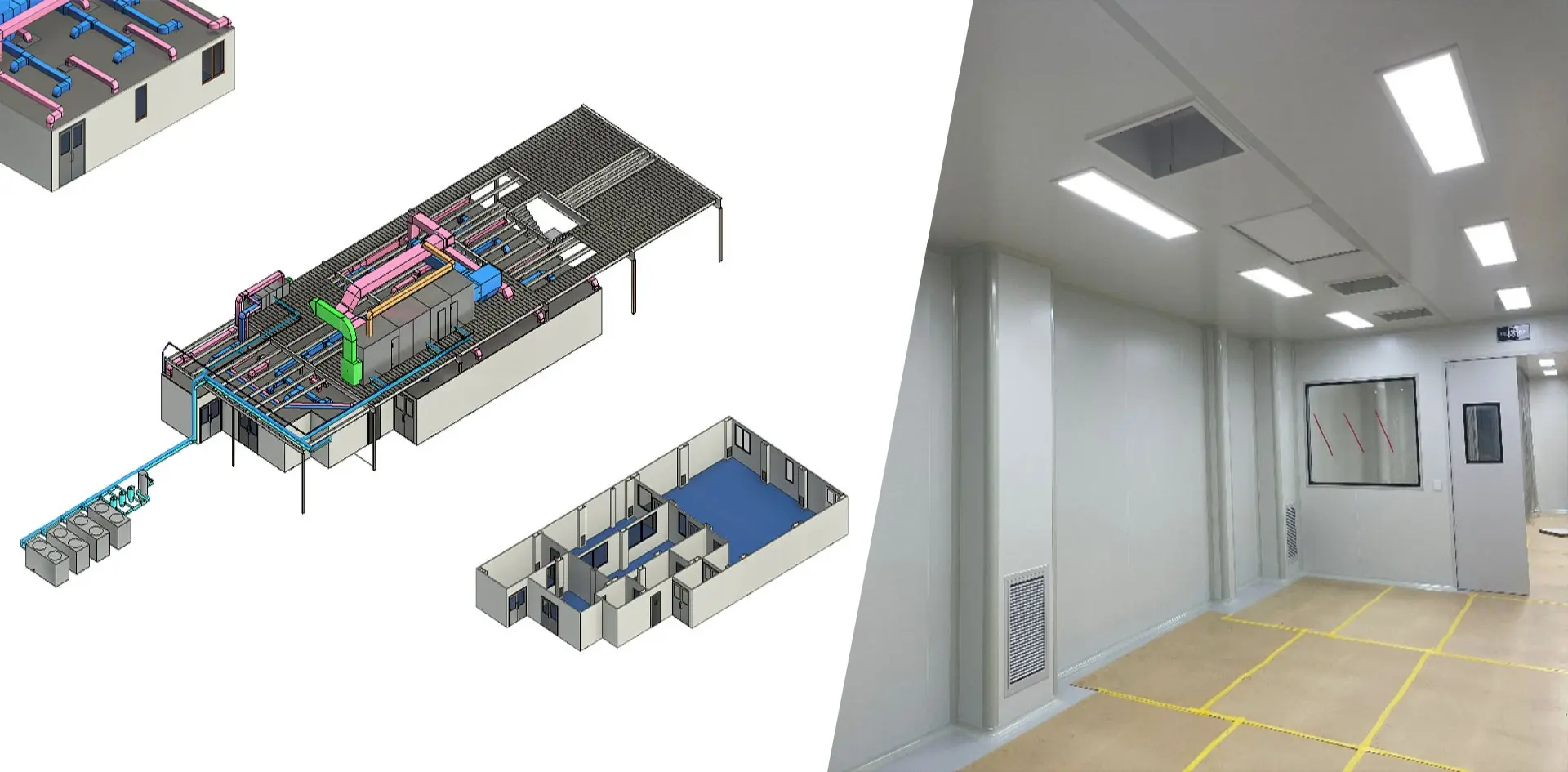 Vapor Recovery
Closed-circuit condensation units designed for hydrocarbon and chemical processing lines to eliminate vapor losses.
View Recovery Skids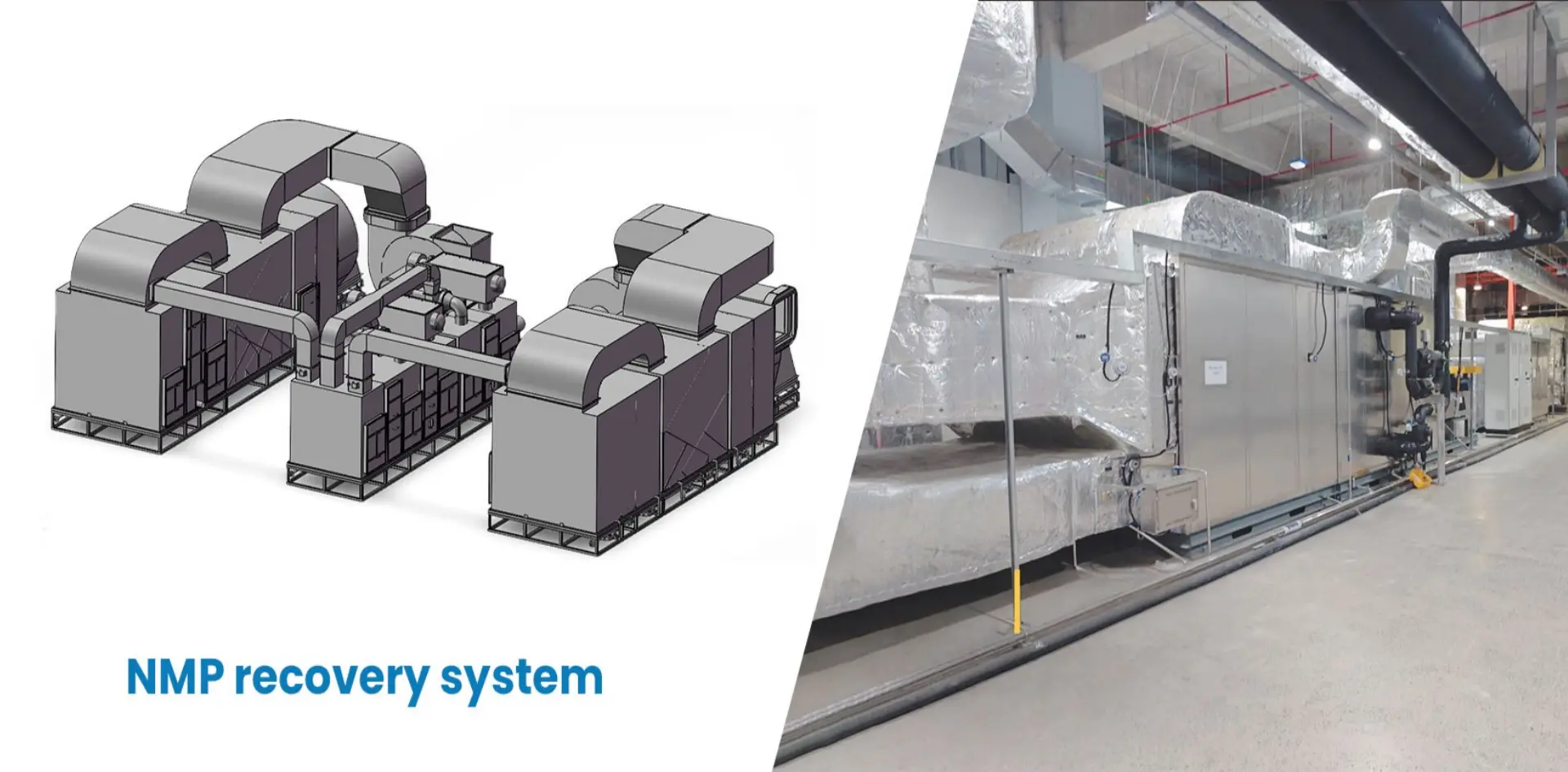 Mil-Spec GJB
Mil-Spec engineered environmental protection systems certified under GJB standards for harsh environments and defense storage.
Precision SolutionsAccelerated by global electrification, solid-state battery R&D, and strict ESG compliance, advanced heat exchange dehumidification has shifted from a peripheral HVAC subcategory to mission-critical infrastructure.
In high-capacity lithium-ion cell manufacturing, environmental dehumidification accounts for up to 35% to 43% of total facility electrical consumption. The continuous desorption of moisture from lithium battery dry rooms requires enormous sensible and latent heat loads. Modern manufacturers must deploy sensible plate heat exchangers, heat pipes, and double heat recovery systems to maintain economic viability.
Procurement metrics have shifted permanently from Initial Capital Expenditure (CAPEX) to 10-year Lifecycle Operational Expenditure (OPEX). Advanced sorption dehumidification systems integrated with high-efficiency heat exchangers often pay for their initial premium within 11 to 14 months through minimized steam or electrical reactivation draws.
International regulatory frameworks (EPA, EU REACH, and China’s Dual-Carbon Strategy) now penalize VOC leakage and thermal inefficiency. High-efficiency NMP recovery (>99%) and volatile organic compound thermal destruction demand seamless thermal coupling between condensing heat exchangers and desiccant rotors.
As battery and semiconductor firms expand into North America, Europe, and Southeast Asia, equipment providers must supply dual-frequency, cross-certified (CE, UL, CSA, ASME) dehumidification systems backed by localized field service engineering teams.
Hangzhou DryAir’s R&D trajectory is solving the thermodynamic limits of adsorption, waste heat scavenging, and smart algorithmic control.
Current desiccant rotors utilize functionalized silica gel or 3A/4A/13X molecular sieves requiring regeneration temperatures between 120°C and 160°C. Our next-generation rotor matrix leverages high-surface-area MOFs capable of releasing captured moisture at sub-75°C desorption temperatures.
Pioneering closed-loop cascade thermal loops. By routing sensible heat from freshly desorbed air directly into the incoming regeneration stream via high-effectiveness cross-flow plate heat exchangers, the sensible heat loss is largely contained within the chassis.
Static humidity control leads to continuous over-drying and excessive heating. DryAir’s proprietary neural network PLC control modulates wheel rotation velocity, bypass airflow rates, and dynamic heat input based on real-time external ambient moisture flux.
Different industrial chemistries demand different dew point criteria. We engineer custom environmental packages tailored to the unique thermodynamic risks of each process.
Trace ambient humidity hydrolyzes LiPF6 electrolyte salts into dangerous, corrosive Hydrofluoric Acid (HF), destroying cell capacity and causing catastrophic thermal events.
Hygroscopic powders, effervescent tablets, gelatin capsules, and active pharmaceutical ingredients (APIs) clump, hydrolyze, or lose bio-viability under elevated relative humidity.
Naval surface vessels, avionics, ammunition vaults, and missile storage hangars face aggressive salt-spray accelerated oxidation and mold growth.
Sub-micron photolithography and wafer fabrication require absolute suppression of airborne molecular moisture to avoid haze defect formation on quartz optics.
Use this engineering matrix to evaluate system configurations, target dew points, and recommended heat recovery architectures before issuing project RFQs.
| Application Scenario | Typical Target Range | Recommended System | Core Heat Exchanger Architecture |
|---|---|---|---|
| Lithium-ion Cell Assembly & Electrolyte Filling | -40°C to -60°C DP | Turn-key Dry Room | Sensible Double Heat Exchanger Wheel + Glycol Chillers |
| Solid-State & Next-Gen Lithium Metal Cells | Down to -70°C DP | Desiccant Dehumidifier | Dual-Rotor Cascade System with Intermediate Pre-Cooling |
| Electrode Coating & Drying Exhaust | ≥99% Solvent Recovery | NMP Recovery System | Cross-Flow Plate Condensation Heat Exchangers + Pre-coolers |
| Hygroscopic Pharma Powders & Gelatin Capsules | 10% – 30% RH | Desiccant Dehumidifier | Direct Expansion (DX) Dehumidifier + Reactivation Heat Coil |
| Defense, Ammunition & Weaponry Storage | ≤35% – 40% RH | Mil-Spec Dehumidifier | Corrosion-Resistant Evaporative Coils + Heat Exchanger |
| General Bulk Warehousing & Raw Storage | 45% – 60% RH | Refrigerative System | High-COP Direct Condensing Mechanical Refrigeration |
| Chemical Petrochem & Fuel Loading Terminals | Emission VOC Compliance | VOC Abatement System | Cryogenic Condenser Exchangers + Regenerative Thermal Oxidizer |
Since 2010, Hangzhou DryAir Treatment Co., Ltd. has established engineering dominance across rotary desiccant dehumidification and industrial VOC abatement. Our facilities, testing protocols, and client track record are fully open to audit.
Operating strictly under ISO 9001 and the Chinese GJB National Military Standard, DryAir tests every unit in an internal full-scale psychrometric testing room prior to freight dispatch. Export units feature CE, UL, CSA, ASME, and EAC certifications.
Download Full Engineering Profile & Case StudiesOperational and thermodynamic data compiled directly from active global commissioning sites.
In-depth thermodynamic review of how high-pressure compression combined with deep-cooling heat exchangers captures hydrocarbon vapor from petroleum storage terminals before atmospheric vent discharge.
Read Full Analysis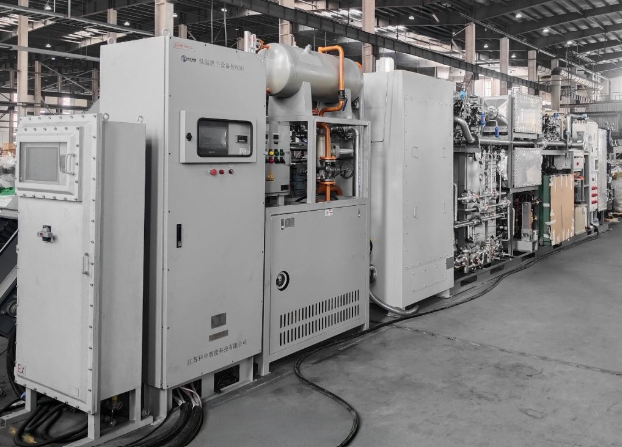
Examining how multi-stage temperature control, heat exchanger fouling mitigation, and condensing coil balance sustain solvent recovery across round-the-clock cathode coating production schedules.
Read Full Analysis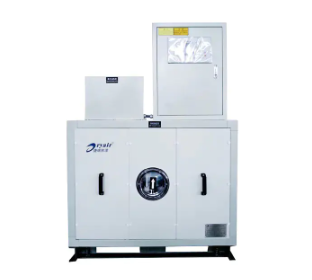
Psychrometric calculations demonstrating how relative humidity fluctuations trigger powder agglomeration, die jamming, and chemical decomposition in automated tablet pressing suites.
Read Full AnalysisClear, auditable answers to the most critical technical questions raised by international engineering consultancies and EPC buyers.
Hangzhou DryAir rotary desiccant dehumidifiers routinely achieve and continuously sustain supply air dew points down to a guaranteed -70°C dew point (equivalent to <0.002 g/kg moisture content). This performance is specifically engineered for solid-state cell labs, lithium pouch cell electrolyte filling, and moisture-sensitive lithium metal processing.
We provide end-to-end turnkey execution: initial computational fluid dynamics (CFD) airflow modeling, envelope panel manufacturing, AHU fabrication, on-site mechanical erection, PLC commissioning, and dew point validation. We have completed successful dry room deliveries across Europe, North America, and Southeast Asia for global manufacturers like Tesla and Northvolt.
All DryAir equipment lines can be custom configured and labeled for destination regulatory compliance: CE marking for the European Union, UL/CSA certification for electrical assemblies in the US and Canada, ASME code compliance for pressure vessels and heat exchangers, and EAC for Eurasian Economic Union territories.
Our ZJRH series NMP recovery units guarantee a minimum solvent recovery rate of ≥99% on electrode coater exhaust streams. This efficiency dramatically reduces raw solvent procurement overhead, avoids expensive regulatory EPA emission fines, and feeds clean recovered solvent into on-site distillation recycling plants.
International buyers have access to 24/7 remote cloud diagnostics via encrypted VPN tunnels, priority spare rotor and heat exchanger inventory dispatch, on-site bi-annual audit inspections, and an optional comprehensive two-year overseas service agreement executed by dedicated DryAir field HVAC engineers.
Yes. DryAir specializes in hybrid thermal integration. Our dehumidification skids can be engineered with secondary hydronic coils designed to exploit hot water or low-pressure steam loops (from 60°C to 110°C) originating from compressors, boilers, or cogeneration plants, significantly slashing electric heating costs.
Explore our full spectrum of specialized configurations, including explosion-proof systems, deep-refrigeration units, and custom solvent condensers.
Rotary DHU
High-capacity desiccant rotor with heavy-gauge galvanized framing and variable reactivation heating.
View Specifications Custom Cleanroom
Factory-insulated cam-lock panels with ultra-tight leakage rates tested for high-volume gigafactory demands.
Explore Enclosures
Solvent Loop
Multi-pass condensation system tailored for high concentration electrode coater lines.
View NMP Units
Ex-Proof VOC
Combines cryogenic precooling and thermal combustion to achieve >99.5% organic compound destruction.
Explore RTO Scrubbers Dual Stage
Provides primary latent load knockdown prior to introducing intake air to deep-drying rotors.
View Precoolers
GMP Package
Constructed with smooth-interior panels, HEPA filtration housings, and hygienic drain pans.
View GMP Systems
Super Dry
Ultra-low moisture environmental chambers designed for handling lithium-metal and sulfide electrolytes.
View R&D Dry Rooms
Eco-Certified
Specialized condensation systems tailored to port loading facilities, tank farms, and petrochemical refining.
View Vapor SystemsSubmit your plant architectural footprint, airflow CFM requirements, and target dew points to receive psychrometric load balances and thermodynamic ROI analysis within 24 hours.