
Core Engineered Dehumidification & Recovery Systems
Factory-tested, low-temperature reactivation equipment delivered directly to international lithium-ion cleanrooms, solvent extraction pipelines, and high-spec industrial manufacturing hubs.
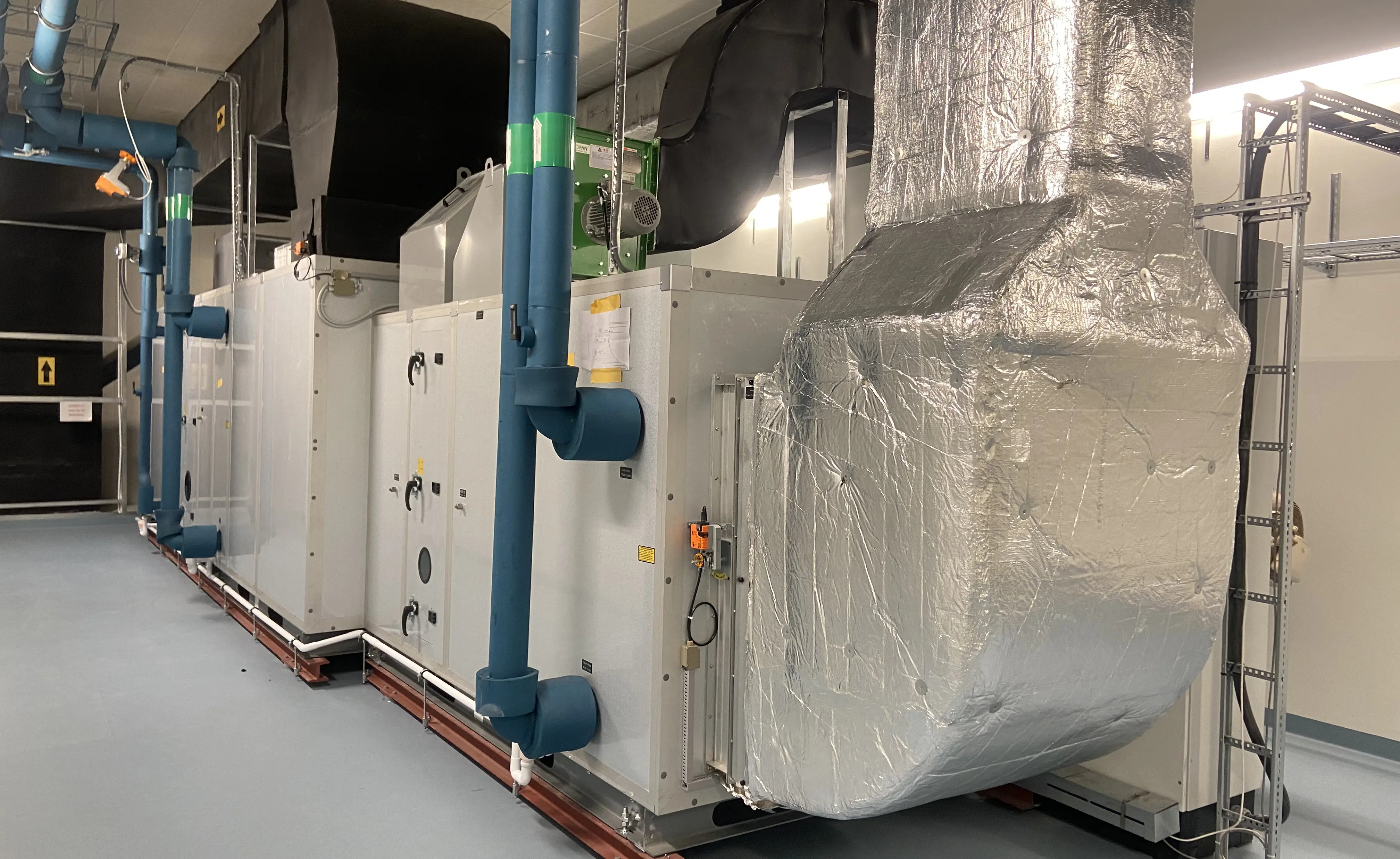 -70°C Dew Point
DHU Rotary Desiccant Dehumidifier
Engineered for lithium cell assembly with waste-heat driven low temperature reactivation matrices.
View Specifications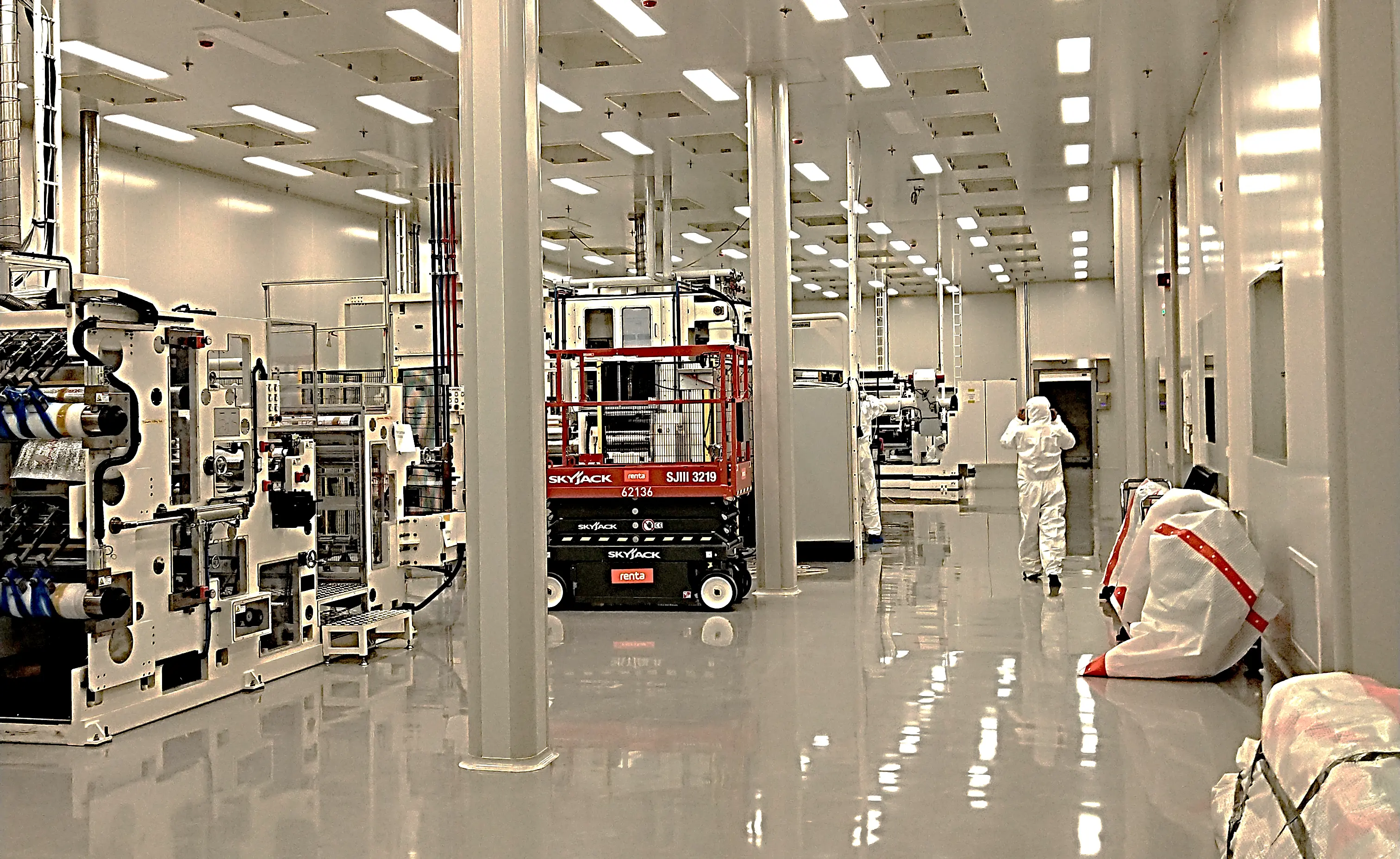 Turnkey EPC
Turn-key Dry Room System
Full envelope design, high airtightness enclosure panels, psychrometric balancing, and automated validation.
Explore Dry Rooms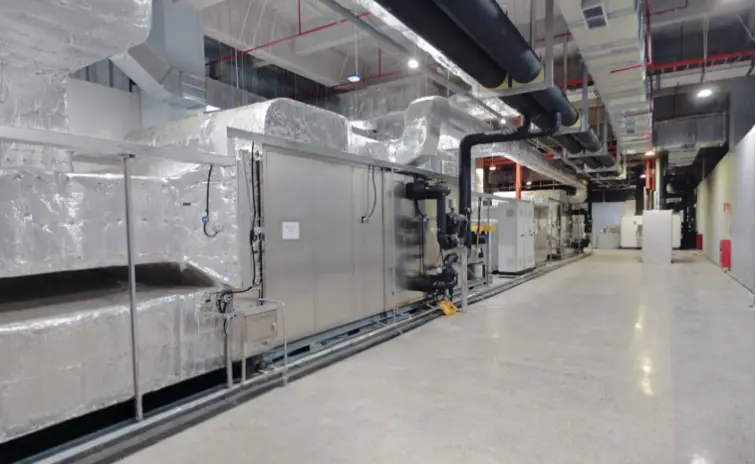 ≥99% Purity
NMP Solvent Recovery System
Multi-stage condensation for electrode coater exhaust streams reducing raw material expenditure.
Inspect Recovery Units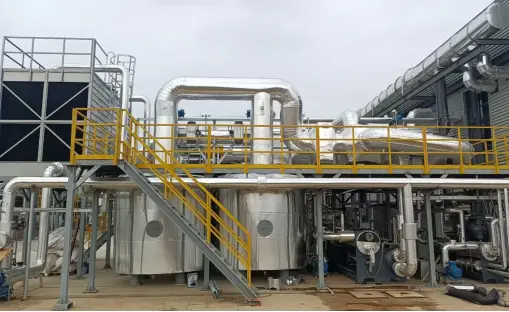 RTO + Deep Chilling
VOC Abatement System
Thermal oxidizers and cryogenic chillers designed to guarantee compliance with regional emission standards.
Explore VOC Abatement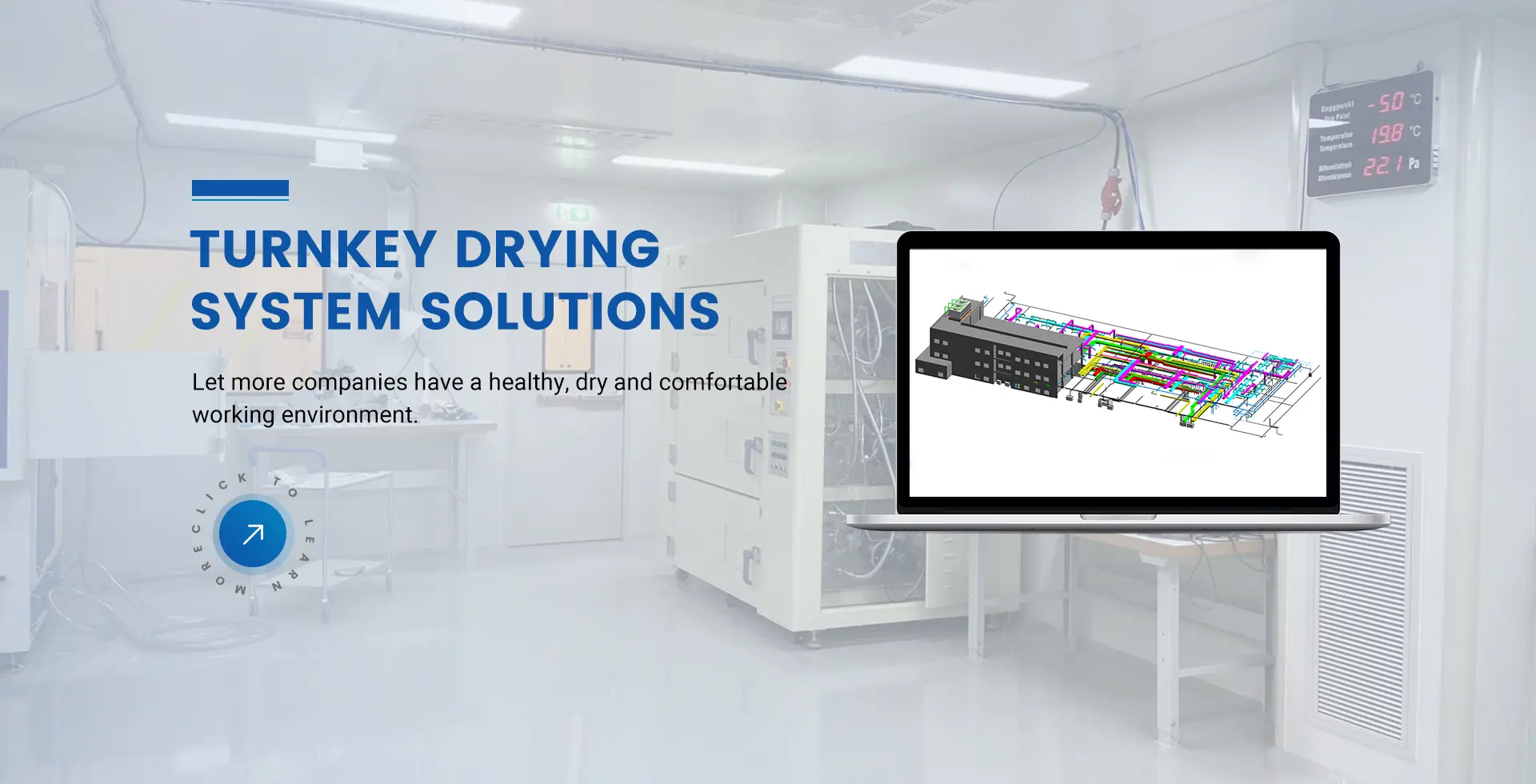 Pre-Cooling Stage
Refrigerative Dehumidifier
High COP direct expansion refrigeration for primary stage fresh air moisture removal and climate conditioning.
View Refrigerative Models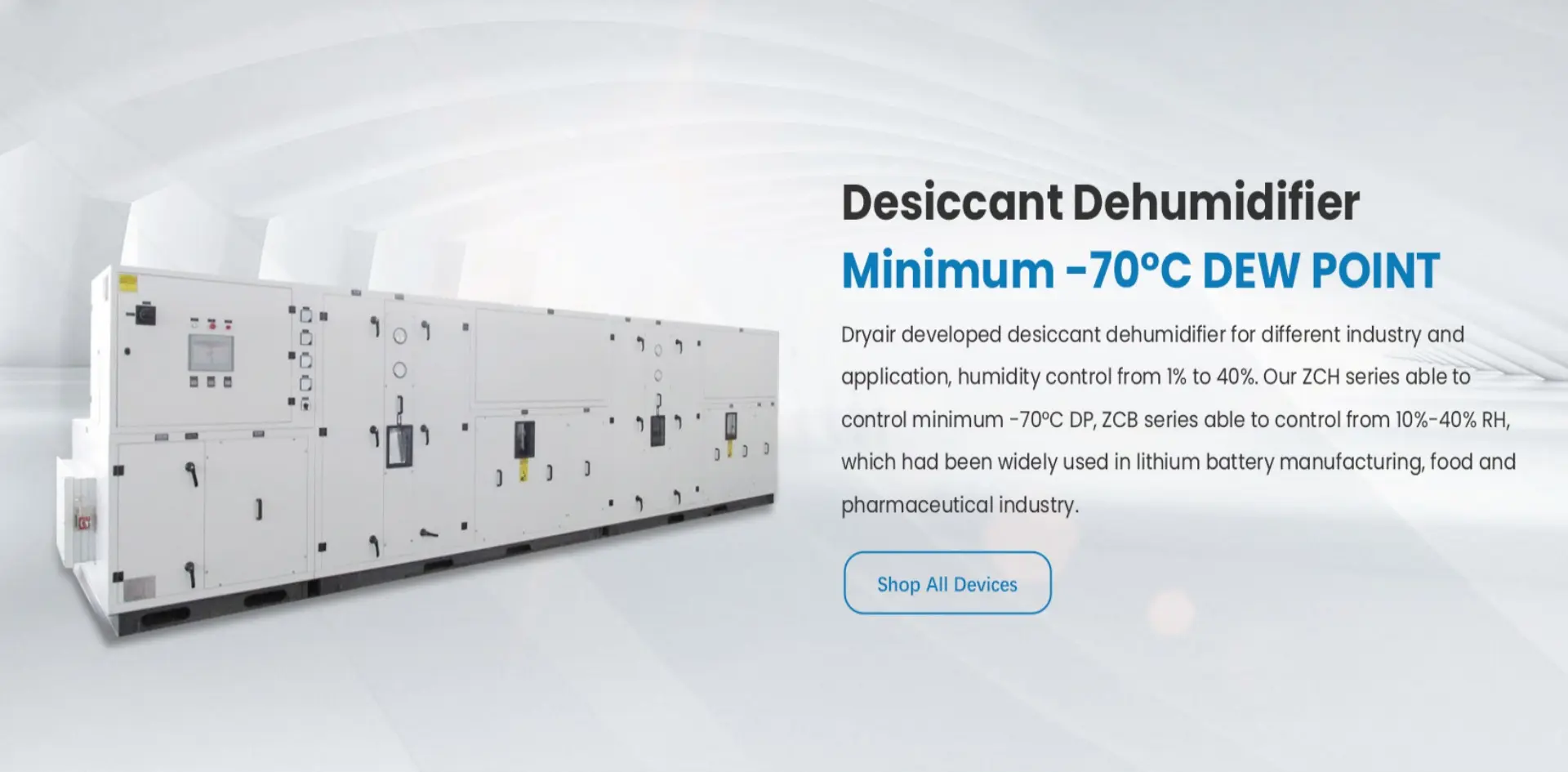 VAV Control
Low Temp Regeneration Rotor
Custom synthesized honeycomb rotor matrices reactivated using 50°C to 80°C low-grade process waste heat.
See System Series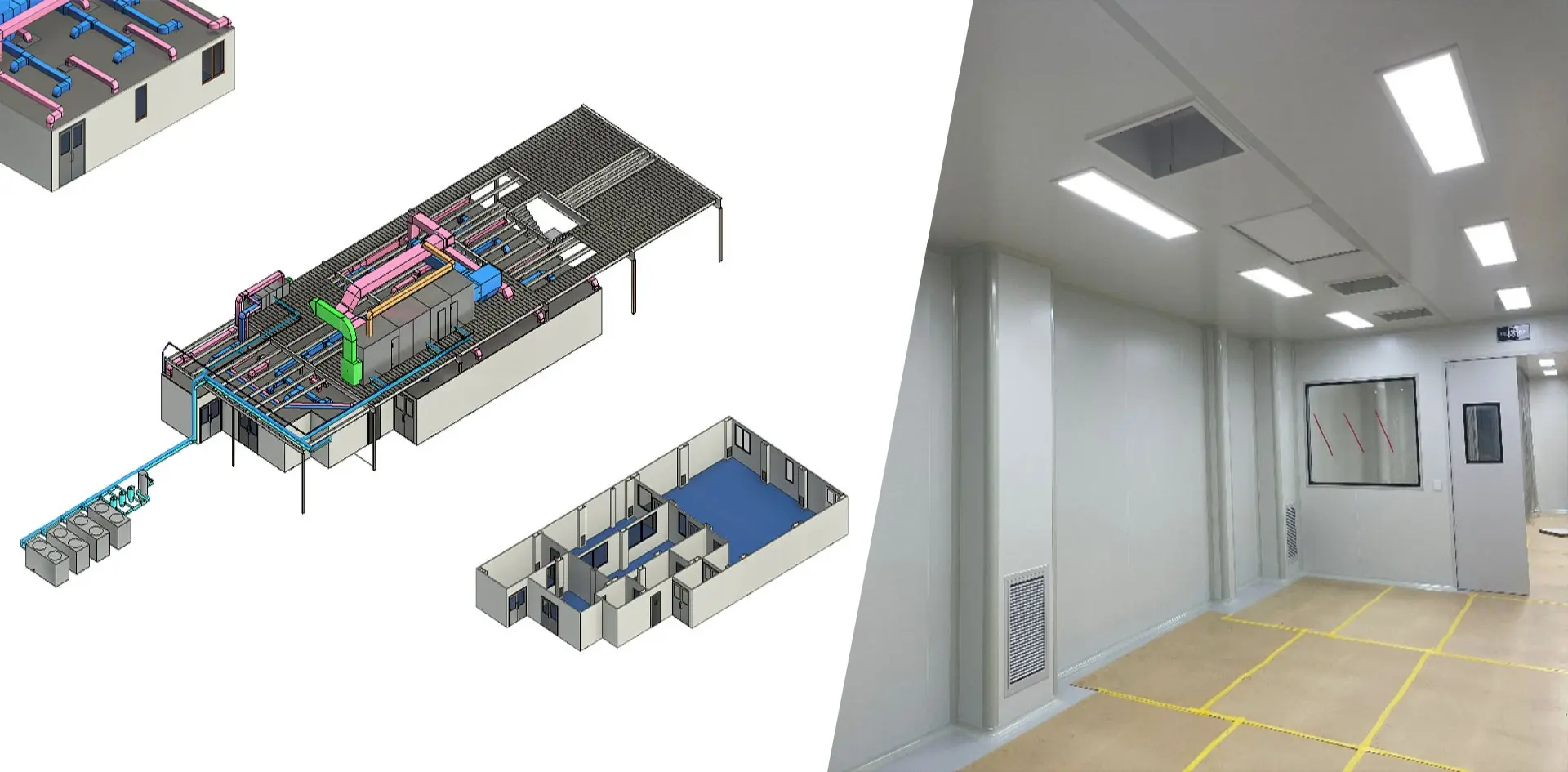 Engineering RFQ
Industrial System Engineering Specs
Exhaustive engineering documentation, load calculations, psychrometric curves, and rotor sizing protocols.
Request Full Catalog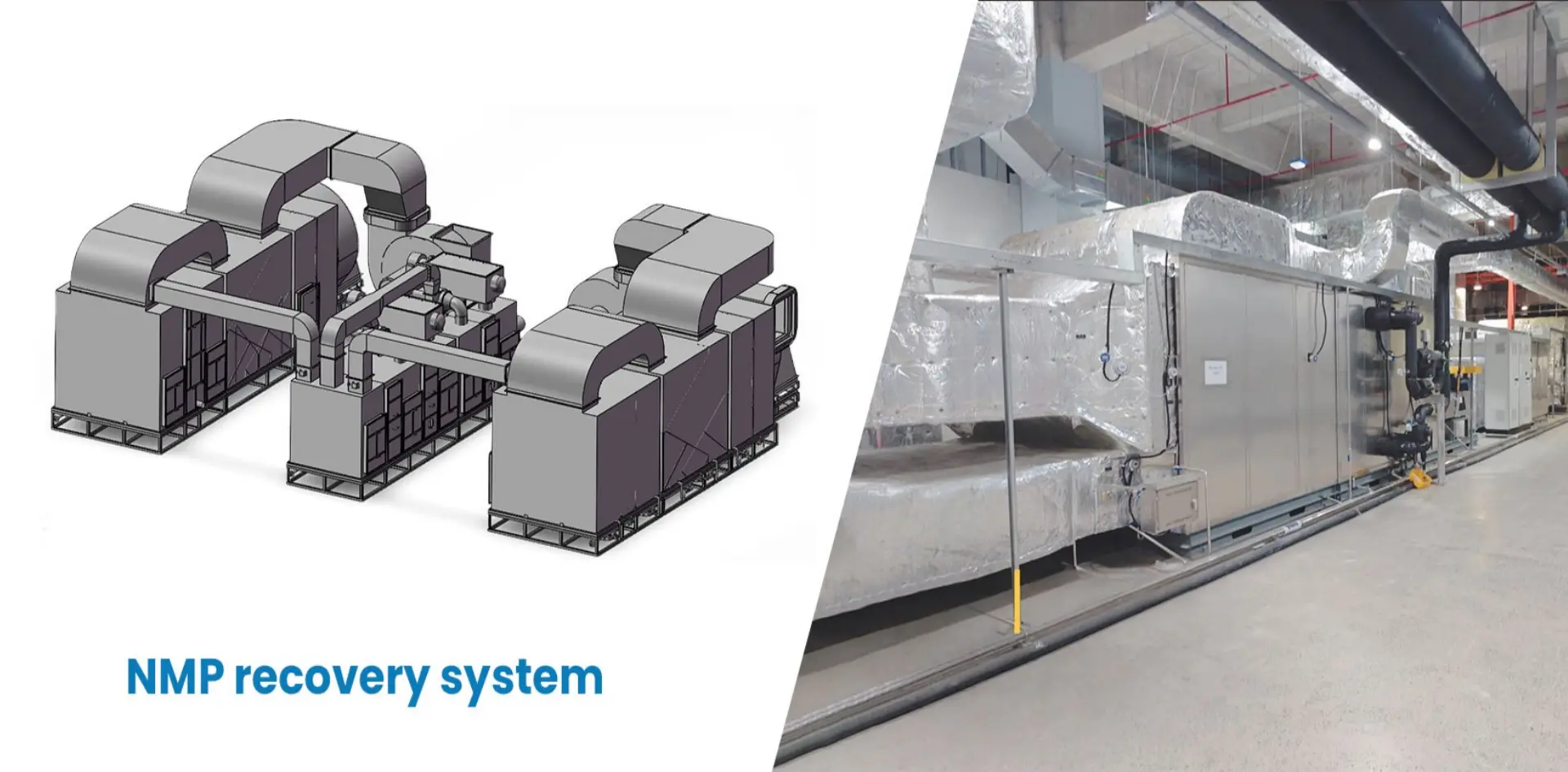 Global Field Support
On-Site Commissioning & Service
Multilingual technical field crews, FAT/SAT inspection, sensor calibration, and turnkey operational warranties.
Field Service DetailsThermodynamic Realities of Low Temperature Regeneration (LTR)
Eliminating the massive OPEX bottleneck in industrial desiccant air treatment: how composite sorbents and low-grade enthalpy scavenging redefine moisture separation economics.
In modern industrial process engineering, industrial dehumidification has long represented an unavoidable thermodynamic penalty. For high-stakes manufacturing sectors—such as lithium-ion battery gigafactories, solid-state electrode fabrication labs, biopharmaceutical compounding suites, and specialized defense storage—ambient moisture is an aggressive contaminant. In battery assembly, trace ambient moisture reacts violently with fluorinated electrolyte salts (e.g., LiPF6) to generate hydrofluoric acid (HF), inducing irreversible microstructural degradation on the active cathode surface, reducing initial cell capacity, and shortening electrochemical cycle life. Consequently, continuous process air must be maintained at a strict supply air dew point ranging between -40°C and -70°C.
Traditional rotary adsorption desiccant systems rely on high-temperature reactivation streams, typically ranging between 120°C and 160°C. In a standard setup, sensible electric or high-pressure steam heating batteries consume up to 60% to 75% of the total system power just to vaporize and desorb moisture from the rotating silica-gel or synthetic zeolite matrix. This creates a severe operational cost (OPEX) burden. As the world shifts toward aggressive carbon accounting benchmarks (e.g., EU Battery Regulation 2023/1542, ESG Scope 1 and 2 targets), standard high-heat reactivation is no longer financially or ecologically viable.
Engineering Core Principle: Low Temperature Regeneration (LTR) operates between 50°C and 85°C by exploiting customized composite adsorbent matrices (mesoporous silica chemically fused with metal-organic framework arrays and hygroscopic halogen salts) with steep Type IV adsorption isotherms. This permits desorption via industrial low-grade waste heat, condenser rejection loops, and high-efficiency water-source heat pumps—slashing primary reactivation energy consumption by 35% to 52%.
The Adsorption Mechanics: From Traditional Zeolite to Engineered Composite Rotors
In standard rotary desiccant systems, the physical adsorption of moisture into a desiccant structure releases latent heat of adsorption, elevating the temperature of the dry process supply air. When regenerating the saturated portion of the wheel, significant thermal energy must be applied to overcome the strong van der Waals bonds and electrostatic coordination between the H2O dipoles and the pore walls of synthetic zeolite (e.g., 4A or 13X crystal lattices). Because standard zeolites display a linear or concave isotherm at low partial pressures, stripping the water molecules requires elevated thermal kinetic excitation—hence the persistent need for 140°C+ thermal energy.
Hangzhou DryAir's low temperature regeneration systems circumvent this thermodynamic hurdle through precision nano-architectured rotor matrices. By impregnating the corrugated glass fiber substrate with synthesized mesoporous silica bonded with localized metal-organic coordination nodes, the pore size distribution is finely tuned to 2.0–3.5 nm. This micro-porous profile creates a stepped sorption isotherm. When moisture passes into the desiccant matrix at 20°C, the water vapor readily condenses via capillary action within the uniform nanopores. However, once the matrix moves into the reactivation zone, the adsorption equilibrium shifts abruptly at a relatively low energy threshold. A stream of reactivation air heated to only 60°C–75°C provides sufficient enthalpy to strip the bound moisture, enabling deep continuous regeneration without degrading the adsorption rotor's mechanical or chemical integrity over years of 24/7 service.
Global Enterprise Procurement Dynamics for Low-Dew-Point Systems
Analyzing the paradigm shift in capital expenditure (CAPEX) versus total lifecycle cost of dry air (LCODA) across tier-one manufacturing ecosystems.
LCODA-Driven Tender Evaluations
Global gigafactory EPC teams are migrating away from lowest-initial-cost bids toward 10-year Levelized Cost of Dry Air models. Because a 100,000 m³/h dry room consumes millions in kilowatt-hours annually, a 30% reduction in reactivation energy via low temperature regeneration pays back equipment capital differentials within 14 to 18 operational months.
Integration of Low-Grade Industrial Waste Heat
Procurement directors now require multi-source heat adaptation. Hangzhou DryAir systems are engineered with modular dual-stage hydronic coils capable of utilizing 55°C jacket cooling water from industrial air compressors, exhaust stream enthalpy from electrode baking tunnels, and industrial chilled water condenser heat.
Regulatory ESG & Carbon Border Adjustments
With the implementation of the European Carbon Border Adjustment Mechanism (CBAM) and mandatory battery lifecycle footprints, battery exports to Europe and North America must verify minimized operational megawatt-hours per gigawatt of cell output. Low-regeneration desiccant architecture serves as a measurable Scope 2 carbon abatement lever.
The Shift in International Sourcing Strategy: Direct Manufacturer Engagement
Historically, European and North American engineering firms routinely procured dehumidification hardware through fragmented Western integrators who outsourced rotor manufacturing to third parties. However, supply chain disruptions, margin stacking, and slow turnaround on field replacement parts have led multinational battery and pharma groups (including CATL, Tesla, Northvolt, and TTI) to contract directly with certified Chinese tier-one manufacturers. Hangzhou DryAir Treatment Co., Ltd., established in 2010, has become a principal partner in this shift by maintaining a 200+ unit/month production throughput and end-to-end proprietary fabrication of rotors, air handling chassis, and embedded refrigeration stages.
Tailored Engineering Frameworks for Critical Moisture Regimes
Configured psychrometric staging based on chemical vulnerability, enclosure leakage parameters, and sensible internal thermal loads.
| Target Manufacturing Application | Critical Moisture Constraint | Regeneration Enthalpy Source | Recommended System Configuration | Action |
|---|---|---|---|---|
| Lithium-Ion Electrolyte Filling & Stacking | -40°C to -60°C DP | Direct waste heat scavenging (70°C–80°C) | Dual-rotor cascading low-dew-point DHU series with DX coil | Explore Dry Room |
| Solid-State & Lithium-Metal Research Rooms | -60°C to -70°C DP | Heat pump assisted hybrid hot water loop | Ultra-deep sorption zeolite composite with post-trim cooling | View Dehumidifier |
| Electrode Slurry Coating & Drying Flue Gas | ≥99% NMP Recovery | Coater oven exhaust enthalpy integration | ZJRH Series multi-stage condensation + gas concentration | Inspect NMP Recovery |
| Effervescent Tablets & Sterile APIs (cGMP) | 10% to 20% RH (Class A/B) | Boiler blowdown or low-pressure clean steam | Sanitary clean-in-place desiccant chassis with HEPA filtration | Examine Pharma Specs |
| Aerospace Avionics & Ordnance Depots | ≤35% RH (Non-condensing) | Ambient air-source heat pump loop | GJB-compliant military standard corrosion-prevention DHU | Download Defense Doc |
| Solvent Storage, Fuel Transfer & Tank Farms | VOC Emission < 20 mg/m³ | Autogenous regenerative thermal oxidizer heat | JEN Series deep-cooling condensation combined with rotary RTO | View VOC Systems |
Lithium Battery Dry Room Architecture
Moisture control is not just about the dehumidifier; it is an integrated aerodynamic envelope problem. Hangzhou DryAir engineers design complete turn-key dry rooms featuring double-sealed polyurethane wall panels with zero-bridge cam-locks, high-induction air diffuser distribution to prevent localized moisture stratification, and pressure cascades ensuring positive room pressure (+20 to +50 Pa) over surrounding buffer corridors to prevent infiltration.
VOC Abatement & High-Yield Solvent Recovery
Our ZJRH closed-loop NMP recovery units operate with zero environmental venting during standard production. By combining chilled brine sub-cooling coils with specialized gas-phase adsorption, solvent recovery rates exceed 99% purity. The recovered NMP is recirculated back into slurry mixing tanks, saving tier-one lithium battery producers millions in raw chemical procurement each quarter.
Auditable Global Export Compliance & Field Assurance
Strict conformity with North American, European, and Eurasian electromechanical standards, backed by in-house deep-dew-point environmental simulation test chambers.
Multi-Jurisdiction Safety Certifications
Every industrial unit destined for export can be built to comply with CE Machinery Directive 2006/42/EC and Low Voltage Directive 2014/35/EU, UL 1995/UL 60335 for the United States, CSA C22.2 for Canada, ASME Section VIII Boiler and Pressure Vessel Code for refrigeration piping, and EAC TR CU compliance for the Eurasian Customs Union.
Dual ISO 9001 & GJB Quality Assurance
Hangzhou DryAir holds both civilian ISO 9001 quality management certification and the GJB national military standard quality management system qualification. This ensures rigorous tracking across raw materials, automated CNC sheet metal laser cutting, continuous automated TIG welding, and complete electrical panel wiring verification.
In-House FAT Environmental Test Chamber
Prior to shipment, industrial units undergo Factory Acceptance Testing (FAT) within our computerized environmental test room. We simulate extreme field conditions—from humid tropical ambients of 38°C at 90% RH to freezing dry winter conditions—logging real-time dew point stability, reactivation thermal flux, and fan motor acoustics under calibrated chilled water loads.
Comprehensive On-Site Commissioning & 2-Year Warranty Agreements
Deployment in foreign jurisdictions can introduce operational risks if technicians lack specialized desiccant wheel expertise. To mitigate client exposure, Hangzhou DryAir deploys dedicated commissioning taskforces—including bilingual HVAC and automation engineers—to lead Site Acceptance Testing (SAT), calibrate chilled-mirror hygrometers, fine-tune VFD PID feedback loops, and train plant operations staff. Overseas customers can also secure an extended two-year comprehensive parts and field service warranty agreement, backed by regional spare parts hubs stocked with certified drive motors, drive belts, precision silicon perimeter seals, and electronic controllers.
Technology Roadmap: Next-Generation Sorption & AI Psychrometrics
How Hangzhou DryAir is pioneering solid-state cleanroom dew points down to -80°C and autonomous psychrometric self-optimization.
Metal-Organic Frameworks (MOFs)
Development of super-adsorbent crystalline MOF arrays (such as MIL-101 derivatives) designed for reactivation at ultra-low temperatures below 50°C. This breakthrough will allow desiccant regeneration using low-grade cleanroom waste water loops without external heater banks.
-80°C DP Solid-State Battery Prep
Sulfide-based solid electrolytes (e.g., Li6PS5Cl) release toxic hydrogen sulfide (H2S) gas upon contact with even nominal moisture. DryAir is currently field-testing triple-stage rotor cascades engineered to sustain steady -80°C dew point microenvironments across mass-production scale dry envelopes.
Digital Twin & AI Edge Modulation
Real-time machine learning controllers that ingest external weather forecasts, interior personnel shift schedules, and production line run rates to predictively modulate rotor rotation speed, reactivation airflow, and valve positions—preventing dew point drift and eliminating energy waste.
Frequently Answered Engineering & Procurement Inquiries
Direct technical guidance on system sizing, installation tolerances, thermal economics, and export logistics.
What is the lowest continuous dew point reachable by DryAir systems?
How does Low Temperature Regeneration (LTR) compare with electric heating in OPEX?
Can DryAir deliver complete turn-key dry room projects internationally?
Which regulatory and electrical certifications are supported for export orders?
How is the solvent recovery rate maintained in NMP Recovery Systems?
What international warranty and technical maintenance provisions are available?
Engineered Systems Ready for Global Integration
Explore our core desiccant, cleanroom enclosure, VOC control, and solvent recovery products engineered to meet rigorous international procurement specifications.
Low-DP Rotary
Industrial Desiccant Dehumidifiers
High-capacity desiccant air handling units with low temperature regeneration coils for maximum energy savings.
View Specifications
Gigafactory Grade
Turnkey Dry Room Enclosures
Comprehensive dry room supply from structural envelope and airlock interlocks to ultra-dry air handling loops.
Review Dry Room EPC
Low Emission
ZJRH Solvent Recovery Plants
Proven solvent recovery exceeding 99% for lithium battery electrode coating processes worldwide.
Inspect Recovery Units
EPA / CE Compliant
JEN Series VOC Systems
Cryogenic condensing stages integrated with regenerative thermal oxidizers to treat industrial organic emissions.
View VOC Solutions
Commercial COP
Refrigerative Dehumidifiers
Heavy-duty direct expansion condensing units for warehouses, packaging zones, and fresh air pre-treatment.
View Refrigerative Models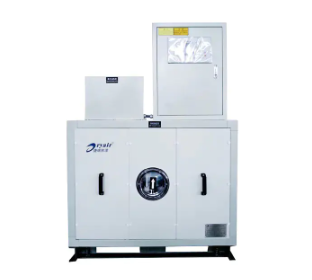 cGMP Class
Sanitary Pharmaceutical Units
Double-skin insulated stainless steel air handling units with sanitary wash-down desiccant rotors for tablet coating.
Explore Pharma Series Verified Facility
Manufacturing & Engineering Center
Explore our 200+ unit/month factory, automated CNC production line, and certified military-standard testing chambers.
Download Plant Profile Worldwide Network
Global Engineering Support
Comprehensive turnkey engineering support, remote IoT monitoring, spare parts supply, and rapid international field service.
Contact Field EngineersRequest Psychrometric Load Calculations & System Schematics
Share your required enclosure dimensions, target supply air dew point (-40°C to -70°C), ambient climate conditions, and internal process heat loads. Our registered HVAC engineers will return a complete psychrometric mass-balance design within 24 hours.