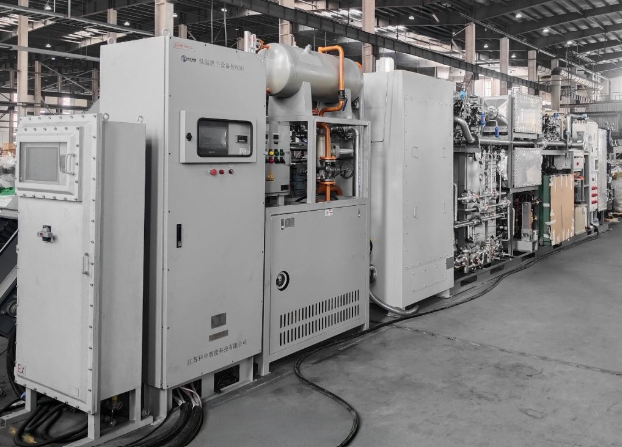
DP -70°C Control
Desiccant Dehumidifier
DHU series rotary desiccant dehumidifier engineered for deep low dew point stability in battery dry rooms, defense storage, and precision facilities.
Explore ModelEngineered rotatory systems, low-temperature thermal regeneration modules, and turn-key environmental envelopes compliant with CE, UL, CSA, ASME, and EAC standards.
DP -70°C Control
DHU series rotary desiccant dehumidifier engineered for deep low dew point stability in battery dry rooms, defense storage, and precision facilities.
Explore Model Turnkey EPC
Complete ultra-low humidity dry rooms featuring precision enclosures, specialized air handling, regeneration systems, and end-to-end commissioning.
Explore Model Recovery ≥99%
High-efficiency solvent capture for battery electrode coating lines, reducing chemical raw material procurement spend and environmental emissions.
Explore Model Deep Cooling + RTO
Advanced deep-cooling condensation combined with regenerative thermal oxidizers (RTO) for rigorous industrial VOC compliance and emission purification.
Explore ModelHigh-efficiency mechanical refrigeration moisture extraction suited for workshops, staging areas, and pre-cooling stages ahead of desiccant rotors.
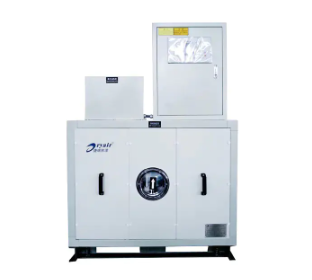
Explore Model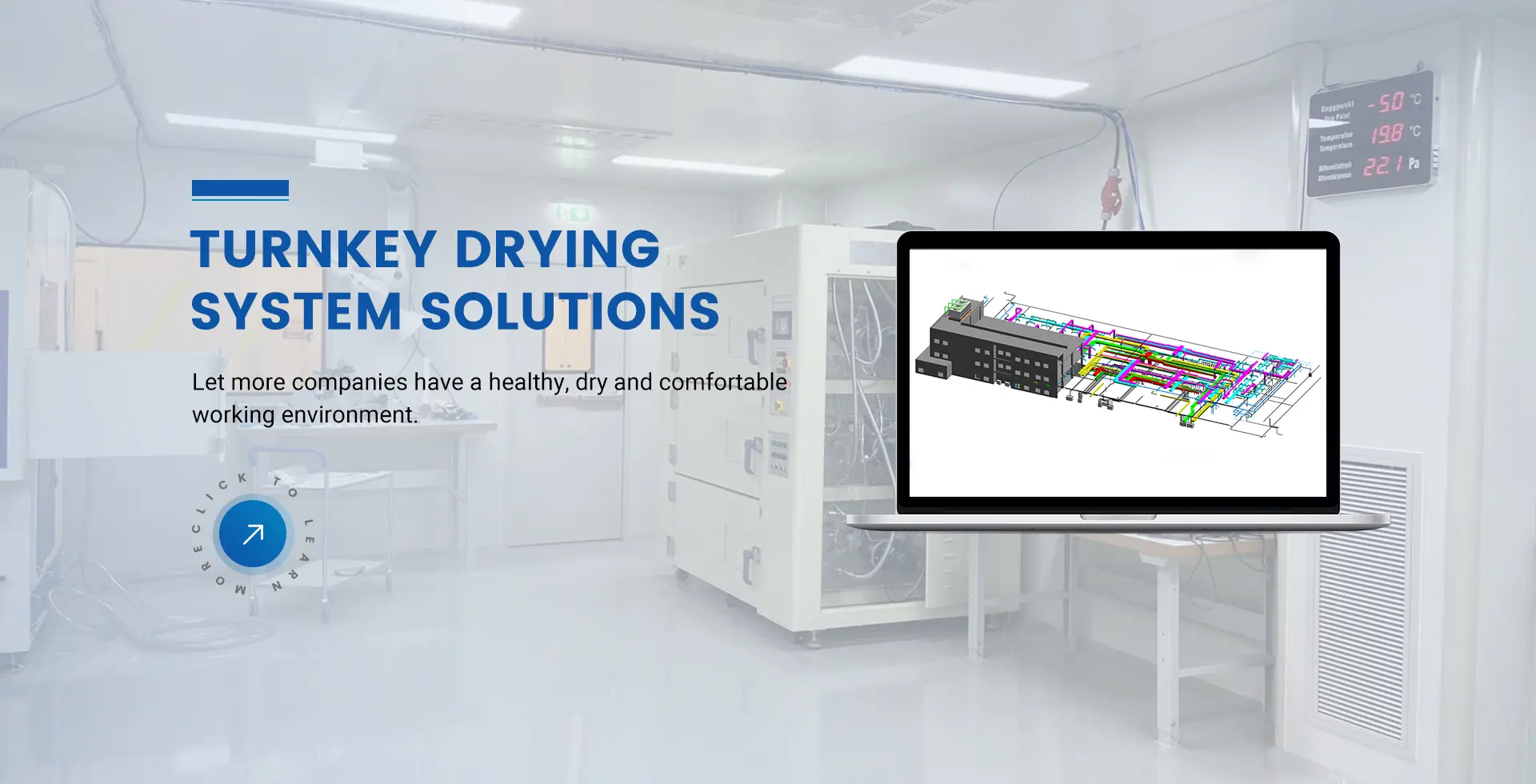 Low-Temp Regen
Utilizes low-temperature regeneration (55°C–85°C) to desorb moisture, enabling industrial waste heat integration and saving over 35% thermal OPEX.
Explore Model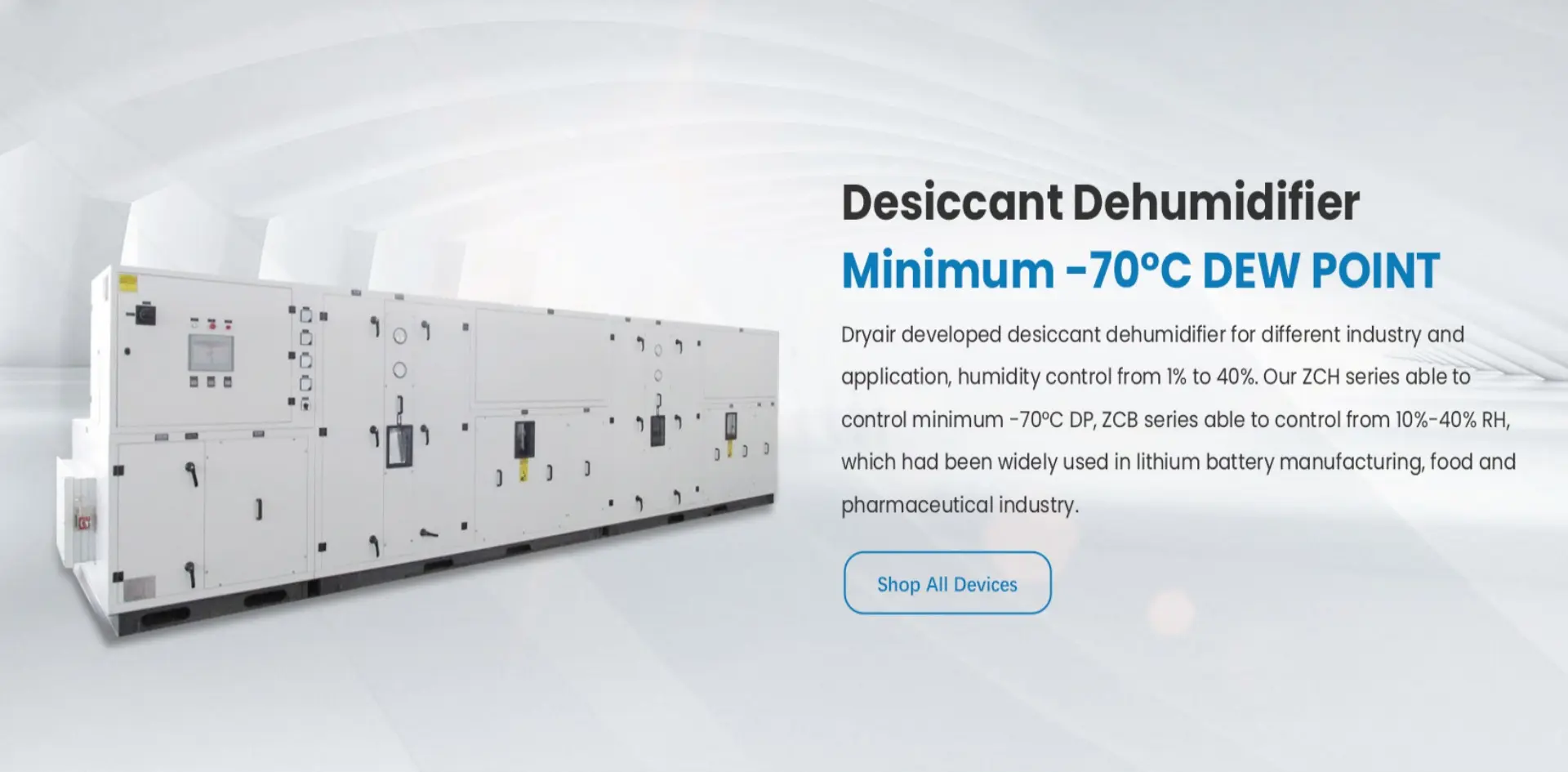 GMP / Clean Air
Engineered for pharmaceutical and semiconductor processing, combining HEPA filtration, active air cooling, and sanitary desiccant rotors.
Explore Model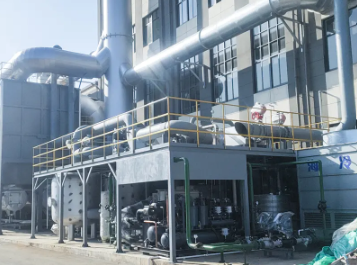 Vapor Recovery
Multi-stage condensation refrigeration recovery for petrochemical loading depots, hazardous chemical storerooms, and paint exhaust treatment.
Explore ModelOvercoming conventional desorption thermal penalties: How DryAir delivers stable -40°C to -70°C dew point atmospheres using low-grade waste thermal energy.
Standard desiccant systems require 120°C to 140°C reactivation temperatures, consuming massive electrical or direct-gas power. DryAir's low-temperature regeneration architecture operates efficiently at 60°C to 85°C. This allows factories to tap low-pressure process steam, air compressor water jackets, and industrial waste heat directly.
By pairing high-purity synthesized silica gel with metal-organic framework (MOF) dopants and inorganic fiber substrates, the desiccant rotor exhibits an ultra-steep desorption isotherm under modest temperature gradients, guaranteeing that moisture release completes within rapid rotor cycle intervals without desiccant degradation.
Exposing desiccant wheels to 140°C thermal cycling accelerates mechanical binder fatigue, chemical glazing, and seal wear. Operating under low-temperature regeneration lowers rotor thermal stresses by over 45%, preventing edge degradation and ensuring zero air bypass leakage over 10+ years of continuous service.
Founded in 2010 in Hangzhou, Zhejiang, DryAir has grown into China's premier industrial desiccant air treatment manufacturer, trusted by global tier-one gigafactories and aerospace institutions.
Our turnkey dry room installations power leading battery cell developers across the world, including Tesla, Northvolt, CATL, ATL, BYD, EVE Energy, Farasis, Envision, SVOLT, and TTI. We understand gigafactory uptime requirements where an hour of humidity drift ruins multi-million dollar yields.
DryAir operates certified quality infrastructure adhering to ISO 9001 and the demanding GJB national military standard system. Every dehumidification skid undergoes pressure decay, leakage detection, dew point suppression, and acoustic verification in our certified in-house performance test bay prior to containerization.
Tailored engineering packages built to destination electrical and mechanical building codes: CE (Machinery & EMC directives), UL/CSA 1995 HVAC standards for North America, ASME Section VIII pressure vessel certification for coils, and EAC certificates for the Eurasian Economic Union.
Why Fortune 500 procurement teams and EPC contractors partner with Hangzhou DryAir to overcome supply-chain crunches, inflated CapEx, and multi-year project backlogs.
By leveraging Hangzhou's mature advanced manufacturing cluster—from laser sheet cutting and robot welding to direct access to desiccant chemical synthesis—DryAir supplies industrial-grade, ASME/UL-certified systems at 30% to 50% lower CapEx compared to legacy European and American OEM equivalents.
Western HVAC OEMs currently quote 36 to 52 weeks for custom desiccant dehumidifiers. DryAir’s scalable production capacity of 200+ units per month enables rapid shipment within 8 to 14 weeks for standard DHU models, protecting critical cell manufacturing milestone dates from project delay penalties.
Global procurement risks multiply when dividing the dry room envelope, desiccant air handler, chiller plant, and solvent recovery between fragmented suppliers. DryAir provides complete EPC delivery: CFD psychrometric modeling, skid fabrication, modular shipping, field erection, and certified dew point signoff.
Ensuring uninterrupted continuous operation through localized engineering assistance, remote IoT monitoring, and rigorous multi-national compliance certifications.
We provide international clients with an optional comprehensive 2-year service agreement. Dedicated DryAir commissioning engineers deploy globally for on-site installation supervision, sensor calibration, and SAT verification.
Every system features industrial PLC hardware (Siemens/Allen-Bradley) with encrypted edge-cloud connectivity. DryAir technicians perform remote psychrometric diagnostics, dew point monitoring, and predictive maintenance dispatch.
Electrical skids are engineered in compliance with NFPA 70 / NEC standards for the USA, CE low-voltage and EMC directives for the European Union, and CSA 22.2 for Canada, guaranteeing immediate approval by local AHJs.
Critical mechanical components—including drives, tensioners, seal kits, and low-temperature control valves—are stocked with regional distribution partners in Europe and North America for rapid 48-hour emergency dispatch.
Moisture threshold engineering parameters cross-referenced with optimized DryAir equipment architectures across critical manufacturing industries.
| Application Scenario | Moisture Sensitivity & Risk Factor | Required Environmental Target | Recommended DryAir Solution Skid |
|---|---|---|---|
| Lithium Battery Cell Assembly & Electrolyte Filling | Moisture reacts with LiPF6 electrolyte salts to generate hydrofluoric acid (HF), degrading cell life and creating critical thermal runaway hazards. | -40°C to -60°C Dew Point | Turn-key Dry Room System |
| Solid-State & Lithium-Metal Battery Lines | Extreme atmospheric sensitivity where pure lithium anode surfaces oxidize instantly upon exposure to trace parts-per-million moisture. | Down to -70°C Dew Point | DHU Low-Temp Regeneration Unit |
| Battery Cathode Coating & Drying Exhaust | High concentrations of expensive, toxic N-Methyl-2-pyrrolidone solvent require ultra-clean condensation and zero ambient leakage. | ≥99% Solvent Recovery | ZJRH Series NMP Recovery System |
| Hygroscopic Pharma Powders & Softgels | Excess relative humidity causes powder clumping, tablet press sticking, gelatin capsule liquefaction, and premature API degradation. | 10% to 25% Relative Humidity | Sanitary Pharma Desiccant System |
| Defense, Missile & Ordnance Depots | Internal propellant breakdown, fuse corrosion, and micro-electronic failure accelerated by atmospheric moisture and condensation cycles. | ≤35% RH (GJB Compliant) | Military-Standard Desiccant Skid |
| General Industrial Staging & Pre-cooling | High latent humidity loads in warehouse corridors and staging airlocks prior to final desiccant deep-drying cleanrooms. | 45% to 60% Relative Humidity | High-Capacity Refrigerative Dehumidifier |
| Petrochemical Fuel Storage & Solvent Vapors | VOC vapor loss during tanker loading and atmospheric venting violates regional environmental standards and loses valuable feedstocks. | EPA / EN Emission Limits | Deep-Cooling Condensation + RTO |
How gigafactory carbon-neutrality mandates, electrification, and intelligent HVAC modeling are redefining industrial desiccant air treatment standards through 2030.
Gigafactories are systematically eliminating natural-gas direct-fired regeneration to meet corporate Scope 1 & 2 net-zero emissions targets. Low-temperature regeneration systems will become the universal standard, utilizing industrial heat pumps and low-grade heat recovered from laser welding, baking ovens, and compressor chillers.
Traditional dehumidification skids run fixed fan speeds and constant heater loads regardless of outdoor ambient changes. Next-generation systems integrate neural network airflow controllers that dynamically adjust rotor rotation speeds, purge air ratios, and regeneration heat input based on real-time weather and personnel load tracking.
With fast-tracked gigafactory schedules demanding rapid production start-up, the trend is moving away from field-built air handlers toward modular, pre-commissioned containerized skids. Fully piped, wired, and factory-tested low-temperature regeneration dehumidifiers drop commissioning timelines from months to days.
Real-world insights, empirical data, and operational best practices to help engineering consultants compare desiccant dehumidification technologies with confidence.
Authoritative answers directly from our senior HVAC engineers to address common procurement and specification queries.
Direct access to our complete lineup of certified desiccant dehumidifiers, thermal-recovery recovery modules, and clean-air industrial skids.
Rotary DHU
High-efficiency desiccant rotary dehumidification system engineered for stable process air down to -70°C dew point in demanding environments.
View Product Specs
Gigafactory Scale
One-stop integrated EPC dry rooms incorporating low-leak envelopes, airlock management, desiccant air handling, and SCADA validation.
View Product Specs
Solvent Recycling
Industry-leading solvent capture systems designed for battery electrode coater exhaust streams, consistently maintaining ≥99% recovery rates.
View Product Specs
Thermal RTO
Engineered deep condensation combined with regenerative thermal oxidation skids to destroy hazardous industrial air toxins and VOC compounds.
View Product SpecsReliable moisture separation unit for staging air, production workshops, and warehouse staging ahead of deep desiccant drying stages.
View Product Specs
Waste Heat Ready
Optimized desiccant system engineered to utilize 55°C–85°C waste heat sources, reducing gigafactory operating electricity consumption dramatically.
View Product Specs ISO & GJB Quality
Heavy-duty, vibration-resistant environmental control systems engineered under GJB national military standards for mission-critical reliability.
View Product Specs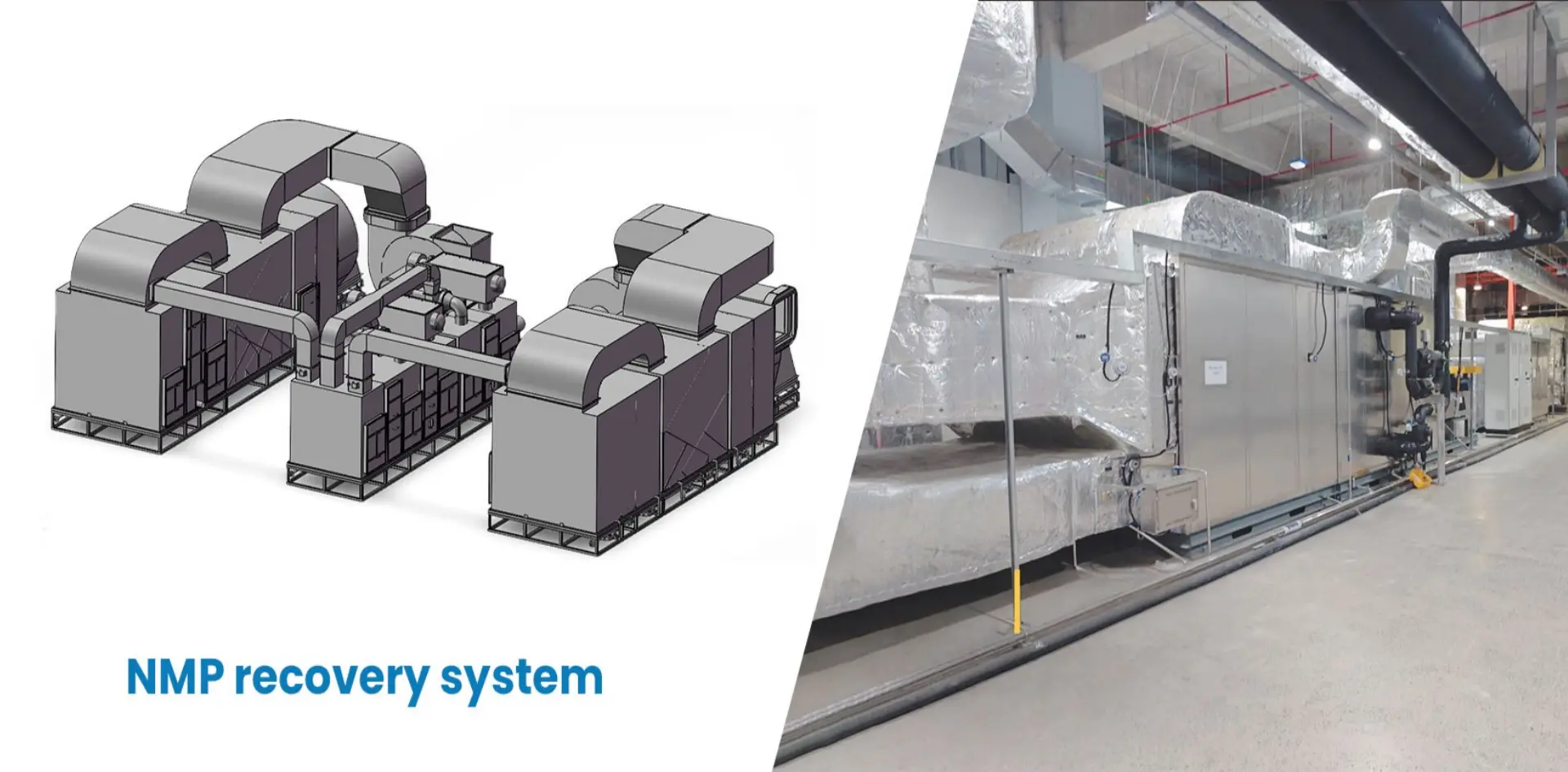 Zero Leak Seals
Explosion-proof air handling units incorporating low-temperature reactivation, stainless air paths, and advanced thermal recovery matrices.
View Product SpecsWhether you are designing a gigafactory lithium cell dry room, upgrading pharmaceutical cleanrooms, or optimizing thermal energy spend, Hangzhou DryAir provides psychrometric load calculations and certified equipment selections within 24 hours.