
 -70°C Dew Point
Desiccant Dehumidifier (DHU Series)
Ultra-low dew point dual-rotor climate control for battery gigafactories and aerospace test chambers.
View Product SpecsExplore our certified range of temperature and humidity chambers, rotary desiccant units, and environmental abatement skids engineered for demanding industrial processes.
-70°C Dew Point
Ultra-low dew point dual-rotor climate control for battery gigafactories and aerospace test chambers.
View Product Specs EPC Turnkey
End-to-end design, high-airtight envelope installation, air distribution, and automated PLC commissioning.
Explore Dry Rooms ≥99% Purity
Patented condensation and heat recycling system designed for electrode coating lines, slashing operational solvent expenditure.
Explore NMP Units RTO + Cooling
Deep-cooling condensation paired with regenerative thermal oxidizers to treat complex industrial volatile organic exhausts.
View VOC Systems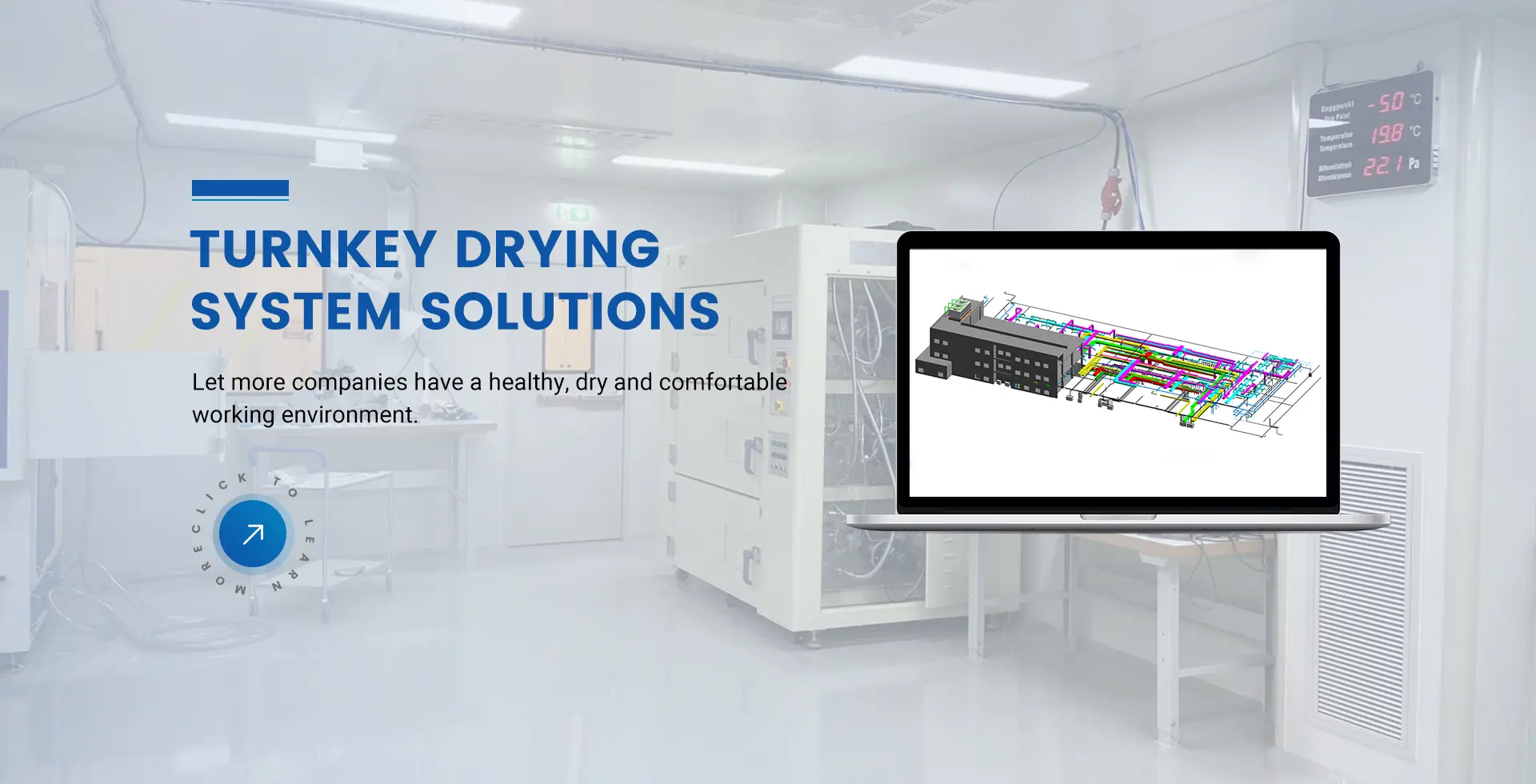 Pre-Cooling Stage
Energy-efficient moisture extraction for staging halls, pharmaceutical prep areas, and dry room pre-cooling circuits.
View Refrigerative Units Battery Assembly
Hermetically sealed temperature-humidity dry spaces maintaining -40°C to -60°C DP across active cell-winding stations.
View Cell Solutions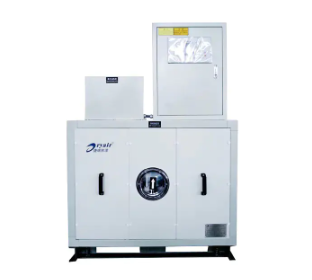 GMP Class A/B
Precision relative humidity (10-30% RH) and sterile cleanroom climate management for effervescent and capsule manufacturing.
View Pharma Systems GJB Military Spec
Heavy-duty environmental testing and preservation rooms engineered to GJB standards for radar, ammunition, and guidance avionics.
Request Technical DataIn modern cleanroom operations and advanced electrochemical manufacturing, an industrial temperature and humidity room (commonly termed a walk-in climate chamber or ultra-dry room) is far more than standard HVAC. When working with chemistries like lithium nickel manganese cobalt oxide (NMC), lithium iron phosphate (LFP), or next-generation solid-state electrolytes, atmospheric water vapor acts as a direct reactant. Moisture intrusion triggers toxic hydrofluoric acid (HF) generation, irreversible active material passivation, and destructive thermal runaway risks.
Achieving dew point suppression down to -50°C, -60°C, or -70°C dew point (equivalent to moisture content below 0.002 grams of water per kilogram of dry air) necessitates an engineered ecosystem. It requires specialized desiccant rotor matrices, double-walled thermal break sandwich panels, hermetic joint welding, and zero-clearance vapor seals. Hangzhou DryAir addresses this mission-critical demand through holistic psychrometric design, combining mechanical pre-cooling with synthetic zeolite rotor adsorption.
Supply Air Dew Point: -70°C DP (Hangzhou DryAir) vs. +4°C DP (Refrigeration Limit). Conventional chillers condense moisture only until freezing stops the coils; rotary adsorption breaks through the freezing wall.
Thermal Bridge Factor: TB1 rating with polyurethane/rockwool continuous cam-lock assemblies, eliminating exterior condensation risk during humid seasonal peaks.
Regeneration Energy Savings: Proprietary heat-pipe sensible heat exchangers and medium-pressure steam regeneration recover up to 45% of reactivation thermal input.
China’s concentration of EV gigafactories, battery raw material processing, and advanced manufacturing clusters has fueled rapid innovations in environmental control engineering. Hangzhou DryAir leverages this mature supply chain to deliver unmatched cost efficiency and speed.
Located in the industrial corridor of Hangzhou, Zhejiang, DryAir manufactures critical sub-assemblies in-house: from precision laser-cut sheet metal and structural framework to custom heat pipe exchangers and sealed damper enclosures. This localized density eliminates supply bottlenecks and ensures rigorous quality tracking.
With a standard production cadence exceeding 200 high-capacity units per month, DryAir delivers major gigafactory projects in 8 to 12 weeks—half the timeline of European or American suppliers. Skidded, pre-wired, and piping-tested configurations arrive ready for quick site drop-in.
Our specialized engineering team includes 6 master’s and doctoral degree holders, 2 national registered HVAC engineers, and 58 skilled technicians. This deep technical foundation enables bespoke psychrometric simulations, finite element analysis (FEA) of envelopes, and computational fluid dynamics (CFD) for clean airflow.
Procuring directly from a primary Chinese manufacturer yields a 30% to 45% CAPEX reduction over Western OEMs without sacrificing components. We standardize on global brands: Siemens PLCs, ABB motors, Schneider switchgear, and Swedish/Japanese synthesized desiccant rotors.
Hangzhou DryAir maintains an internal environmental test chamber certified to validate air volumes, external static pressures, and dew points down to -75°C before overseas crating. Clients receive full Factory Acceptance Test (FAT) data packages, complete with calibrated sensor logs.
Having supplied multinational pioneers like Tesla, Northvolt, and TTI, our field service engineers manage on-site rigging, duct leak testing, and dew point commissioning worldwide. We also back international installations with an optional 2-year extended service agreement.
The drive toward all-solid-state batteries, stringent global carbon accounting, and semiconductor miniaturization is transforming environmental room engineering. Key industry vectors include:
Sulfide-based solid electrolytes release toxic H2S gas when exposed to trace moisture. Next-gen dry rooms demand supply air dew points tightened to -65°C to -75°C DP, requiring multi-stage cascading rotors and ultra-sealed interlocks.
Conventional electric heaters consume up to 60% of dry room utility power. Modern installations integrate high-temperature industrial heat pumps, co-generation steam, and plant waste heat recovery, reducing overall facility OPEX by over 35%.
Smart sensors embedded throughout the chamber feed predictive algorithms. These systems automatically adjust rotor speed, bypass ratios, and chiller staging in real time to counter shifting outdoor weather and personnel shifts.
Fixed stick-built construction is yielding to pre-engineered modular walk-in dry pods. These deliver rapid assembly, plug-and-play validation, and flexible factory reconfiguration as gigafactories scale their manufacturing footprint.
Different industries carry distinct vulnerability profiles. Hangzhou DryAir tailors chamber dynamics to the specific sensitivities of your materials and processes.
Target: -40°C to -65°C Dew Point | Class 1,000 to 10,000 Cleanroom
Moisture degrades electrolyte salts (LiPF6), producing corrosive HF gas that reduces battery life and compromises cell safety. DryAir encloses electrode winding, cell assembly, stacking, and electrolyte filling in an ultra-dry microclimate.
Target: 1% to 20% RH | GMP Grade A/B/C Classification
Hygroscopic active pharmaceutical ingredients (APIs), effervescent formulations, and soft gelatin capsules lose structural stability in humid ambient air. DryAir provides stable sterile climate chambers compliant with FDA 21 CFR Part 11 and EU GMP Annex 1.
Target: ≤35% RH | Built to GJB National Military Specifications
Long-term preservation of missile guidance systems, radar transmitters, optical arrays, and solid-propellant munitions demands non-condensing storage environments. Our systems prevent electrolytic corrosion and propellant degradation.
Target: ±0.5°C Temperature | ±2% RH Precision Tolerance
Advanced photolithography, wafer probing, and optical thin-film deposition demand zero vapor drift. Our micro-modulating climate units prevent thermal expansion anomalies and microscopic moisture fogging on quartz optics.
Target: -40°C to +85°C Thermal Cycling | 10% to 95% Controlled RH
Automotive airbag propellant filling, EV powertrain electronic control units (ECUs), and LiDAR sensor modules undergo rigorous environmental validation to guarantee zero field failures across extreme global climates.
Target: Clean Gas Discharge & Solvent Condensation
Deep-cooling condensation coupled with RTO units recovers valuable petrochemical vapors and reduces plant emissions below strict local EPA and European directives.
Fragmented procurement creates finger-pointing when room dew points fail. Hangzhou DryAir executes under an integrated Turnkey EPC model—assuming single-source responsibility for your cleanroom envelope, dehumidification plant, ducting, and automated controls.
Our engineers model fresh air infiltration, process exhaust volumes, operator perspiration, transfer air leaks, and equipment latent loads to size rotors accurately without over-specifying chillers.
We manufacture double-skin modular insulated panels with cam-lock tongue-and-groove joints, vapor-barrier PVC base tracks, and magnetic gasket interlocks that eliminate vapor bypass under high positive pressure.
All AHUs incorporate high-grade stainless steel interior casings (SUS304), antimicrobial drain pans, forward/backward curved direct-drive plug fans, and premium desiccant wheels rated for decades of continuous operation.
For electrode coating spaces, DryAir connects its ZJRH NMP condensation systems directly to coater exhaust streams—recovering more than 99% of solvent vapor for on-site repurposing and cutting VOC stack levels.
Custom-built PLC enclosures with industrial touchscreen HMIs support Modbus TCP, Profinet, and BACnet protocols. Systems feature automated dew-point tracking, filter pressure alarms, and remote diagnostics.
Our certified commissioning crews execute helium tracer gas leak testing, room pressurization tests, aerosol challenge tests for HEPA banks, and multi-point continuous dew-point logging prior to handoff.
Ensure your engineering teams select the right environmental envelope. This table compares conventional cleanrooms against certified ultra-low dew point dry rooms.
| Performance Parameter | Commercial Cleanroom (Class 10k) | Standard Industrial Dry Room | Hangzhou DryAir Turnkey Dry Room |
|---|---|---|---|
| Supply Air Dew Point | +4°C to +10°C DP | -20°C to -40°C DP | -50°C to -70°C DP Controllable |
| Dehumidification Method | Chilled Water Surface Condensation | Single Silica Gel Desiccant Rotor | Dual Cascading Synthetic Zeolite Rotors |
| Envelope Leakage Rate | Class B / Class C (EN 1886) | Class L2 Permeation | Class L1 (≤0.02 L/s·m² at 400 Pa) |
| Regeneration Energy Source | N/A (Standard Chiller Reheat) | Direct Electric Resistance | Steam / Heat Pump / Waste Heat Recovery |
| Casing Thermal Bridging | TB3 to TB4 | TB2 Standard | TB1 (No external condensation at 35°C 85% RH) |
| Export Compliance | Domestic Codes Only | CE Self-Declaration | CE, UL, CSA, ASME, EAC Full Certification |
| Solvent Recovery Integration | No Integration | External 3rd-Party Skid | Native ZJRH NMP System (≥99% Efficiency) |
When global engineering, procurement, and construction (EPC) teams evaluate Chinese dry room suppliers, their priorities extend well beyond price. Hangzhou DryAir meets key operational and compliance criteria:
Because environmental chambers run continuous 8,760-hour annual production cycles, electric and thermal consumption accounts for over 75% of life-cycle expense. DryAir's low-temperature desorption rotors, sensible heat wheels, and variable-frequency fan drives yield substantial OPEX payback within the first 18 operating months.
International projects require electrical adaptability. We configure control panels and motors for North American (480V 60Hz 3-phase), European (400V 50Hz 3-phase), and regional Japanese/Southeast Asian voltages. All control cabinets feature UL 508A certified panels and NFPA 79 safety compliance.
We provide comprehensive documentation packages for cleanroom validation: certified material mill test certificates (MTRs), welding maps, pressure testing logs, electrical schematics in EPLAN, and IQ/OQ/PQ validation protocols conforming to GAMP 5 principles.
Detailed technical answers addressing environmental room selection, dew point physics, compliance, and international commissioning.
Select from our certified core models and turnkey environmental solutions engineered for export across Europe, North America, and the Asia-Pacific region.
DHU Model
Skid-mounted rotary desiccant units delivering up to 50,000 m³/h of dry air down to -70°C dew point.
Download DHU Specs
Full EPC
Comprehensive gigafactory dry room package: structural envelope, air handling, ducts, and automated PLC racks.
Request Turnkey RFQ
Recovery ≥99%
Engineered for roll-to-roll electrode coating lines to recapture N-Methyl-2-pyrrolidone with minimal energy waste.
View Solvent Data
VOC Compliant
Integrated deep-cooling condensation and Regenerative Thermal Oxidizer (RTO) for petrochemical exhaust streams.
View VOC Options
High Efficiency
Robust industrial refrigeration units handling high latent loads in warehouse storage, packaging, and clean staging.
View Refrigerative Range OEM Factory
Tailored chamber footprints with customized ceiling heights, pass-through airlocks, and integrated crane bays.
Request Custom Catalog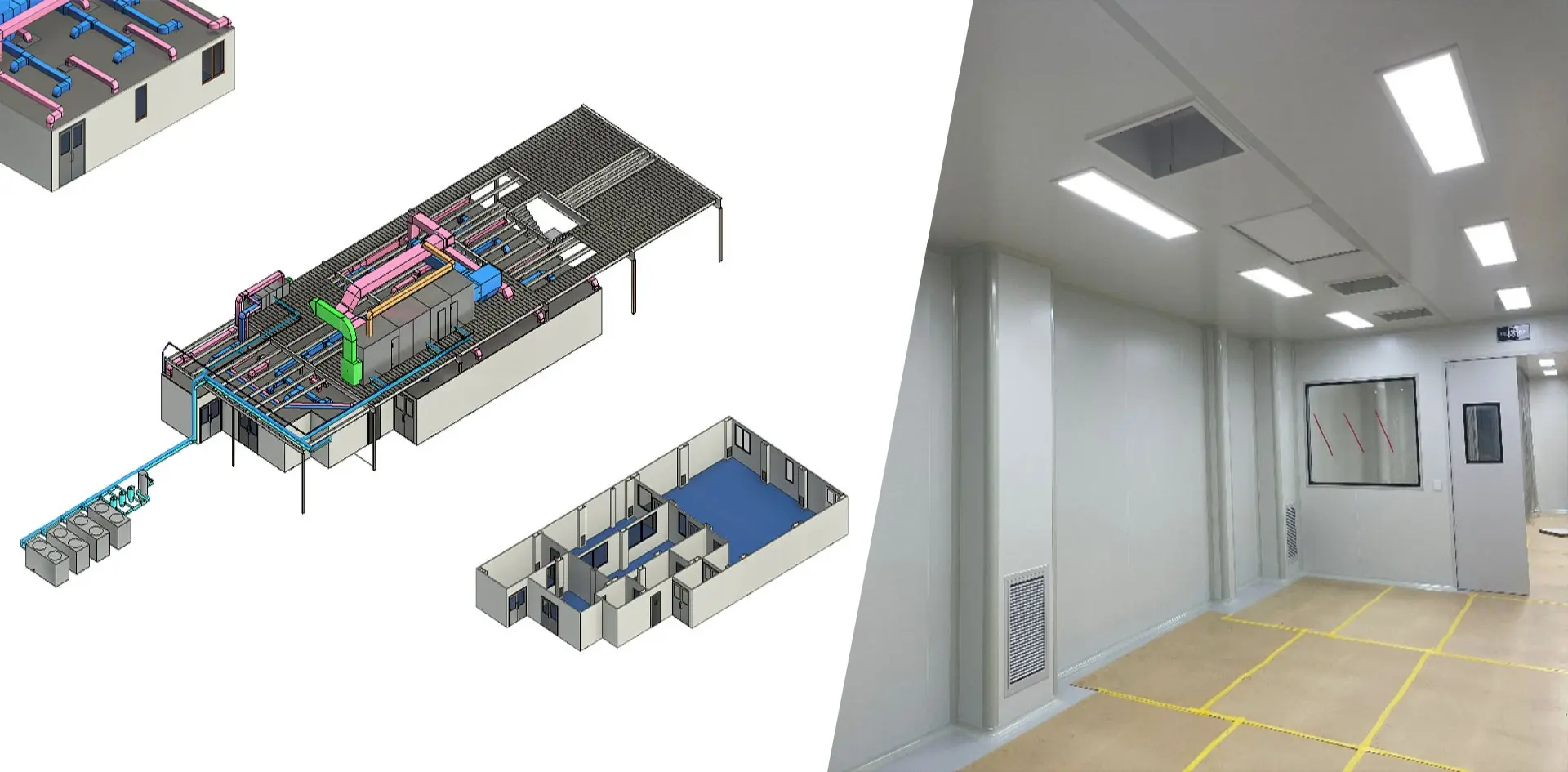 Field Tested
Zero-discharge solvent condensation modules built to ASME Section VIII pressure vessel codes.
Explore Coater Systems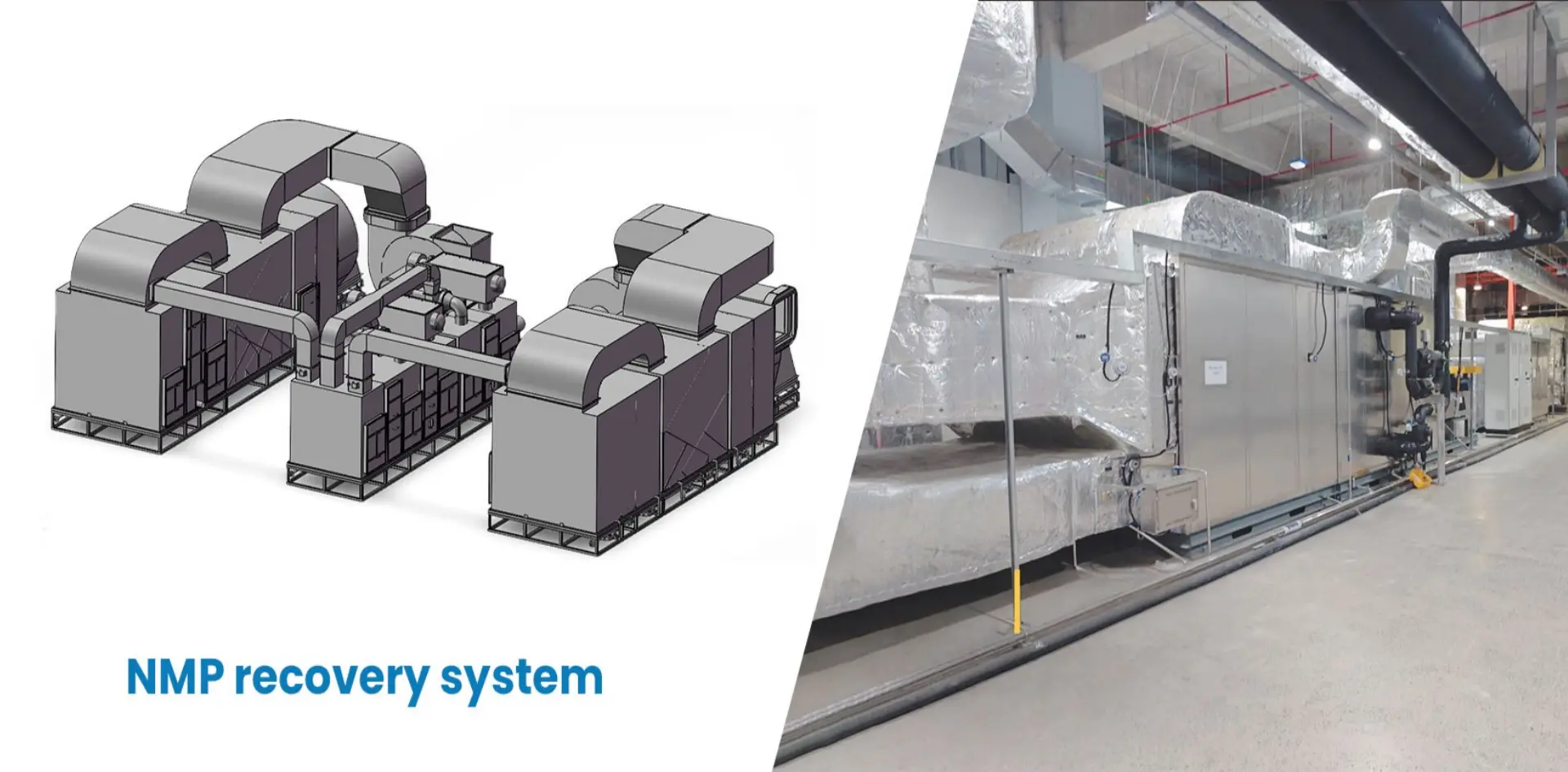 Clean Emissions
Full emissions treatment architecture pairing low-dew-point dry air with advanced stack exhaust abatement.
Learn MoreShare your room dimensions, target dew point (-40°C to -70°C), operator count, and process exhaust volume. Our registered HVAC engineering team will return a psychrometric heat-mass balance calculation and technical proposal within 24 hours.