
Engineered Dehumidification & Environmental Systems
High-precision industrial rotary desiccant units, heat pumps, and closed-loop abatement installations manufactured under strict ISO 9001 and CE/UL export criteria.
 DP -70°C Spec
Desiccant Dehumidifier
DHU industrial rotary desiccant systems providing continuous ultra-dry air for battery electrodes, military warehouses, and pharma plants.
View Specifications Turnkey EPC
Turn-key Dry Room System
Complete modular dry enclosures, sealed envelopes, air management, ducting, and automated environmental validation under one contract.
Explore Dry Rooms Recovery ≥99%
NMP Recovery System
ZJRH series dual condensation systems engineered to extract and recycle N-Methyl-2-pyrrolidone solvent from high-temp coater exhausts.
Technical Data Cryo + RTO
VOC Abatement System
Regenerative Thermal Oxidizers (RTO) and deep cooling scrubbers destroying volatile organic pollutants with thermal efficiencies above 95%.
View Abatement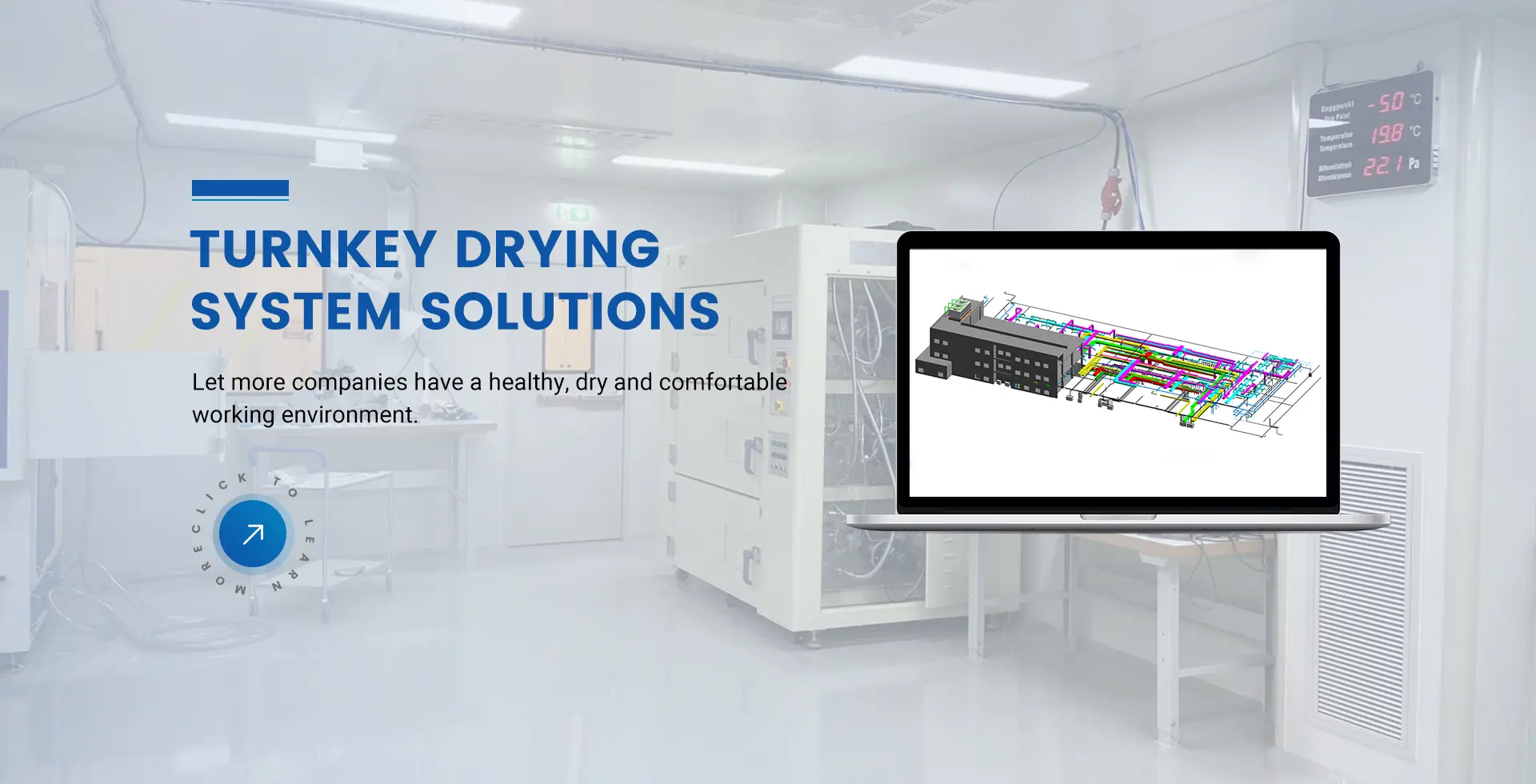 Pre-Cooling Stage
Refrigerative Dehumidifier
Industrial condensing moisture separators for ambient warehouse control and thermal stabilization before deep desiccant drying wheels.
Learn Details Clean Class ISO 6
Battery Cell Assembly Dehumidifier
Ultra-low dew point air handling units designed to safeguard electrolyte wetting and stacking from hydrofluoric acid contamination.
View Solutions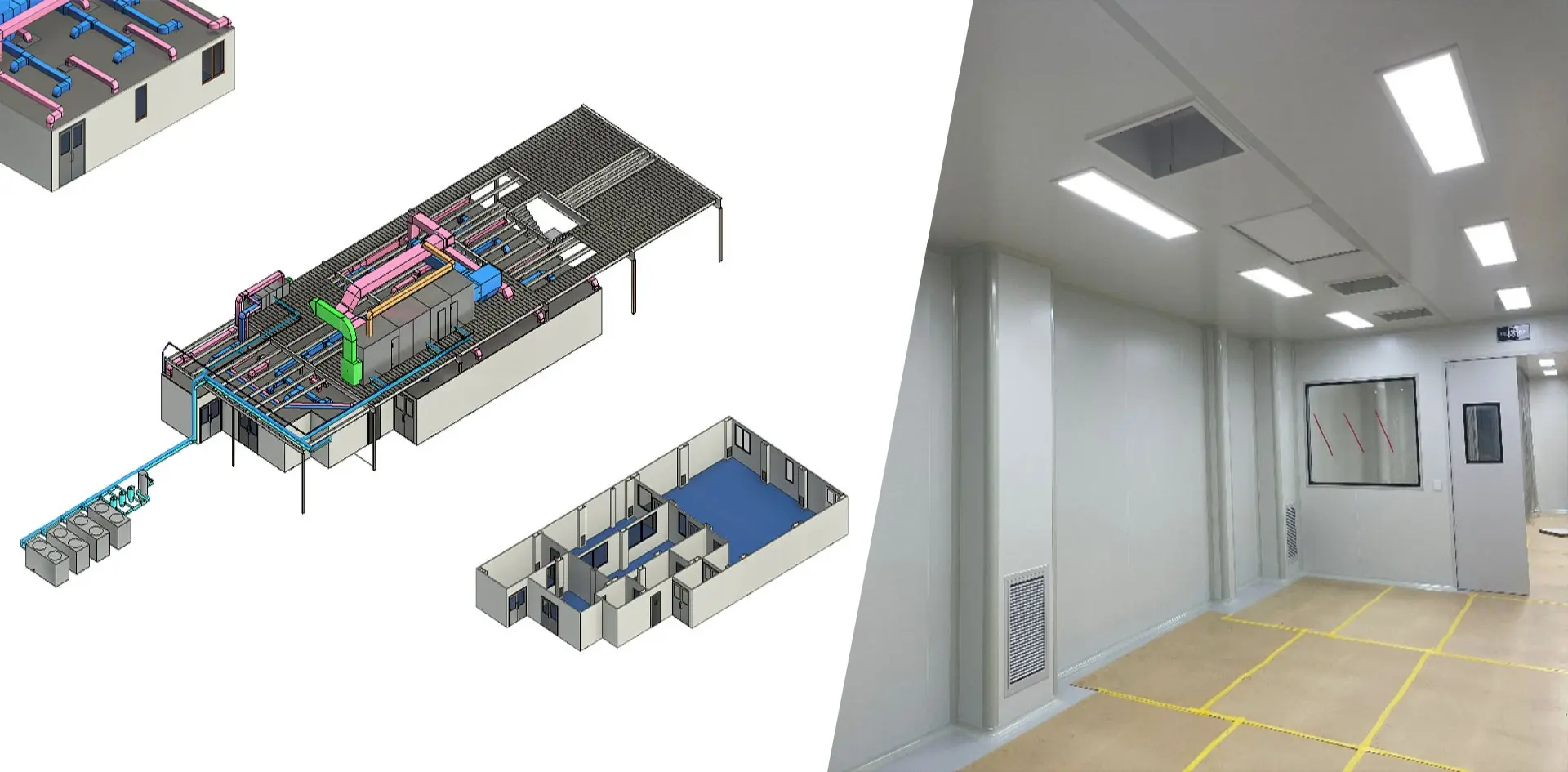 Energy Integrated
Closed-Circuit NMP Solvent Unit
Specialized condensation systems engineered to recirculate treated hot dry air back into the drying box with zero latent energy waste.
Explore System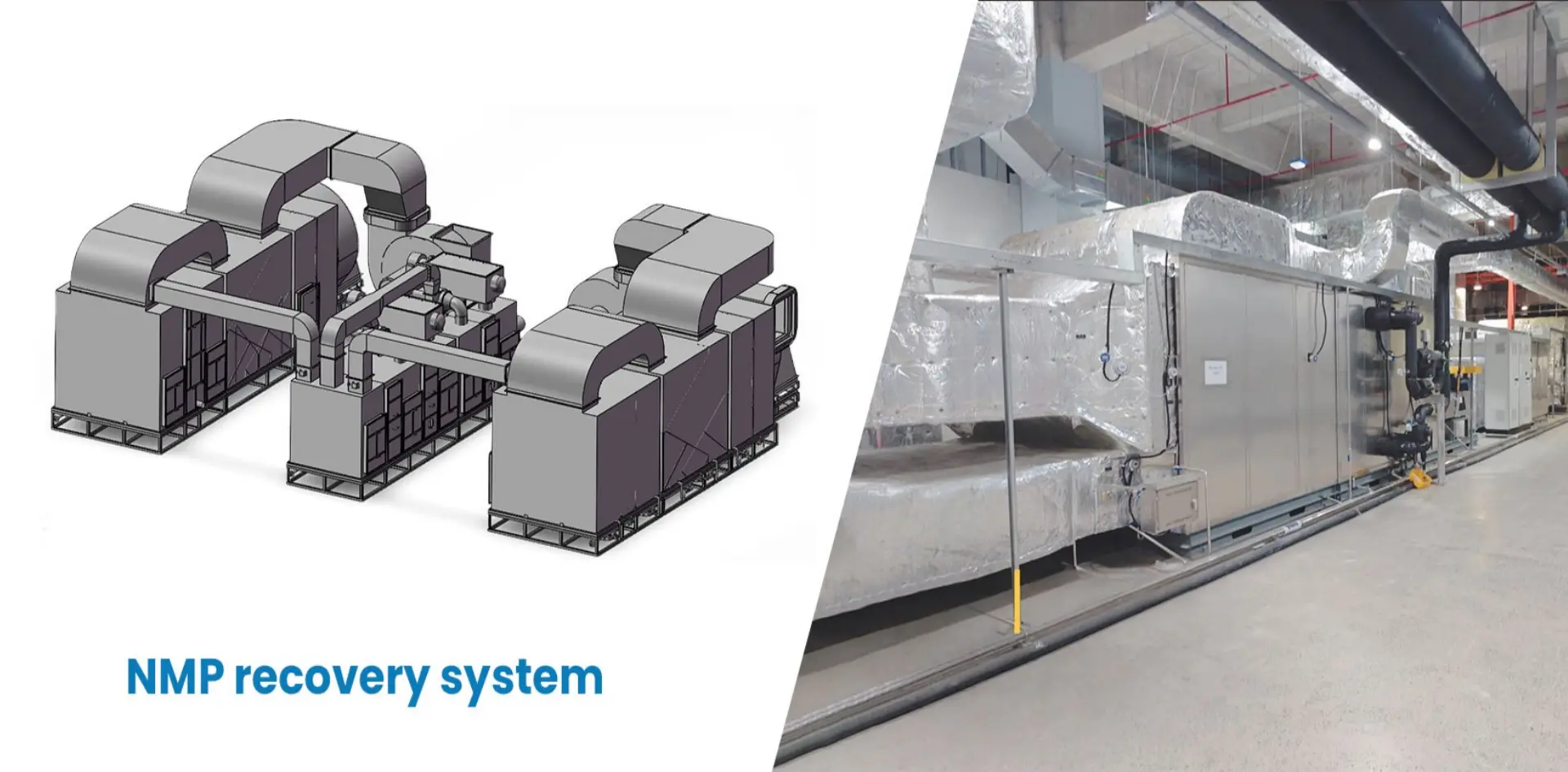 Emission Standard
Industrial VOC Deep-Chiller Unit
Multi-stage cascade condensation recovery modules for volatile chemical depots, pharmaceutical solvent stripping, and tank terminals.
System BlueprintThe Global Industrial Moisture Challenge & Macro Paradigms
As modern manufacturing shifts toward sub-nanometer semiconductor lithography and gigawatt-scale solid-state battery chemistry, ambient relative humidity control has evolved into a strategic operational risk.
Lithium & Solid-State Gigafactories
Lithium hexafluorophosphate (LiPF6) reacts exothermically with ambient moisture down to 10 ppm, precipitating corrosive hydrofluoric acid (HF) that compromises cathode integrity. Next-generation lithium metal and sulfide-based solid-state electrolytes require sustained -50°C to -70°C dew point atmospheres. Traditional DX refrigeration stalls at 4°C due to evaporator freezing, demanding multi-stage desiccant rotor integration with bypass heat recovery.
Thermal Decarbonization in HVAC
Industrial dehumidification represents up to 43% of total facility energy usage in gigafactories. The global movement toward carbon neutrality dictates that desiccant regeneration cannot rely solely on raw electric resistance heating. High-efficiency systems now utilize industrial waste-heat recycling, low-pressure process steam loops, and heat-pump thermal boosters that slash carbon intensity by 32% per cubic meter of treated dry air.
Stringent Global ESG & VOC Directives
With environmental enforcement tightening under the EU Industrial Emissions Directive (IED) and US EPA Clean Air Act, battery coating exhausts must eliminate N-Methyl-2-pyrrolidone (NMP) release. Integrating desiccant dry room design with closed-loop condensation recovery allows factories to recover >99% pure solvent while meeting zero-uncontrolled-stack thresholds across international jurisdictions.
Low Dew Point Engineering, Proven at Gigafactory Scale
Established in 2010, Hangzhou DryAir Treatment Co., Ltd. has established market leadership in rotary sorption science, maintaining 30%+ share in China and deploying critical systems for tier-one manufacturers globally.
Precision Sizing Over Catalog Guesswork
Our team of 74 technical specialists—including 6 doctoral/master degree holders, 2 national registered HVAC engineers, and 8 senior research leads—analyzes psychrometric latent load variations caused by personnel perspiration, envelope door cycles, wall permeation, and fresh air induction. By applying finite-element air-mass balance models, DryAir prevents system undersizing or unnecessary parasitic energy consumption.
DryAir designs and fabricates its own structural casings with broken-bridge insulation profiles (leakage rate <0.17%), minimizing thermal bridging and interior condensation risk. All equipment undergoes real-world performance validation inside our in-house environmental simulation testing chamber prior to sea freight shipment.

Localized Application Scenarios & Target Psychrometrics
A quick technical reference guide for facility engineers determining dew point targets, allowable room air velocities, and system topologies across distinct process domains.
| Industrial Sector | Specific Critical Process | Target Dew Point / RH | Failure Mode Prevented | Recommended System Hardware |
|---|---|---|---|---|
| Lithium Battery | Electrolyte Filling & Cell Stacking | -40°C to -60°C DP | HF Acid Formation, SEI Breakdown | Turnkey Battery Dry Room |
| Solid-State Cells | Sulfide Electrolyte Processing | Down to -70°C DP | H2S Toxic Gas Evolution | Dual-Rotor Desiccant System |
| Pharmaceutical | Effervescent Tablets & Softgel Drying | 10% to 25% RH (±2%) | Powder Clumping, Hydrolysis, Mold | Sanitary Rotor Dehumidifier |
| Aerospace & Defense | Avionics & Munitions Preservation | ≤35% RH (Ambient) | Galvanic Corrosion, Propellant Decay | GJB Standard Dehumidifier |
| Electrode Coating | Cathode Drying Oven Exhaust | ≥99% Solvent Catch | NMP Environmental Pollution & VOC Cost | Closed-Circuit ZJRH Recovery |
| Bulk Warehousing | Cold Storage Anti-Frosting & Pre-Air | 45% to 60% RH | Ceiling Condensation, Ice Buildup | DX Condensing Dehumidifier |
End-to-End Turnkey Delivery Methodology
Mitigating project risk from conceptual thermodynamic sizing to SAT (Site Acceptance Test) signoff on the factory floor.
Phase 01: Audit
Detailed psychrometric analysis of plant location, outside air extremes, internal heat/vapor generation, personnel shift loads, and building structural air tightness.
Phase 02: Design
CFD air dispersion simulations, CAD duct schematics, energy-recovery coil integration, regeneration source selection (steam/gas/electric), and electrical control logic.
Phase 03: Manufacture
CNC laser fabrication, panel polyurethane foaming, silica gel/molecular sieve rotor balancing, wiring to UL 508A / CE standard, and in-house calorimeter run tests.
Phase 04: Commission
Global deployment of DryAir field engineers for on-site installation, cleanroom envelope smoke testing, balancing air changes, and continuous dew point validation.
Localized Compliance & Global Engineering Support
Seamless export readiness for North America, Europe, Southeast Asia, and the Middle East with comprehensive regulatory approvals.
Worldwide Safety Codes
Custom panels and assemblies certified to CE (Machinery & Low Voltage Directives), UL 1995/60335, CSA C22.2, ASME pressure vessel codes, and EAC standards. Units feature dual-voltage frequency drives compatible with 380V/50Hz, 480V/60Hz, or 400V/50Hz power grids.
Trusted by Global Tier-1 Leaders
DryAir systems operate at overseas and domestic gigafactories including Tesla, Northvolt, CATL, ATL, BYD, EVE Energy, Farasis, Envision, SVOLT, and TTI. This tier-one validation confirms zero unpredicted dew point excursions across multi-year production campaigns.
2-Year Overseas Service SLA
International clients can secure an optional 2-year full-care service package covering scheduled on-site inspections, sensor recalibration, desiccant drive belt kits, critical spare parts buffering, and secure 24/7 VPN remote diagnostic connectivity via DryAir Cloud Care.
Technology Roadmap: Smarter, Low-Carbon Dehumidification
DryAir's ongoing R&D initiatives focus on material science breakthroughs and AI-driven control loops designed to cut total cost of ownership.
AI Psychrometric Optimization
Traditional systems run regeneration heaters at maximum duty regardless of weather. DryAir's adaptive neural-network controllers predict atmospheric humidity swings 6 hours in advance, modulating reactivation thermal output in real-time to slash OPEX by 15-22% while guaranteeing stable target dew point tolerances.
Metal-Organic Frameworks (MOF)
Collaborating with leading university chemical laboratories, DryAir is prototyping synthesized MOF desiccant substrates that desorb moisture at ultra-low regeneration temperatures (55°C–75°C compared to conventional 120°C–140°C), unlocking the direct utilization of low-grade factory waste heat.
Total VOC Zero-Release Integration
Integrating deep cryogenic condensation circuits directly with Regenerative Thermal Oxidizers (RTO) and rotor concentrators, achieving 99.8% recovery of dangerous solvents like NMP while purifying stack emissions to meet stricter VOC caps (<20mg/m³).
Engineering White Papers & Research Insights
Practical thermodynamic calculations and process case studies direct from our engineering teams.
How Does Oil Gas Condensation Recovery Work?
An evaluation of multi-stage cascade refrigeration cycles engineered to capture low-boiling hydrocarbon volatiles from terminal fuel distribution racks.
Download PDF Report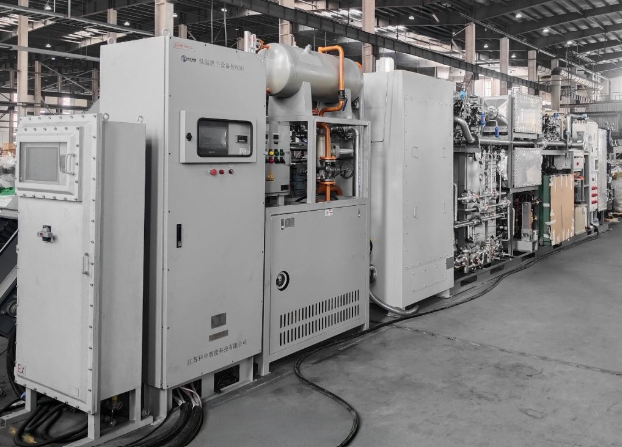
Maintaining Stable NMP Recovery Under 24/7 Demands
A guide to preventing heat-exchanger fouling, managing coater line pressure imbalances, and sustaining >99% recovery rates in continuous gigafactory duty.
Download PDF Report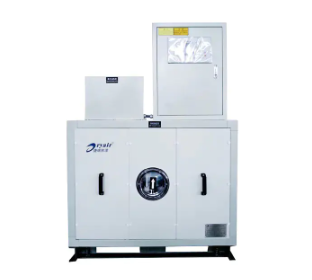
Excess Moisture Hazards in Solid Dosage Formulation
Analyzing hygroscopic powder caking, degraded active pharmaceutical ingredients (APIs), and microbial hazards during packaging lines.
Download PDF ReportFrequently Asked Technical & Sourcing Questions
Clear, audited information answering international engineering and procurement inquiries.
Standard & Custom Environmental Control Equipment
Select from our field-tested dehumidifiers, solvent extraction modules, and VOC abatement packages tailored to your facility parameters.
Rotary DHU
Industrial Rotary Sorption Dehumidifier
Equipped with high-performance PPS silica gel or molecular sieve rotors to handle high-moisture airflows with minimal regeneration energy consumption.
View Product Details
Lithium Cleanroom
Precision Turnkey Dry Room Enclosure
Integrated envelope construction with hermetic interlocking wall panels, negative/positive room pressure balance, and fire-safe insulation.
Configure Dry Room
Solvent Recycling
Continuous NMP Solvent Recovery Skid
High-yield condensation technology with waste heat exchange options, customized for high-speed automated battery slurry casting ovens.
Check Specifications
Thermal Clean
Regenerative Thermal Oxidizer (RTO)
Ceramic honeycomb heat storage beds destroying industrial volatile solvent vapors at temperatures above 800°C with thermal efficiency exceeding 95%.
Explore RTO Systems
Energy Efficient
Industrial DX Refrigeration Dehumidifier
Scroll-compressor refrigeration units removing gross latent moisture loads ahead of desiccant wheels or for temperature-controlled warehouse air.
View Machinery Specs GJB Compliant
Defense Anti-Corrosion Dehumidifier
Built under national military standards to protect naval vessels, missile bays, radar assemblies, and ammunition magazines from moisture degradation.
Request Data Sheet
GMP / FDA Ready
Hygienic Pharmaceutical Dehumidifier
Stainless steel interior casing, fully washable antimicrobial rotors, and HEPA filter housings meeting FDA and EU cGMP cleanroom criteria.
View Pharma Solutions
Hazardous Class 1
Petrochemical Vapor Condensation Unit
ATEX/IECEx explosion-proof environmental refrigeration skids designed to capture hazardous solvent fumes at chemical processing and storage docks.
Explore Hazard SystemsReady to Engineer Your Low Dew Point Environment?
Submit your process parameters, room dimensions, or coater exhaust specs. Our senior HVAC engineering team will return a customized psychrometric model and quotation within one business day.