Industry White Paper & Global Engineering Benchmark
China Leading China Dehumidifying Dryer Factory & in China
Authoritative desiccant dehumidification engineering, turnkey battery dry rooms down to -70°C dew point, ≥99% NMP solvent recovery, and industrial VOC abatement systems engineered by Hangzhou DryAir Treatment Co., Ltd.
Supply Air Dew Point: -70°C Minimum
Capacity: 200+ Units/Month
Compliance: CE • UL • CSA • ASME • EAC • GJB
Engineered Equipment Portfolio
Flagship Dehumidifying Dryers & Process Climate Units
Review our factory-direct industrial desiccant rotors, VOC processors, and turnkey dry room suites built for gigafactory and cleanroom applications.
DP -70°C Control
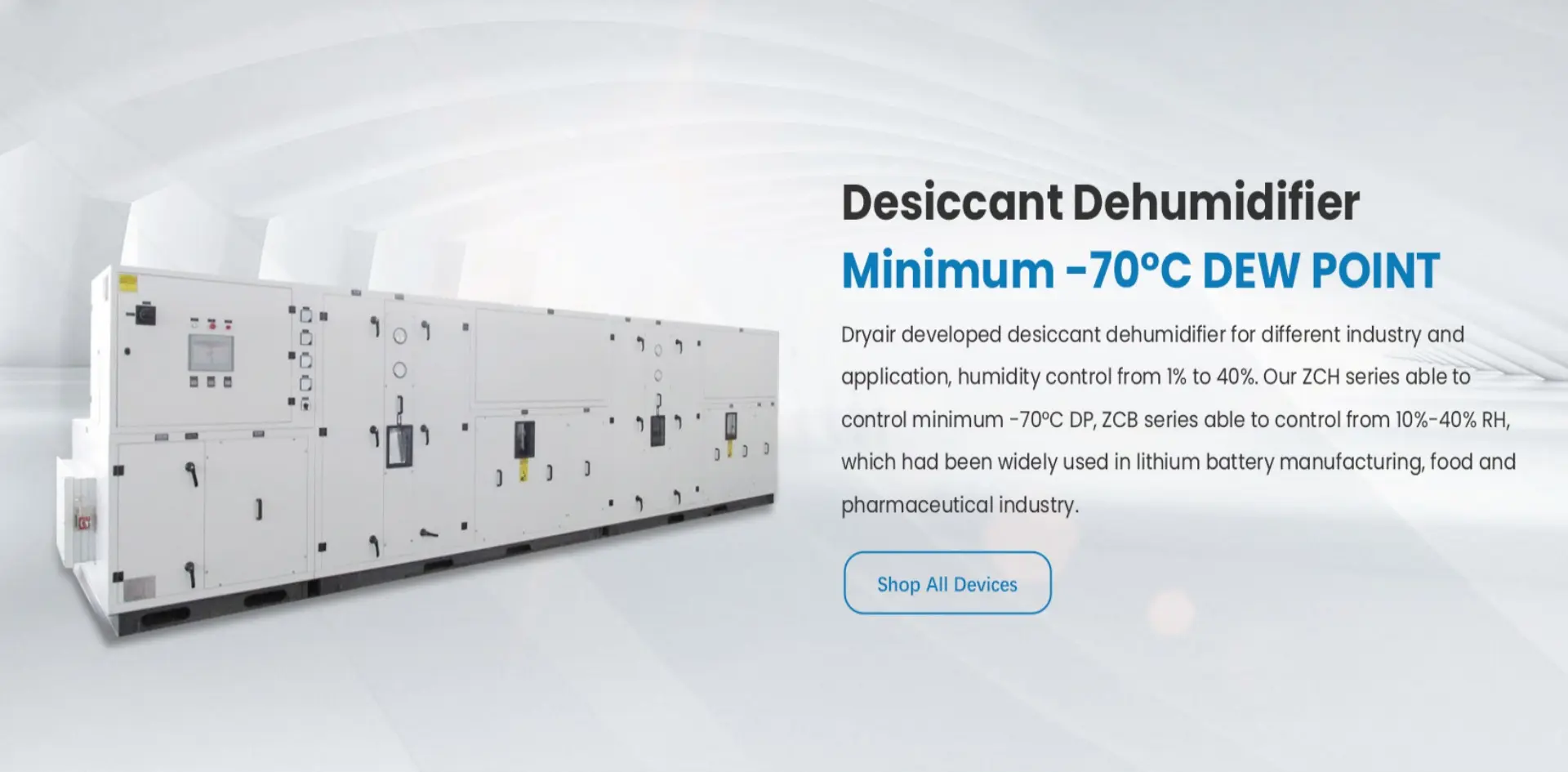
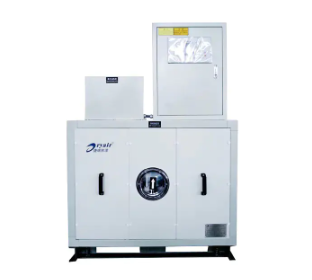
DHU Ultra-Low Dew Point Desiccant Dryer
Industrial rotary honeycomb desiccant wheel with dual-cassette structure for battery cell production and precision drying.
The Strategic Imperative for Advanced Dehumidifying Dryers in China
Industrial climate engineering is no longer simply about comfort cooling; it has transformed into a mission-critical yield determinant for global electric vehicles, advanced microelectronics, and sterile pharmaceutical processing.
Lithium-Ion & Solid-State Gigafactory Scaling
Modern lithium cell chemistries (NMC811, LFP, NCA, and solid electrolytes like LLZO/sulfides) are hyper-sensitive to ambient moisture. Even trace humidity induces lithium hexafluorophosphate ($LiPF_6$) hydrolysis, liberating volatile Hydrofluoric Acid ($HF$), causing active material passivation, micro-cracking, and battery cell bloating. China's desiccant engineering delivers stable dew points of -40°C to -70°C across millions of cubic meters of production space 24 hours a day, 365 days a year.
Decarbonization & Low-OPEX Thermal Reactivation
Desiccant wheel regeneration historically accounts for 40% to 65% of the total cleanroom utility bill. Chinese manufacturing advances integrate waste heat recuperation, heat pump auxiliary condensation, and low-temperature molecular sieve binders. Hangzhou DryAir systems routinely recapture coater exhaust and flue gas heat, slashing gigawatt-hour utility footprints while securing carbon border adjustment compliance.
Stringent Biopharmaceutical & cGMP Control
Under revised FDA, EMA, and WHO cGMP Annex 1 criteria, hygroscopic powders, effervescent tablets, softgels, and lyophilization packaging require stringent Relative Humidity (RH) regimes below 15% to 20% RH. Hangzhou DryAir desiccant equipment removes bacterial multiplication risks caused by standing condensates while maintaining microbiological sterility.
Proven Engineering References in Global Tier-1 Gigafactories & Enterprises
Low Dew Point Engineering, Proven at Gigafactory Scale
Founded in 2010 at Qingshan Industrial Park, Lin'an, Hangzhou, Hangzhou DryAir Treatment Co., Ltd. has established itself as an authoritative leader in desiccant dehumidification engineering in China. Today, the company commands over 30% of China's desiccant dehumidification market and ranks firmly in the top three national manufacturers.
Our multidisciplinary team includes 74 elite specialists comprising 6 researchers with master's and doctoral degrees, 2 national registered HVAC engineers, 8 senior engineers, and 58 seasoned technicians. This engineering team has delivered turn-key dry rooms and environmental controls for global electric vehicle giants such as Tesla, Northvolt, and TTI, as well as Chinese battery titans like CATL, BYD, and SVOLT.
Operating an advanced, in-house performance testing room, DryAir verifies every single assembled unit against strict psychrometric parameters prior to factory acceptance testing (FAT), ensuring seamless commissioning and lifetime stability.
Avoid common procurement misalignments: specifying an overly loose dew point jeopardizes critical product yields, while an over-specified target incurs unnecessary capital and utility expenditure.
Target Industrial Application
Typical Dew Point / RH Parameter
Moisture Vulnerability & Risk Mode
Recommended Hangzhou DryAir System
Action Link
Lithium-Ion Cell Assembly & Electrolyte Filling
-40°C to -60°C DP (<0.5% RH)
Formation of toxic hydrofluoric acid ($HF$); battery cell swell and rapid internal impedance spike.
* Psychrometric values calibrated at 101.325 kPa barometric pressure. Contact Hangzhou DryAir engineering for load modeling based on personnel count, air infiltration, and process exhaust CFM.
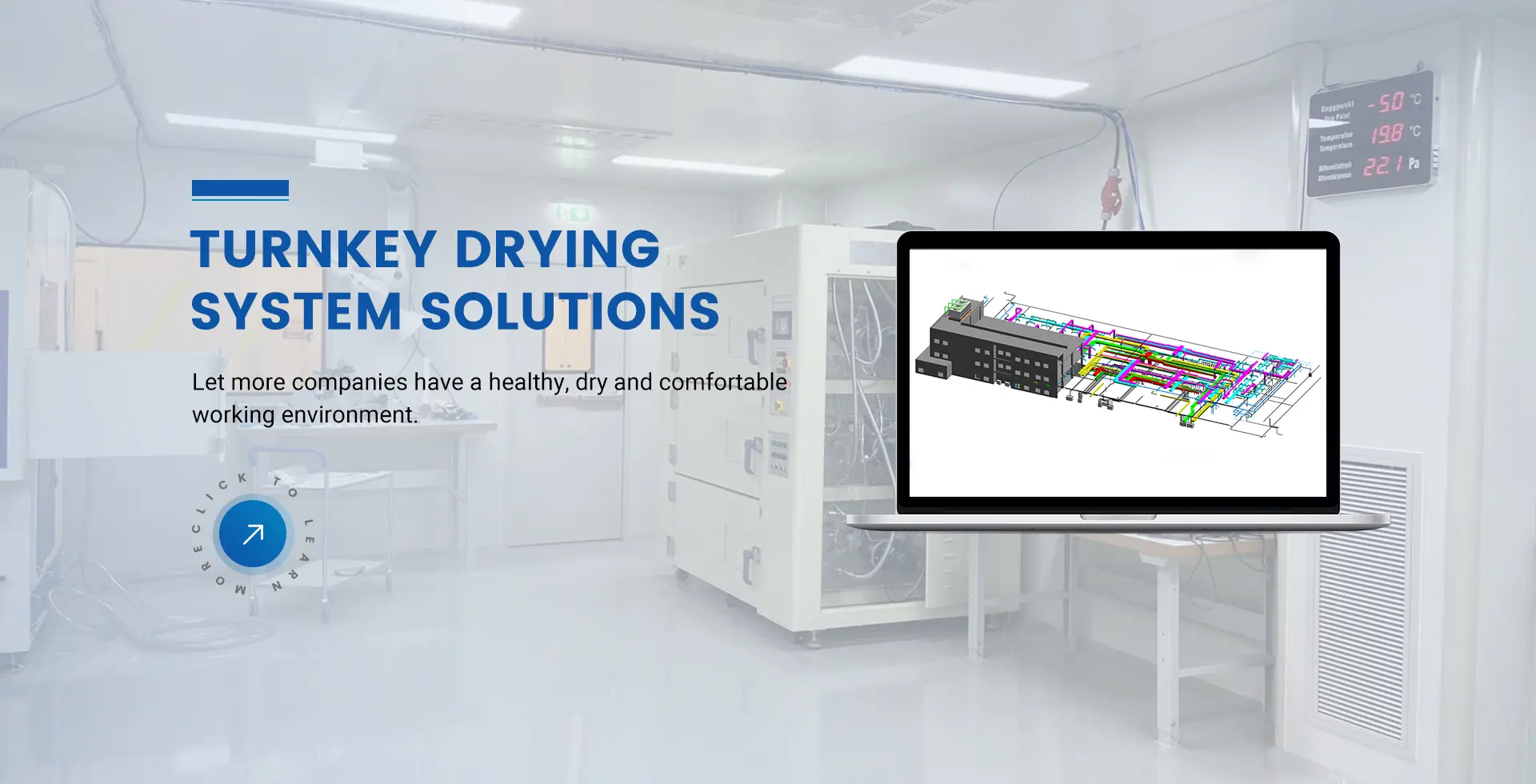
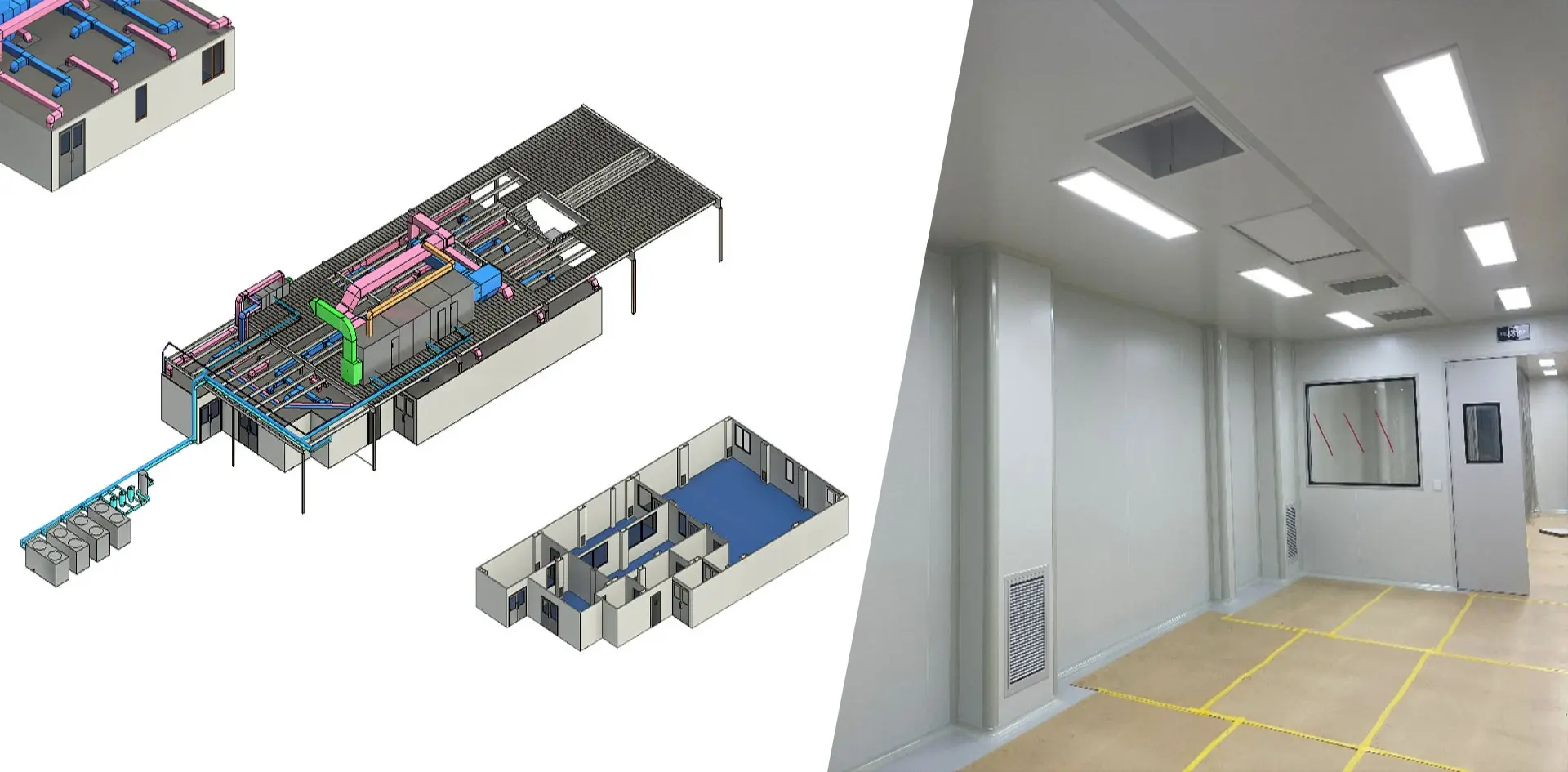
Turnkey EPC Delivery Model
Five-Stage Project Implementation Methodology
From first psychrometric modeling to long-term lifecycle support, DryAir eliminates operational handoff friction through single-source accountability.
Stage 01
Consulting & Modeling
Deep review of process envelope, moisture influx, infiltration air volume, personnel thermal load, and precise dew point threshold requirements.
Stage 02
Psychrometric Design
Custom airflow engineering, finite element analysis (FEA) duct modeling, thermal recovery balancing, and multi-tier energy conservation optimization.
Stage 03
In-House Manufacturing
Precision sheet metal fabrication, rotor casing mounting, wiring under UL/CE standards, and dynamic FAT verification in our environmental test chamber.
Stage 04
On-Site Commissioning
Airtight enclosure erection, duct connection, PLC loop tuning, dew point testing down to -70°C, and complete validation handoff.
Stage 05
Continuous Lifecycle Care
24/7 telemetry monitoring, regional spare parts warehousing, preventive servicing, and an optional 2-year overseas warranty program.
Global Compliance & Certification
Engineered to International Norms: CE, UL, CSA, ASME & EAC
Exporting industrial dehumidification drying equipment demands rigorous electrical, mechanical, and safety harmonizations. Hangzhou DryAir systems are engineered and verified to meet regional compliance frameworks across Europe, North America, and Central Asia:
North America: UL 1995 / CSA C22.2 certification for industrial air handlers and control cabinets.
European Union: CE Machinery Directive (2006/42/EC), Low Voltage Directive, and EMC certification.
Pressure Vessels: ASME Boiler and Pressure Vessel Code compliance for refrigerant coils and condensative recovery vessels.
Eurasia & Defense: EAC conformity for EAEU member states; GJB national military standard certification in China.
Furthermore, overseas buyers benefit from our optional two-year service agreement covering dispatch of factory field engineers, local inventory of critical components (motors, sensors, desiccant drive belts), and secure encrypted remote diagnostics via industrial IoT gateways.
Maintaining -50°C to -65°C dew point in high-traffic glovebox lines and automated filling tunnels. Protects electrolyte salt integrity, reduces scrap rate below 0.05%, and prevents thermal runaway risks in consumer and EV energy packs.
Pharmaceutical Tableting & Gelatin Encapsulation
Preventing softgel deformities and moisture agglutination in fluid-bed granulators. Controls microbial count without relying solely on chemical biocide sanitization, fully aligning with cleanroom ISO Class 5-8 specifications.
Preventing wafer oxidation and localized photoresist delamination. Delivers laminar, ultra-clean dry air filtered through HEPA/ULPA stages with steady static pressure retention across vacuum transfer airlocks.
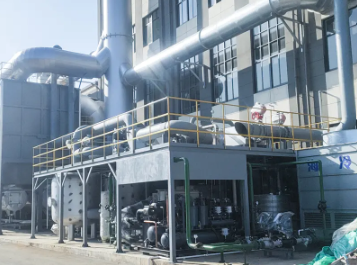
Designed for coil coating lines, printing operations, and polymer drying ovens. Strips volatile solvents through deep multi-stage cryogenic chillers before sending exhaust stream through regenerative thermal oxidizers.
Engineering Knowledge Base
Technical Insights from Hangzhou DryAir Engineers
In-depth technical writeups addressing solvent recovery efficiency, humidity failure modes in drugs, and volatile oil gas condensation.
VOC Abatement
How Does an Oil Gas Condensation Recovery System Work?
Industrial oil gas condensation systems capture volatile hydrocarbon vapors during petrochemical loading and unloading. By deploying stepped thermodynamic refrigeration down to -75°C, vaporized compounds liquefy efficiently before venting to meet strict fugitive emissions standards.
What Problems Does Excess Humidity Cause in Drug Formulation?
From powder cohesion during die compaction to moisture-induced degradation of gelatin shells, unmonitored humidity destroys tablet friability and dissolution kinetics. We present psychrometric solutions to maintain cleanroom balance within 10%–20% RH.
The Next Era of Desiccant Adsorption & AI-Driven Climate Control
Hangzhou DryAir is actively engineering the next frontier of industrial climate engineering to meet carbon-neutral gigafactory requirements.
Metal-Organic Framework (MOF) Desiccant Wheels
Moving beyond classic synthesized silica gels and 3A/4A zeolite molecular sieves, DryAir's R&D pipeline is evaluating porous MOF matrices. These crystalline frameworks possess tailored pore structures that exhibit sharp water uptake isotherms at ultra-low relative pressures, allowing full desorption at under 75°C and reducing regeneration heating energy by over 35%.
AI-Powered Predictive Psychrometric Telemetry
Integrating embedded neural network controllers on our DHU drying skids. By continually correlating external weather forecasts, real-time worker count, and door cycle rates, the AI dynamically modulates reactivation fan speeds and heaters ahead of latent load spikes, preventing dew point drift while curbing energy waste.
Zero-Carbon Hydrogen & Waste Heat Integration
Preparing cleanroom manufacturing for post-fossil fuel compliance. DryAir systems now feature dual-fuel and thermal-oil interfaces that connect directly to industrial hydrogen burners, coater exhaust recuperators, or regional district waste-heat lines to completely eliminate electric resistance reactivation where feasible.
Procurement & Engineering FAQ
Frequently Asked Questions by Global Buyers
Get direct answers on performance limits, international certifications, installation timelines, and post-commissioning maintenance.
What is the lowest dew point a DryAir desiccant dehumidifier can achieve?
Hangzhou DryAir rotary desiccant dehumidifiers can reliably control supply air down to a minimum of -70°C dew point (equivalent to <2 ppmv moisture content). This ultra-dry specification is critical for lithium metal cell assembly, solid-state battery formulation, and anhydrous electrolyte injection tunnels.
Do you supply complete turnkey dry rooms for battery factories outside China?
Yes. Hangzhou DryAir regularly delivers full EPC turnkey dry rooms globally. Our scope encompasses pre-sales engineering consulting, architectural envelope layout, AHU duct fabrication, on-site erection supervision, commissioning, and final dew point validation. We have successfully served premier international manufacturers including Tesla, Northvolt, and TTI.
Which international certifications do DryAir systems hold for export markets?
Depending on destination requirements and unit model, DryAir systems are supplied with CE (Europe), UL and CSA (North America), ASME (pressure vessels), and EAC (Eurasian Economic Union) certifications. Our manufacturing facility strictly operates under ISO 9001 quality management and the Chinese GJB national military standard system.
What solvent recovery efficiency can an integrated DryAir NMP recovery system reach?
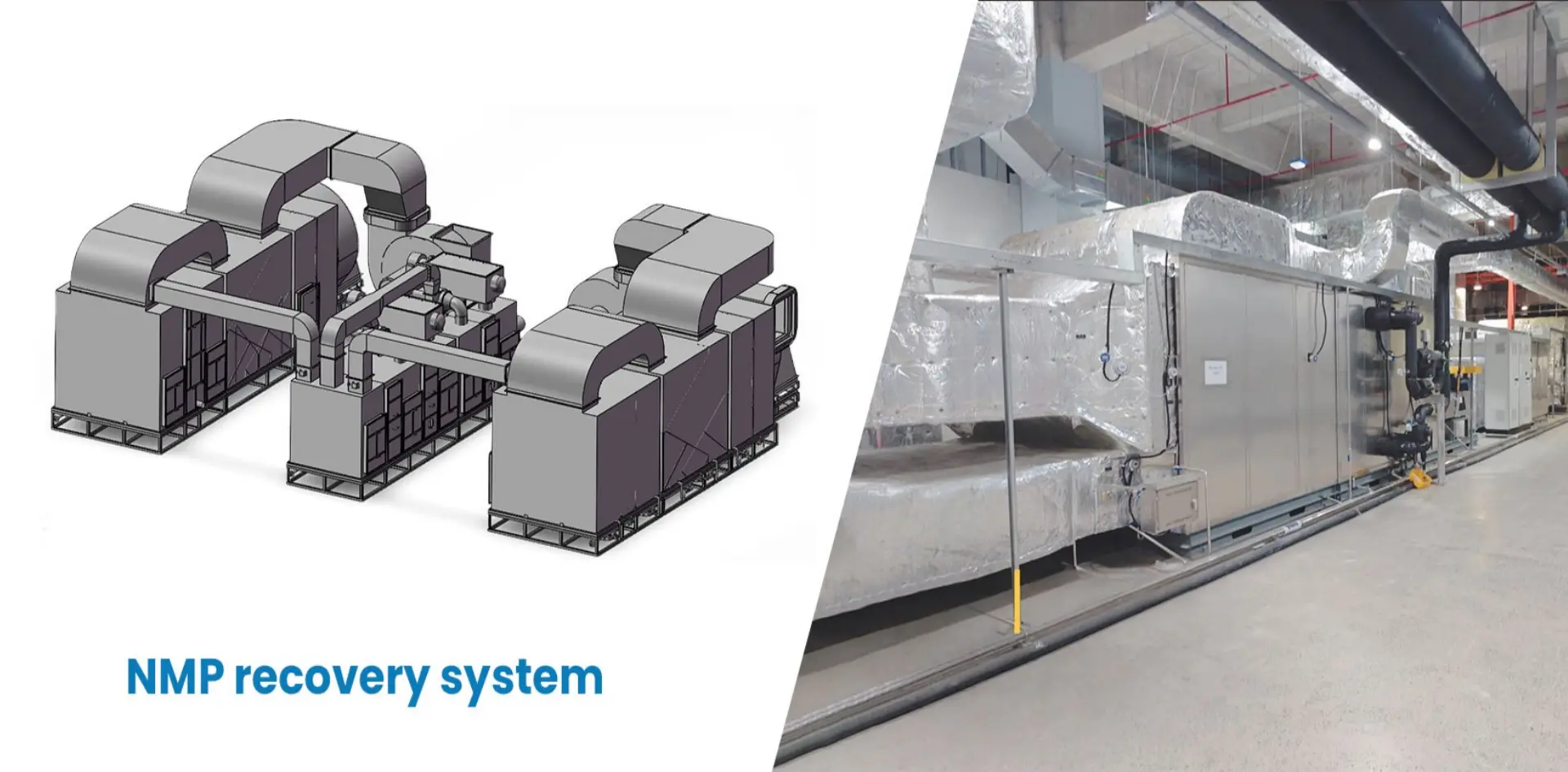
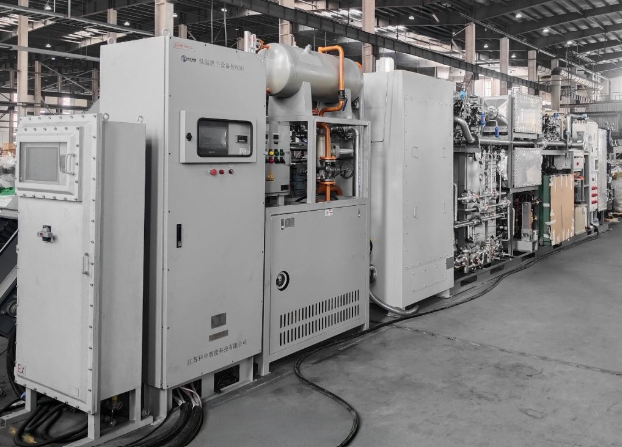
DryAir ZJRH NMP recovery systems are engineered to achieve an exceptional solvent recovery rate of ≥99% on continuous electrode coating and drying lines. This drastically lowers virgin NMP chemical procurement expenditures, captures usable waste heat, and ensures full compliance with local industrial VOC emission thresholds.
What after-sales and on-site commissioning support is available for international buyers?
Overseas clients have access to our optional two-year full-service agreement in addition to standard factory warranties. This includes on-site installation supervision and testing by senior field engineers, localized replacement component dispatch, and secure 24/7 cloud diagnostics.
How does Hangzhou DryAir manage regeneration energy consumption to reduce cleanroom OPEX?
Desiccant regeneration consumes significant thermal energy. Hangzhou DryAir integrates internal purge heat recovery sectors, secondary heat exchange wheels, and optional steam/thermal-fluid heating coils. These engineering configurations capture sensible heat from the reactivation exhaust, cutting electricity consumption by 20% to 40% compared to legacy desiccant dehumidifiers.
Catalog Overview
Explore Our Full Range of Dehumidifying Drying Solutions
Direct from China's leading desiccant dehumidifier factory: select any solution below to access detailed technical sheets or request custom sizing.
Rotary Silica Wheel
DHU Desiccant Dehumidifier
Continuous moisture adsorption from process airstreams down to -70°C dew point for high-precision manufacturing.
Send us your room dimensions, target dew point, personnel numbers, and fresh air volumes. Hangzhou DryAir engineers will generate a comprehensive psychrometric mass balance and system sizing quotation within 24 business hours.

 DP -70°C Control