 DP -70°C Target
Industrial Desiccant Dehumidifier
DHU Series dual-rotor desiccant air treatment units delivering ultra-low dew point air for mission-critical lithium cell assembly and aerospace payload assembly.
View SpecificationsExplore Hangzhou DryAir’s tier-one manufactured equipment engineered for demanding psychrometric management across high-capacity gigafactories and commercial infrastructure.
DP -70°C Target
DHU Series dual-rotor desiccant air treatment units delivering ultra-low dew point air for mission-critical lithium cell assembly and aerospace payload assembly.
View Specifications Full EPC Delivery
Modular, high-airtightness containment architecture with fully integrated deep-cooling stages, desiccant air handles, and complete validation protocols.
Explore Dry Rooms Recovery Rate ≥99%
Closed-loop VOC recovery systems recycling N-Methyl-2-pyrrolidone on cathode coating lines, cutting solvent lifecycle acquisition costs significantly.
Examine System Data RTO Condensation
Synergistic multi-stage refrigeration condensation combined with regenerative thermal oxidizers (RTO) to neutralize process exhaust gases.
Inspect VOC AbatementDirect expansion refrigeration condensing units designed for raw latent load trimming, packaging plants, warehousing, and pre-cooling stages.
Refrigerative Dehumidifier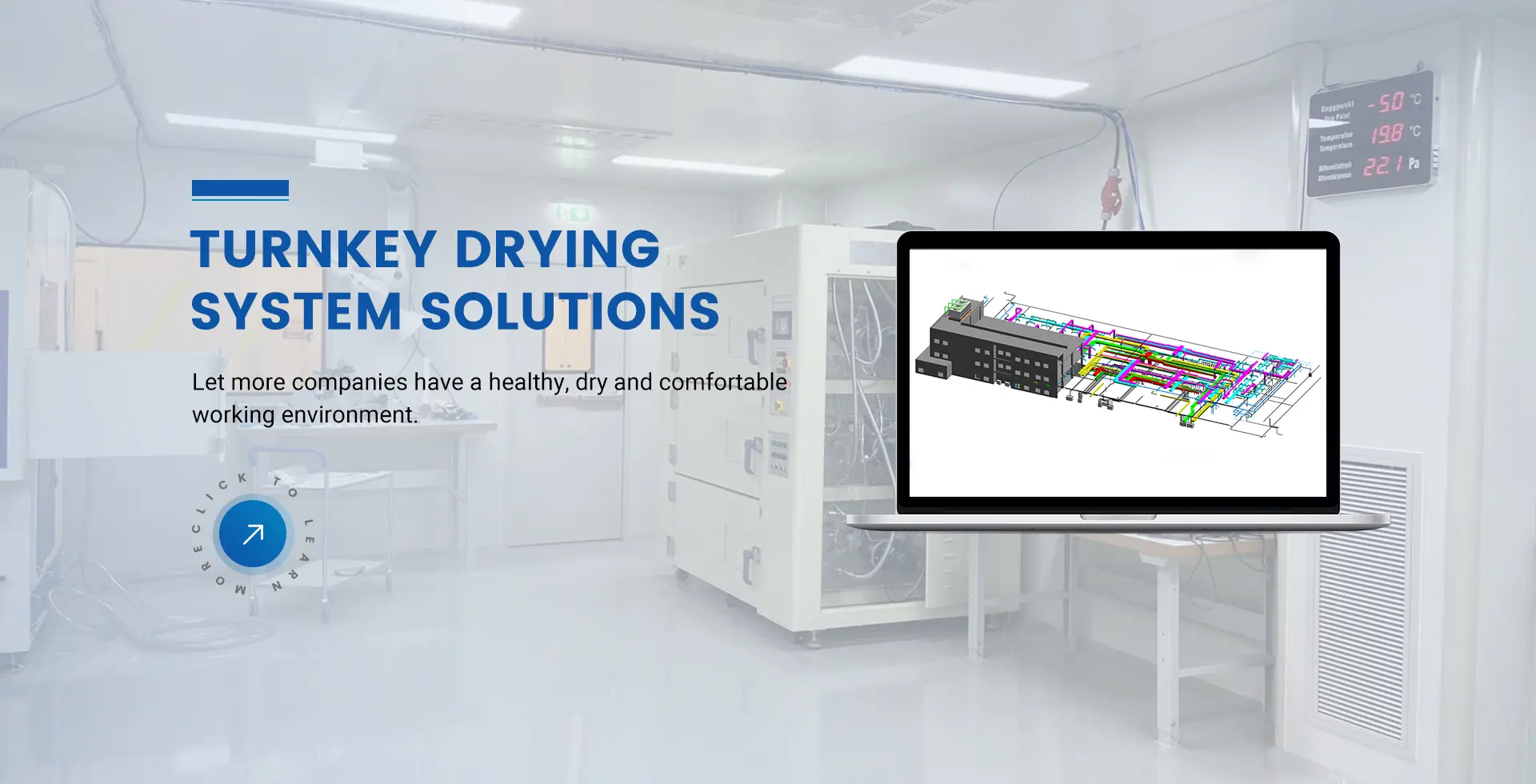 Combined Cycle
Engineered to work upstream of adsorption rotors, removing massive ambient latent loads using high-COP refrigerative coils to maximize total system efficiency.
View Pre-Cooler Systems RH 40% - 60%
Packaged DX commercial & industrial units built for continuous indoor air quality control in electronics assembly, pharmaceutical staging, and precision storage.
Browse Product Range Tropical Rated
Equipped with high-efficiency scroll/screw compressors engineered for extreme ambient temperatures, delivering stable condensing performance globally.
Request Engineering CatalogModern industrial manufacturing faces unprecedented psychrometric challenges. From gigawatt-scale battery factories to microelectronics cleanrooms, refrigerative and desiccant hybrid dehumidification forms the operational backbone of global productivity.
China accounts for over 65% of the world's production capacity for industrial refrigeration coils, hermetic scroll compressors, and integrated thermodynamic controls. Hangzhou DryAir leverages this mature supply chain to deliver high-capacity chillers and refrigerative dehumidifiers that undercut Western fabrication lead times by 40% while exceeding baseline energy efficiency metrics.
Traditional condensing dehumidification systems often suffer from high specific power consumption during partial load periods. Leading Chinese manufacturers have transitioned from fixed-displacement compressors to electronically commutated inverter drives and microchannel aluminum heat exchangers, elevating the operational Coefficient of Performance (COP) across wide humidity bands.
Refrigerative dehumidification acts as the essential high-efficiency front-end in deep-drying systems. Removing 1kg of airborne moisture via refrigeration consumes roughly one-third the energy needed to drive thermal desiccant rotor regeneration. By optimizing the thermodynamic crossover point between cooling coil condensation and adsorption wheel capture, total facility OPEX drops up to 34%.
Selecting between direct condensation and rotary chemical adsorption requires auditing psychrometric moisture ratios, sensible-latent load splits, and freezing constraints.
| Engineering Parameter | Standalone Refrigerative Dehumidifier | Rotary Desiccant Dehumidifier | DryAir Integrated Hybrid System |
|---|---|---|---|
| Target Dew Point (DP) | +3°C to +10°C Dew Point | -20°C to -70°C Dew Point | -40°C to -70°C Dew Point (Ultra-Low) |
| Primary Removal Mechanism | Surface Condensation below Dew Point | Physical Adsorption on Silica/Molecular Sieve | Refrigerative Pre-Cooling + Desiccant Finishing |
| Energy Efficiency Benchmark | Extremely High at RH > 45% (High COP) | Energy intensive regeneration heat cycle | Optimized: Condensing strips bulk water; Rotor strips residual |
| Freezing & Frost Risk | Coil frost builds below 0°C (Requires Defrost Cycle) | No freeze risks (Solid-state vapor phase) | DX stage tuned to +4°C eliminating coil icing altogether |
| Capital Investment (CAPEX) | Cost-effective capital outlay | Moderate to High investment | Optimized total footprint and lifecycle expense |
| Primary Target Application | Warehouses, Packaging, Electronics Staging | Specialized Pharma, Chemical Labs | EV Battery Gigafactories, Solid-State R&D |
Every industry presents unique moisture profiles. Hangzhou DryAir engineers system capacity directly around your product's moisture tolerance thresholds.

Moisture chemically reacts with electrolyte salts (LiPF6) to generate hydrofluoric acid (HF), resulting in cell swelling and safety degradation. DryAir dry rooms maintain ultra-dry conditions throughout stacking, winding, and filling bays.
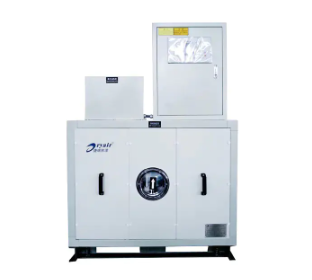
Hygroscopic compounds, effervescent powders, and gelatin capsules agglomerate and degrade if exposed to relative humidity above critical thresholds. DryAir systems preserve strict GMP cleanroom environmental standards.

Designed to comply with rigorous GJB military standard engineering protocols, protecting avionics, propellants, unguided weaponry, and optoelectronic equipment from internal micro-corrosion and mold degradation.
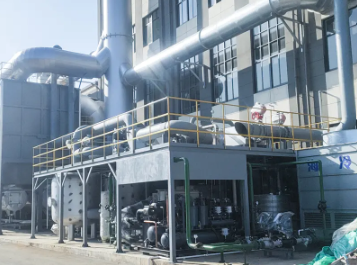
Integrated cryogenic condensing combined with RTO mechanisms captures volatile organic hydrocarbons from loading gantries and chemical reactors before atmospheric emission limits are exceeded.
Hangzhou DryAir continues investing in thermodynamic efficiency, predictive IoT systems, and environmentally sustainable refrigerants that meet future global compliance standards.
Global F-gas directives require phasing down high-GWP refrigerants. DryAir’s mechanical R&D is transitioning to low-GWP alternatives (such as R454C, R32, and CO2 natural refrigerant cascades) engineered to preserve high volumetric capacity without efficiency compromises in tropical installations.
Integration of real-time machine learning models running at edge controllers dynamically throttles variable frequency drive (VFD) compressors and modulating hot-gas bypass valves, adapting to instant variations in outdoor wet-bulb temperatures and cleanroom occupancy loads.
Condenser waste heat rejected by industrial refrigerative dehumidifiers is routed via closed-loop hydronic loops to provide pre-heating energy for rotary desiccant reactivation, slashing external electric or gas boiler heating requirements down toward net-zero targets.
Hangzhou DryAir Treatment Co., Ltd. has delivered turnkey low-dew-point humidity control systems since 2010. Ranked among the top three manufacturers in China with over 30% domestic market share, we deliver validated systems certified to CE, UL, CSA, ASME, and EAC standards.
Clear engineering answers addressing psychrometric limits, international compliance, and integration practices for global factory installations.
Browse our certified machinery lines configured for battery manufacturing, pharmaceuticals, defense storage, and hydrocarbon emission controls.
Standard Rotor
Engineered with patented silicone/molecular sieve rotors providing reliable low-dew-point air where standard cooling cannot operate.
Technical Data
Turnkey Dry Room
Turnkey engineered dry room enclosures incorporating structural insulated panels, air showers, and integrated environmental HVAC.
Dry Room Architecture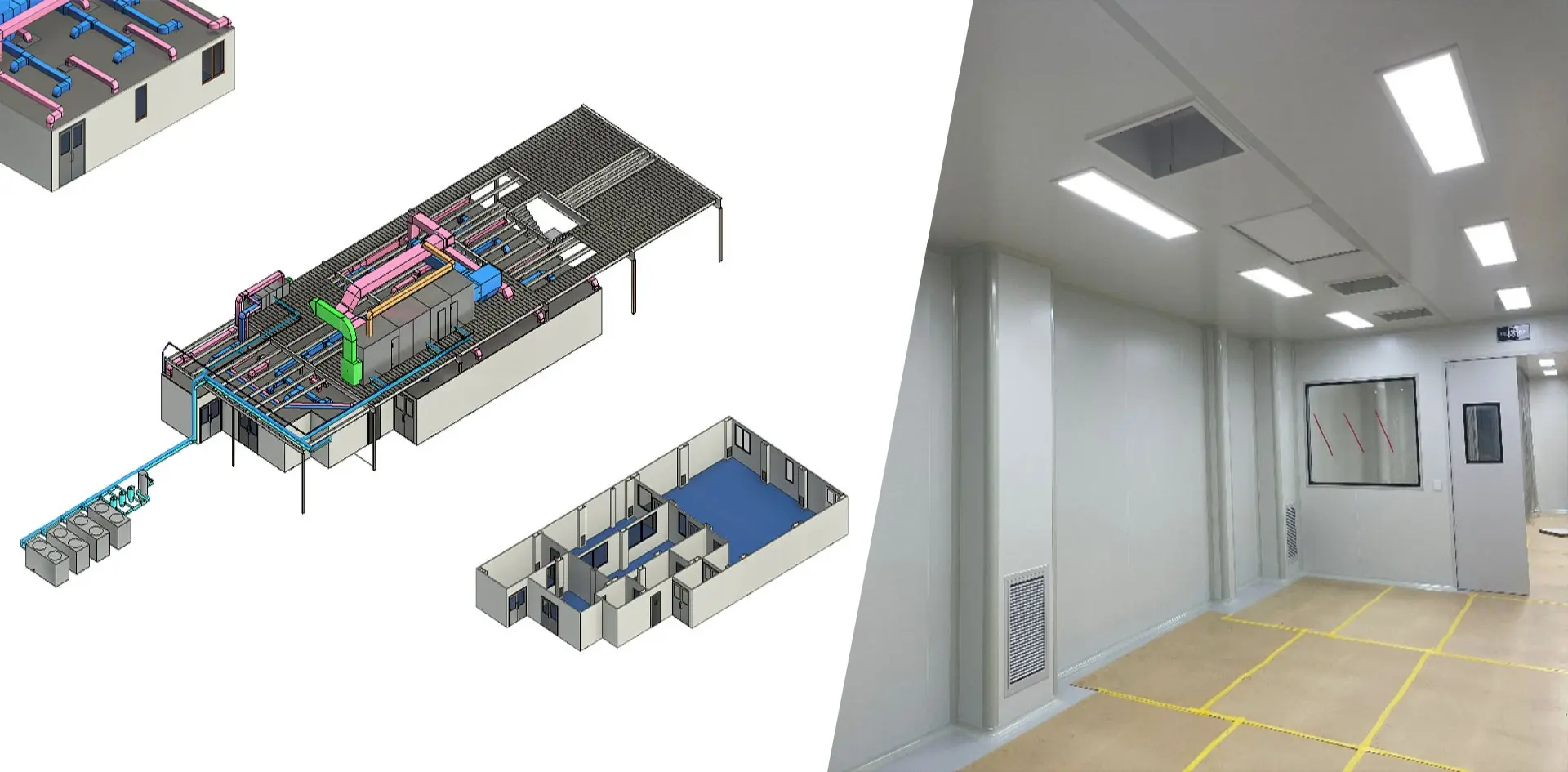 Solvent Saver
Specialized condensing and absorption unit configured to recover solvent vapors from high-temperature cathode drying exhausts.
Review Solvent Systems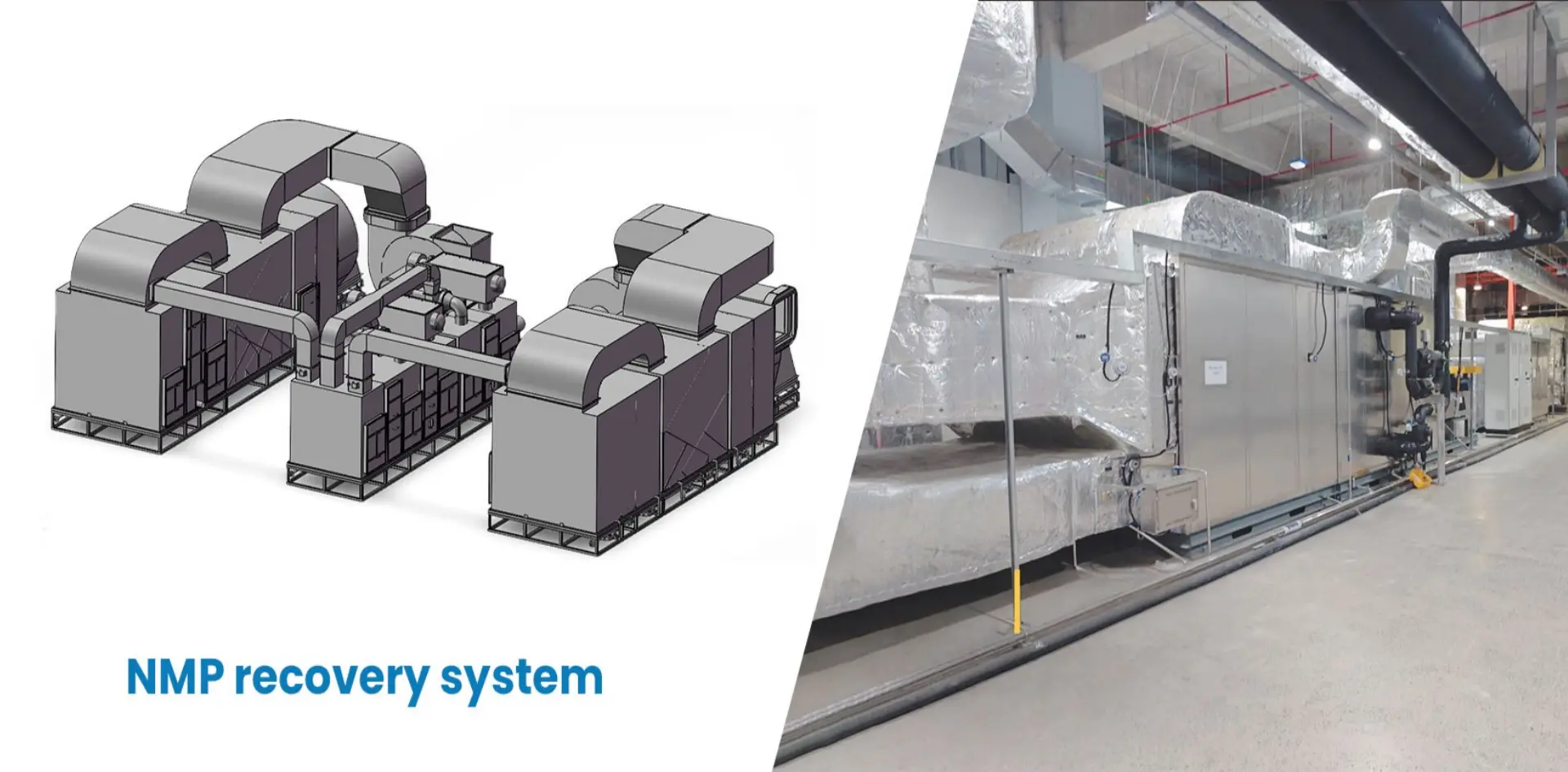 Clean Emissions
Combines multi-stage heat recovery with secondary thermal oxidation for reliable compliance with clean air industrial standards.
Emission TechnologyPackaged refrigerative dehumidification systems engineered for bulk storage facilities, archival rooms, and seed staging warehouses.
Warehouse Systems Precision Coil
Customizable air handling units combining chilled-water coils, direct expansion cooling, and reheat loops for steady relative humidity.
Custom Air Handlers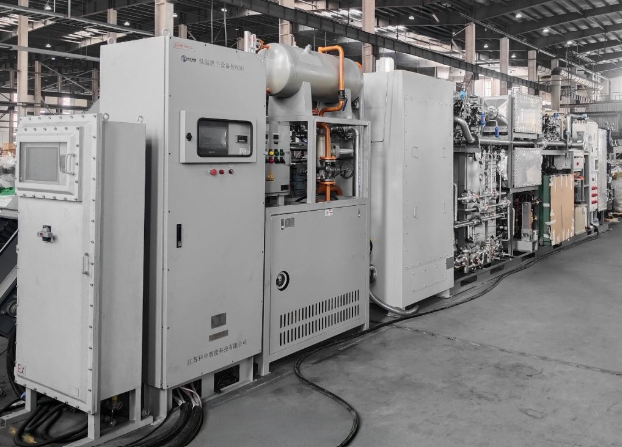 Corrosion Guard
Explosion-proof ATEX/IECEx compliant designs built specifically for volatile storage and hazardous material processing areas.
Request EX Catalogue Documentation
Access our comprehensive selection curves, psychrometric calculation charts, and international installation project portfolios.
Contact Engineering TeamSend us your facility layout, moisture load calculations, and dew point targets. Our senior engineering staff responds within one business day with psychrometric equipment sizing and complete budgetary estimates.