

DHU Desiccant Dehumidifier
Industrial rotary desiccant dehumidifier engineered to control process dew points down to -70°C where conventional refrigeration fails.
Explore DHU SeriesRobust, factory-calibrated equipment lines custom-built to eliminate ambient moisture risks, capture volatile gases, and reduce lifecycle kilowatt consumption across demanding production environments.
Industrial rotary desiccant dehumidifier engineered to control process dew points down to -70°C where conventional refrigeration fails.
Explore DHU Series
Complete ultra-low humidity dry room infrastructure including hermetic envelope, air handling modules, duct networks, and validation.
Explore Turnkey Rooms
Specialized recycling system designed for electrode coating lines to harvest N-Methyl-2-pyrrolidone solvent with high purity extraction.
Explore NMP Recovery
Deep-cooling condensation coupled with Regenerative Thermal Oxidation (RTO) for extreme exhaust emission purification compliance.
Explore VOC Abatement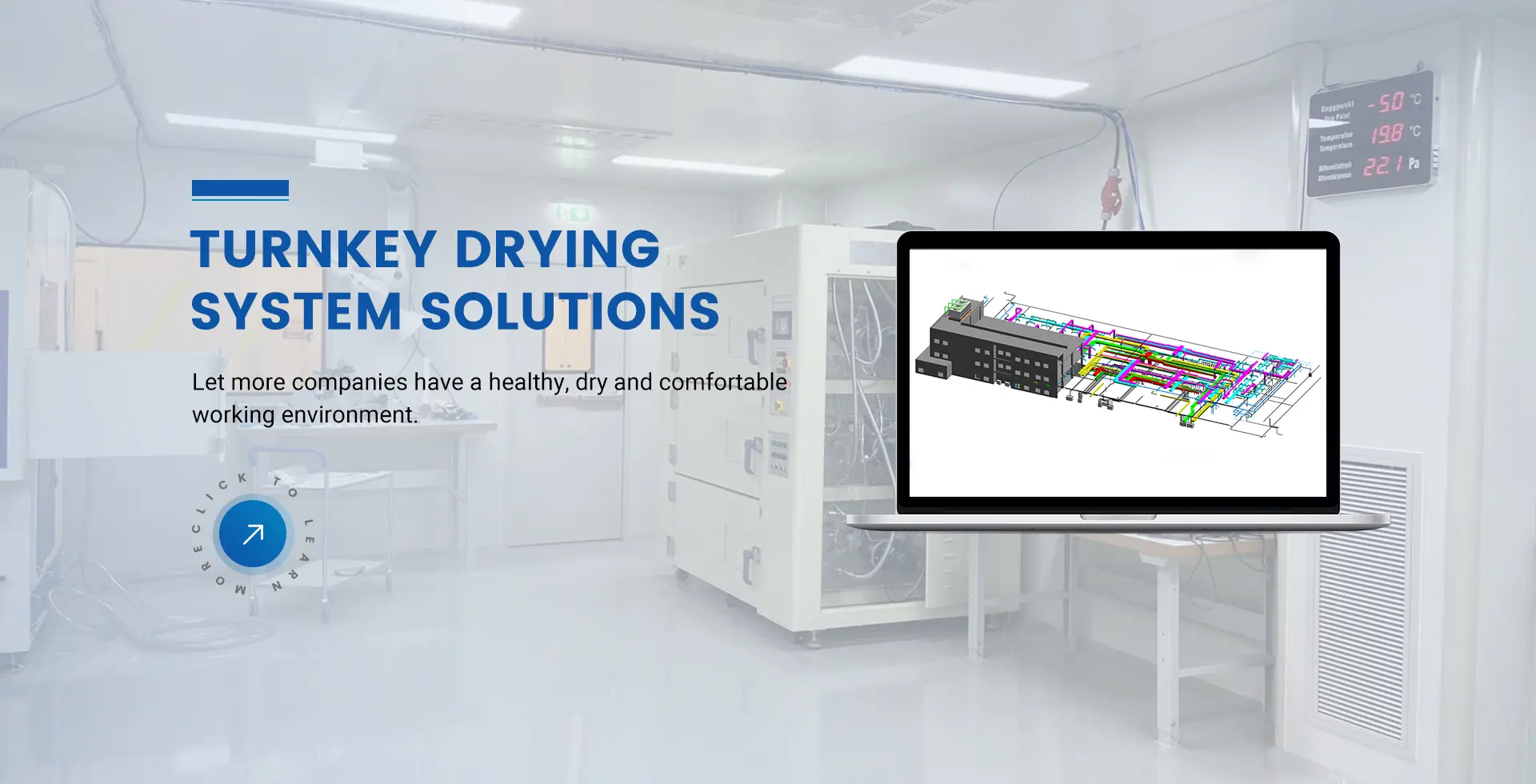
High-efficiency condenser moisture extraction systems suitable for precision warehouses, workshops, and pre-cooling dehumidification.
Explore Refrigerative Units
Massive volumetric supply air configurations with double-rotor cascading layouts configured to keep RH under strict bounds.
Explore Modular Dry Units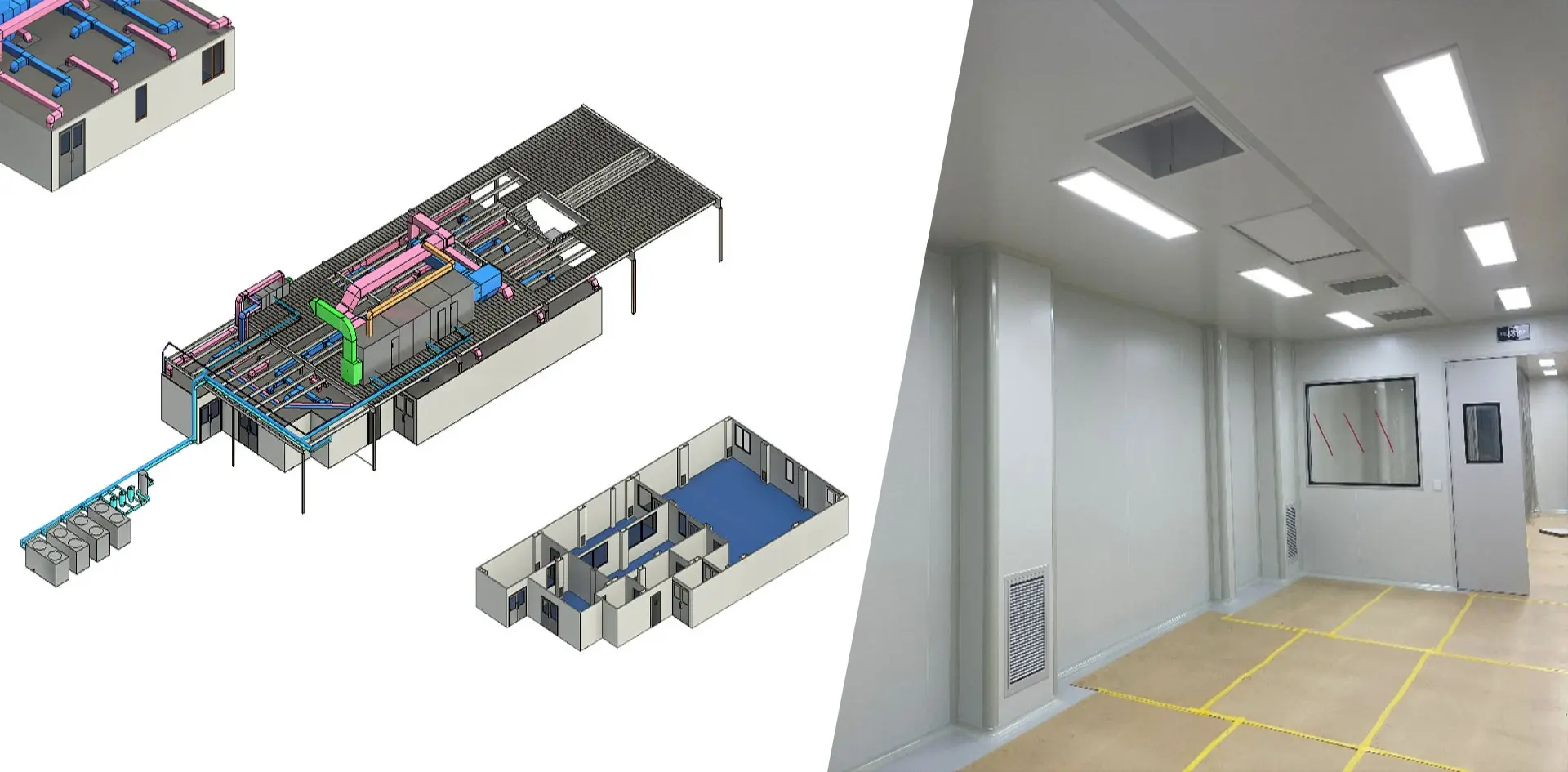
Integrated multi-stage filtration (HEPA/ULPA) with chemical molecular sieves to ensure zero contamination in aerospace & pharma clean zones.
Explore Purifying Dryers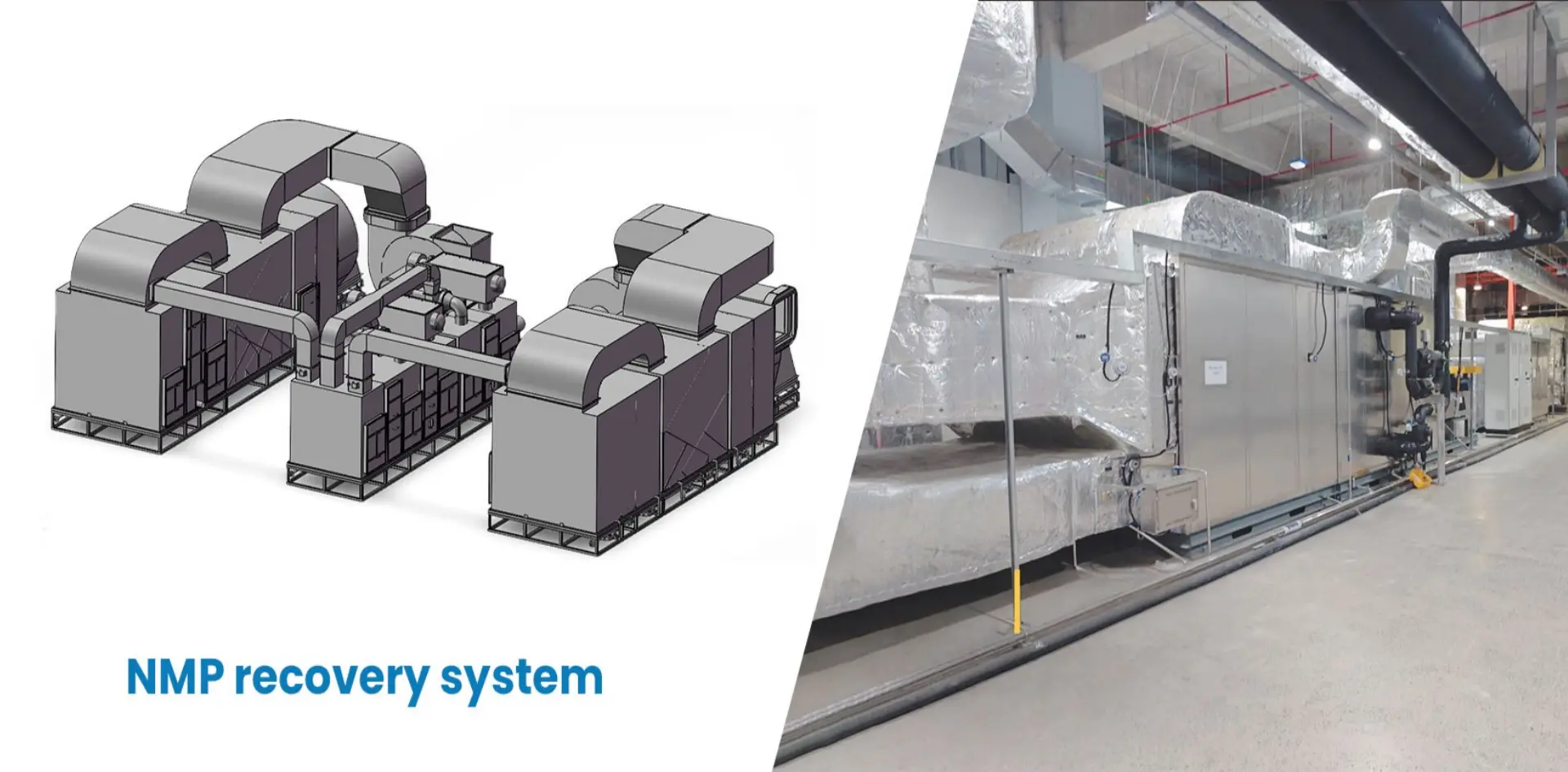
Patented thermal energy reactivation designs that reuse waste process heat to regenerate rotor desiccant media at 30% lower OPEX.
Explore Energy SaversThe transition to next-generation energy storage, micro-nanometer semiconductors, and bio-therapeutics has transformed dehumidification from standard HVAC into an indispensable yield-critical process variable.
Industrial desiccant regeneration accounts for up to 40% of utility overhead in battery gigafactories. International procurement teams evaluate dehumidifiers not on baseline unit capex, but on kilowatt consumption per kilogram of water vapor extracted over ten operating years.
In lithium-ion manufacturing, ambient moisture interacts with electrolyte salts (LiPF6) to produce hydrofluoric acid (HF), causing cell swelling, capacity degradation, and catastrophic safety hazards. Controlling supply air to -50°C or -70°C dew point is an existential quality gate.
International environmental standards (REACH, EPA, EU Batteries Regulation) penalize solvent exhaust. Integrated NMP recovery rates exceeding 99% alongside zero-ozone-depletion low GWP refrigerants are mandatory checkmarks for multi-national vendor shortlisting.
Hangzhou DryAir Treatment Co., Ltd. (founded 2010) ranks among China's top three desiccant manufacturers with over 30% national market share, backed by 74 technical specialists and rigorous performance validation.
Staffed by 6 Master's/Ph.D. researchers, 2 National Registered HVAC engineers, 8 senior engineers, and 58 specialized technicians managing psychrometric calculations and fluid simulation.
Field-tested installations operating at massive capacity for Tesla, Northvolt, CATL, ATL, BYD, EVE Energy, Farasis, Envision, SVOLT, and TTI across continents.
Compliant with ISO 9001 and the high-tolerance GJB National Military Standard. Every unit undergoes automated thermodynamic load-chamber testing prior to departure.
Factory output surpassing 200+ heavy industrial dehumidification units per month, ensuring short lead times and modular drop-in delivery for rapid mega-plant scaleouts.
Process humidity requirements vary drastically between manufacturing verticals. DryAir custom configures rotor desiccant chemistry, internal face velocity, and cooling coils to exact chemical vulnerabilities.
Protecting electrode slitting, winding, cell assembly, and electrolyte injection with deep -40°C to -70°C dew point atmospheric controls.
Guarding hygroscopic powders, gelatin capsule drying, and packaging cleanrooms against agglutination, mold growth, and active ingredient instability.
Built to military-grade GJB specifications to maintain dry storage atmospheres (≤40% RH) for ordnance, optical targeting, avionics, and composite curing.
Closed-circuit condensation recovery and regenerative thermal oxidation to trap volatile vapor plumes during pipeline, tank, and terminal operations.
Stabilizing cleanroom air handles to prevent static cling, reticle oxidation, and photoresist micro-defects during photolithography steps.
Over-specifying humidity tolerances inflates lifetime power expenses; under-specifying degrades finished product yields. Review our engineering selection reference:
| Application Scenario | Target Air Environment | Dehumidification Method | Primary Energy Driver | Recommended Configuration |
|---|---|---|---|---|
| Lithium-Ion Cell Assembly & Electrolyte Fill | -40°C to -60°C Dew Point | Dual-Rotor Desiccant Adsorption | Thermal Regeneration (Steam/Elec) | Turn-key Dry Room System |
| Next-Gen Solid State & Lithium Metal | Down to -70°C Dew Point | Deep Desiccant Cascading Rotor | Direct High-Heat Regeneration | Ultra-Low DP Desiccant Unit |
| Electrode Drying Line Coater Exhaust | ≥99% NMP Solvent Recovery | Chilled Deep Condensation | Chilled Loop Glycol Water | ZJRH NMP Recovery System |
| Effervescent Tablet & Softgel Encapsulation | 10% to 30% Relative Humidity | Silica Gel / Molecular Sieve Rotor | Medium Temperature Reactivation | Pharma Desiccant Purifier |
| Defense, Ordnance & Avionics Storage | ≤40% Relative Humidity | Single Rotor Air Drying Unit | Heat Wheel Waste Exchanger | GJB Standard Dehumidifier |
| Terminal Fuel Vapors & Chemical Off-Gas | Local EPA Emission Thresholds | Condensation + 3-Bed RTO | Regenerative Burner Heat | VOC Abatement System |
| Bulk Raw Materials Logistics Warehousing | 45% to 60% Relative Humidity | Direct Expansion Refrigerative | Compressor Power | Refrigerative Dehumidifier |
Eliminating interface clashes between HVAC installers, equipment manufacturers, and cleanroom wall contractors with one responsible EPC partner.
Process auditing, psychrometric boundary calculation, latent personnel load modeling, and door-opening leakage estimations.
Custom 3D CFD simulation, ductwork static pressure balancing, PLC electrical schematic design, and energy-recovery loops.
In-house CNC sheet fabrication, rotor installation, wiring assembly, and stringent performance verification in test cells.
On-site erection, airtight insulation wall jointing, duct connecting, and sensor instrumentation under DryAir project engineers.
Full continuous dew point performance validation under load, staff training, handover documentation, and spare parts supply.
Building industrial plant hardware for export requires strict alignment with localized mechanical and electrical electrical codes to avoid port impoundment or commissioning delays.
Custom builds tailored to North American UL/CSA electrical standards, European CE Machinery & Low Voltage Directives, ASME pressure vessels, and Eurasian EAC rules.
Beyond standardized factory warranties, international clients can enroll in extended 2-year lifecycle agreements featuring scheduled on-site maintenance audits and direct field technician dispatch.
Edge-connected PLC controllers allow DryAir technical teams in Hangzhou to co-monitor airflow volume, regeneration heater temperatures, and differential pressures in real-time alongside your local facility engineers.
Guaranteed stocks of drive belts, silicon wiper seals, HEPA filters, bearings, and electric heating rods pre-packaged for air-freight dispatch within 24 hours of notification.
How Hangzhou DryAir is advancing industrial moisture removal technologies to meet the demands of 2030 net-zero manufacturing targets.
Developing next-generation MOF (Metal-Organic Framework) composite matrices allowing desiccant rotor regeneration at temperatures below 75°C, enabling total activation using low-grade waste hot water.
Machine learning algorithms embedded within system controllers forecast exterior meteorological shifts (rainstorms, sudden humidity spikes) and modulate rotor RPM and reactivation heat before room drift occurs.
Phasing out traditional hydrofluorocarbon refrigerants ahead of international bans by integrating CO2 (R744) and ammonia transcritical pre-cooling circuits directly inside our modular air handling systems.
Technical papers authored by our field engineering directors to assist facility planners in designing cleaner, safer, and lower-emission plants.
An engineering breakdown of multi-stage cooling recovery loops, pressure drop management, and vapor liquefaction during bulk fuel transfer operations.
Read White Paper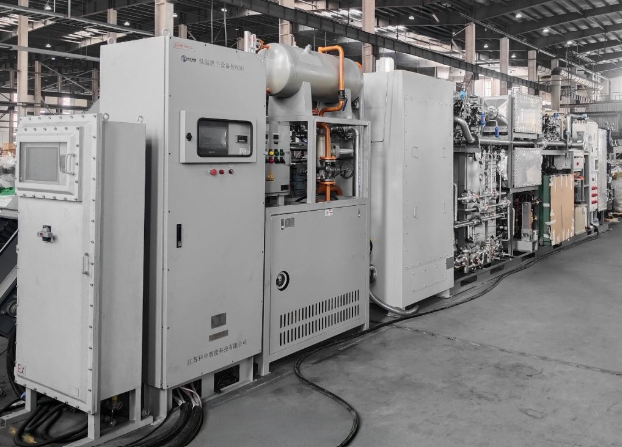
Examining preventive measures against heat-exchanger fouling, condensed droplet carryover, and VOC slip in gigawatt-scale electrode coating towers.
Read White Paper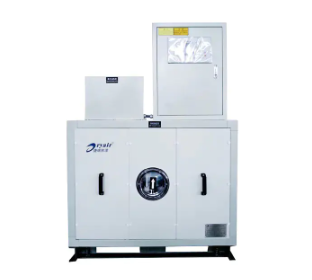
Identifying humidity critical control points across fluid bed dryers, tableting presses, blister sealing lines, and sterile packaging isolators.
Read White PaperDirect, technical answers addressing technical feasibility, factory audits, installation times, and international project execution.
Select from our field-proven models below or consult our engineering design division for tailor-made psychrometric systems matching your exact facility parameters.
High-adsorption silica gel rotor configuration suited for commercial drying rooms, precision tool storage, and pharmaceutical packing.
Product Specifications
Ultra-sealed sandwich panel architecture with airlocks, positive-pressure differential dampers, and continuous laser dew point monitoring.
Turnkey System Details
Closed-circuit condensation towers with automated solvent concentration monitoring, producing re-usable battery-grade NMP.
Recovery System Specs
High-destruction efficiency RTO units engineered to neutralize halogenated compounds, organic hydrocarbons, and chemical process gases.
Abatement Solutions
Compact footprint refrigeration-cycle dehumidification unit optimized for high latent load extraction at ambient room conditions.
Dehumidifier Details
Specialized anti-corrosion, explosion-proof, and shock-resistant custom dehumidifiers certified under national military specifications.
Defense Drying Systems
Cleanroom air treatment modules offering Class 100 HEPA air cleanliness merged with continuous sub-zero dew point stability.
Cleanroom Units
Cryogenic deep refrigeration modules engineered to capture volatile organic hydrocarbons and oil vapors during terminal pumping cycles.
Vapor Recovery DetailsShare your factory drawings, sensible/latent moisture load parameters, and target process dew points. Our senior engineering division will provide full psychrometric calculations and equipment sizing within one business day.