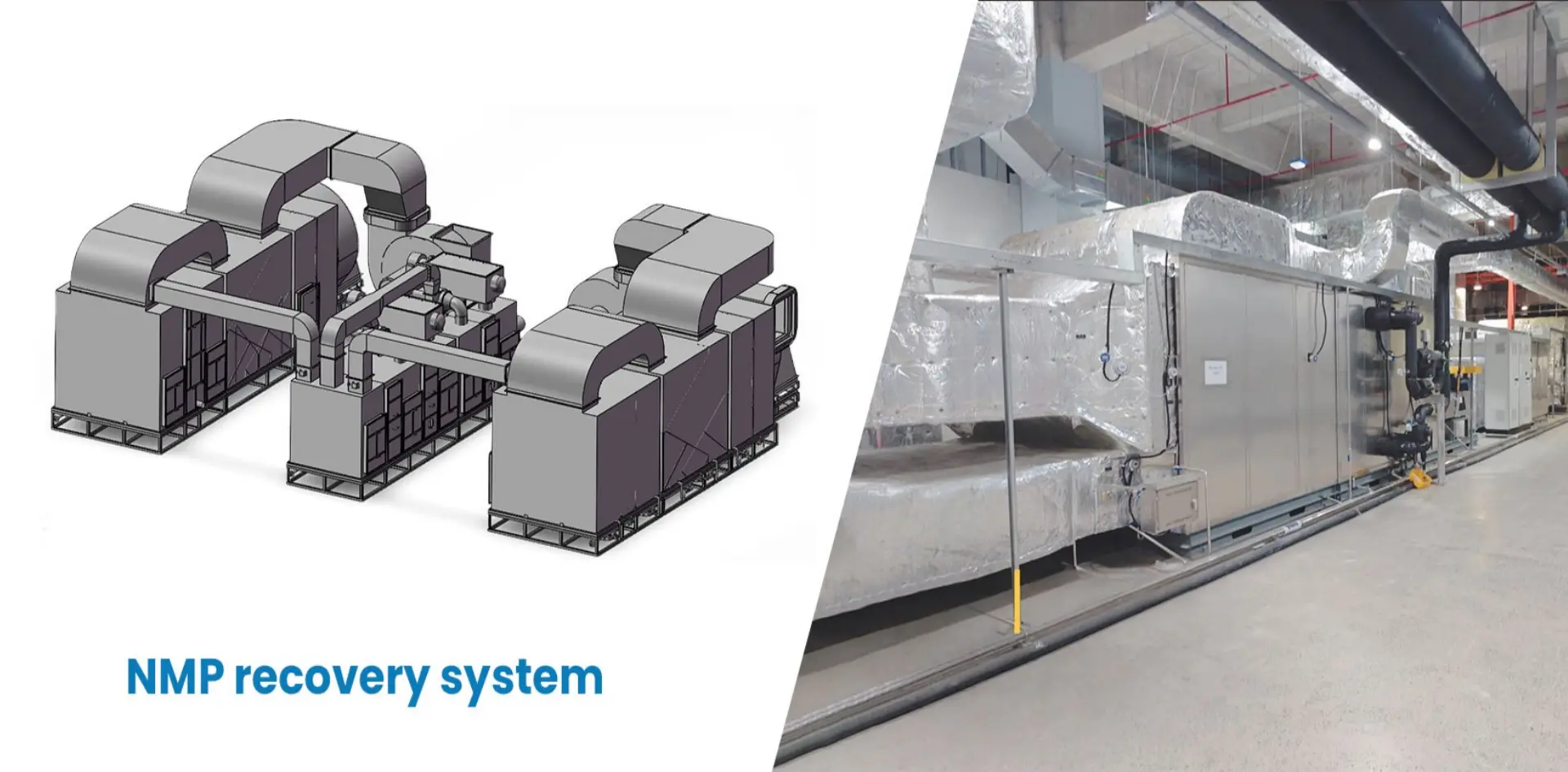
The Thermodynamic Paradigm Shift: Beyond Mechanical Condensation
Over the last decade, high-precision industrial manufacturing has encountered a hard physics barrier. Traditional DX (direct expansion) mechanical chillers condense moisture on chilled coils, functioning reasonably well down to a dew point of +4°C to +6°C. However, pushing mechanical systems lower initiates ice buildup on evaporator fins, prompting continuous defrost cycles and rapid energy loss. In processes demanding ultra-dry air—most notably lithium-ion battery cell assembly, electrolyte filling, high-voltage semiconductor lithography, and active pharmaceutical ingredient (API) handling—refrigerative cooling is physically incapable of achieving the necessary dryness without prohibitive inefficiencies.
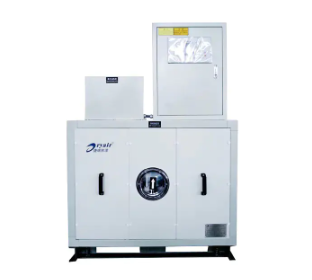
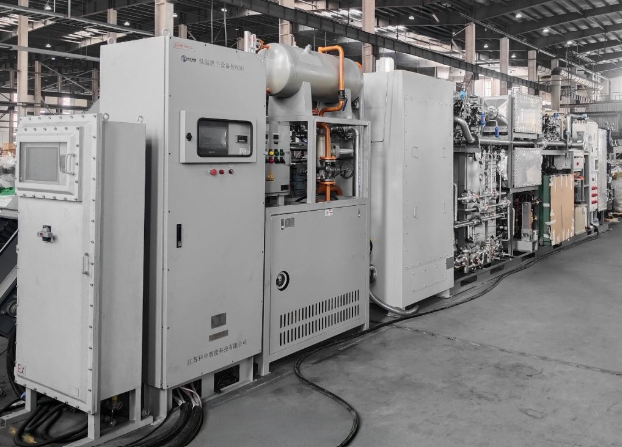
This reality has positioned the rotary desiccant dehumidifier as the non-negotiable core of modern cleanroom HVAC. By utilizing honeycomb substrate matrices impregnated with synthesized metal silicate or molecular sieves (zeolites), industrial desiccant rotors achieve chemical vapor adsorption across microscopic pore structures (2 to 5 Angstroms). Air streams passing through the process sector have moisture extracted down to absolute vapor contents below 0.005 g/kg dry air, translating to supply air dew points of -40°C, -50°C, and down to -70°C.
As advanced energy storage technologies shift from NCM622 chemistries to high-nickel 811, 9-series, and solid-state architectures, moisture sensitivity elevates exponentially. Atmospheric vapor reacts immediately with hexafluorophosphate electrolyte ($LiPF_6$), producing hydrofluoric acid ($HF$), which degrades cathode lattices, induces internal gas venting, and escalates battery fire hazards. Consequently, industrial rotor dehumidification is no longer viewed as general HVAC equipment—it is a critical yield-governing process apparatus.
Key Macro Sourcing Drivers for Rotor Systems
1. Escalating Cleanroom Megawatt Demands
In a typical 20GWh battery gigafactory, cleanroom dehumidification accounts for roughly 35% to 43% of the total plant electrical footprint. Sourcing decisions now center strictly on regenerative coefficient of performance (COP) and waste-heat reactivation loops.
2. Strict Total Cost of Ownership (TCO) Audits
Global EPC engineering firms have moved beyond initial machine price tags. Lifecycle cost models prioritize seal longevity (preventing cross-leakage between reactivation and process air) and heat-recovery bypass designs.
3. Turnkey Accountability vs. Fragmented Sourcing
Procuring panels from one vendor, AHUs from another, and rotors from a third routinely causes project delays and inter-contract finger-pointing when dry rooms fail SAT dew point tests. Single-source turnkey EPC delivery has emerged as the global best practice.