
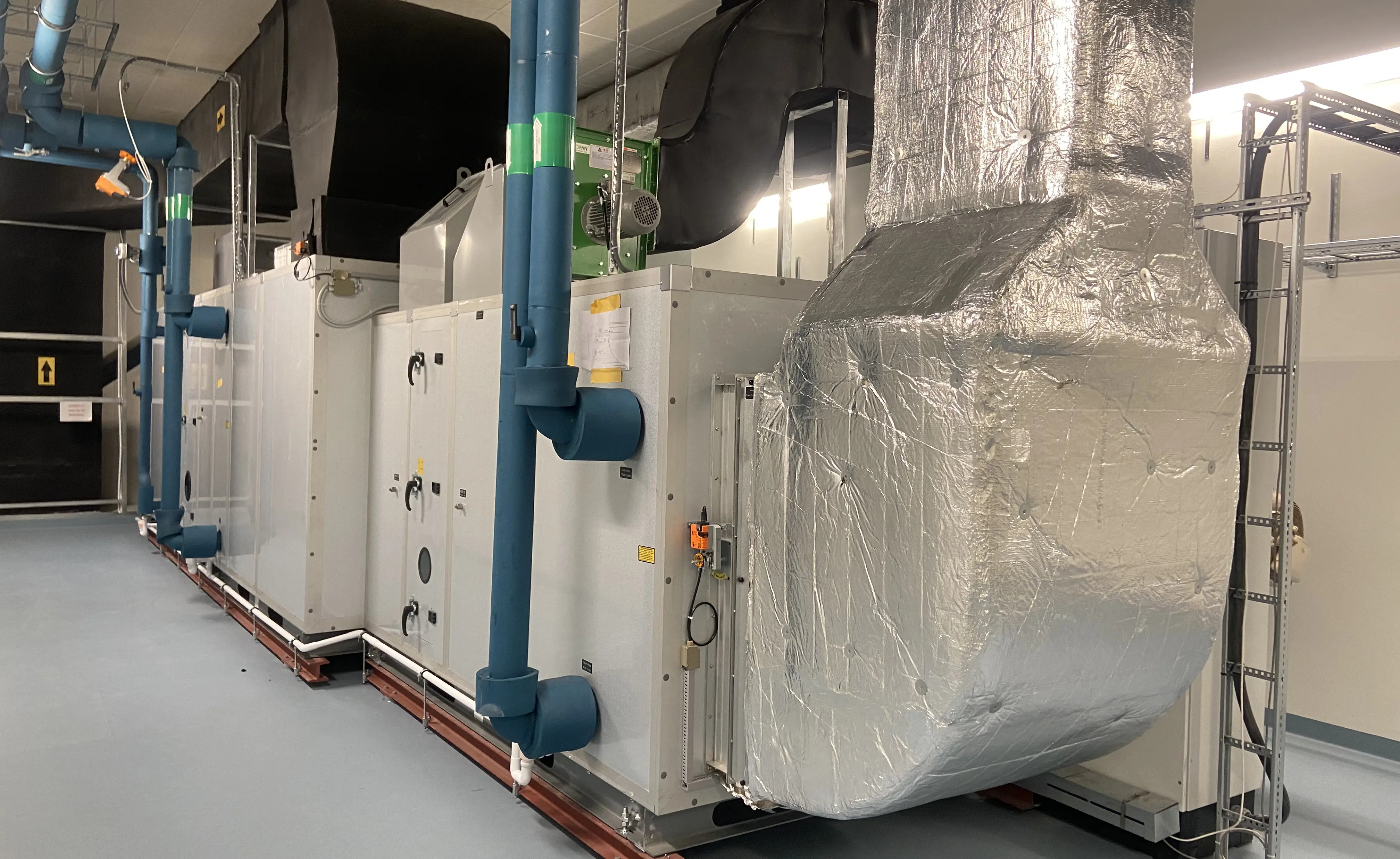
 DP -70°C
Desiccant Dehumidifier
DHU series rotary desiccant dehumidifiers deliver ultra-low dew point air where traditional refrigeration falters, serving battery and military plants.
Explore ModelEngineered for extreme performance in demanding industrial facilities. Select our high-capacity rotary desiccant dehumidifiers, solvent abatement, and cleanroom air handlers built for reliability.
DP -70°C
DHU series rotary desiccant dehumidifiers deliver ultra-low dew point air where traditional refrigeration falters, serving battery and military plants.
Explore Model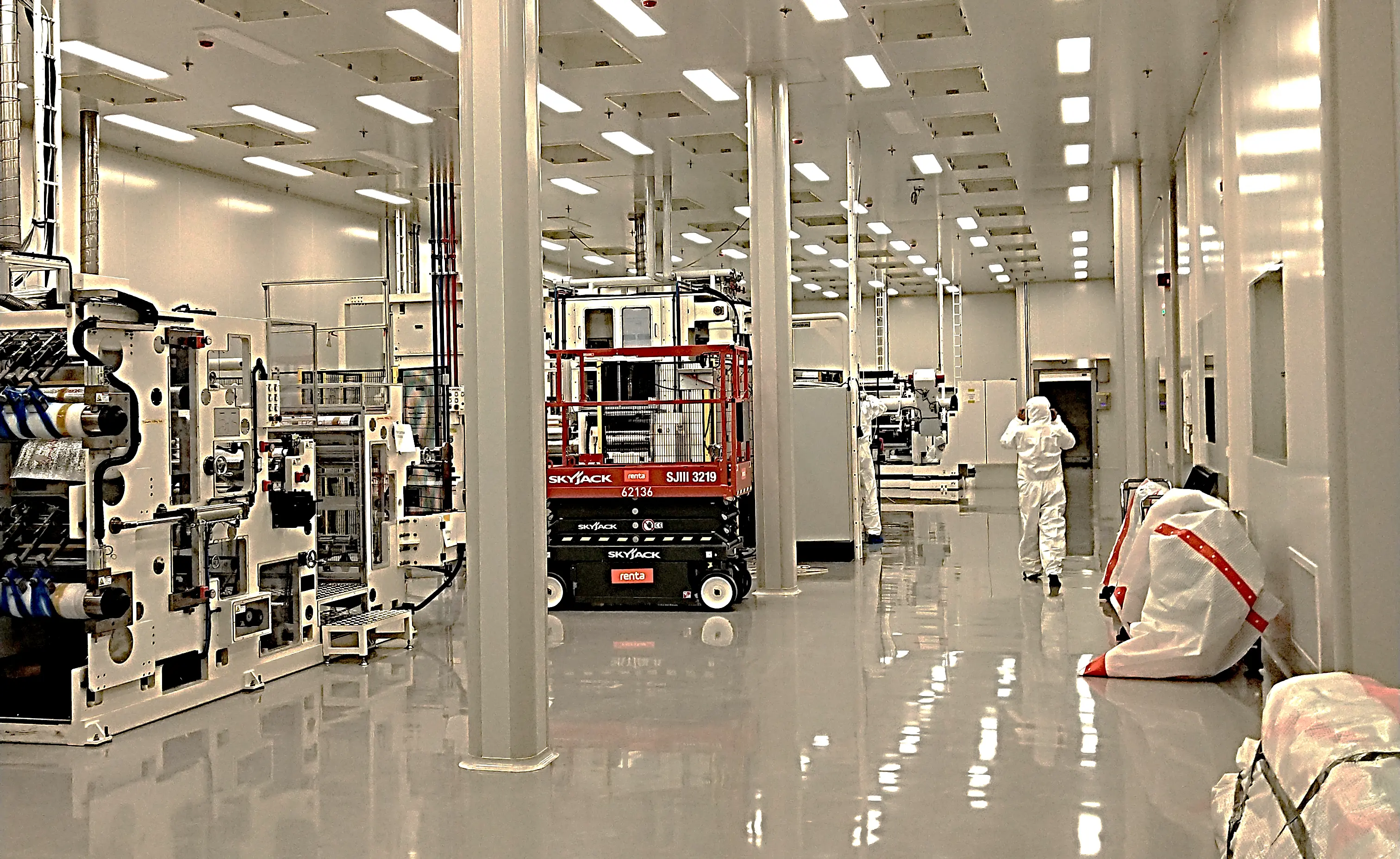 Turnkey EPC
Integrated enclosure, air distribution, low-dew-point dehumidification, and automated controls delivered under unified EPC validation.
Explore Model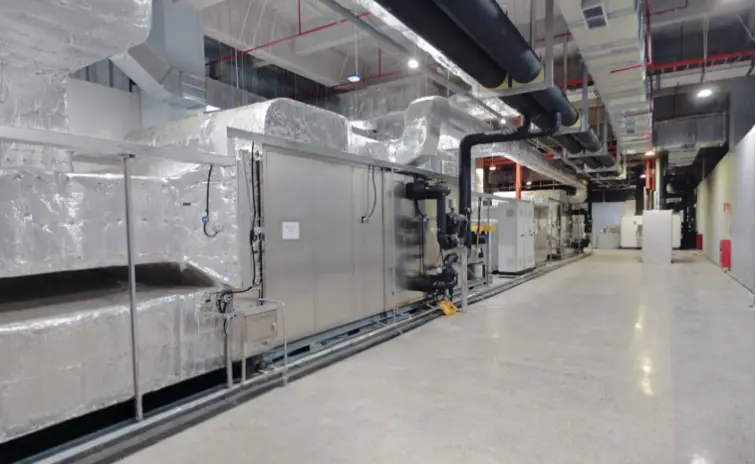 ≥99% Recovery
High-yield condensation and absorption systems designed to capture solvent vapors from battery electrode drying exhausts with high efficiency.
Explore Model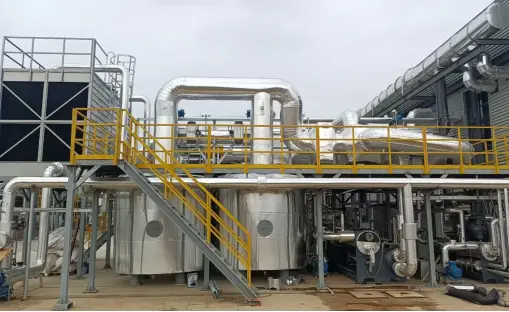 Cooling + RTO
Combines deep-cooling condensation with regenerative thermal oxidation (RTO) to abate hazardous volatile emissions down to clean limits.
Explore Model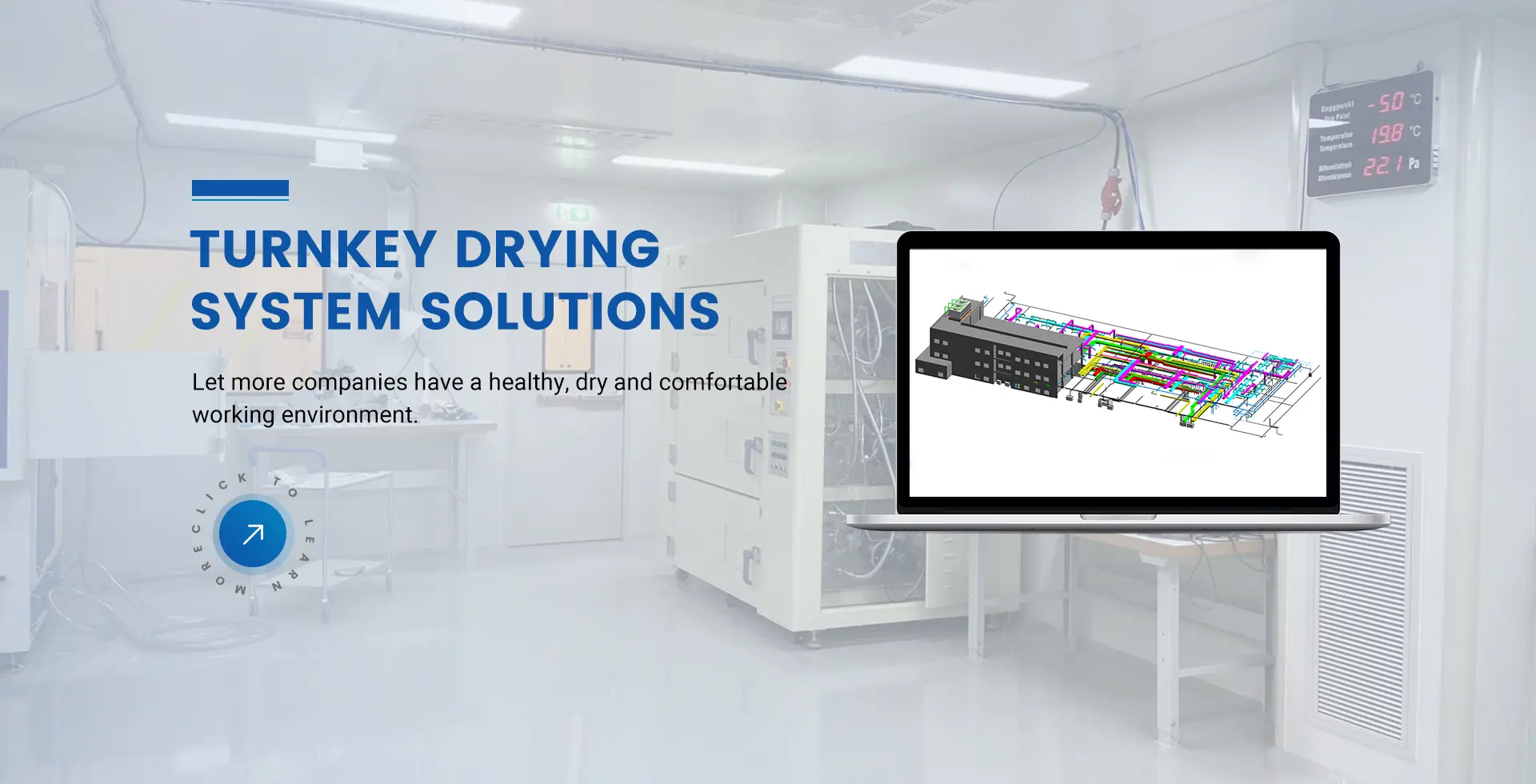 Silica Rotor
In-situ synthesized active silica gel honeycomb rotors offering high sorption surface area, washability, and long mechanical life.
Explore Model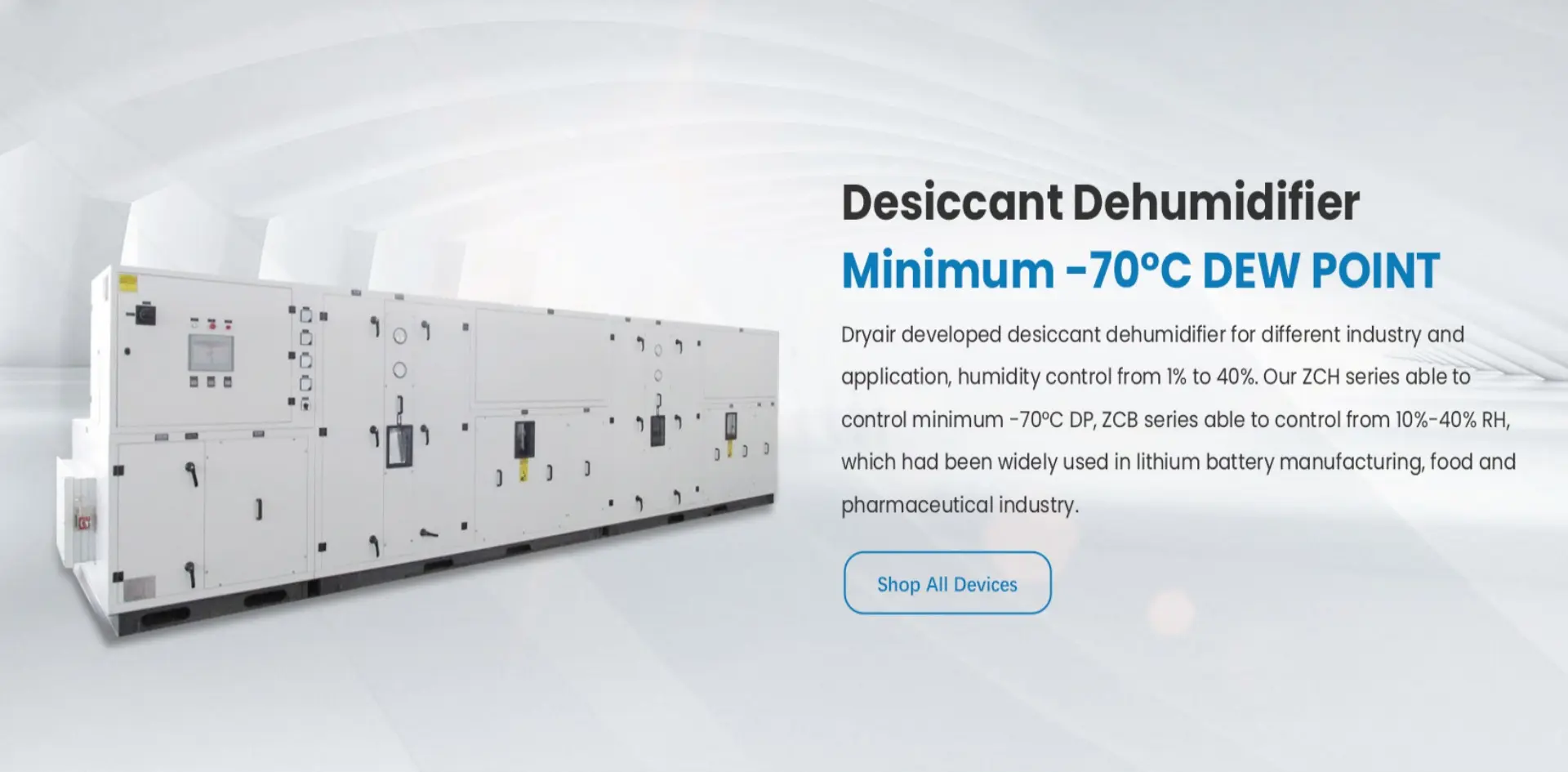 Giga Modular
Standardized, modular clean dry room infrastructure for lithium cell assembly lines with thermal insulation and airtight sealing joints.
Explore Model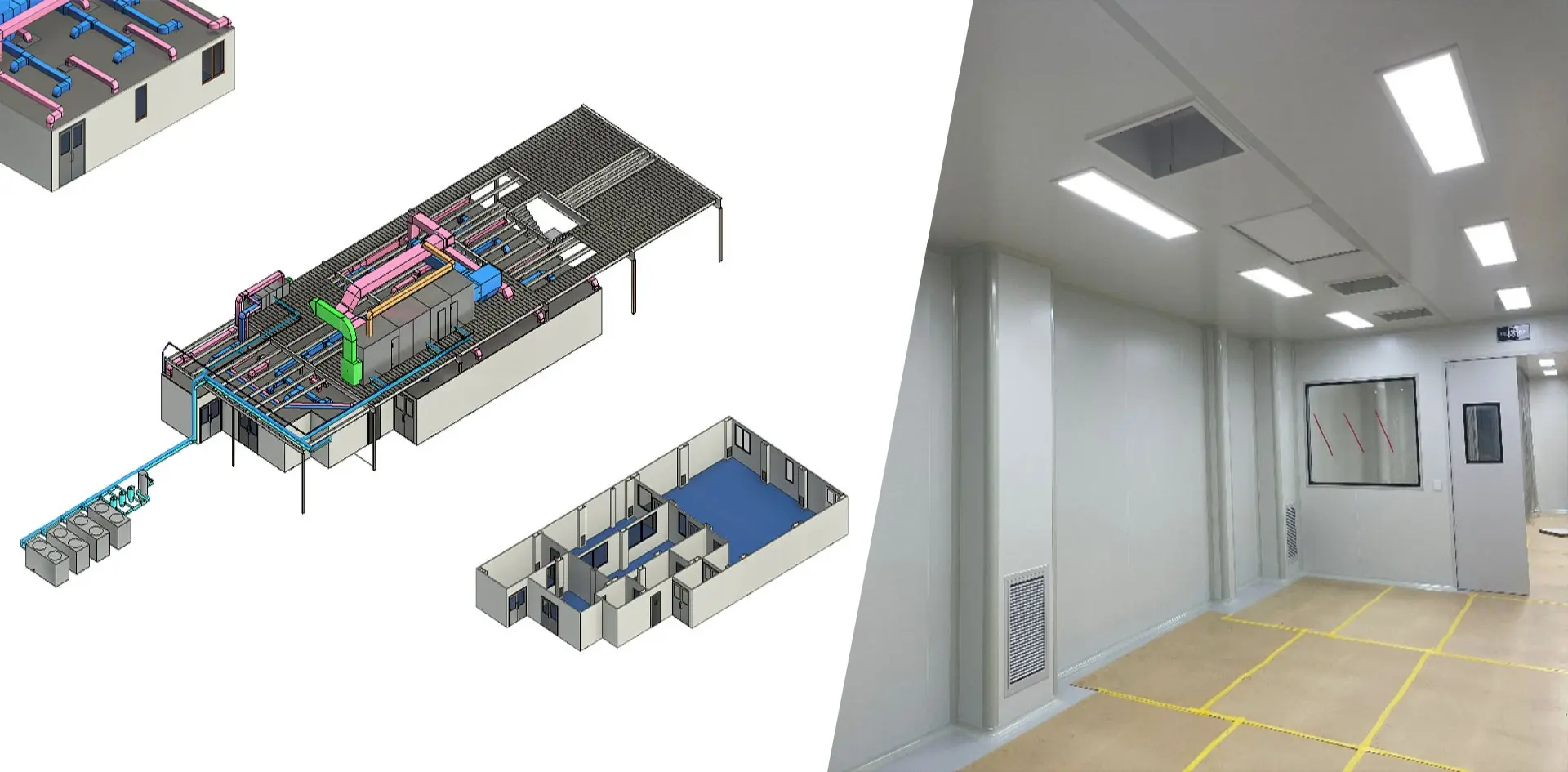 Zero Loss
Continuous closed-loop solvent treatment designed for large-scale battery manufacturing with integrated waste-heat utilization.
Explore Model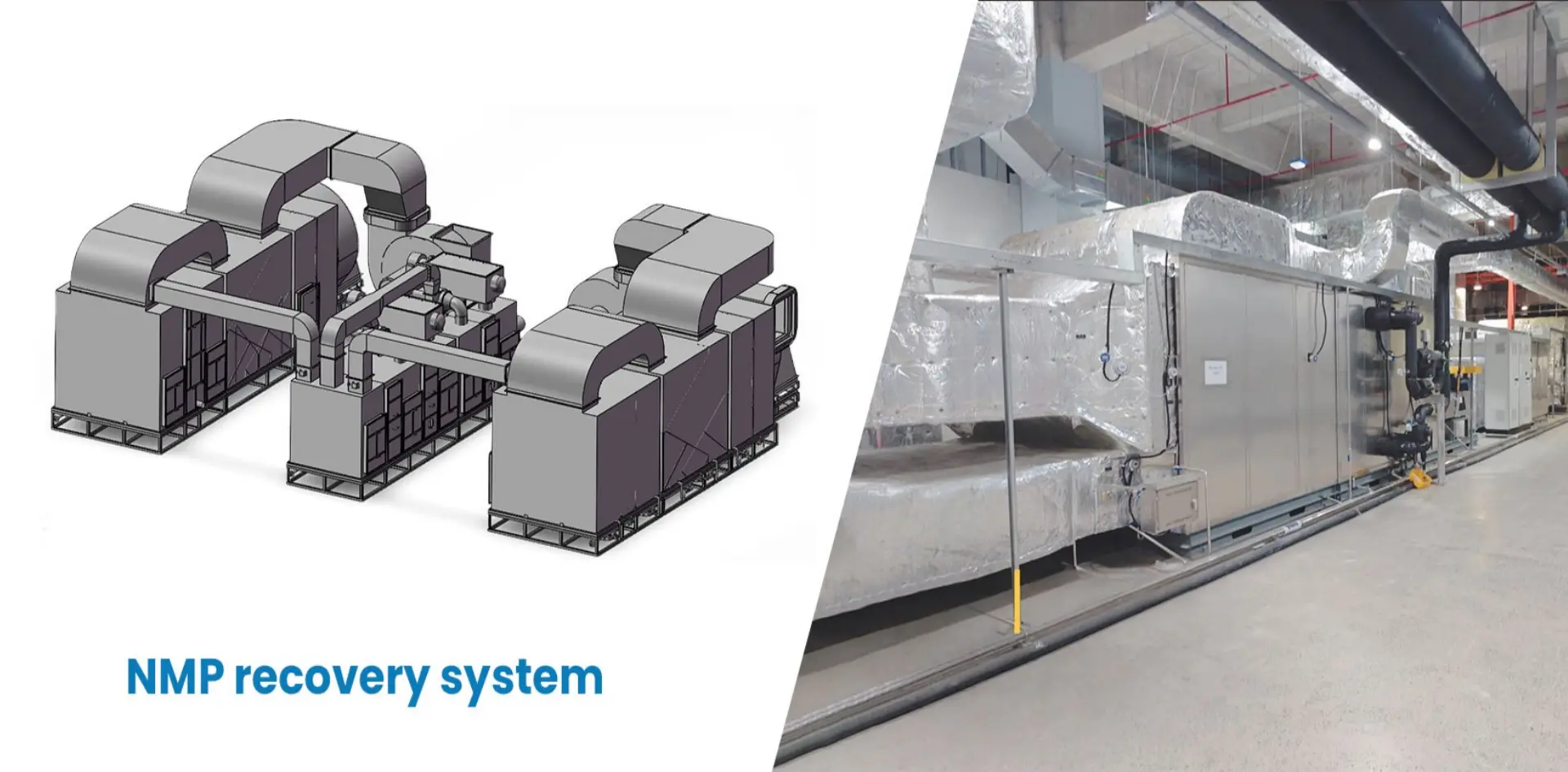 Pre-Cooling
Energy-efficient primary dehumidification systems for warehouse storage, pre-treatment steps, and cleanroom fresh air make-up handling.
Explore ModelSorption rotor technology is evolving from passive inorganic matrices to dynamic, low-temperature catalytic surfaces that balance drying efficiency with energy consumption.
Conventional silica gel rotors require regeneration temperatures between 120°C and 140°C. Next-generation metal-organic frameworks (MOFs) and surface-modified silica matrices decrease regeneration hurdles down to 60°C–80°C, enabling the direct utilization of low-grade industrial waste heat and district thermal water loops.
As lithium-metal anodes and sulfide-based solid-state electrolytes enter industrial-scale pilots, allowable moisture thresholds drop below -60°C dew point down to continuous -75°C to -80°C. Modern multi-stage cascade absorption wheels feature advanced air-seal designs that isolate dry-air boundaries.
Replacing static thermal controls with machine-learning psychrometric algorithms allows real-time modulation of rotor rotational speed, fan CFM, and heating duty based on incoming weather profiles and cleanroom occupancy, reducing facility OPEX by up to 28%.
Moisture control directly affects product stability, chemical safety, and production yields across mission-critical sectors.
Moisture traces react violently with LiPF6 electrolyte salts, forming corrosive hydrofluoric acid (HF) that compromises cathode integrity. Our systems maintain -40°C to -70°C dew point across cell assembly lines, winding booths, and electrolyte injection bays.
Hygroscopic powders, effervescent compounds, and soft gelatin capsules lose active potency or clump under ambient humidity. We configure GMP-compliant dehumidification systems keeping RH tightly controlled between 10% and 25% without microbiological risks.
Built under strict GJB national defense criteria, DryAir protects missile propellant storage, avionic sub-assemblies, and precision optical housings against mold growth, surface corrosion, and dielectric breakdown during deployment and archival storage.
Oil vapor recovery and hazardous solvent purification during petrochemical tanker loading and storage tank maintenance. Condensation treatment combined with regenerative thermal oxidizers (RTO) satisfies environmental emission standards.
Wafer fabrication plants, cleanrooms, and display manufacturing clean-tunnels mandate unyielding dry air supplies to stop microscopic native oxide formation and photolithography delamination issues.
Hangzhou DryAir integrates in-house precision rotor synthesis, laser welding, and automated performance validation chambers to ensure consistency and on-time shipment.
Operating scalable manufacturing halls equipped with CNC automated sheet metal centers, foaming fixtures, and rotor integration rigs to support simultaneous multi-gigafactory contracts.
We synthesize active silica gel and composite molecular sieve matrices directly into inorganic fiber substrates, guaranteeing dynamic structural adhesion without desiccant shedding.
Every custom absorption dehumidifier undergoes strict factory acceptance testing (FAT) inside climate-controlled simulation test chambers before crate packing and sea shipment.
Based in Lin'an, Hangzhou, our manufacturing base benefits from direct access to Ningbo and Shanghai deep-water container terminals, facilitating rapid sea freight to global project destinations.
International factory planning requires regional safety alignment, standardized electrical layouts, and ongoing field service support.
DryAir products are engineered to conform with regional codes: European CE Machinery/EMC/PED directives, North American UL 1995/508A and CSA electrical assemblies, ASME pressure vessels, and Eurasian EAC certifications.
To safeguard high-uptime facilities abroad, we offer a dedicated overseas lifecycle program including scheduled site maintenance visits, pre-commissioning alignment, localized spare parts consignment, and remote SCADA monitoring.
From initial latent load modeling to ductwork configuration, airtight envelope paneling, and dry-air distribution commissioning, our project team provides a single point of accountability for cleanroom dew points.
Aligning plant targets with equipment sizing avoids capital over-allocation while protecting sensitive materials.
| Industrial Application Area | Target Moisture / Dew Point | Core System Selection | Engineering Benefit |
|---|---|---|---|
| Lithium Cell Assembly & Electrolyte Injection | -40°C to -60°C DP | Turn-key Dry Room System | Prevents HF generation and cell swelling during mass manufacturing. |
| Solid-State & Next-Gen Lithium Metal Cells | Down to -70°C DP | DHU Desiccant Dehumidifier | Maintains extreme dryness for metallic lithium foil processing. |
| Electrode Coating & Anode/Cathode Drying | ≥99% Recovery | ZJRH NMP Recovery System | Recovers valuable solvent vapors with waste-heat integration. |
| Hygroscopic Pharma Powders & Packaging | 10% - 25% RH | Low Dew Point Rotor Unit | Prevents active ingredient degradation and tableting blockages. |
| Military Storage, Weapons & Avionics | ≤35% - 40% RH | Defense-Grade Dehumidifier | Meets GJB military specifications for long-term corrosion prevention. |
| Chemical Tankers & VOC Industrial Handling | Emission Compliant | JEN VOC Abatement System | Combines deep chill condensation with thermal oxidation cleanup. |
| Pre-Cooling & Factory Warehousing | 45% - 60% RH | Refrigerative Dehumidifier | Cost-effective moisture extraction for primary make-up air streams. |
Clear technical insights to support system specification and vendor qualification.
DryAir absorption silica gel and molecular sieve composite rotors reliably provide discharge air down to a continuous -70°C dew point. When arranged in multi-rotor cascades inside hermetically sealed air handlers, targets down to -75°C can be held for solid-state cell lines.
Unlike cheaper rotors where desiccant slurry is simply coated over corrugated paper, DryAir utilizes an in-situ chemical reaction that binds active silica gel directly to ceramic inorganic fibers. The desiccant cannot shake loose, is washable with water, and resists high thermal regeneration cycling.
Yes. DryAir provides turnkey dry room solutions covering initial thermodynamic calculations, panel envelope layout, dehumidifier fabrication, on-site mechanical erection, and final validation. We have completed projects for companies like Tesla, Northvolt, and TTI.
Our ZJRH NMP solvent recovery systems consistently hit a solvent capture efficiency rating greater than or equal to 99%. Combining low-temperature chilling stages with internal heat-pipe exchangers, the unit recovers high-purity solvent while cutting energy consumption on coating lines.
Systems can be certified to CE (Machinery, EMC, Pressure Equipment), UL 1995/UL 508A, CSA C22.2, ASME Boiler and Pressure Vessel standards, and EAC specifications for the Eurasian market. All manufacturing runs under audited ISO 9001 and GJB quality programs.
We offer an optional 2-year overseas technical agreement covering remote SCADA monitoring, annual site audit check-ups by senior engineers, and regional spare-part stock kits (sealing belts, sensors, drive chains) to maintain facility uptime.
Explore our full line of rotary desiccant units, dry room packages, and solvent abatement hardware.
Desiccant
Designed for low humidity needs down to -70°C dew point using energy-saving regeneration heat exchangers.
Technical Details
Integrated Dry Room
Insulated airtight cleanrooms with integrated air distribution and balancing for battery lines.
Technical Details
Recycling
Recovers N-Methyl-2-pyrrolidone from electrode coating ovens, cutting production expenditures and stack emissions.
Technical Details
RTO Skid
Two-stage volatile organic compound abatement combining chilling loops with thermal oxidation.
Technical Details Custom Dehumidifier
High-CFM rotary desiccant units built for multi-bay aerospace hangars, dry dock preservation, and munitions caches.
Technical Details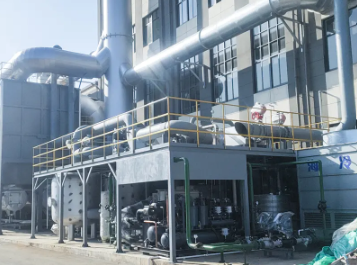 Oil & Gas
Cryogenic and deep-condensation systems capturing fuel and solvent vapors during petrochemical loading.
Technical Details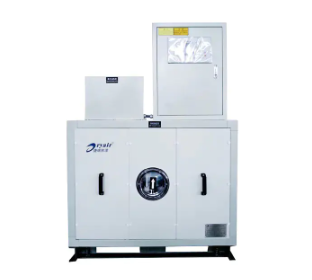 GMP Grade
Washable silica rotors engineered with stainless steel casings and HEPA filtration for cleanroom GMP environments.
Technical Details
Refrigeration
Cost-effective moisture extraction for warehouses, food packaging operations, and preliminary stage air chilling.
Technical Details