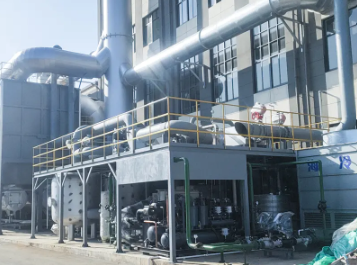
Desiccant Dehumidifier
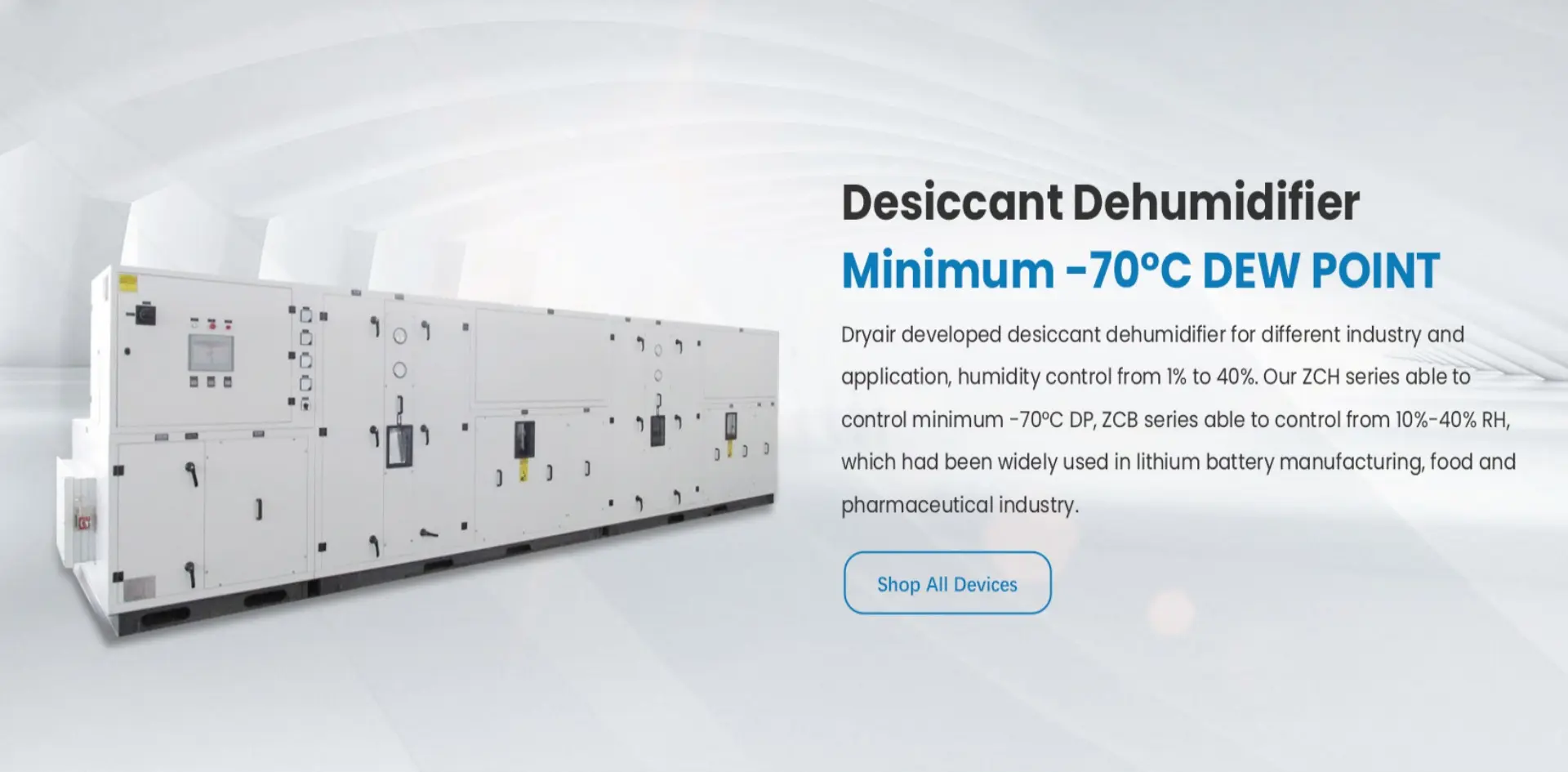
DHU series rotary desiccant dehumidifiers provide ultra-low supply air dew points down to -70°C with patented rotor sealing and waste-heat recovery integration.
Explore DehumidifierEngineered for extreme moisture protection, continuous low dew-point retention, and energy-conserving thermal regeneration across global industrial ecosystems.
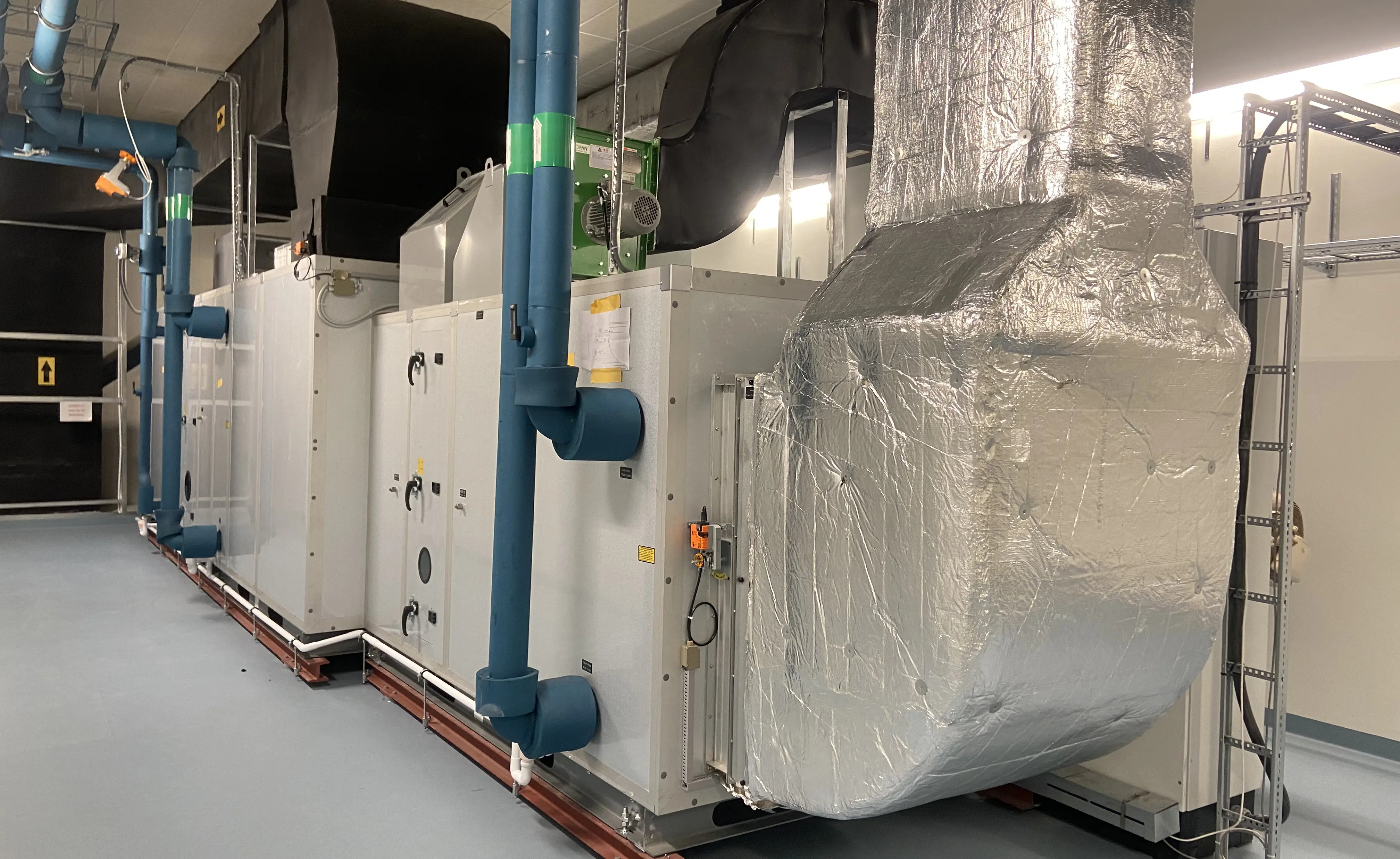
DHU series rotary desiccant dehumidifiers provide ultra-low supply air dew points down to -70°C with patented rotor sealing and waste-heat recovery integration.
Explore Dehumidifier
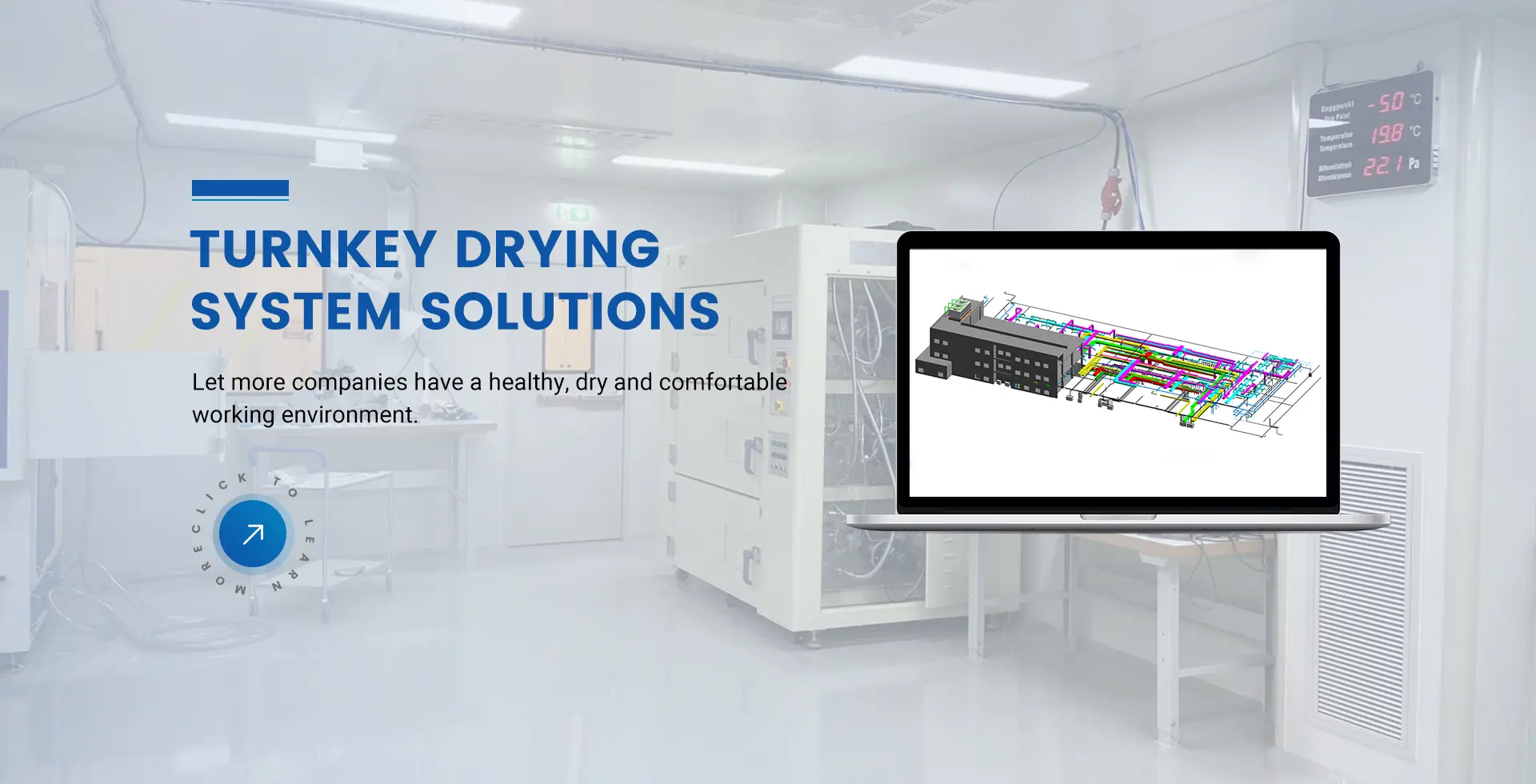
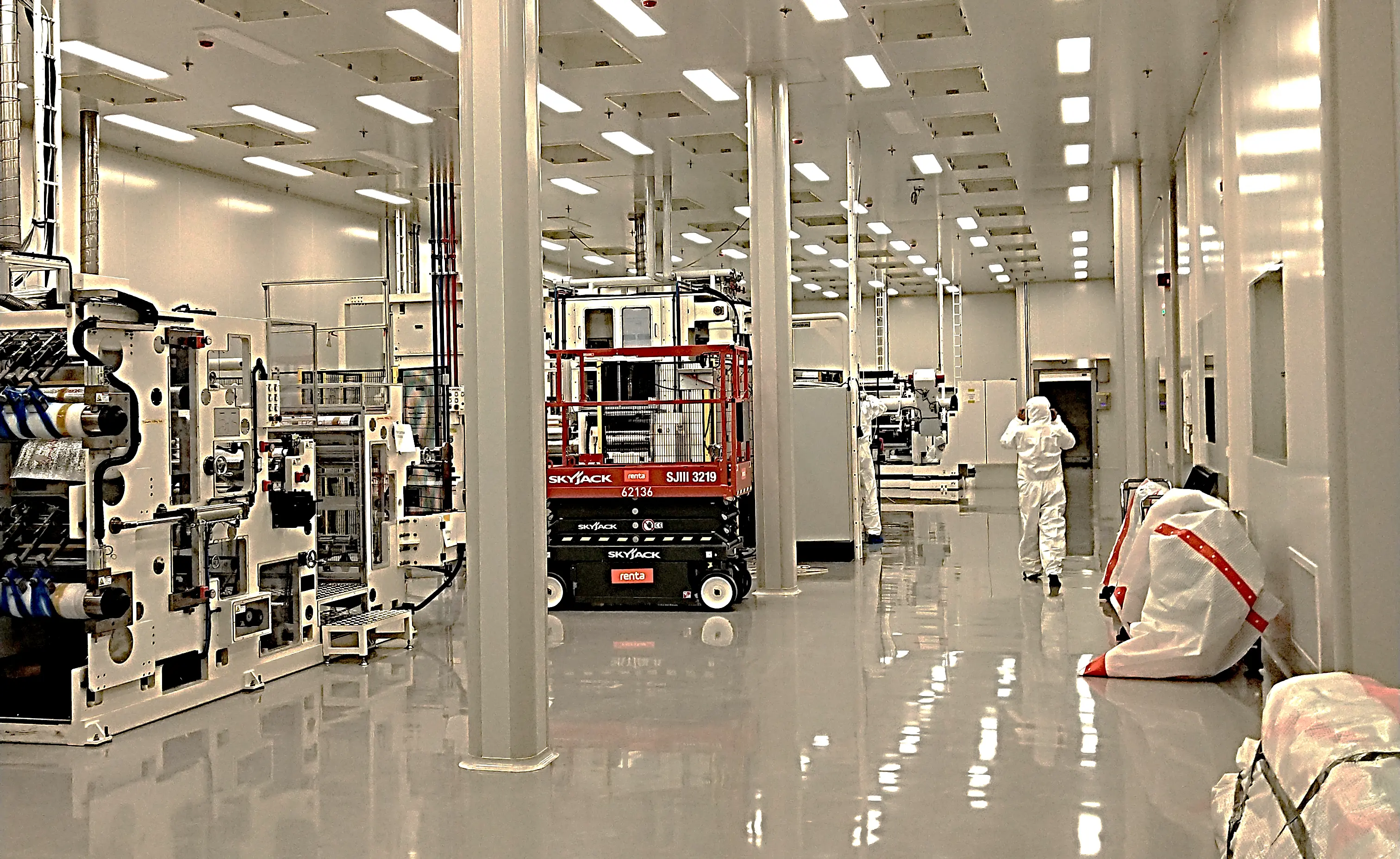
Comprehensive environmental enclosure EPC: hermetic air distribution, cleanroom construction, low-dew-point AHU cascading, and multi-point psychrometric control.
View Turnkey System
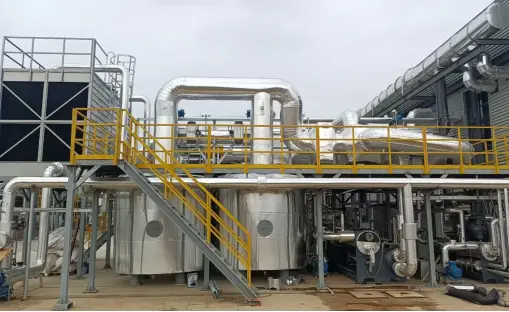
High-efficiency solvent reclamation for electrode coaters. Multi-stage chill condensation and molecular sieves secure over 99% N-Methyl-2-pyrrolidone recycling.
Inspect Recovery Plant
Thermal regenerative oxidizers coupled with cryogenic recovery to eliminate industrial gaseous pollutants and meet strict international environmental exhaust mandates.
Discover VOC Solution
Mechanical compressor-driven condensing units engineered for bulk moisture extraction, pre-cooling stages, and broad ambient commercial storage areas.
View Refrigerative Units
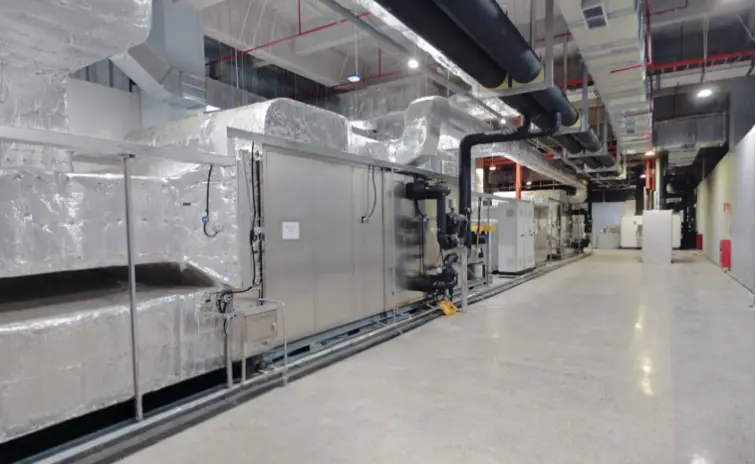
Cascaded double-rotor architectures operating in series with intermediate chillers to maintain stable supply air dew points below -60°C under severe latent room loads.
View Double-Rotor AHU
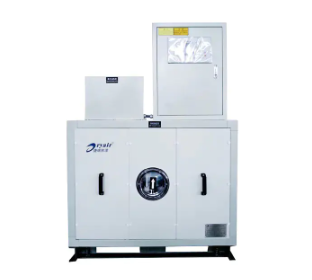
Washable, bacteriostatic desiccant rotors housing stainless-steel casing designed for pharmaceutical solid dosage, effervescent compounding, and blister packing lines.
View Sanitary Systems
ATEX and explosion-proof certified deep-condensation packages designed for volatile hydrocarbon vapor capture during tanker terminal loading and refinery transfers.
View Vapor CondensersAs advanced manufacturing transitions from standard climate control toward micro-environmental precision, industrial dehumidification has transformed from a supplementary HVAC utility into a mission-critical process safeguard.
The global shift toward electric mobility and stationary Energy Storage Systems (ESS) has unleashed unprecedented demand for ultra-low dew point dry rooms. Battery chemistries like high-nickel NCM, silicon-anode blends, and all-solid-state cells demand continuous environments below -50°C to -70°C dew point to eliminate hydrofluoric acid (HF) generation and prevent microscopic thermal runaway defects during jelly-roll winding, pouch stacking, and electrolyte injection.
Global regulatory bodies (FDA, EMA, NMPA) enforce microclimate stability across API synthesis, fluid-bed drying, effervescent tableting, and cold-form blister packing. Moisture absorption triggers rapid API degradation, chemical hydrolytic decomposition, and powder agglomeration. Modern cleanrooms demand synchronized humidity control decoupled from sensible cooling to maintain 10%–20% RH without thermal subcooling inefficiencies.
Desiccant regeneration consumes significant thermal energy. With industrial electricity and carbon tariffs climbing, worldwide plant operators demand heat-pump regeneration, thermal wheel condensation recycling, and direct integration with factory waste-heat loops (steam condensate, compressor jacket water, RTO exhaust heat), reducing life-cycle operating costs by up to 35%.
Over 15 years of continuous psychrometric rotor research, national standard laboratory testing, and successful deliveries for tier-one manufacturers globally.
Under-specifying dew points compromises final product yields, while over-specifying introduces unnecessary thermal operating expenses. Refer to verified industry sizing benchmarks:
| Industrial Process Application | Target Dew Point / Relative Humidity | Contaminant / Hazard Mitigated | Primary Architecture | Equipment Link |
|---|---|---|---|---|
| Lithium-Ion Cell Assembly & Electrolyte Injection | -40°C to -60°C DP | Hydrofluoric acid (HF) formation, gas swelling | Turnkey Dry Room (Double-Rotor) | Dry Room EPC |
| Next-Gen Solid-State & Lithium-Metal Cells | -60°C to -70°C DP | Anode passivation, lithium-nitride reactivity | Ultra-Low DP Desiccant Dehumidifier | Desiccant Units |
| Cathode Electrode Coater Exhaust Handling | ≥99% Recovery Yield | N-Methyl-2-pyrrolidone toxic emissions & loss | NMP Deep-Cool Condenser + Sieve | NMP Recovery |
| Hygroscopic Pharma Powders & Gelatin Encapsulation | 10% to 25% RH (-10°C to -20°C DP) | Powder caking, hydrolytic API degradation | Sanitary Desiccant Air Handler | Pharma Rotary |
| Defense, Missile Silos & Avionics Preservation | ≤35% to 40% RH (Ambient) | Electrochemical rust, pyrotechnic destabilization | GJB-Compliant Military Desiccant Dehumidifier | Defense Dehum |
| Petrochemical Fuel Storage & Hydrocarbon Transfer | EPA / EU Emission Limits | Benzene, toluene, volatile VOC air pollution | Deep-Cool Condensation + RTO Plant | VOC Systems |
| Raw Material Bulk Storage & Pre-Cooling Intake | 45% to 60% RH | Mold formation, structural condensation puddling | Mechanical Refrigerative Dehumidifier | Refrigerative |
From preliminary load calculation to validation and two-year on-site support, our unified engineering team assumes complete single-point operational accountability.
Calculation of room infiltration rates, envelope vapor transmission, personnel moisture emission, and thermal load balancing.
CAD layout, double-wall hermetic duct airflow modeling, CFD circulation analysis, and energy-conserving heat recovery integration.
In-house manufacturing under ISO 9001 and GJB standards with pre-commissioning testing in our national enthalpy room.
Specialized cleanroom airtight assembly, AHU docking, piping, sensor calibration, and -70°C dew point stress validation.
Preventative maintenance schedules, telemetry monitoring, rotor reactivation inspections, and guaranteed 24-month field support.
Ambient psychrometric realities vary across global industrial zones. We tailor dehumidification configurations to withstand local climate extremes without sacrificing energy targets.
High relative humidity paired with ambient temperatures reaching 38°C puts massive moisture burdens on fresh air intakes (exceeding 25g/kg absolute humidity). In facilities across Malaysia, Indonesia, and the US Gulf Coast, DryAir systems employ deep chilled-water coils for mechanical bulk condensing down to 8g/kg prior to introducing air to the primary desiccant rotor, preventing desiccant thermal flooding.
Facilities across Scandinavia and Germany encounter bone-dry external air during sub-zero winters that spikes sensible heating demands, contrasted with mild, moist summers. DryAir modular AHUs leverage heat-recovery variable bypass dampers, balancing sensible and latent loads while meeting stringent CE, EN 1886 mechanical cleanroom casing leakage classifications (L1, D1, T2/TB2).
Delivering turn-key dry room packages for US-based EV manufacturers requires full NFPA 70 / NEC electrical compliance, UL-listed control panels, and ASME certified pressure vessels. Process air streams must maintain precise micro-positive pressure (15–30 Pa) against ambient environments to completely negate unconditioned perimeter leakage.
As battery chemists advance to sodium-ion, solid electrolytes, and high-voltage cathodes, dehumidification architectures are evolving to meet these rigorous operating demands:
While traditional silica gel and synthetic zeolite rotors provide reliable -70°C dew point air, Metal-Organic Frameworks (MOFs) allow structural tuning at sub-nanometer levels. MOF-impregnated rotor wheels desorb moisture at 65°C to 80°C instead of 130°C to 140°C, opening the door for low-grade industrial waste heat and solar thermal fluid regeneration.
Modern gigafactories are moving away from static setpoints. DryAir is integrating real-time neural psychrometric estimators into Siemens and Allen-Bradley platforms. By reading real-time worker movement, weather forecasts, and electrode production pacing, AI dynamically modulates rotor RPM, face-bypass ratios, and regeneration heaters, eliminating energy waste during partial-load shifts.
Upcoming battery regulations (such as EU Battery Passport mandates) penalize solvent exhaust and carbon footprints. Future systems pair NMP condensation with integrated bio-scrubbers and zero-flue VOC oxidation loops. This allows 99.5%+ NMP reuse while purifying exhausted warm air for building preheating, cutting plant carbon footprints.
Clear, audited technical answers regarding rotor physics, installation prerequisites, worldwide certifications, and warranty operations.
Access technical datasheets, CAD dimensional footprints, and engineering support for all standard and bespoke dehumidification configurations.
High-efficiency desiccant wheel with multiple reactivation source options (electric, steam, direct-fired gas, or thermal oil loops).
View Desiccant DHU
PIR fire-retardant cleanroom wall systems, hermetic airlocks, epoxy antistatic flooring, and continuous monitoring arrays.
View Dry Room EPC
Multi-stage heat-exchange condensation units providing automated VOC stripping and reduced factory operating expenses.
View NMP System
Regenerative thermal oxidizers maintaining combustion temperatures over 800°C for complete VOC breakdown (≥99.5% DRE).
View VOC Units
Built with scroll or screw compressors, eco-friendly refrigerants (R410A/R134a), and integrated defrost controls for general moisture management.
View Refrigerative Units
Heavy-duty anti-vibration framing, marine-grade aluminum coatings, and automated self-clearing fault protocols for defense and aerospace readiness.
View Defense Systems
Closed-loop, low-temperature condensation equipment engineered to recover volatile solvent vapors from chemical handling and fuel terminals.
View Vapor Recovery
Engineered for semiconductor assembly, flat-panel display fabs, and optical coating cleanrooms requiring precise ±1% RH tolerance.
View Precision AHU