
Flagship Dehumidification & Environmental Systems
Engineered to deliver uninterrupted, mission-critical atmospheric dew-point stability with audited thermal energy recovery.
 DP -70°C Control
Industrial Desiccant Dehumidifier
DHU rotary absorption systems delivering supply air moisture levels down to -70°C dew point for lithium battery and precision dry environments.
Configure Specifications Full EPC Turnkey
Turnkey Dry Room System
End-to-end integrated environmental enclosure, air distribution balance, thermal envelope, and strict validation under a unified EPC delivery.
View Turnkey Portfolio ≥99% Recovery
NMP Solvent Recovery System
Recaptures N-Methyl-2-pyrrolidone from electrode coating lines, dramatically cutting purchasing expenditure and fulfilling environmental compliance.
Explore Recovery Units Cryo + RTO
VOC Abatement Systems
Deep condensation cooling paired with high-efficiency Regenerative Thermal Oxidizers (RTO) for extreme volatile organic gas destruction.
View Abatement Data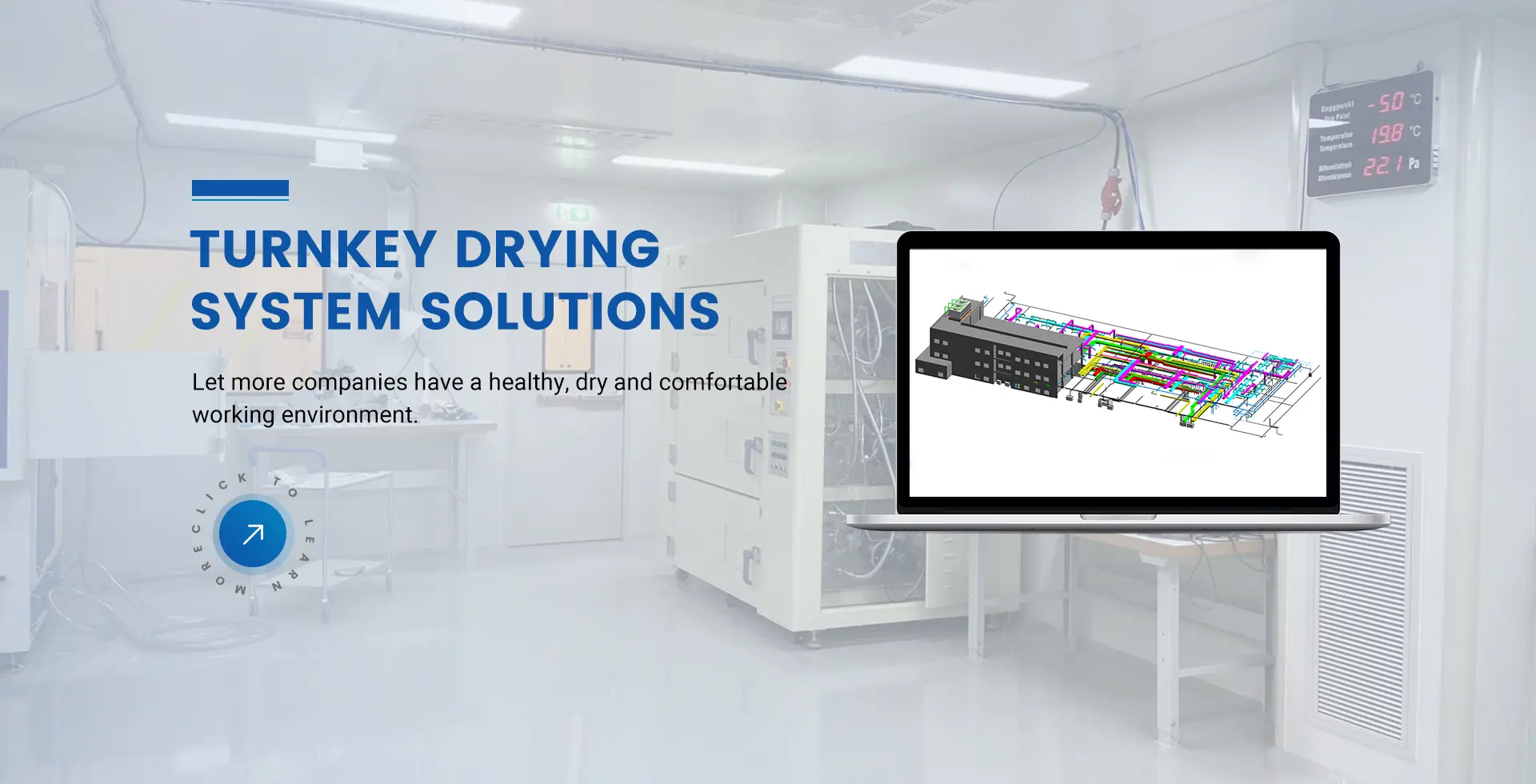 Pre-Cooling Stage
Refrigerative Dehumidifier
Commercial and industrial refrigeration condensing modules engineered for warehouse moisture moderation and secondary desiccant pre-treatment.
Technical Datasheet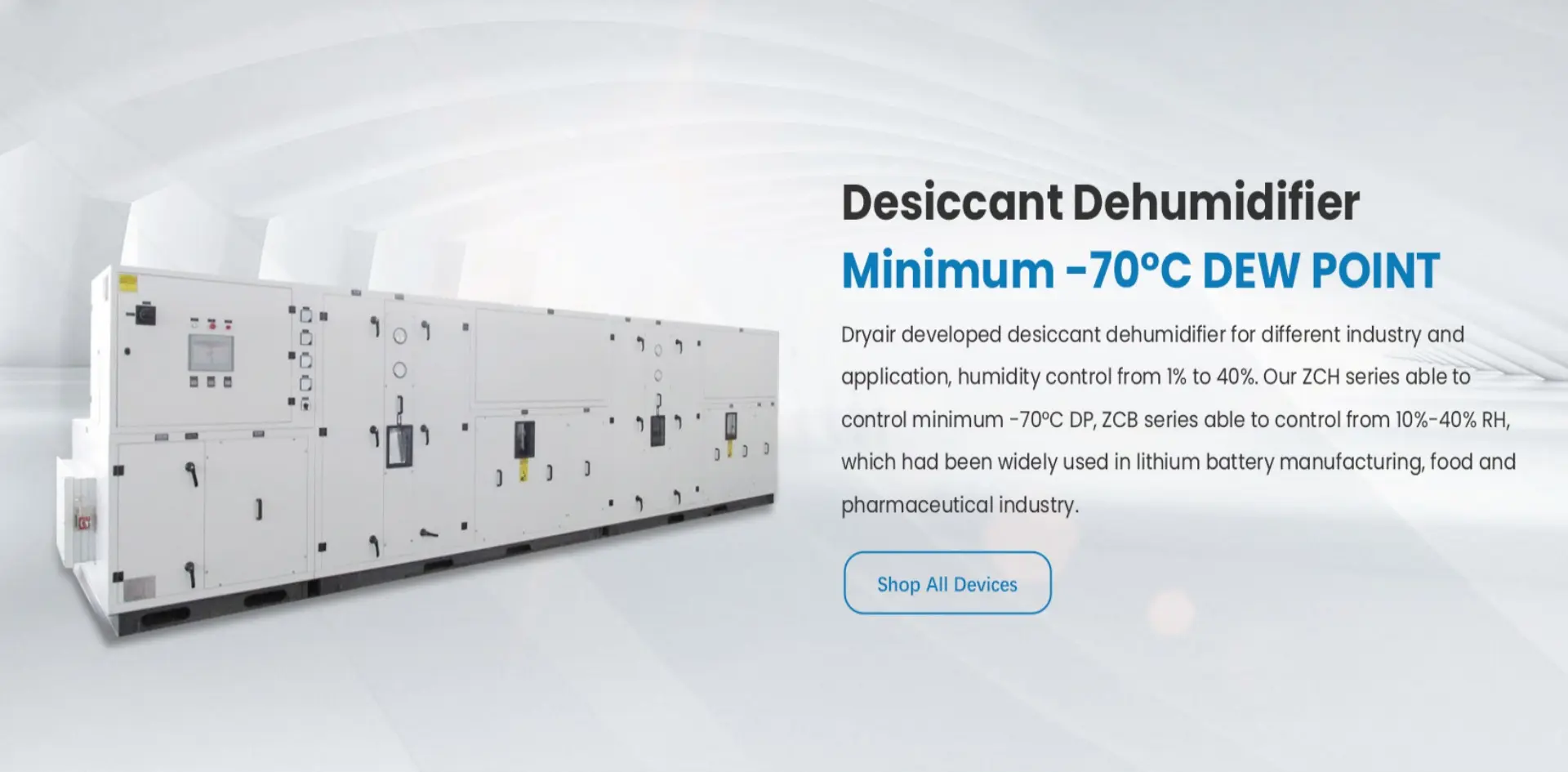 Cleanroom Class ISO 6-7
Lithium Assembly Cleanroom
Airtight, negative/positive pressure-managed envelope modules maintaining moisture concentrations under 10 ppm for cathode handling and electrolyte dosing.
Cleanroom Solutions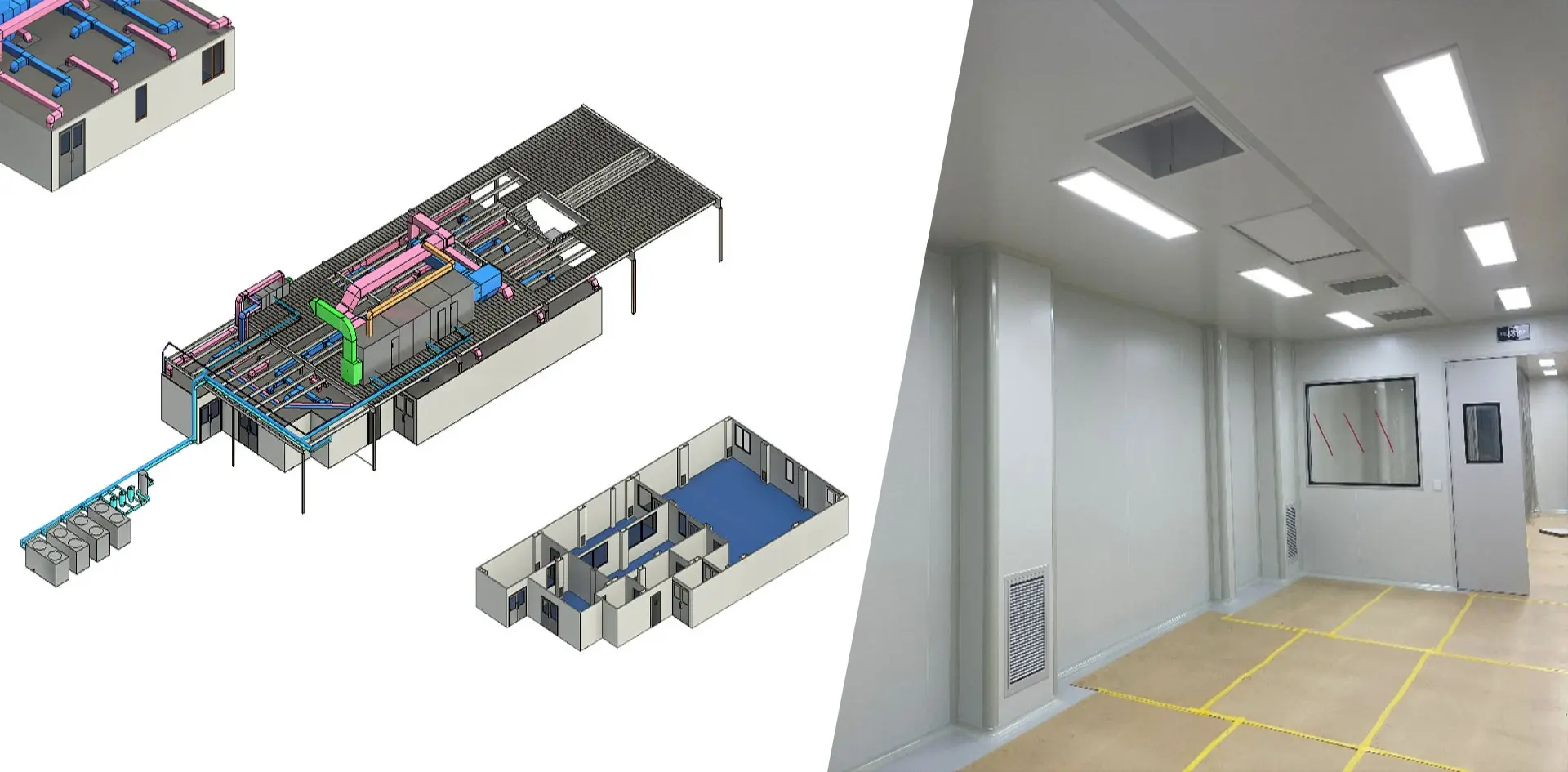 Waste-Heat Recovery
Multi-Rotor Absorption Systems
Dual and triple-rotor continuous desiccant arrays integrated with waste heat regeneration coils, reducing electrical parasitic load by up to 35%.
Calculate Energy Savings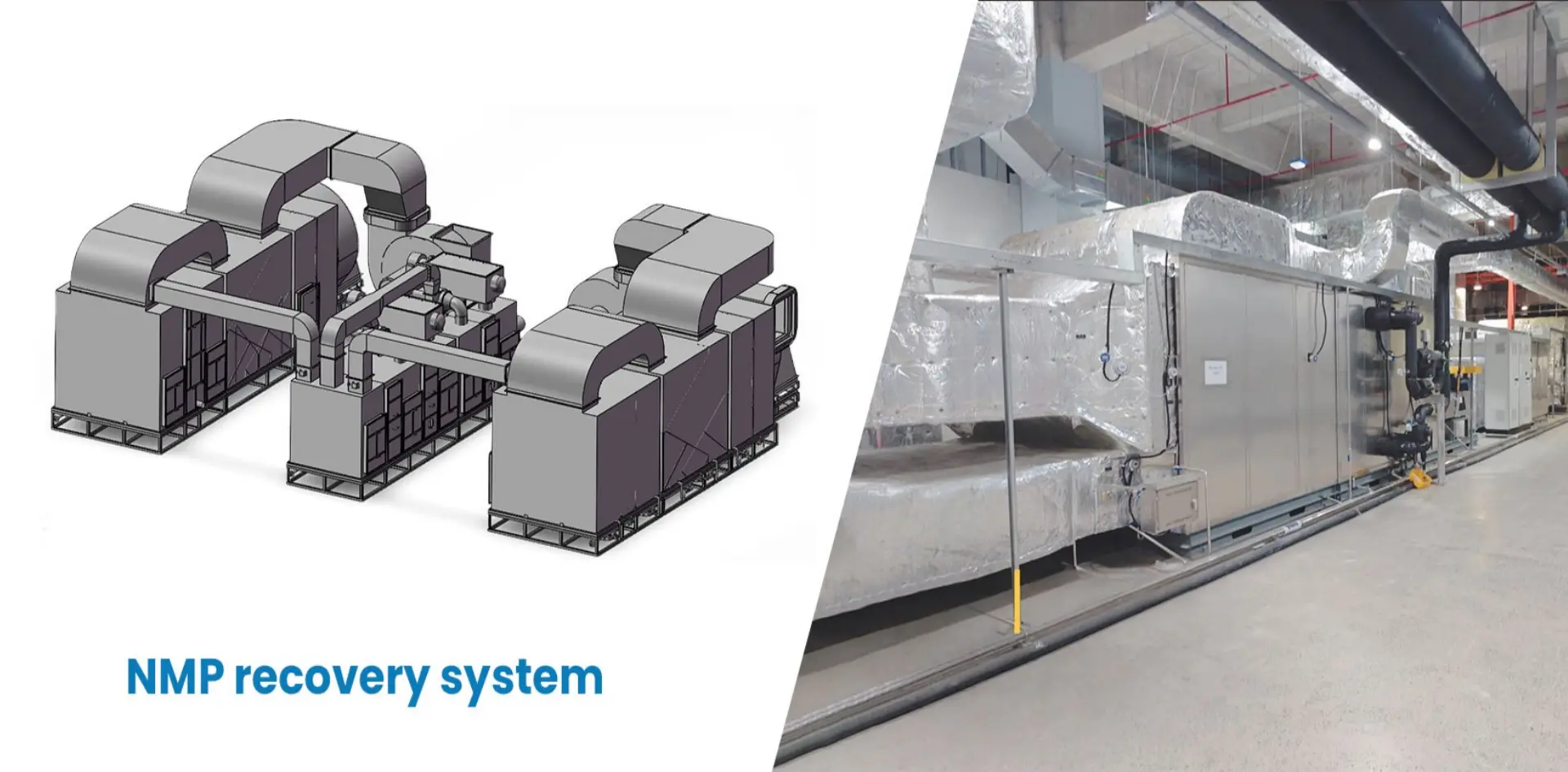 ATEX / Explosion-Proof
Explosion-Proof VOC System
Specially sealed solvent vapor treatment installations designed for chemical plants, battery slurry compounding, and volatile fluid terminals.
ATEX ConfigurationsThe Physics of Deep Desiccant Dehumidification & Microclimate Integrity
Industrial desiccant dehumidification is not merely an extension of conventional HVAC cooling coils; it represents a fundamental thermodynamic divergence. While refrigeration relies on lowering air temperatures below its dew point to precipitate bulk water vapour—rendering it inefficient and physically constrained below 4°C due to evaporator icing—rotary desiccant systems utilize synthetic honeycomb structures impregnated with metal silicate or functionalized zeolite matrices to directly extract water molecules via capillary condensation and chemical adsorption down to -70°C dew point.
Founded in 2010, Hangzhou DryAir Treatment Co., Ltd. has established an unrivaled domestic and international benchmark. Operating across a state-of-the-art manufacturing campus in Qingshan Industrial Park, Lin'an, Hangzhou, DryAir commands a domestic market share exceeding 30%, sustained by continuous thermodynamic innovation, computational fluid dynamics (CFD) optimization, and airtight room isolation engineering.

China Factory 4.0: Unmatched Supply Chain Resilience & Scalability
How DryAir eliminates bottleneck exposure for global Tier-1 battery makers and cleanroom infrastructure contractors.
200+ Units/Month Throughput
With an automated, multi-bay fabrication line spanning sheet metal CNC processing, robotic seam welding, and specialized rotor integration bays, DryAir delivers concurrent gigawatt-scale equipment orders without phase delays.
SCALABILITY ADVANTAGEEnd-to-End Component Verticalization
Unlike regional integrators subject to third-party rotor lead times, our tightly coupled domestic supply chain sources premium Swedish and Japanese desiccant matrices, industrial fans, and precision drives within rapid logistics radii.
ZERO BOTTLENECKSAudited In-House Environmental Chambers
Every single rotary desiccant dehumidifier undergoes end-of-line verification inside our full-scale environmental simulation test station. Dew point integrity, air leakage, and thermal efficiency curves are validated before overseas crating.
MIL-SPEC VERIFICATIONMacro Industry Solutions: Precise Atmospheric Dew Point Matrix
Cross-industry engineering parameters comparing required dew points, contamination risks, and dedicated DryAir architectures.
| Industrial Sector | Moisture Vulnerability & Risk Mode | Required Supply Dew Point | System Architecture & Heat Integration |
|---|---|---|---|
| Lithium-ion Battery Manufacturing | Moisture combines with LiPF6 electrolyte salts to generate hydrofluoric acid (HF), causing cell swelling, capacity degradation, and safety failure. | -40°C to -60°C DP | Dual-rotor cascade desiccant dehumidifiers with closed-loop dry-air return, desiccant purge sector, and chilled water pre-cooling. |
| Solid-State & Lithium-Metal Cells | Lithium metal reacts violently with atmospheric water vapour; solid electrolytes (sulfides) decompose instantly, emitting poisonous H2S gas. | -65°C to -70°C DP | Ultra-low dew point triple-stage molecular sieve arrays, zero-leak airtight welded casing, and continuous trace moisture sensor matrices. |
| Pharmaceutical Dry Granulation | Hygroscopic powder agglomeration, API hydrolytic chemical degradation, tablet blistering, and packaging mold colonization. | 10% to 25% RH (-10°C DP) | Sanitary stainless steel (SUS304/316L) air handling modules, G4/F7/H14 multi-stage filtration, and chemical-free regeneration. |
| Military, Defense & Aerospace | Electrochemical corrosion on avionics, explosive propellant degradation, optical lens clouding, and rocket booster seal failure. | ≤ 30% to 40% RH | Built to National Military Standard GJB 9001C, featuring reinforced structural vibration dampers and redundant PLC automation. |
| Petrochemical & Bulk Solvent Depots | Fugitive volatile organic emissions during transfer and storage; high thermal oxidation energy consumption. | Emissions < 20 mg/Nm³ | Multi-stage deep condensing cryogenic chillers combined with Regenerative Thermal Oxidizers (RTO) with 95%+ thermal regeneration. |
Technology Roadmap: The Next Era of Industrial Humidity Abatement
Addressing the decarbonization challenges of mega-scale dry room operations through advanced thermodynamics and artificial intelligence.
Phase I: Metal-Organic Frameworks (MOFs)
Transitioning beyond conventional silica gels toward custom synthetic MOF-coated desiccant rotors. MOFs permit water desorption at regeneration temperatures under 75°C (compared to traditional 120°C–140°C), unlocking the direct utilization of low-grade factory waste heat.
Phase II: AI Dynamic Load Forecasting
Implementation of cloud-native neural predictive controllers that dynamically regulate rotor speed, regeneration fan frequency, and chilled water bypass based on personnel density sensors, ambient weather forecasts, and production throughput.
Phase III: Direct Heat-Pump Regeneration
Integrating closed-loop CO2 (R744) high-temperature heat pumps directly into the regeneration air stream. This thermodynamic coupling replaces resistive electric heaters or fossil fuel burners, slashing overall system operational carbon footprints by over 45%.
Global Enterprise Procurement: Overcoming Critical Sourcing Blind Spots
How senior EPC project directors and cleanroom facility leaders eliminate unbudgeted capital loss during desiccant system bidding.
Casing Infiltration & Sealing
Substandard casing craftsmanship causes latent ambient moisture to infiltrate the dry-air chamber. DryAir builds double-wall insulated enclosures with thermal break profiles achieving EN 1886 D1 mechanical air leakage ratings.
Parasitic Regeneration Energy
Desiccant regeneration constitutes over 70% of lifecycle OPEX. DryAir integrates high-efficiency purge recovery sectors, redirecting internal wheel heat to reduce secondary coil energy consumption by 20% to 30%.
Latent Occupancy Surges
Standard design models often underestimate transient moisture loads released during personnel shift changes. We conduct strict psychrometric buffer modeling to guarantee zero dew-point degradation during intensive floor operations.
Full EPC Accountability
Segmenting contracts between the HVAC vendor, dry room panel builder, and controls integrator invites catastrophic schedule slip. DryAir serves as a singular, unified turnkey entity assuming complete legal performance risk.
Worldwide Compliance Assured: Localized Engineering & Safety Standards
Engineered to satisfy the stringent jurisdictional codes of North America, the European Union, and Eurasian trade corridors.
North American Compliance (UL & CSA)
Equipped with fully certified industrial control panels (UL 508A), electrical components bearing cULus/CSA listings, and pressure vessel engineering meeting ASME Section VIII specifications for seamless regional permitting.
European Union Directives (CE & ATEX)
Manufactured to fulfill the Machinery Directive (2006/42/EC), Low Voltage Directive, and EMC compatibility regulations. ATEX-certified motor enclosures and spark-proof fan construction protect solvent-dense exhaust air lines.
On-Site Global Field Commissioning
DryAir dispatches certified commissioning teams globally to supervise installation, perform Helium mass spectrometer casing leak audits, execute FAT/SAT protocols, and provide localized ongoing 2-year maintenance support agreements.

Proven by World-Leading Clean Technology Pioneers
Our engineering division houses 74 specialized technical personnel, including 6 master's and doctoral degree holders in thermal physics, 2 National Registered HVAC Engineers, and 8 Senior Engineers. DryAir's systems are audited and chosen by international industry giants including Tesla, Northvolt, CATL, ATL, BYD, EVE Energy, Farasis Energy, Envision AESC, SVOLT, and TTI.
Every installation benefits from our proprietary digital engineering library, encapsulating psychrometric calculation algorithms, CFD thermal simulation profiles, and empirical operational datasets harvested across more than a decade of multi-gigawatt cleanroom deployments.
Frequently Asked Questions: Sourcing Desiccant Systems in China
Direct technical answers addressing the operational, financial, and logistical inquiries of international engineering teams.
What exact dew point threshold can DryAir guarantee during full factory operation?
How does DryAir's turnkey delivery model operate for overseas battery gigafactories?
What energy optimization strategies are utilized to reduce rotary desiccant OPEX?
How does DryAir's NMP Recovery System achieve ≥99% solvent capture rates?
Which regulatory certifications accompany DryAir export shipments?
Specialized Industrial System Configurations
Explore target system configurations for process airflow lines, high-efficiency recovery loops, and environmental compliance.
DHU Series
Standard DHU Dehumidifiers
High-efficiency desiccant wheel rotor systems designed for continuous operation across chemical packaging and lithium laboratories.
Select DHU Model
Airtight Envelope
Complete Turn-key Dry Room
Single-source supply covering structural insulated panels, air showers, hermetic airlocks, and ultra-dry conditioned airflow delivery.
Dry Room Quotation
Circular Recovery
Electrode Coater NMP Unit
Engineered to handle intensive drying exhaust airflows, separating pure NMP liquid for purification with minimum energy overhead.
Download Process Flow
Destruction >99%
Regenerative Thermal Oxidizer
Thermal conversion of noxious organic vapors into harmless CO2 and water with multi-bed ceramic heat exchange recovery chambers.
Inquire RTO Capacity
DX Cooling Coil
Direct Expansion Dehumidifier
High-efficiency scroll compressor systems designed for warehousing, surface preparation, and moisture balancing above 40% RH.
Request DX Catalog
Giga-Scale Project
Gigafactory Cleanroom Enclosure
Multi-thousand square meter dry rooms built with integrated structural steel walkable ceilings, FM-approved panels, and laminar dry air supplies.
Gigafactory Consulting
Pilot Line R&D
Pilot Line Desiccant Units
Compact, skid-mounted low-dew-point air handlers tailored for university laboratories, pouch cell pilot lines, and specialized drug formulation.
Pilot Line Datasheet
Solvent Condenser
Cryogenic Vapor Condenser
Deep refrigeration condensation capture modules engineered to recover hydrocarbons and solvent emissions at terminals and manufacturing lines.
Request Oil-Gas Specs