
Featured Industrial Dehumidification & Recovery Systems
Factory-calibrated equipment optimized for lithium battery gigafactories, sterile pharmaceutical cleanrooms, precision microelectronics, and harsh naval aerospace operations.
 -70°C Dew Point
DHU Desiccant Dehumidifier
Rotary desiccant wheel engineered for ultra-deep moisture stripping where mechanical chilling condenses out. Features energy-recovery purge sectors.
View Product Specs Turnkey EPC
Turn-Key Dry Room System
End-to-end gigafactory enclosure, air treatment cascade, airtight ductwork, and smart automated environmental controls under unified commissioning.
Explore Turnkey Rooms Recovery ≥99%
NMP Solvent Recovery System
ZJRH series dual-condensation and adsorption cycle designed for battery cathode coating lines. Recovers ultra-pure N-Methyl-2-pyrrolidone solvent.
NMP System Details RTO + Deep Chilling
VOC Abatement System
JEN series cryogenic condensation paired with regenerative thermal oxidation (RTO) for extreme volatile organic emission treatment and oil-gas vapor capture.
VOC Solution Guide High Efficiency
Refrigerative Dehumidifier
Heavy-duty compressor-driven cooling dehumidifiers designed for bulk pre-cooling stages, pharmaceutical warehouses, and clean storage vaults.
View Refrigerative Units -50°C to -70°C DP
Dual-Rotor Cascade Unit
Patented multi-stage rotary desiccant architecture specifically engineered for next-gen solid-state battery electrolytes and lithium-metal processing.
Cascade System Specs ISO Class 5-8
Modular Battery Dry Room
Pre-engineered airtight cleanroom envelope with anti-static panels, low-leakage interlocking airlocks, and integrated psychrometric monitors.
Enclosure System Info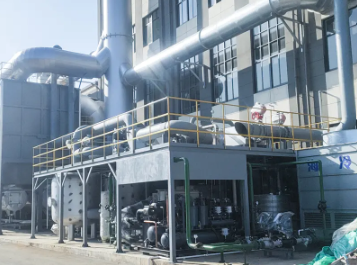 Explosion-Proof
Condensation Recovery Skid
ATEX and Ex-compliant condensing skid system designed for petrochemical tank vapor balancing, solvent reclaiming, and marine fuel bunkering.
Skid Technical DataChina Desiccant Rotor Dehumidifier Price in the World vs. in China
An exhaustive procurement audit detailing capital expenditures (CAPEX), total cost of ownership (TCO), and operational thermodynamics across North America, Europe, and Chinese manufacturing hubs.
Western Equipment Index
Traditional European and North American manufacturers (e.g., Munters, DST, Bry-Air Western lines) price baseline industrial rotary desiccant systems at $4.50 to $7.80 per CFM ($7.65 to $13.25 per m³/h). For ultra-low dew point systems (-50°C to -70°C DP), capital pricing frequently surpasses $12.00 to $18.50 per CFM due to fragmented fabrication sub-contracting and heavy corporate overhead.
China Factory Direct Benchmark
Factory-direct pricing from elite Chinese manufacturers like Hangzhou DryAir ranges between $1.80 to $3.40 per CFM ($3.00 to $5.80 per m³/h) for standard industrial configurations, and $4.20 to $7.50 per CFM for validated -70°C dew point dual-rotor systems. This delivers an initial 35% to 55% CAPEX reduction without sacrificing component integrity.
Total Lifecycle OPEX Parity
Over a 10-year operational lifecycle, energy consumption represents roughly 78% to 84% of an industrial dehumidifier's total financial expenditure. Chinese systems implementing advanced waste-heat regeneration loops, zero-loss purge seals, and high-crystallinity molecular rotors achieve identical or superior coefficient of performance (COP) metrics compared to Western counterparts.
| Equipment Category & Dew Point Rating | Airflow Capacity Range | Global / Western Market Price (USD) | China Domestic Price (USD / RMB Equiv.) | Export FOB/CIF Price from China | Primary Regeneration Source |
|---|---|---|---|---|---|
| Standard Industrial Silica Gel (-20°C DP) | 1,500 – 6,000 m³/h | $22,000 – $48,000 | $9,500 – $19,000 | $11,800 – $22,500 | Electric / Low-Pressure Steam |
| Deep Low Dew Point System (-40°C to -50°C DP) | 8,000 – 25,000 m³/h | $75,000 – $165,000 | $34,000 – $78,000 | $39,500 – $89,000 | Direct Gas / High-Temp Steam / Electric |
| Ultra-Deep Lithium Battery Dual-Rotor (-60°C to -70°C DP) | 30,000 – 80,000 m³/h | $220,000 – $540,000 | $98,000 – $245,000 | $115,000 – $275,000 | Thermal Oil / Waste Heat / Reactivation Purge |
| Turnkey Battery Dry Room EPC (300 to 1,000 m²) | 50,000 – 150,000 m³/h | $1.2M – $3.8M | $520,000 – $1.65M | $620,000 – $1.95M | Integrated Chiller + Desiccant + Recovery |
| ZJRH Cathode NMP Solvent Recovery Skid | 15,000 – 60,000 m³/h | $380,000 – $850,000 | $160,000 – $360,000 | $185,000 – $410,000 | Multi-Stage Chilled Condensation Heat Exchanger |
CAPEX Cost Architecture: Where Does the Money Go?
Procuring a high-performance rotary desiccant dehumidifier involves specialized engineering subsystems. An objective analysis of manufacturing bills of materials (BOM) reveals the cost distribution:
Why China's Supply Chain Compresses System Costs
The cost disparity between China and global competitors is not a result of compromised quality, but rather systemic geographic advantages:
- Colocated Component Clustering: Over 85% of rotor raw materials, high-temperature silicon peripheral seals, centrifugal EC plug fans, and ASME-spec coils are clustered within a 200km radius in Zhejiang and Jiangsu provinces.
- Rapid Structural Prototyping: CNC laser machining, automated panel foaming, and automated TIG orbital welding allow customized air handling unit (AHU) double-wall casing fabrication at 60% lower tool overhead.
- Scale Advantage from Gigafactories: As the primary supplier to CATL, BYD, ATL, EVE, and SVOLT, Hangzhou DryAir manufactures in excess of 200 heavy-industrial units monthly, achieving tremendous purchasing economies of scale.
High-Value Localized Application Scenarios
Psychrometric requirements differ substantially across processes. Sizing and pricing must reflect moisture load dynamics, personnel respiration, air infiltration rates, and volatile solvent vapors.
Lithium-Ion & Solid-State Battery Cells
Moisture is the primary catalyst for hydrofluoric acid (HF) generation when exposed to LiPF6 electrolytes. Exposure reduces retention capacity and induces catastrophic thermal runaway.
Design Point: -40°C to -70°C Dew Point (<0.01 g/kg moisture content). Continuous air changes with triple airlock seals.
Typical DryAir Installations: CATL gigafactories, Northvolt Ett, Tesla Giga Berlin supplier line.
Pharmaceutical Cleanrooms & Lyophilization
Hygroscopic active pharmaceutical ingredients (APIs), effervescent oral suspensions, and soft gelatin encapsulation demand strict moisture limits to prevent product agglomeration and microbiological growth.
Design Point: 15% – 25% Relative Humidity at 20°C (Dew Point -5°C to -15°C). GMP Class A/B cleanroom integration.
Complies with FDA 21 CFR Part 11, EU cGMP Annex 1, and automated CIP/SIP steam sanitation.
Defense, Aerospace & Naval Preservation
Avionics, guided missile guidance packages, propellants, and naval submarine compartments undergo rapid galvanic corrosion when atmospheric relative humidity surpasses 40% RH.
Design Point: 30% – 35% RH year-round. Built to Chinese GJB military specifications and MIL-STD-810G vibration tolerances.
Shock-resistant, explosion-proof casings with redundant PLC control logic.
Petrochemical & Hydrocarbon Storage
Volatile organic vapors released during marine oil tanker offloading, rail tank car loading, and hydrocarbon tank breathers present explosive hazards and environmental emissions.
Design Point: Cryogenic deep-cooling down to -75°C combined with regenerative carbon bed or thermal oxidizer (RTO).
Reduces stack emissions below local environmental authority thresholds (<10 mg/m³).
Semiconductor & OLED Wafer Fabs
Micro-condensation during EUV photolithography and chemical vapor deposition (CVD) results in irreversible wafer etching defects and pattern misalignment.
Design Point: Dew Point -30°C to -45°C with ±0.5°C ultra-precise temperature trim coils and chemical filter stages.
Zero-outgassing rotor materials preventing silicone aerosol airborne contamination.
Electrode NMP Coating Evaporation Lines
Anode and cathode roll-to-roll drying ovens vent massive volumes of heated gas carrying vaporized N-Methyl-2-pyrrolidone solvent, representing millions in wasted raw material.
Design Point: ≥99% solvent reclamation efficiency with multi-stage condensation loops, recycling clean hot air back into ovens.
Directly returns pure solvent to raw chemical staging, slashing production OPEX.
Technology Roadmap: Next-Gen Psychrometric Innovation
Addressing the thermodynamic paradox: how to extract maximum water vapor while slashing reactivation energy expenditure by 30% to 45% through synthetic molecular engineering and AI control.
Synthetic Zeolite & MOF Rotor Nanotechnology
Traditional desiccant wheels relied upon standard sodium silicate (silica gel). While economical for comfort conditioning, silica exhibits high vapor equilibrium limits that stall around -35°C to -45°C dew points.
- Type 4A & 13X Molecular Sieves: DryAir embeds high-crystallinity aluminosilicate synthetic zeolites featuring micro-pore apertures between 0.3 nm and 0.9 nm. These precisely trap polar H₂O molecules while repelling larger organic solvent chains.
- Metal-Organic Frameworks (MOFs): Pilot-phase rotors synthesizing MOF-303 substrates show ultra-steep desorption isotherms at regeneration temperatures below 85°C, compared to 140°C for standard systems.
- Anti-Aging Structural Seals: Viton-fluoropolymer dual lip seals prevent bypass air transfer between the reactivating high-temp sector and the dry process airstream under pressure differentials up to 2,500 Pa.
AI-Driven Psychrometric Modulation & Low-Carbon Heat Pumps
Fixed-speed desiccant wheels waste tremendous energy when ambient conditions fluctuate. Hangzhou DryAir integrates neural-network predictive algorithms and multi-stage waste-heat loops:
- Predictive Weather Feedforward: System PLCs query micro-climate meteorological barometers and temperature forecasts, proactively adjusting reactivation heater duty 45 minutes prior to ambient vapor spikes.
- Refrigeration Condenser Heat Harvesting: Utilizing the high-side reject heat (65°C to 75°C) from the pre-cooling chiller compressors to preheat reactivation inlet air, cutting primary steam/electric demand by 28%.
- Dynamic Wheel Angular Velocity: Stepless inverter rotation adjusts rotor RPM between 8 and 22 rev/h based on real-time room occupancy, latent load variations, and door opening cycles.
China Factory Supply Chain Resilience & Efficiency Advantages
How Hangzhou DryAir’s Lin'an manufacturing complex maintains unyielding production lead times, superior quality assurance, and aggressive global pricing.
Vertical Manufacturing Integration
Unlike Western brand integrators who outsource AHU sheet metal, coil winding, and rotor cassette welding to fragmented third parties, Hangzhou DryAir retains 100% in-house manufacturing across its Lin'an Qingshan Industrial Park facilities. From automated laser CNC punch-presses to double-skin polyurethane foaming and electrical panel wiring, every subsystem is audited on-site.
GJB Military & ISO 9001 Systems
DryAir operates under dual quality frameworks: standard commercial ISO 9001 and the rigorous GJB National Military Standard System. Military qualification demands documented traceability for every structural weld, helium leak testing of high-pressure cooling coils, and vibration fatigue endurance testing before any unit is stamped for dispatch.
Compressed Lead Times (6-8 Weeks)
Western competitors routinely quote lead times between 26 and 48 weeks for custom 50,000+ m³/h low-dew-point AHUs due to motor supply shortages and labor friction. Hangzhou DryAir delivers standard custom configurations in 6 to 10 weeks, supporting fast-track battery gigafactory construction cycles without risk of project delay penalties.
Global Commercial Landscape, Localized Support & Compliance
Overcoming cross-border procurement hurdles with comprehensive international code certifications, turnkey engineering field service, and regional warranty programs.
Full Export Compliance
Systems custom-engineered and certified to CE, UL, CSA, ASME, and EAC electrical and pressure vessel codes, enabling fast-track permitting across North America, the EU, and Eurasian economic zones.
Global Field Engineers
Bilingual commissioning specialists dispatched directly to client project job sites worldwide for duct integration, sensor calibration, air balancing, and on-site staff training.
2-Year Overseas Warranty
Optional extended comprehensive 2-year service package for international buyers including priority critical airfreight spare parts and 24/7 direct remote cloud diagnostics.
Tier-1 Component Sourcing
Standardization on globally available electrical sub-components: Siemens or Schneider PLCs, ABB variable speed drives, and Ziehl-Abegg fans ensures local replacement ease.
Audited Project References in Global Clean Energy & Battery Manufacturing
Frequently Asked Questions: Procurement & Engineering Guide
Detailed answers addressing psychrometric tolerances, equipment pricing variables, rotor longevity, and international warranty dispatch protocols.
What are the key technical parameters determining the price of a China desiccant rotor dehumidifier?
- Target Supply Dew Point: Sizing for a -20°C DP system requires a single standard silica rotor, whereas a -60°C to -70°C DP ultra-dry requirement necessitates a dual-rotor cascade configuration with molecular sieve chemistry and reactivation heat recovery, which roughly doubles the core unit price.
- Process Airflow (m³/h or CFM): Structural casing size, motor kilowatt ratings, and rotor diameter scale exponentially with volume.
- Reactivation Energy Method: Direct-fired gas and high-pressure steam reactivation units carry higher initial valve-train and heat exchanger CAPEX than simple electric resistance heaters, but slash operating utility expenses by up to 60%.
- Export Certification Standards: Units built to UL 1995/CSA standards with NEMA-rated electrical enclosures and ASME-stamped cooling coils carry an approximate 8% to 15% engineering and compliance surcharge compared to standard domestic GB models.
What is the expected operating lifespan of a DryAir molecular sieve rotor, and how does performance degrade?
How does Hangzhou DryAir manage international shipping, transport damage, and customs clearance?
What recovery rate and solvent quality can be expected from a ZJRH series NMP recovery system?
How does DryAir provide localized commissioning and warranty support for North American and European facilities?
Industrial Equipment Directory & Direct Quotation Portal
Compare our primary industrial equipment portfolios below. Select your target system to access technical blueprints, energy consumption models, and factory-direct price sheets.
Core Product Line
Desiccant Dehumidifier
DHU series rotary desiccant dehumidifiers deliver stable low-dew-point air where refrigeration alone cannot reach — from battery dry rooms to military storage.
Get Rotor Pricing
Complete EPC Contract
Turn-key Dry Room System
Complete humidity-controlled rooms — enclosure, air handling, dehumidification, controls and validation — delivered under a single unified engineering contract.
Request Dry Room Proposal
Solvent Efficiency
NMP Recovery System
Captures N-Methyl-2-pyrrolidone from electrode coater exhaust for reuse, cutting solvent spend and stack emissions with guaranteed ≥99% efficiency.
Download NMP Brochure
Thermal Oxidation
VOC Abatement System
Deep-cooling condensation and regenerative thermal oxidation to treat VOC waste gas and recover oil vapors from chemical and industrial exhausts.
Inquire VOC Units
Low Energy OPEX
Refrigerative Dehumidifier
Cost-effective moisture removal for warehouses, workshops and pre-cooling stages ahead of desiccant systems, slashing aggregate plant utility draw.
Refrigerative Catalog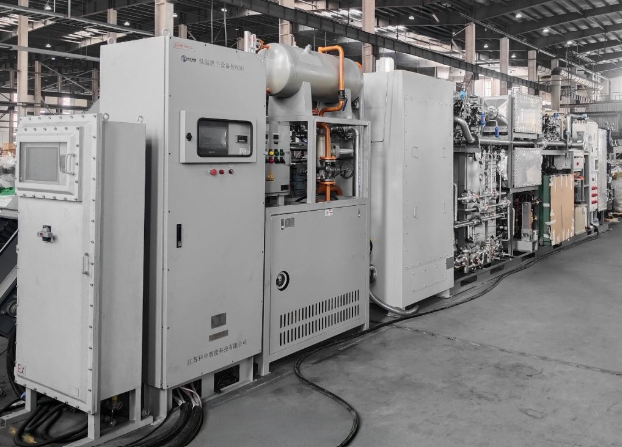 Electrode Coating
Coater Line Exhaust Recovery
Integrated energy and solvent recovery skids designed for multi-tier roll-to-roll lithium battery cathode slurry production lines.
Request Technical Data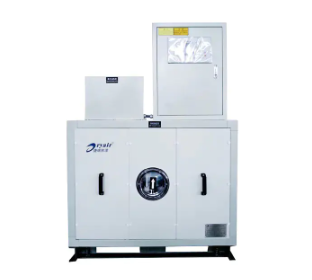 GMP / FDA Class
Pharma Cleanroom System
Hygienic double-skin construction with anti-microbial coatings, HEPA filtration integration, and complete validation documentation for drug makers.
View Pharma Whitepaper GJB / Mil-Standard
Defense Environmental Unit
Integrated environmental systems built under the GJB national military standard to protect aerospace equipment, ammunition, and guidance avionics.
Connect With EngineersReady to Optimize Your Humidity Control CAPEX & Dew Point Reliability?
Connect directly with Hangzhou DryAir's senior psychrometric HVAC engineering department. Receive complete mass-energy balances, psychrometric process charts, airflow duct schematics, and firm CIF quotation within 24 hours.