

DHU Desiccant Dehumidifier
Controls supply air down to -70°C DP for next-generation dry room integration.
SpecificationsEngineered to hold stringent psychrometric variables 24/7/365 with minimized operational thermal regeneration loads.
Controls supply air down to -70°C DP for next-generation dry room integration.
Specifications
Comprehensive envelope enclosure, psychrometric cascade HVAC, and DCS validation.
Explore Room
Engineered condensation loop reclaiming ≥99% pure solvent from battery coaters.
System Details
Cryogenic deep cooling combined with regenerative thermal oxidizers (RTO).
View Thermal Core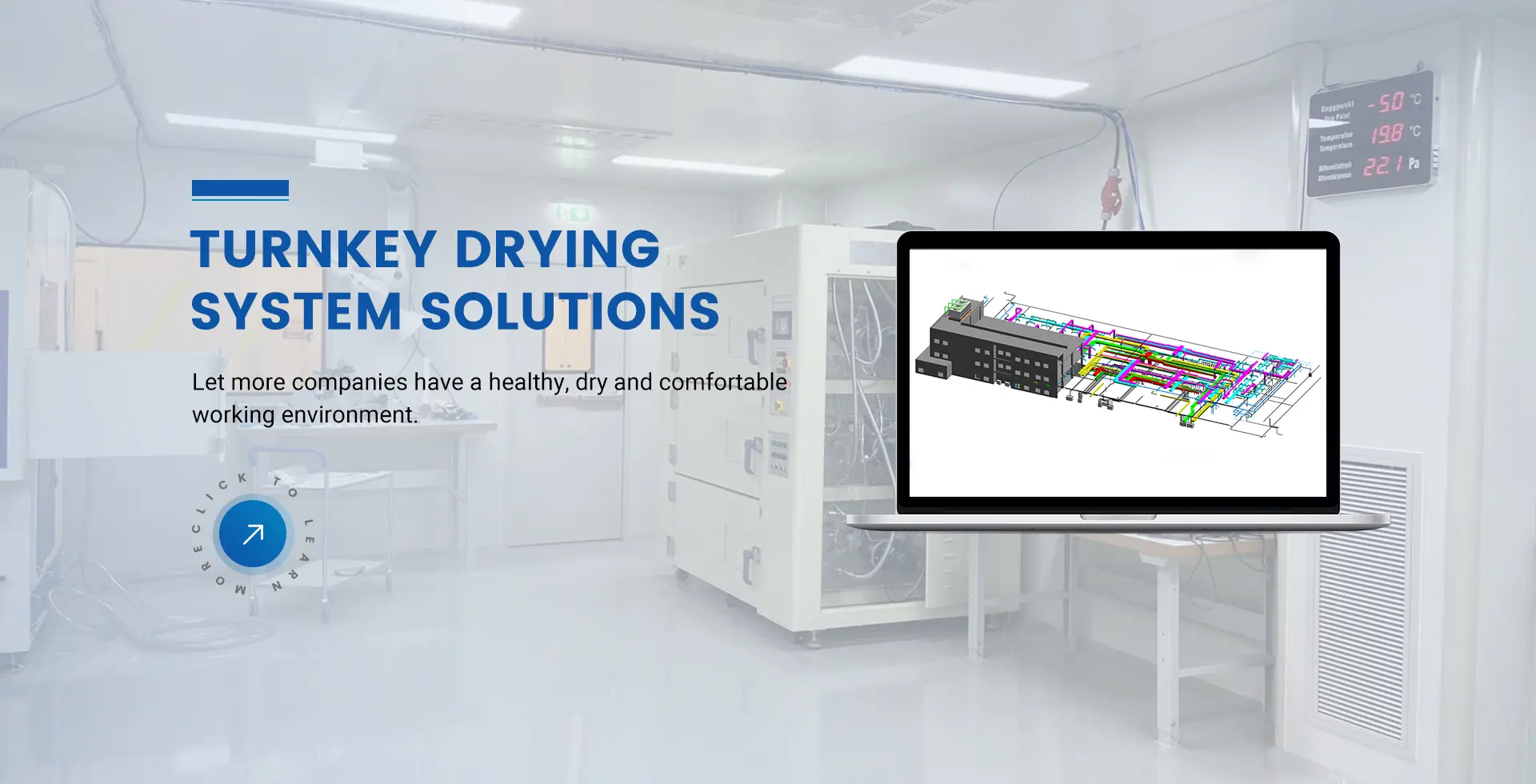
Dual-stage silica-gel / molecular sieve rotors for critical battery assembly.
Rotor Schematics
Airtight PIR/PUR modular panelling system engineered to minimize infiltration.
Chamber Specs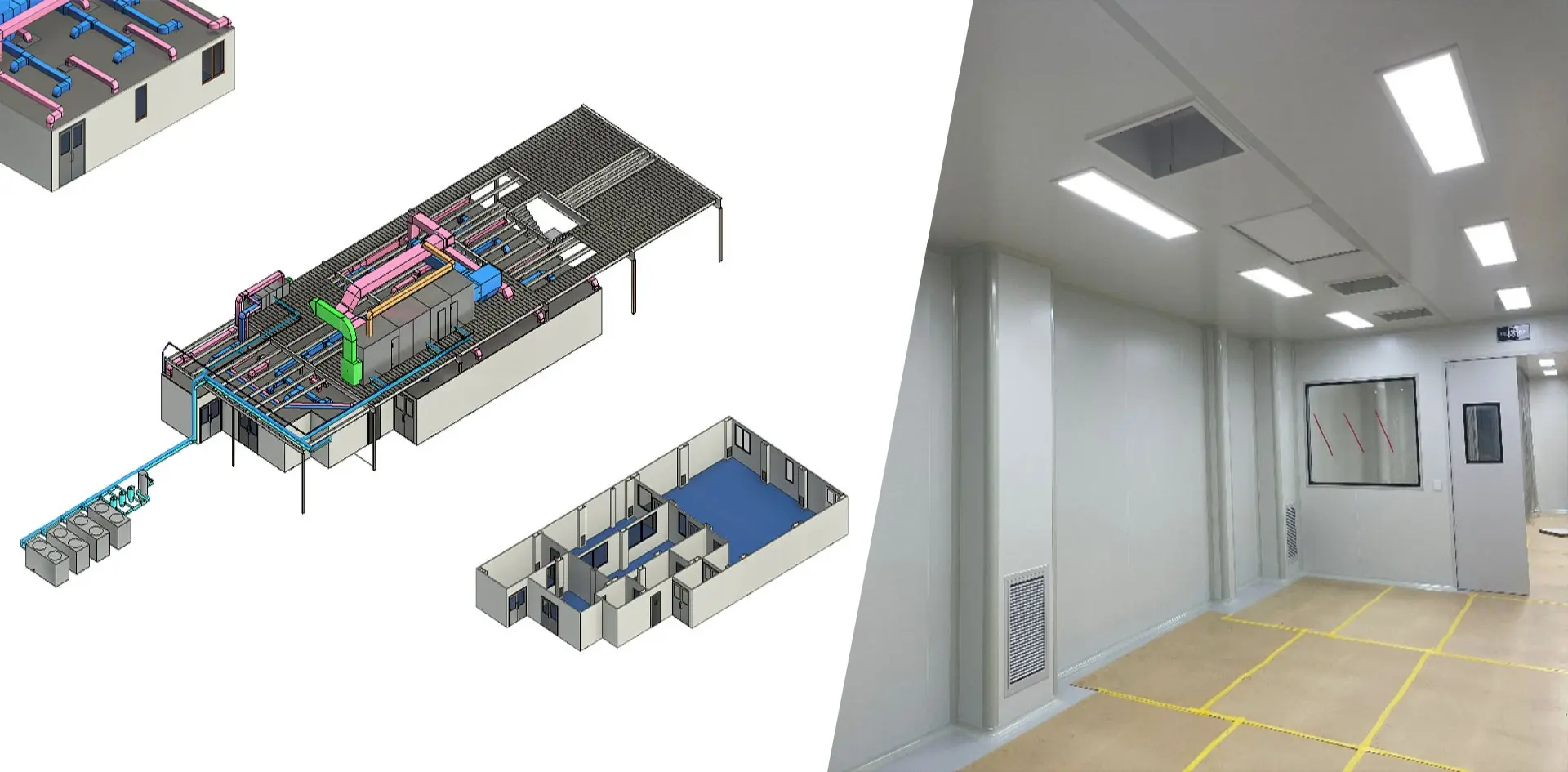
Multi-stage chiller integration preventing environmental volatile organics escape.
Chiller Layout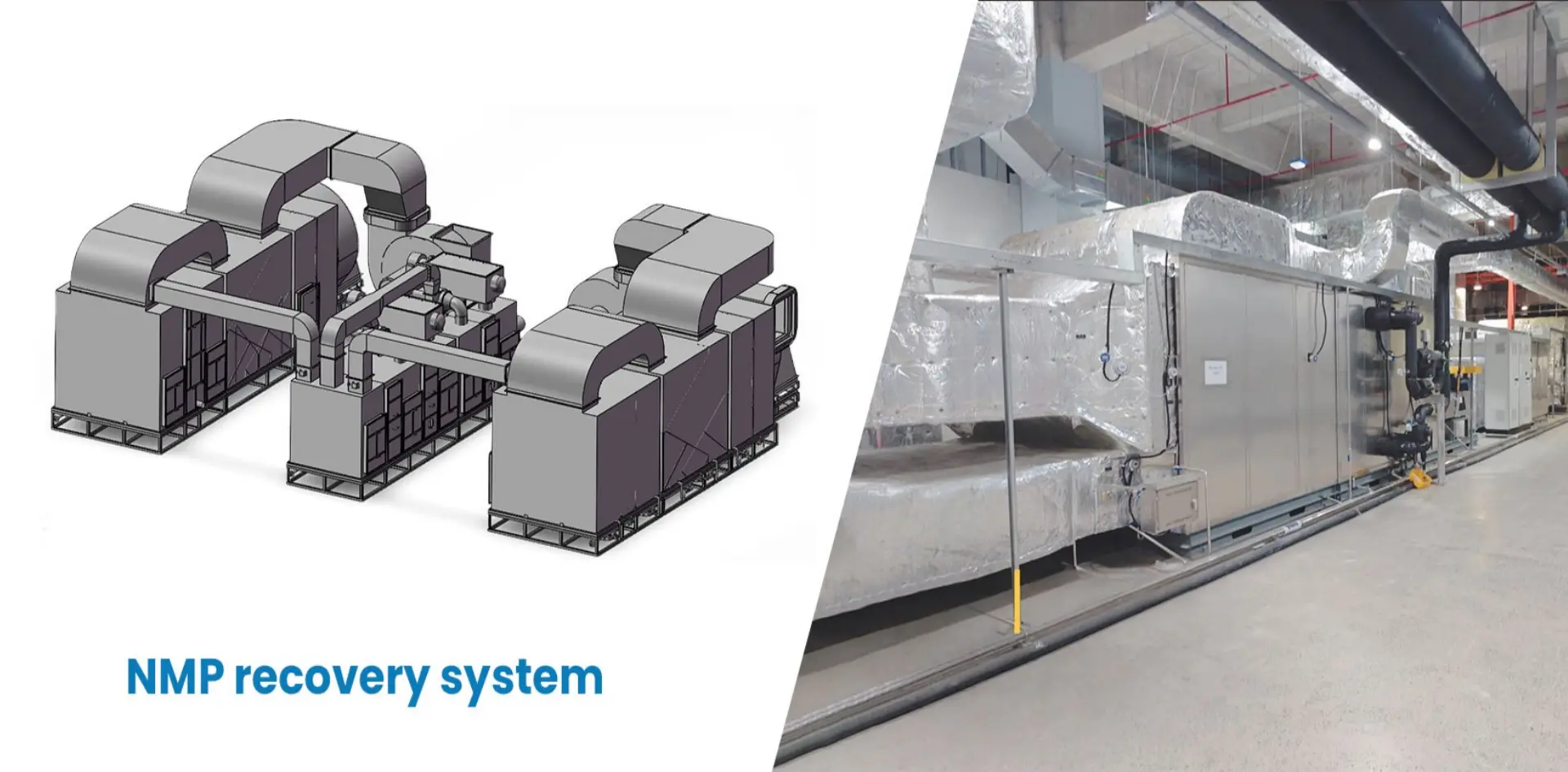
Optimized DX refrigeration coils intended for high-efficiency bulk dehumidification.
DX Module SpecsAnalyzing global demand trajectories for ultra-low humidity dry rooms and high-stability climate control infrastructure.
The global push towards clean transport and scalable storage has caused exponential growth in lithium battery gigafactories. Supply chains across North America, Europe, and Asia demand multi-megawatt environmental chambers capable of holding continuous negative dew points without localized variations.
Desiccant regeneration represents up to 40% of the operational energy in an active battery cell assembly hall. The technological frontier has shifted toward thermal integration, leveraging heat pumps, waste-heat recapture from air compressors, and heat-exchanger-assisted purge cycles.
Next-generation solid-state batteries (SSBs) utilizing sulfide-based solid electrolytes generate hazardous hydrogen sulfide (H2S) gas upon ambient moisture contact. This demands a critical shift from standard -40°C DP production zones to airtight -60°C and -70°C DP micro-environments.
A psychrometric design baseline for facility engineers, EPC managers, and process architects.
| Application Field | Critical Control Target | Predominant Risk Mitigated | Recommended Machine Scheme |
|---|---|---|---|
| Lithium-Ion Cell Assembly & Electrolyte Filling | -40°C to -60°C DP | Hydrofluoric acid (HF) generation, swelling, reduced lifecycle | Turn-key Dry Room System |
| Solid-State & Lithium Metal Cell Research | -60°C to -70°C DP | Passivation layer degradation, lethal H2S gas formation | DHU Ultra-Low DP Desiccant Unit |
| Electrode Slurry Coating & Exhaust Drying | ≥99% NMP Recovery | Solvent loss, atmospheric emissions, VOC compliance fines | ZJRH Closed-Loop Recovery Plant |
| Hygroscopic Pharma Powders & Softgels | 10% - 30% RH (at 20-22°C) | Powder caking, erratic dosing, blister package breakdown | Sanitary Rotary Dehumidifier |
| Defense, Missile & Avionics Storage | ≤40% RH (GJB Compliant) | Micro-electronic corrosion, explosive propellant degradation | GJB Military Grade Air Handler |
| Raw Material Warehousing & Pre-Cooling | 45% - 60% RH | Condensation mildew, bulk structural dampening | Refrigerative Dehumidifier |
| Hydrocarbon Fuel Racks & Tank Loading | Emission Threshold Bounds | Vapor plumes, environmental air toxicity hazard | Cryogenic Deep Cooling + RTO |
Operational background of Hangzhou DryAir Treatment Co., Ltd. (Est. 2010), serving tier-1 gigafactories globally.
Delivered large-scale air dehumidification projects for industry leaders such as CATL, ATL, BYD, EVE Energy, Farasis, Envision, and SVOLT. International deployments include factories operating for Tesla, Northvolt, and TTI.
Engineered to international requirements with CE, UL, CSA, ASME, and EAC export standards. The company maintains an ISO 9001 quality framework and the GJB national military manufacturing accreditation system.
Supported by 74 dedicated technical specialists, including 6 master's and doctoral degree holders, 2 national registered HVAC engineers, and 8 senior industrial engineers, with an in-house performance test room for FAT validation.
One unified organization covers design calculation, modular chamber manufacturing, duct installation, on-site commissioning, and an optional 2-year overseas technical maintenance agreement with 24-hour response times.
Strategic advancements shaping commercial climate chambers, smart controls, and solvent reclamation systems.
Integration of AI-driven thermodynamic controls dynamically modulates reactivation heater output and rotor rotation speeds based on real-time shift occupancy, production pauses, and ambient seasonal weather shifts, trimming 15–22% off base parasitic energy.
Development of composite metal-organic framework (MOF) coatings and proprietary high-density zeolite compounds capable of desorbing water molecules at regeneration temperatures below 80°C, enabling the use of industrial low-grade waste steam.
Total electrification of regeneration matrices coupled with hybrid heat-pump cascading circuits, closed-loop volatile solvent recycling systems (≥99%), and clean exhaust pathways that meet global zero-emission factory directives.
Integrated solutions engineered to manage humidity, temperature, air purity, and emissions across the facility.

Sanitary multi-stage filtration units engineered to ISO cleanroom standards.
AHU Details
Deep-cooling fluid exchangers designed for pre-cooling high-volume outdoor air.
Cooling Plants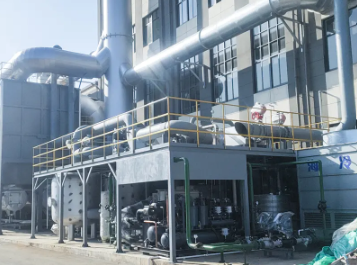
Condenses VOC exhaust streams to simplify municipal compliance.
Trap Schemes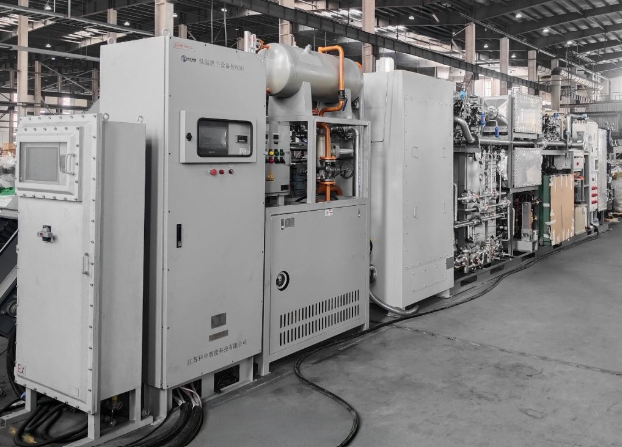
Maintains solvent partial pressures along battery casting tracks.
Loop Design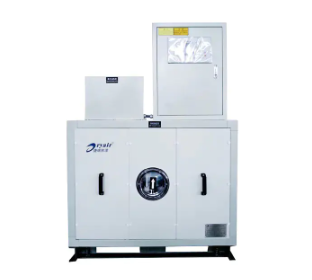
Low RH conditioning suites built for sterile filling, compounding, and packaging.
GMP Units
Mil-spec climate rooms designed for satellite, propellant, and avionics testing.
Mil-Spec Systems
Stable DP chambers engineered for high-yield silicon lithography operations.
Micro-Env Clean
Direct component replacement rotors for retrofitting existing plant HVAC systems.
Rotor LineupClear, practical answers to common sizing, commissioning, and operational questions.
DryAir rotary desiccant dehumidification systems control supply air reliably down to -70°C dew point (equivalent to <0.0033 g/kg dry air). This low-moisture air profile is engineered for lithium battery cell assembly, electrolyte filling, and next-generation solid-state lithium-metal architectures.
Yes. DryAir provides turnkey dry room delivery covering engineering consulting, dynamic building-load calculations, system design, proprietary component fabrication, overseas logistics, on-site mechanical erection, PLC commissioning, and ongoing maintenance. International clients include Tesla, Northvolt, and TTI.
Depending on the destination market and specifications, DryAir units are certified under CE (European Machinery Directive), UL / CSA (North American electrical codes), ASME (pressure vessels and fluid coils), and EAC (Eurasian Customs Union). Manufacturing facilities maintain both ISO 9001 and the GJB national military standard quality certifications.
DryAir ZJRH series NMP recovery plants achieve a solvent recovery rate of ≥99% on lithium-ion battery electrode coating and drying exhausts. This recaptures high-purity N-Methyl-2-pyrrolidone for distillation and reuse, lowering solvent purchasing costs and helping maintain emissions compliance.
International clients have access to an optional two-year comprehensive service agreement alongside secure remote IoT diagnostics, priority factory spare parts delivery, and deployment of DryAir commissioning technicians for on-site FAT/SAT validation.