
Reliable Battery Dry Room In the World & from China
Industrial Whitepaper on -70°C Dew Point Control, Turnkey Dry Room Systems, NMP Solvent Recovery (≥99%), and Advanced VOC Abatement for Next-Gen Lithium-Ion & Solid-State Gigafactories.
Top-Tier Ultra-Low Dew Point & Solvent Recovery Systems
Engineered for extreme reliability, energy efficiency, and total atmospheric compliance across global lithium-ion cell manufacturing plants.
 Dew Point -70°C
Desiccant Dehumidifier (DHU Series)
Ultra-low dew point rotary desiccant dehumidification engineered for lithium cell assembly, electrolyte injection, and hygroscopic processing.
View Product Spec Turnkey EPC
Turn-key Dry Room System
Complete modular dry room enclosures including HVAC air handling units, precise dew point controls, airlocks, and validation.
Explore Dry Rooms Recovery ≥99%
NMP Recovery System
Captures N-Methyl-2-pyrrolidone solvent vapors from cathode coating ovens, achieving high purity liquid recycling and zero emission risks.
NMP Recovery Details RTO + Cooling
VOC Abatement System
Integrates deep-cooling condensation and regenerative thermal oxidizers (RTO) for comprehensive industrial tail gas purification.
VOC Systems Spec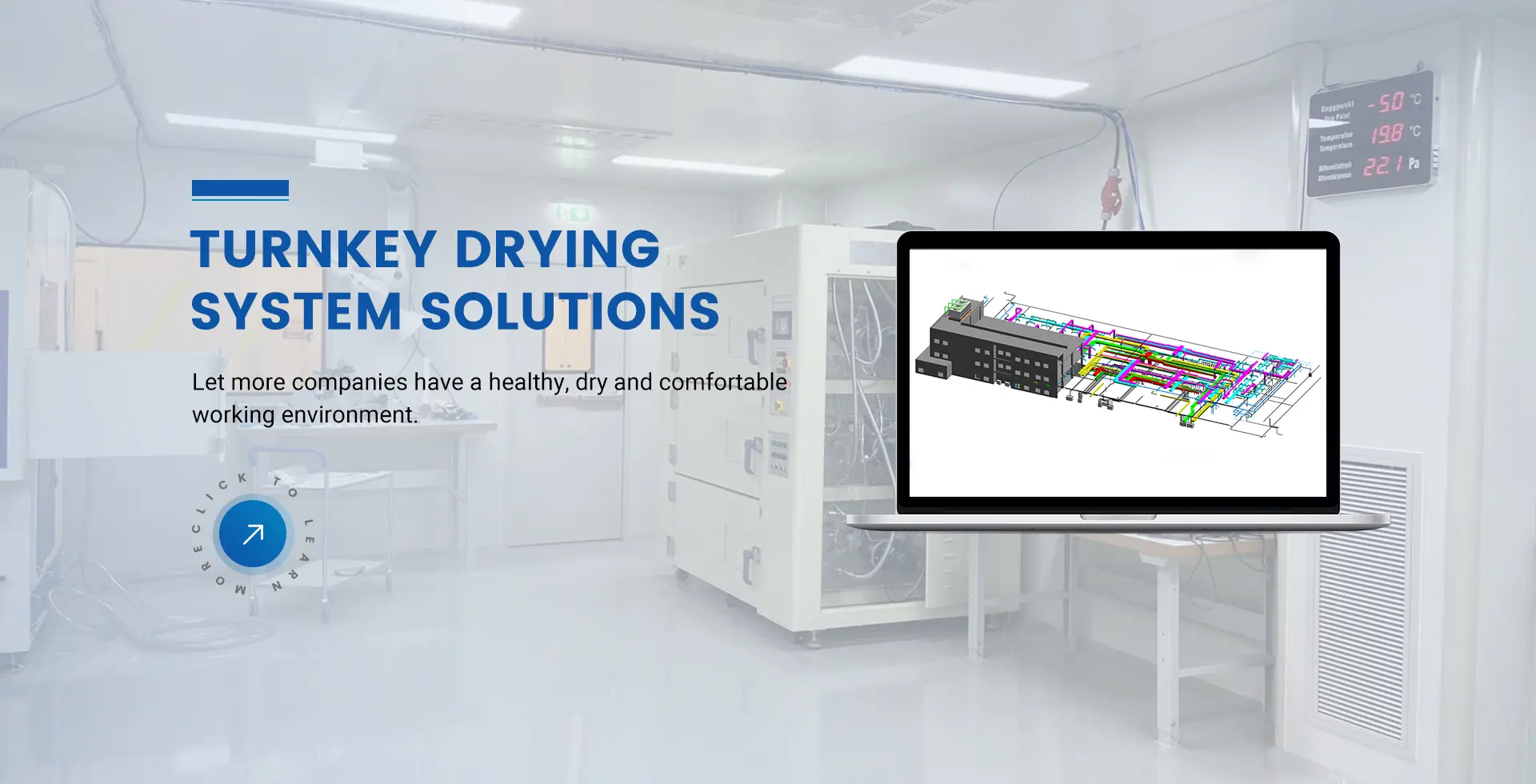 High Energy COP
Refrigerative Dehumidifier
Primary moisture reduction units for raw material warehouses, plant pre-cooling air intake, and general industrial moisture management.
Refrigerative Specs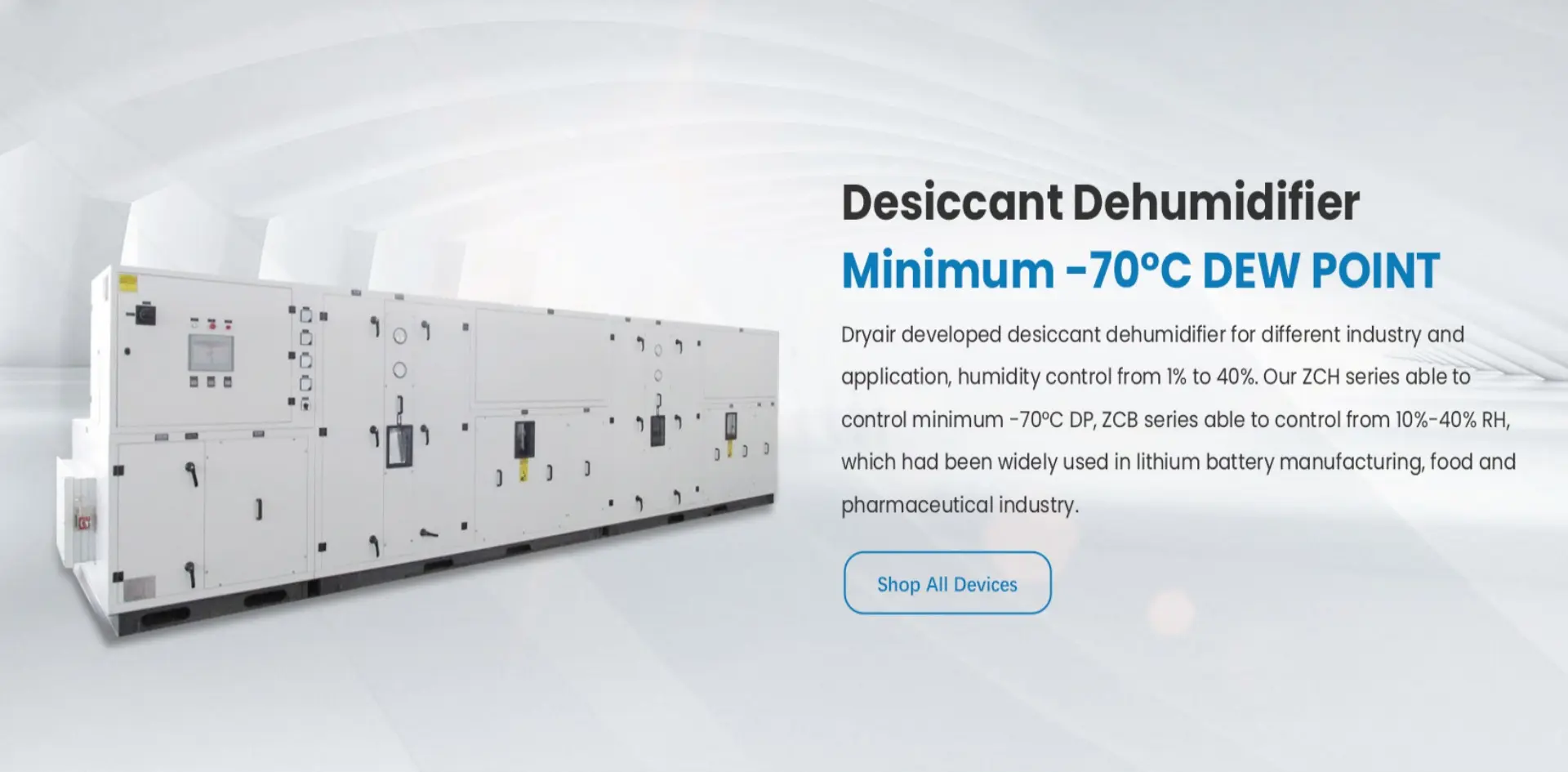 Hermetic Enclosure
Modular Dry Cleanroom Panel System
Zero-leakage sandwich panel walls and ceilings with specialized gasket seals designed for extreme pressure control and dew point maintenance.
Cleanroom Enclosures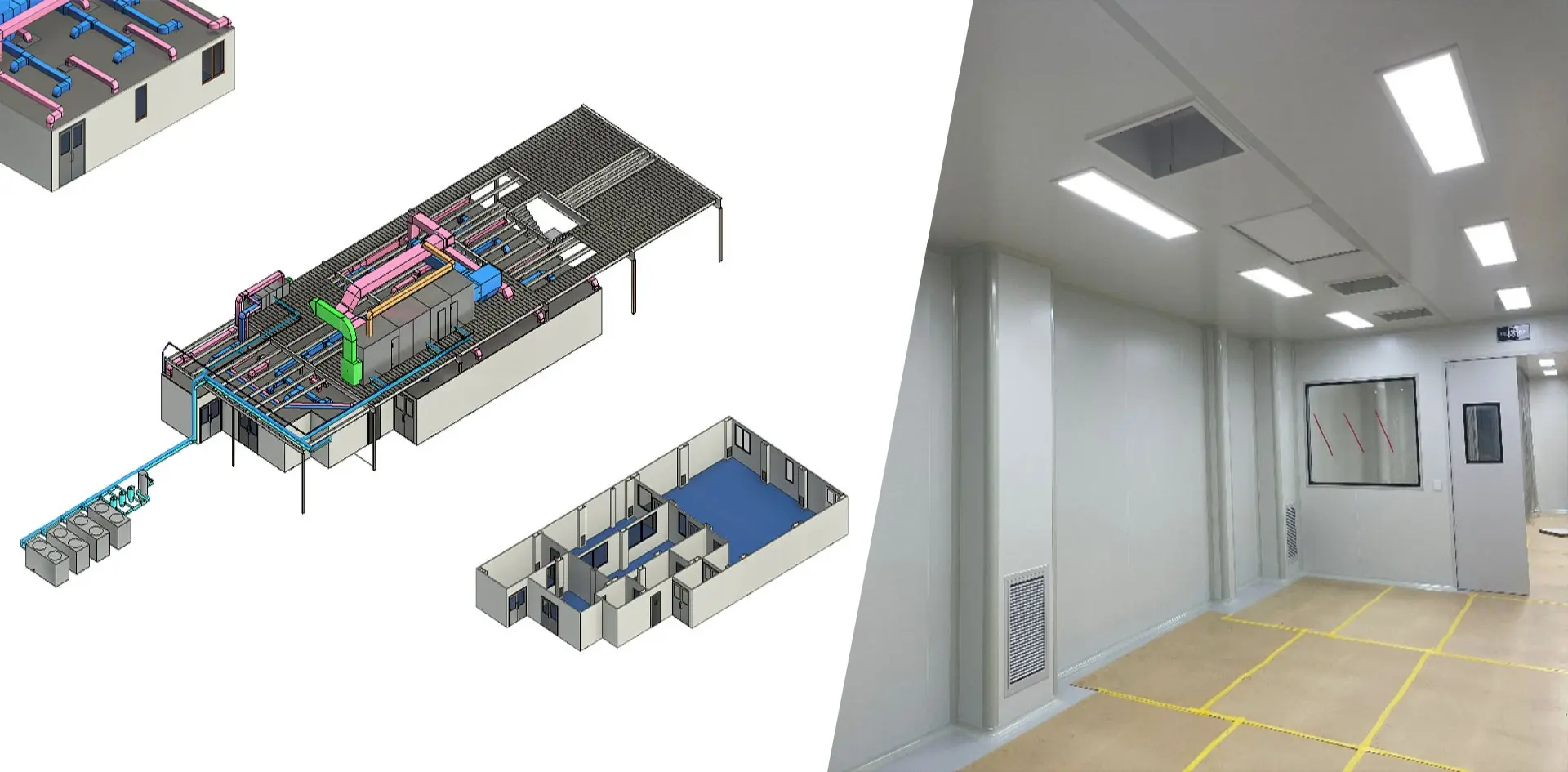 Solid-State Ready
Cell Assembly & Filling Dry Units
Targeted hyper-dry airflow modules providing dedicated air curtains and supply ducts for electrolyte injection machines.
Cell Assembly Units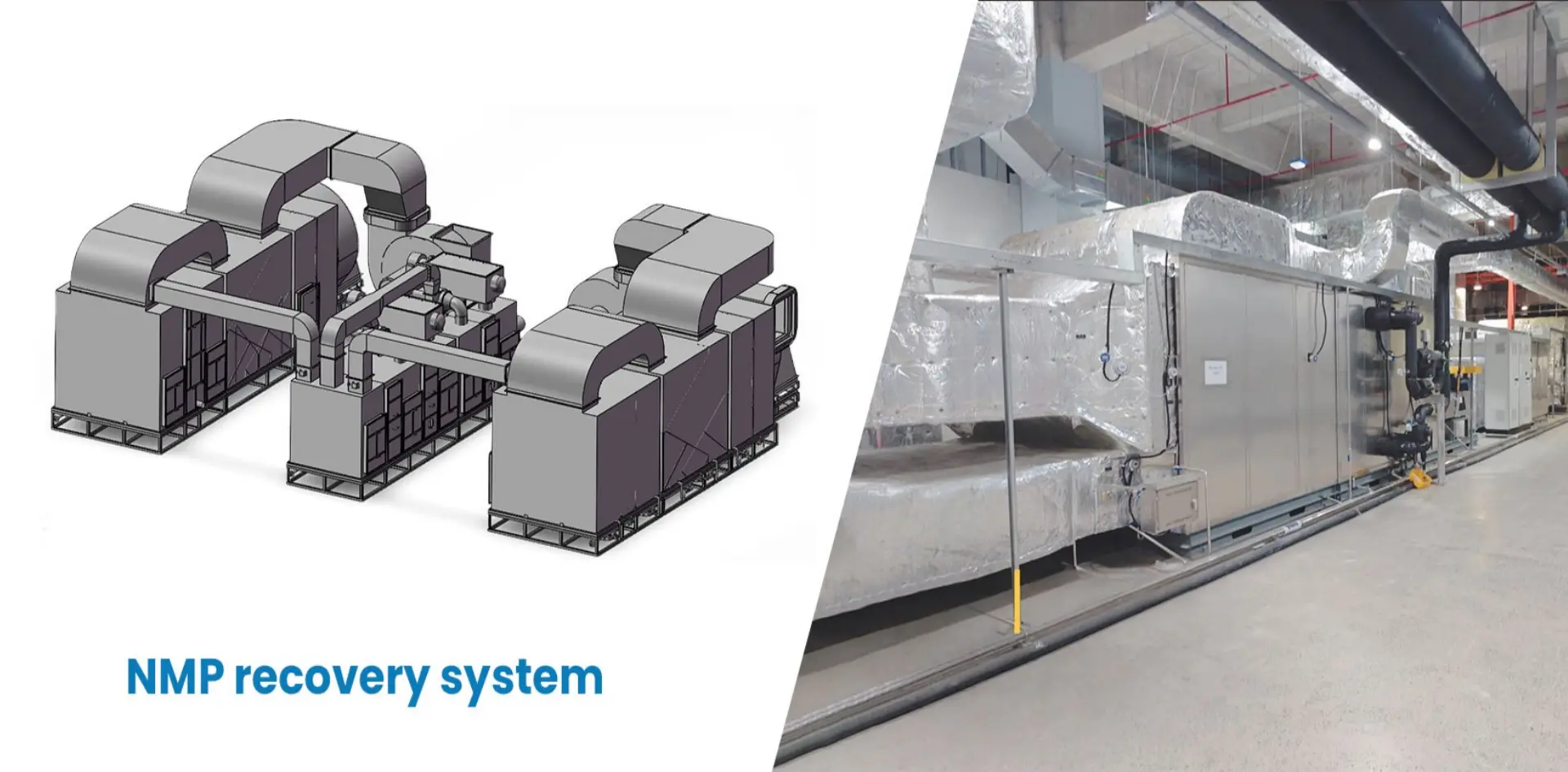 35% Energy Saved
Heat-Recovery Desiccant Unit
Integrates waste heat reclamation loops into the desiccant rotor reactivation sector, slashing plant thermal operating costs significantly.
Heat Recovery SystemsHangzhou DryAir Performance Dashboard
Proven engineering capacity, rigorous military-grade quality management, and global project execution metrics.
The Global Battery Dry Room Landscape: Why Reliability Defines Gigafactory Yield
The global transition toward electrification—spanning electric vehicles (EVs), grid-scale energy storage systems (ESS), and advanced consumer electronics—has triggered an unprecedented expansion in lithium-ion battery manufacturing capacity. As gigafactories scale across North America, Europe, Asia-Pacific, and emerging regional hubs, the manufacturing threshold for battery cells has tightened exponentially. Among all environmental variables in a battery manufacturing plant, ultra-low dew point humidity control stands out as the single most critical factor dictating cell safety, energy density, cycling life, and overall production yield.
A battery dry room is not merely an insulated cleanroom with HVAC cooling; it is a highly specialized, hermetically sealed atmospheric pressure vessel designed to maintain supply air moisture levels down to a dew point of -40°C, -50°C, -60°C, or even -70°C (corresponding to a relative humidity of less than 0.5% RH at 22°C). In the presence of ambient moisture, highly reactive lithium salts—specifically lithium hexafluorophosphate ($\text{LiPF}_6$) used in organic electrolytes—undergo rapid hydrolysis, forming hydrofluoric acid ($\text{HF}$). Hydrofluoric acid corrodes electrode materials, destroys solid electrolyte interphase (SEI) layers, causes severe gassing during cell formation, and induces micro-dendrite growth that leads to internal short circuits and catastrophic thermal runaway.
Massive OPEX Impact
Dry room environmental control systems account for 25% to 43% of total facility energy consumption in a battery cell production plant. System thermodynamic efficiency directly dictates per-kWh cell production costs.
China's Global Leadership
China processes over 70% of global lithium cell manufacturing equipment. Chinese dry room technology offers unrivaled supply chain maturity, proven field reliability across TWh-scale production, and cost competitiveness.
Zero Failure Tolerance
A dew point spike above -35°C in cell assembly zones forces immediate line shutdowns and scrapping of unsealed cells, resulting in hundreds of thousands of dollars in material waste per occurrence.
Global Commercial and Industrial Status (2025–2030)
Across regional markets, regulatory frameworks and localized supply chain dynamics govern dry room specifications:
- North America (US & Canada): Driven by IRA (Inflation Reduction Act) localized content mandates, battery OEMs demand ASME-certified pressure vessels, UL/CSA electrical compliance, and low-GWP refrigerants alongside local service agility.
- Europe & EU Market: Under the European Battery Regulation and rigorous ESG guidelines, battery manufacturers demand dry rooms equipped with waste heat recovery rotors, lowering total energy consumption while meeting ATEX solvent safety standards.
- China & Asia-Pacific: China remains the global benchmark for dry room engineering velocity. Continuous innovations in dual-rotor desiccant dehumidification and NMP solvent recovery (≥99%) have established Chinese suppliers as indispensable global partners.
Psychrometric Fundamentals & Zone-by-Zone Moisture Thresholds
Achieving stable supply air down to -70°C dew point requires deeply specialized rotary desiccant technology. Standard refrigerative cooling can only dehumidify air down to a dew point of approximately +4°C before ice accumulation blocks evaporator coils. Desiccant dehumidifiers overcome this thermodynamic limit by utilizing synthetic silica gel or molecular sieve honeycomb rotors that adsorb water vapor molecules directly from air streams via vapor pressure differentials.
| Battery Production Process Zone | Target Dew Point Range | Target Relative Humidity (RH) | Key Chemical / Physical Risk Factors | Recommended System Architecture |
|---|---|---|---|---|
| Cathode Slurry Preparation & Coating | -20°C to -30°C DP | < 2.0% RH @ 22°C | NMP solvent vaporization, binder gelation, moisture agglomeration in slurry. | NMP Recovery System + Desiccant Air Handling Unit |
| Electrode Calendering & Slitting | -30°C to -40°C DP | < 0.5% RH @ 22°C | Active material oxidation, surface moisture absorption on porous foils. | Rotary Desiccant Dehumidifier (DHU Series) |
| Electrode Winding & Stacking | -40°C to -50°C DP | < 0.2% RH @ 22°C | Separator swelling, static charge accumulation, localized micro-hydration. | Turnkey Modular Dry Room System |
| Cell Assembly & Electrolyte Injection | -50°C to -70°C DP | < 0.01% RH @ 22°C | Severe $\text{LiPF}_6$ hydrolysis, Hydrofluoric Acid ($\text{HF}$) formation, cell gassing. | Dual-Rotor Low-Dew Point Dehumidifier |
| Solid-State Battery & Li-Metal R&D | -65°C to -70°C DP | < 0.005% RH @ 22°C | Extreme chemical reactivity of metallic lithium anode materials with humidity. | Hyper-Dry Enclosure with Molecular Sieve Rotor |
DryAir Dual-Rotor Desiccant Technology vs. Single-Rotor Systems
To produce air with a dew point below -50°C efficiently, single-stage desiccant rotors require exceptionally high reactivation air temperatures (above 140°C), resulting in exorbitant electricity or steam consumption. Hangzhou DryAir employs a proprietary dual-rotor energy recovery system:
1. Primary Pre-Cooling & Dehumidification Rotor: Process air passes through a pre-cooling chilled water coil to drop air temperature to 10°C, condensing out up to 80% of ambient moisture before entering the first silica gel desiccant wheel.
2. Secondary Deep-Adsorption Molecular Sieve Rotor: The partially dried air is further cooled and routed through a specialized molecular sieve desiccant rotor featuring a high density of micro-pores sized specifically for water molecules (3 to 4 Ångströms). This secondary stage depresses the supply air dew point cleanly down to -70°C.
3. Integrated Heat Recovery Reactivation: Thermal energy extracted from the reactivation air exhaust is transferred back into the fresh process intake stream, reducing thermal energy input by up to 35%.
Why Hangzhou DryAir Leads China & Serves Global Tier-1 Battery Makers
Founded in 2010 in Hangzhou, Zhejiang, Hangzhou DryAir Treatment Co., Ltd. has established itself as one of China’s top three desiccant dehumidification pioneers.
30%+ Market Share in China
DryAir systems power domestic Chinese gigafactories for industry titans including CATL, BYD, ATL, EVE Energy, Farasis Energy, Envision AESC, and SVOLT.
Global Tier-1 References
Exported and operational across international battery projects for global leaders such as Tesla, Northvolt, and TTI (Techtronic Industries).
Military-Grade Certification
Operates under ISO 9001 and the strict GJB national military standard quality management system, with export certifications including CE, UL, CSA, ASME, and EAC.
Trusted Across Global Battery Manufacturing Infrastructure
Localization, Regional Compliance Frameworks & Industrial Application Scenarios
Deploying a turnkey dry room in an international jurisdiction requires far more than shipping equipment; it demands rigorous engineering localization to comply with local building codes, electrical safety standards, environmental regulations, and local labor practices.
Regional Compliance Architecture
DryAir systems are engineered from the ground up to satisfy regional inspection authorities worldwide:
- North America (USA & Canada): Control cabinets are built in strict compliance with UL 508A and CSA C22.2 standards. Pressure vessels within refrigerative pre-cooling units are stamped to ASME Section VIII requirements, guaranteeing frictionless approval by local Authorities Having Jurisdiction (AHJ).
- European Union (EU / EEA): Systems conform to CE Directive 2006/42/EC (Machinery), 2014/35/EU (Low Voltage), and 2014/30/EU (EMC). Where NMP solvents or VOC waste gases are processed, equipment complies with ATEX Explosion-Proof Directive 2014/34/EU.
- Eurasian Economic Union (EAEU): Certified under EAC TR CU 010/2011 (Machinery Safety) and TR CU 004/2011 (Low Voltage Equipment) for heavy industrial deployment in cold-climate regions.
Localized Application Scenarios
Lithium Battery Gigafactories
Turnkey dry room enclosures engineered for continuous $24/7$ multi-gigawatt cell manufacturing, with automated air balance tracking and redundant desiccant rotors to prevent line shutdowns.
Pharmaceutical & GMP Cleanrooms
Strict humidity control (10% to 30% RH) for hygroscopic powder processing, tablet compression, effervescent packaging, and soft gelatin capsule drying under strict FDA / GMP standards.
Military & Aerospace Defense
Environmental protection enclosures manufactured under China's GJB military quality standard to protect sensitive electronics, optics, missile propellant, and armaments from atmospheric corrosion.
The 5-Stage Turnkey EPC Delivery Framework & Tech Roadmap (2025–2030)
Executing a gigafactory dry room project on time and within budget requires a single, accountable engineering partner. DryAir’s 5-stage turnkey project methodology guarantees performance from initial load calculation to final validation.
Consulting & Modeling
Detailed psychrometric heat and moisture balance calculations considering worker latent loads, wall transmission, and air leakage.
Engineering & BIM
3D BIM modeling of air duct layouts, structural sandwich panel enclosures, piping networks, and electrical power distribution.
Precision Fabrication
In-house manufacturing of desiccant AHU units, custom controls, and panel systems with rigorous factory performance testing (FAT).
On-Site EPC & Commissioning
Erection of zero-leakage enclosures, duct installation, electrical integration, system balancing, and -70°C dew point validation.
Lifecycle SLA Support
Optional 2-year overseas service agreement, remote IoT diagnostics, spare parts fulfillment, and preventative maintenance.
Technological Roadmap & Future Outlook (2025–2030)
As battery chemistry transitions toward next-generation architectures, dry room technology is evolving rapidly:
1. Solid-State & Sodium-Ion Adaptations: Sulfide-based solid-state electrolytes emit toxic hydrogen sulfide ($\text{H}_2\text{S}$) gas upon contact with trace humidity. Future dry rooms will integrate continuous -70°C air supply with chemical filtration and active scrubbing networks.
2. AI-Driven Predictive Dew Point Optimization: Integrating machine learning algorithms into PLC control panels enables predictive adjustments of reactivation energy based on real-time ambient weather changes and shift personnel counts, cutting energy usage by an additional 12-18%.
3. Dry Electrode Coating Integration: As solventless dry electrode processing matures, dry room systems will shift focus toward high-efficiency airborne particle extraction and micro-humidity stabilization across high-speed rolling presses.
Frequently Asked Questions (FAQ)
In-depth technical answers for procurement teams, plant engineering directors, and project managers.
What is the lowest dew point a DryAir desiccant dehumidifier can achieve?
DryAir rotary desiccant dehumidifiers can control supply air down to a minimum of -70°C dew point (less than 0.005% relative humidity). This level of ultra-dry performance is essential for lithium battery cell assembly, electrolyte filling, and next-generation solid-state cell manufacturing.
Do you supply complete turnkey dry rooms for battery factories outside China?
Yes. DryAir delivers full turnkey EPC dry room projects covering pre-sales consulting, psychrometric engineering design, in-house equipment manufacturing, global shipping, on-site installation, commissioning, and validation. We have successfully served overseas tier-1 clients including Tesla, Northvolt, and TTI.
Which certifications do DryAir systems hold for export markets?
Depending on model and destination country, DryAir systems are certified to CE, UL, CSA, ASME, and EAC standards. The company operates an ISO 9001 certified quality management system and adheres strictly to the Chinese GJB national military manufacturing standard.
What solvent recovery rate can a DryAir NMP recovery system achieve?
DryAir NMP (N-Methyl-2-pyrrolidone) recovery systems reach a solvent recovery rate of ≥99% on lithium-ion electrode cathode coating lines. This drastically lowers raw solvent purchasing costs while ensuring exhaust emissions comply with clean air standards.
How does DryAir ensure energy efficiency in high-capacity dry rooms?
We incorporate waste heat recovery loops that capture thermal energy from the desiccant reactivation exhaust air stream to pre-heat incoming reactivation air. Combined with dual-rotor silica gel / molecular sieve staging and variable frequency drives (VFD), operating energy consumption is reduced by up to 35% compared to conventional single-rotor setups.
What after-sales maintenance and support are provided globally?
International buyers can opt for an optional 2-year extended service plan. We provide 24/7 remote technical support, expedited spare parts dispatch, and on-site engineering dispatch for installation supervision, system tuning, and maintenance. Details are available on our Global Service Page.
Industrial Precision Dehumidification & Air Treatment Systems
Explore DryAir’s standardized and engineered-to-order product series for energy, pharmaceutical, and defense applications.
DHU Series
Rotary Desiccant Dehumidifier
Delivers continuous low-dew-point supply air where mechanical refrigeration cannot perform.
Explore DHU Series
Gigafactory Scale
Turn-Key Battery Dry Room
Integrated cleanroom envelope, low-dew-point AHU, airlocks, and environmental monitoring.
Explore Turnkey Rooms
Solvent Recycling
NMP Solvent Recovery System
High-purity liquid solvent condensation and recycling for lithium cathode coating lines.
Explore NMP Systems
Tail Gas Clean
Industrial VOC Abatement System
Thermal oxidation and condensation technology engineered for chemical gas compliance.
Explore VOC Systems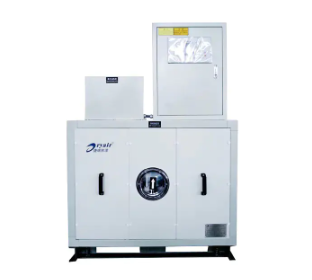 GMP Compliant
Pharma Cleanroom Dehumidifier
Tightly controlled low RH systems preventing moisture absorption during powder compression.
Explore Pharma Units GJB Military Standard
Defense Environmental Controls
Robust anti-corrosion dehumidification units designed under strict defense standards.
Explore Defense Units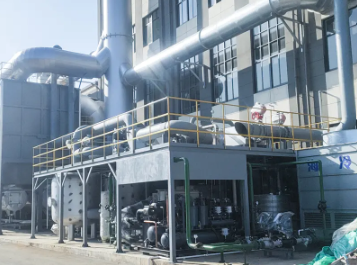 Vapor Capture
Oil & Gas Vapor Condensation Unit
Captures hydrocarbon vapors during chemical loading and storage terminal operations.
Explore Vapor Capture Pre-Cooling & Storage
Refrigerative Dehumidifier Unit
Cost-effective moisture extraction for material storage facilities and ambient fresh air intakes.
Explore RefrigerativeStart Your Battery Dry Room Specification
Download our technical catalogs, submit your factory floor plan CAD for load modeling, or schedule a technical call with our chief HVAC engineers.
Direct Technical Line
+86 571 8990 5557Engineering Inquiry Email
[email protected]Global Headquarters
No. 2088 Keji Road, Qingshan Industrial Park, Lin'an, Hangzhou, Zhejiang, China