DP -70°C Control
Desiccant Dehumidifier (DHU Series)
Industrial rotary desiccant dry machine providing ultra-low dew point process air where refrigeration fails. Built with dual-rotor cascade architecture.
From ultra-dry desiccant wheel skids to chemical solvent recovery and thermal oxidation plants, explore our premier industrial dehumidifier dry machines engineered for mission-critical operations.
DP -70°C Control
Industrial rotary desiccant dry machine providing ultra-low dew point process air where refrigeration fails. Built with dual-rotor cascade architecture.
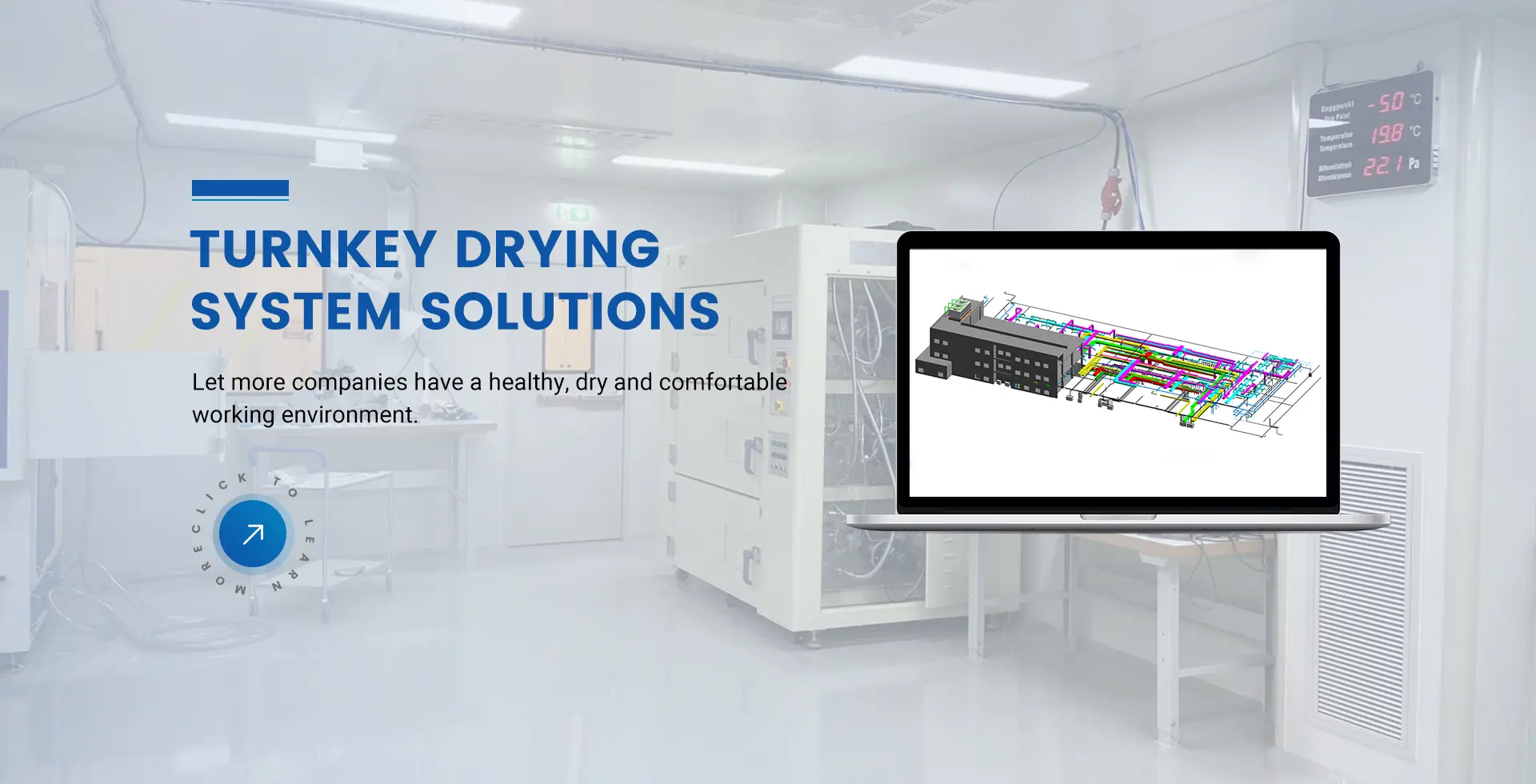
Turnkey EPC
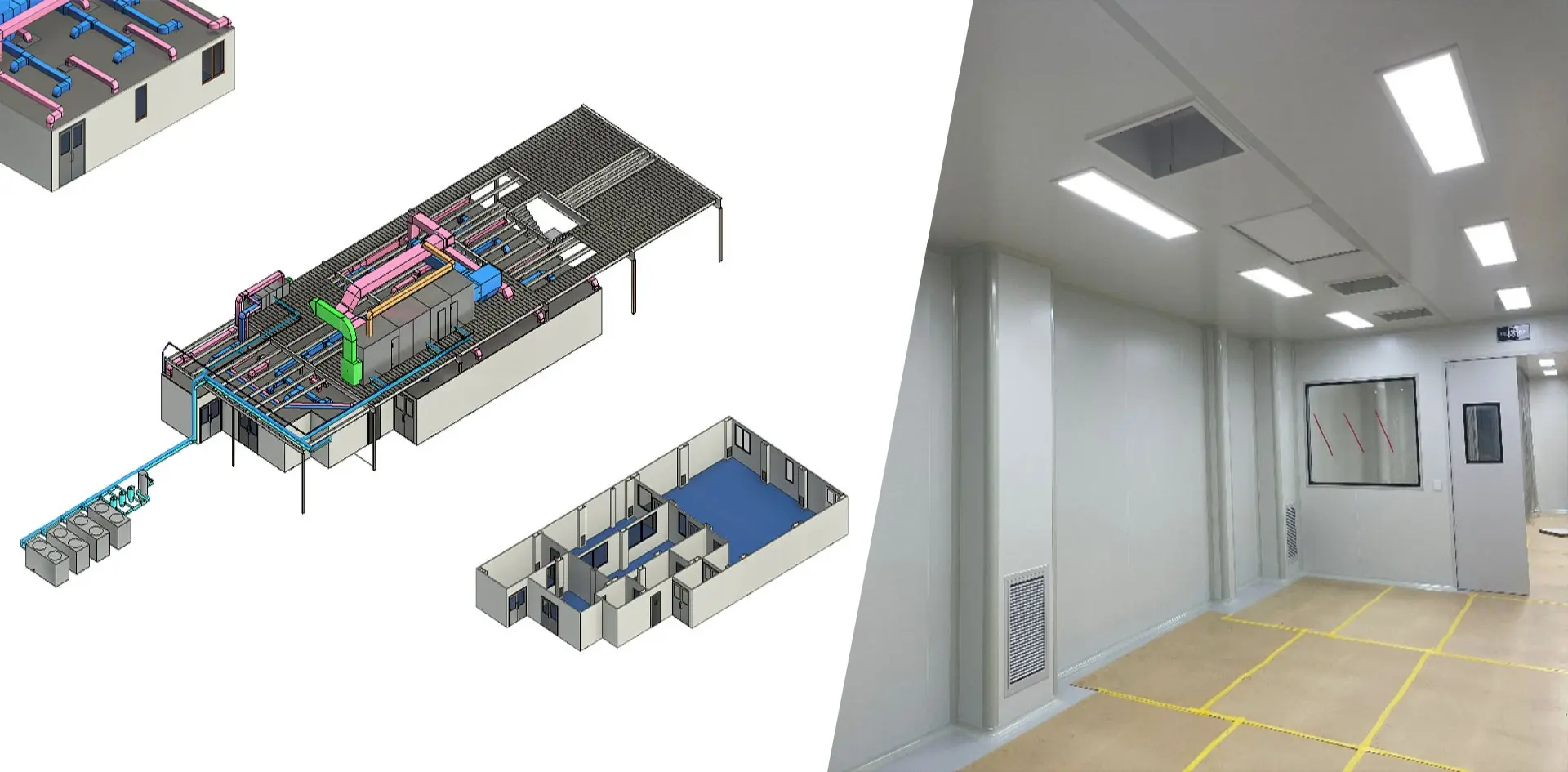
Full lifecycle envelope design: hermetic architectural panels, airlocks, dynamic pressure cascading, and custom environmental integration.
Recovery ≥99%
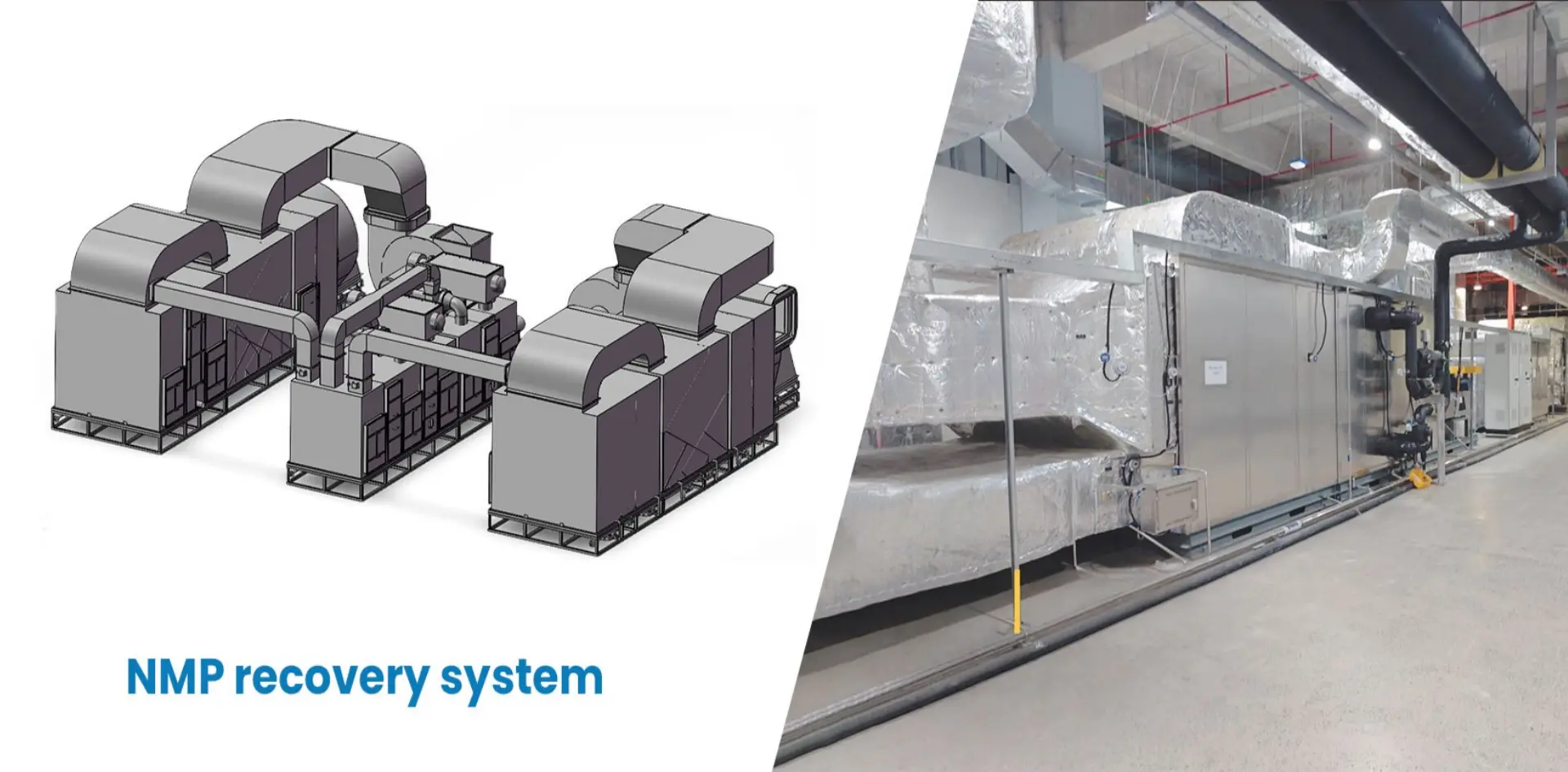
Solvent recycling system designed for lithium-ion battery electrode coating ovens, drastically lowering operational fluid expenses.
Cooling + RTO
Deep-cooling condensation integrated with regenerative thermal oxidizers (RTO) for chemical vapor destruction and clean air discharge.
High COP
Cost-efficient mechanical moisture condensing system serving pharmaceutical storage, clean workshops, and pre-cooling stages.
Custom Skid
Bespoke dehumidification skids with combined pre-cooling, dual desiccant wheels, after-cooling, and HEPA air distribution.
Thermal Regen
Ultra-high efficiency ceramic bed oxidizer eliminating difficult industrial volatile organics with over 95% thermal self-sufficiency.
Cryo-Condensation
Refrigerated vapor recovery units (VRU) capturing organic hydrocarbons during petrochemical terminal transfers and storage tank venting.
Industrial moisture control has transformed from an ambient HVAC comfort variable into a zero-tolerance yield determinant across energy storage, nanotech, and biopharmaceutical synthesis.
Lithium hexafluorophosphate (LiPF6) salts in liquid electrolytes react violently with moisture molecules above 10 ppmv, generating hydrofluoric acid (HF). HF severely degrades cathode crystal structures, corrodes aluminum current collectors, and accelerates SEI layer decomposition. Achieving -50°C to -70°C dew point air delivery is essential to safeguard cell integrity, prevent micro-short circuits, and guarantee long cycling longevity.
In oral solid dosages, effervescent compounding, and lyophilized sterile filling lines, ambient relative humidity exceeding 20% RH causes powder agglomeration, erratic die filling, gelatin softening, and biochemical denaturing. Precise desiccant air drying provides continuous cGMP compliance, stabilizes enzymatic molecules, and accelerates moisture sublimation during secondary packaging without thermal degradation.
Naval weapons arsenals, optical missile guidance systems, and wafer fabrication cleanrooms encounter microscopic atmospheric water vapor that accelerates electrolytic dendritic growth and micro-galvanic oxidation. Applying engineered dry machines operating under stringent GJB military specifications prevents corrosion, preserves explosive energetic compounds, and protects billion-dollar capital installations.
Navigating the physical boundary between condensation dehumidification and chemical rotary adsorption to determine ideal engineering selection based on psychrometric thresholds.
| Performance Metric / Engineering Attribute | Rotary Desiccant Dehumidifier (DHU) | Refrigerative Condensation System | Cryogenic Condensation Skids | Hybrid Desiccant-Chiller Array |
|---|---|---|---|---|
| Supply Air Dew Point Capability | -40°C down to -70°C DP | +4°C to +10°C DP (Frosting limits) | -20°C to -45°C (Solvent focus) | -50°C to -65°C DP (Balanced) |
| Primary Moisture Extraction Mechanism | Vapor pressure differential on zeolite / silica rotor | Surface condensation on chilled copper/aluminum fin coils | Cascade mechanical cooling via cryogenic heat exchangers | Deep DX precooling followed by secondary molecular desiccant wheel |
| Energy Source for Regeneration | Thermal reactivation: Steam, natural gas, electric, waste heat | Compressor electrical input (Reverse Rankine Cycle) | Refrigeration motor power & continuous defrost cycling | Cascade waste condenser heat combined with secondary heating |
| Suitability in Ambient Air Below 0°C | Exceptional (Efficiency increases in cold air) | Severe limitations; requires frequent electric defrost cycles | Medium; requires dual alternating evaporator matrices | Superior operational window year-round |
| Target Manufacturing Sectors | Lithium battery cell assembly, dry rooms, military munitions | Warehousing, food drying, packaging, plastics handling | NMP solvent capture, chemical plant VOC abatement | High-throughput Gigafactories, sterile cGMP pharma plants |
Hangzhou DryAir delivers engineering precision, robust manufacturing infrastructure, and dependable industrial capacity to meet tight project schedules.
Situated within the high-tech industrial corridor of Hangzhou, Zhejiang Province, DryAir integrates an end-to-end supply chain. High-silicate rotor substrate fabrication, laser sheet metal shearing, hermetic casing welding, and custom UL-certified control cabinet assembly are clustered within a 50-kilometer logistics radius, eliminating overseas sub-tier delays.
With an automated production capacity exceeding 200 major industrial units per month, we support multi-gigawatt cell manufacturing phases simultaneously. Where Western OEMs frequently quote 40 to 60 weeks of lead time, our lean continuous manufacturing pipelines achieve factory acceptance testing (FAT) within 12 to 18 weeks.
DryAir operates under stringent dual-quality governance: commercial ISO 9001 and the prestigious GJB National Military Standard. Every dehumidifier dry machine undergoes full psychrometric load simulation in our in-house climate simulation chamber, validating dew points down to -70°C prior to transport.
Global serviceability is baked into our blueprints. We engineer systems incorporating globally serviceable componentry: Siemens or Allen-Bradley PLCs, Schneider switchgear, ABB variable frequency drives, Ziehl-Abegg fans, and Carrier/Bitzer refrigeration compressors, making field maintenance straightforward worldwide.
Moisture sensitivity varies across production stages. DryAir designs tailored thermal-latent solutions balancing energy efficiency and process yield.
Design Setpoint: ≤30% RH | Solvent Exhaust Management
During active slurry drying, massive heat is applied to volatilize N-Methyl-2-pyrrolidone (NMP). Our integrated condensation recovery units pull NMP vapor directly from oven exhausts, returning distilled solvent with purity suitable for factory reuse while cutting volatile exhaust to compliant levels.
Design Setpoint: -40°C to -50°C Dew Point
Bare anode and cathode foils layered with separator films undergo rapid automated mechanical handling. Moisture exposure at this stage is rapidly absorbed by separator substrates. Our industrial desiccant air machines maintain high-volume lamina flow to prevent hygroscopic pick-up.
Design Setpoint: -55°C down to -70°C Dew Point
The most moisture-critical point in battery manufacturing. Exposed liquid electrolyte directly contacts room air. DryAir delivers supply air at -70°C dew point (under 2.5 parts per million by volume), eliminating hydrofluoric acid formation and preventing internal micro-gas expansion.
Design Setpoint: -65°C to -75°C Dew Point (<1 ppmv H2O)
Sulfide solid electrolytes (such as Li10GeP2S12) react with trace ambient humidity to release toxic hydrogen sulfide (H2S) gas while destroying ionic conductivity. DryAir turn-key ultra-dry rooms are engineered with sealed enclosures and high-reactivation molecular sieves for pilot and commercial scale.
From initial psychrometric modeling to final on-site SAT verification, our standardized workflow aligns global procurement, engineering, and plant production teams.
Analysis of door opening frequency, personnel latent heat emissions, fresh air baseline infiltration, and process exhaust requirements to calculate total moisture extraction loads.
Computational Fluid Dynamics (CFD) airflow modeling ensures uniform laminar supply across processing areas, eliminating stagnant pockets and micro-condensation risk.
Precision manufacturing inside our Hangzhou facility. Units undergo rigorous Factory Acceptance Testing (FAT) with simulated dew point validation before overseas dispatch.
Turnkey installation of specialized rockwool/PIR wall and ceiling panels, airtight continuous floor joints, pressure cascade dampers, and certified cleanroom ductwork.
Field commissioning by DryAir engineers verifying 72-hour steady-state dew point curves under simulated production heat loads, supported by remote digital telemetry.
Examining next-generation desiccant matrices, industrial heat recovery integration, and automated psychrometric control platforms.
Transitioning beyond traditional silica gel and synthetic 3A/4A/13X molecular sieves toward advanced MOF-coated honeycomb wheels. MOFs feature tunable pore geometries that allow full reactivation at 60°C to 80°C (compared to traditional 130°C to 160°C), slashing thermal regeneration energy by up to 45%.
Integrating heat pipes and cascading plate-fin economizers to capture waste thermal energy from NMP recovery ovens and boiler exhaust streams. This free waste heat directly powers the desiccant rotor reactivation sector, significantly reducing baseline electricity consumption.
Developing IoT-connected psychrometric platforms that leverage external barometric data, shift headcount patterns, and machine thermal states to dynamically trim rotor rotational speeds and modulation valves, preventing over-drying and conserving power.
Export-certified systems engineered in full alignment with international electrical, pressure, and environmental safety directives.
Engineered for European battery hubs and automotive suppliers. Systems comply with EU 2006/42/EC machinery standards, electromagnetic compatibility (EMC 2014/30/EU), and Pressure Equipment Directive (PED 2014/68/EU) for high-pressure coils.
Designed for the North American market. Control panels feature UL 508A listed enclosures, certified wiring harnesses, short-circuit current ratings (SCCR), and components compatible with 480V / 60Hz 3-phase standards.
Refrigerant coils, receiver vessels, and deep-cooling condensation heat exchangers are manufactured in accordance with ASME Boiler and Pressure Vessel Code Section VIII, stamped for high-pressure reliability.
Certified to Customs Union technical regulations (TR CU 010/2011, 004/2011, and 020/2011) ensuring compliant operation across Eastern Europe and Central Asian industrial manufacturing installations.
International clients are supported through comprehensive 2-year extended warranty packages, rapid air-freight spare parts distribution, remote telemetry diagnostics, and on-site engineering dispatch for installation and maintenance.
Select from our field-proven models or commission a tailored industrial dehumidification skid matched precisely to your cleanroom psychrometric parameters.
Rotary Skid
Continuous deep desiccant drying engineered for commercial cell manufacturing, pharmaceuticals, and ammunition storage.
View Product
Full Facility
Engineered insulated enclosure, dynamic air distribution, and automated low dew point dehumidification delivered under a single contract.
View Product
Fluid Recovery
Captures NMP solvent from lithium-ion coating exhausts, achieving over 99% recovery rates to reduce operating expenses and emissions.
View Product
Thermal Abatement
Multi-stage deep refrigeration condensation paired with regenerative oxidation for rigorous organic vapor emission control.
View Product
High Efficiency
Energy-conscious compressor-based dehumidification for pharmaceutical dry blending, electronics manufacturing, and warehouses.
View Product
Turnkey Modular
Engineered air handler integrating multi-stage filtration, pre-cooling, molecular sieve rotors, and variable-speed fan systems.
View Product
Thermal Destruction
Ceramic heat storage matrix achieving high thermal efficiency in destroying volatile organic emissions from industrial manufacturing lines.
View Product
Vapor Recovery
Specialized cryogenic condensation skid engineered to capture volatile hydrocarbon vapors during heavy fuel transfer and loading operations.
View ProductClear, engineering-backed answers addressing the most common technical, compliance, and international logistics questions raised by EPC contractors and plant directors.