
Featured Industrial Dehumidification & Recovery Systems
Engineered hardware and process environmental systems tailored for ultra-low moisture tolerances, continuous duty cycles, and superior operational thermodynamics.
 DP -70°C Controllable
Rotary Desiccant Dehumidifier (DHU Series)
Engineered rotary honeycomb desiccant rotor delivering continuous ultra-dry air down to -70°C dew point for lithium battery dry rooms and critical microelectronics.
 Full EPC Turnkey
Turn-Key Battery Dry Room System
Integrated structural enclosure, modular airtight panels, multi-stage dehumidification AHUs, and automated environmental validation from concept to commissioning.
 Recovery ≥99%
NMP Solvent Recovery System (ZJRH)
Advanced condensing and desiccant wheel capture system recovering N-Methyl-2-pyrrolidone from battery cathode coating exhaust, slashing solvent OPEX.
 Cooling + RTO
Industrial VOC Abatement System
Deep-cooling condensation coupled with regenerative thermal oxidizers (RTO) for extreme emission compliance and volatile hydrocarbon oil recovery.
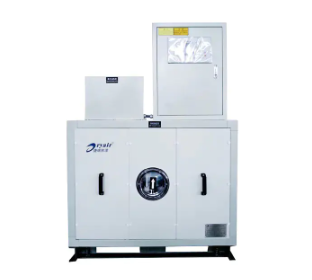 GMP Compliance
Pharma Cleanroom Desiccant System
Hygroscopic powder processing and effervescent packaging climate units ensuring 10–25% RH without temperature spiking, meeting stringent FDA/GMP guidelines.
 GJB Military Standard
Defense & Aerospace Dehumidifier
Heavy-duty anti-corrosion desiccant air handlers certified under the GJB military quality management standard for long-term avionics and weaponry preservation.
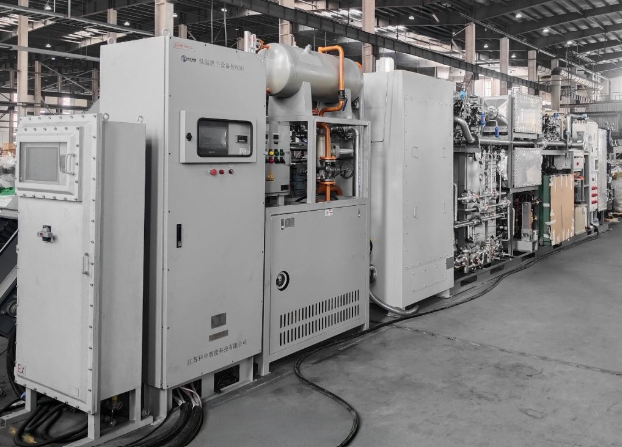
 High COP
Refrigerative & Hybrid Dehumidifier
High-efficiency mechanical cooling dehumidifier paired with DX refrigeration circuits, providing pre-dehumidification ahead of deep-desiccant treatment stages.
 Pilot Line Special
Modular Lab & Pilot-Scale Dry Unit
Compact, skid-mounted desiccant unit tailored for R&D laboratories, battery prototyping cells, and modular cleanrooms requiring rapid plug-and-play installation.
Global Landscape of China Room Desiccant Dehumidifier Solutions
An executive engineering analysis of supply chain localization, thermodynamic superiority, and the critical role of Chinese desiccant manufacturing in global decarbonization.
Supply Chain Centralization
China has emerged as the unequivocal epicenter for lithium battery gigafactory equipment manufacturing. Over 75% of global rotary desiccant rotor deployment originates from or is integrated by Chinese engineering houses. This supply chain density translates into unmatched cost-performance metrics, expedited lead times of 8 to 12 weeks compared to 28+ weeks in Western Europe, and full domestic control over composite matrix raw materials.
- End-to-end component traceability
- Economies of scale across 100+ GWh lines
Thermodynamic & Energy Benchmarks
Ultra-low dew point air processing represents the single largest parasitic energy consumer in dry room operations, often consuming up to 43% of total facility electrical demand. Chinese desiccant engineering innovators like Hangzhou DryAir have shifted industry benchmarks by integrating secondary waste-heat loop regeneration, zeolite/silica dual-matrix wheels, and EC variable fan arrays to achieve COP gains over 28%.
- Desorption heat recovery below 90°C
- High volumetric dehumidification index
Compliance & Export Certification
Modern Chinese desiccant manufacturers do not simply build for domestic facilities; they design for rigorous cross-border deployment. Compliant with CE, UL, CSA, ASME, and EAC standards, and aligned with GJB national defense criteria, systems are engineered to integrate seamlessly into North American NEC electric codes and European EN 1886 mechanical casing deflection standards.
- UL 1995 / CSA C22.2 listing options
- ASME Section VIII pressure vessel stamps
Physics of Rotary Desiccant Adsorption & Megatrends
The core challenge in room desiccant dehumidification is not merely extracting moisture, but maintaining an unyielding vapor pressure gradient between process air and the desiccant rotor matrix while minimizing thermal cross-contamination.
Hangzhou DryAir utilizes high-density corrugated glass-fiber matrices chemically bonded with synthesized inorganic silicate and molecular sieve compounds. As moist air traverses the process sector, vapor molecules are adsorbed into microscopic pores via capillary condensation. The rotor continuously indexes into the regeneration sector, where superheated air drives out moisture.
Core Architectural Advancements:
- Thermal Purge Sector Integration: Prevents heat migration into the supply airstream, reducing post-cooling refrigeration power by up to 22%.
- Composite Honeycomb Adsorbents: 4Å and 13X synthetic zeolites engineered specifically for non-reactive operation in solvent-laden atmospheres.
- Zero-Leak Perimeter Seals: Dual-lip silicone-fluorocarbon perimeter and radial seals ensuring volumetric cross-leakage rates <0.04%.

Localized Industrial Operating Environments
Moisture chemistry is process-specific. Sizing an industrial desiccant system requires exact calculation of room volume, worker latent perspiration, infiltration air changes, and chemical volatilization.
Lithium & Solid-State Batteries
Moisture instantly hydrolyzes lithium hexafluorophosphate (LiPF6) in liquid electrolytes to form toxic Hydrofluoric Acid (HF), corroding internal components and precipitating cell degradation. Solid-state sulfide electrolytes (Li6PS5Cl) are even more reactive, releasing toxic H2S gas when exposed to trace moisture > -50°C DP. Our turnkey systems maintain stable -50°C to -70°C dew point zones across assembly, winding, and electrolyte filling.
Aerospace & GJB Defense Systems
Under China's GJB national military specification and international aerospace guidelines, missile storage vaults, avionics test cells, and propellant handling chambers demand sustained ambient relative humidity below 30% without seasonal fluctuations. Desiccant systems eliminate galvanic coupling corrosion and radar antenna dielectric degradation without relying on volatile chemical inhibitors.
Pharmaceutical & Biotechnology
Hygroscopic pharmaceutical active ingredients (APIs), dry powder inhalers (DPI), effervescent tableting, and gelatin capsule sealing require strict 10%–25% RH envelopes. Excess vapor triggers powder bridging, nozzle clogging in blister packaging, and enzymatic degradation. Our AHUs incorporate sanitary washdown housings, smooth microbial-resistant surfaces, and HEPA terminal filters.
Petrochemical & Vapor Abatement
Volatile organic compound (VOC) emissions from storage terminals and cathode coating exhausts carry hazardous hydro-carbon fractions. Hangzhou DryAir integrates multistage cryogenic condensation with zeolite rotor concentration to recover valuable petrochemical liquids and meet rigorous EPA stack emission targets below 20 mg/Nm³.
Precision Optics & Semiconductor Cleanrooms
Sub-micron lithography, laser crystal growth, and photomask manufacturing suffer severe refraction and thin-film adhesion defects when vapor condensation occurs. Our low-dew-point AHUs provide laminar airflow velocity regulation combined with constant dew point stability (±0.5°C DP), protecting silicon substrates during chemical vapor deposition.
End-to-End Dry Room EPC Delivery Architecture
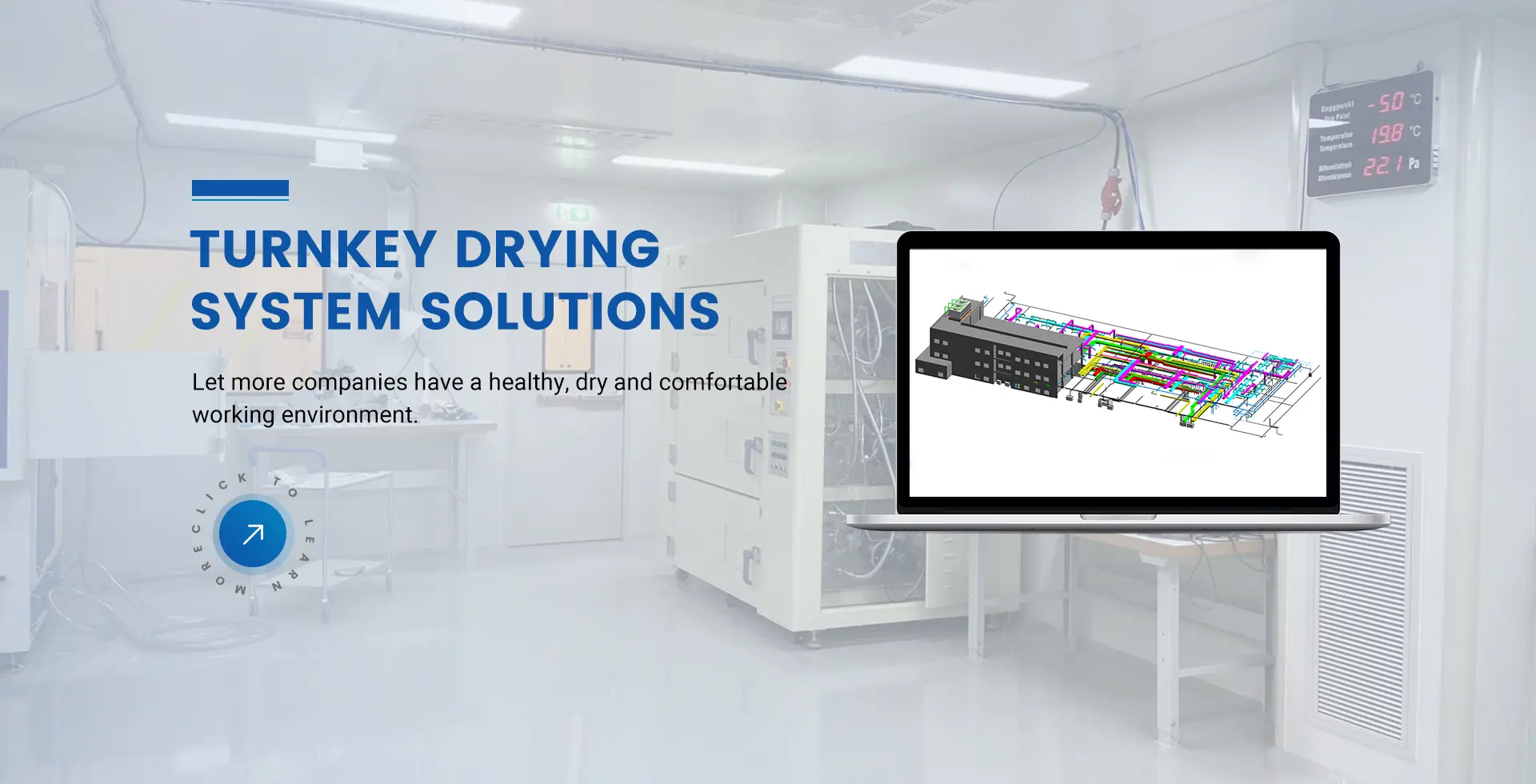
A structured 5-stage engineering execution model ensuring project timeline precision, risk mitigation, and continuous performance validation.
Stage 01: Audit & Psychrometrics
Comprehensive load assessment: calculation of sensible/latent room gains, infiltration via airlocks, worker latent moisture (75g/h per person), door cycling frequencies, and psychrometric process charting.
Stage 02: 3D CAD & CFD Simulation
Computational Fluid Dynamics (CFD) modeling of supply and return airstreams, duct pressure loss balancing, zero-dead-zone cleanroom diffusers, and full BIM coordination to prevent clashes with robotic lines.
Stage 03: Fabrication & Factory FAT
Double-skin airtight AHU manufacturing using thermal-break aluminum profiles and rockwool insulation. Complete Factory Acceptance Testing (FAT) in our environmental testing laboratory prior to crating.
Stage 04: Commissioning & SAT
On-site panel envelope installation, polyurethane sealant pressure testing, duct pressure decay checks, balance of refrigeration circuits, and 72-hour continuous dew point validation down to -70°C.
Dew Point Selection Guide by Industrial Process
Selecting an over-specified target escalates capital expenditure and regeneration kilowatt consumption. Selecting an under-specified dew point causes irreversible product yield destruction.
| Industrial Process / Application | Required Dew Point / RH Target | Primary Hazard of Inadequate Control | Recommended System Configuration |
|---|---|---|---|
| Lithium Battery Cell Assembly & Filling | -40°C to -60°C DP | Electrolyte hydrolysis to toxic HF acid; capacity loss | Turn-key Low Dew Point Dry Room System (DHU Multi-Rotor) |
| Next-Gen Solid-State Battery Cells | -60°C to -70°C DP | Sulfide degradation, hazardous H2S release, anode passivation | Deep-Dew-Point Molecular Sieve Rotary System (DHU-70) |
| Cathode Electrode Slurry Coating Exhaust | ≥99% NMP Recovery | Environmental VOC penalty; loss of expensive solvent inventory | ZJRH Condensing & Desiccant NMP Recovery System |
| Hygroscopic Pharma API & Effervescent Packing | 10% to 25% RH @ 21°C | Powder caking, moisture bridging, tablet disintegration failure | Sanitary GMP Desiccant AHU with Integrated DX Chilling |
| Defense, Ammunition & Avionics Storage | ≤35% to 40% RH | Rapid electrolytic oxidation, propellant degradation, mold | GJB Military Standard Heavy-Duty Industrial Dehumidifier |
| Cathode Precursor & Raw Material Warehouses | 40% to 50% RH | Raw material clumping, moisture uptake into lithium carbonate | Industrial Refrigerative / Pre-Cooling Hybrid Dehumidifier |
| Tank Terminal & Petrochemical Loading | <20 mg/Nm³ Stack VOC | EPA regulatory non-compliance, vapor cloud flammability risks | JEN Deep-Cooling Condensation + Regenerative Thermal Oxidizer |
Technology Roadmap: Next-Generation Desiccant Innovation
The transition toward carbon-neutral battery gigafactories requires radical advancements in desiccant materials, smart digital twin controls, and thermal integration.
Low-Temperature Thermal Regeneration
Conventional silica gel and molecular sieves require regeneration airstreams heated to 120°C–160°C, predominantly utilizing high-power electric heaters or direct-fired gas burners. The DryAir innovation pipeline utilizes metal-organic frameworks (MOFs) and novel polymer matrix desiccants capable of complete desorption at 70°C to 85°C. This allows the system to run on low-grade industrial waste hot water and heat-pump circuits, cutting thermal primary energy by up to 45%.
AI Dynamic Dew Point Balancing
Static dry room air delivery wastes enormous energy during off-shifts or low-occupancy periods. DryAir is rolling out edge-computed predictive algorithms that analyze weather forecasts, shift schedules, airlock door actuation telemetry, and real-time dew point drift. By dynamically throttling rotor RPM, variable regeneration fan volume, and DX compressor frequencies, plants achieve continuous compliance with up to 32% lower lifecycle OPEX.
Solid-State Sulfide Inert Gas Processing
As battery chemistry shifts from liquid electrolyte lithium-ion to all-solid-state designs utilizing sulfide electrolytes, process dry rooms are evolving into closed-loop dry argon or ultra-dry nitrogen atmospheres. DryAir is designing specialized closed-circuit desiccant reclamation systems operating in zero-oxygen environments, achieving dew points below -75°C without gas exhaustion or carrier loss.
Frequently Asked Engineering & Procurement Questions
Actionable answers addressing performance validation, lifecycle calculations, international export certifications, and on-site EPC execution.
What is the lowest verified supply air dew point Hangzhou DryAir desiccant systems achieve?
Can DryAir execute full turnkey dry room EPC contracts outside of China?
Which international certifications and electrical standards do DryAir systems support?
How does DryAir's NMP recovery system achieve a solvent capture rate exceeding 99%?
What after-sales maintenance, diagnostics, and warranty programs are offered globally?
Why choose a Chinese desiccant dehumidifier manufacturer over Western European brands?
Technical Articles & Operational Whitepapers
In-depth technical guides authored by our HVAC and solvent recovery engineering directors to assist specification teams and plant facility managers.
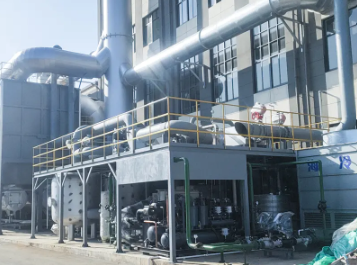
Thermodynamics of Cryogenic Oil-Gas Condensation Systems
A complete analysis of phase change dynamics, multi-stage refrigeration cascade loops, and defroster switching strategies for petrochemical loading arms.
Download Whitepaper
Continuous Operation Strategies for Electrode Coating NMP Recovery
Preventing aerosol clogging, managing heat wheel desynchronization, and balancing air exhaust temperatures to sustain ≥99% solvent capture continuously.
Read Full Case Study
Moisture Degradation Risks in Solid Dosage & Capsule Packaging
Evaluating sorption isotherms, gelatin brittleness thresholds, and psychrometric cleanroom layout to eliminate effervescent tablet degradation.
Access Research PaperExplore Complete Dehumidifier & Dry Room Solutions
Shortlist industry-validated equipment lines built in Hangzhou, certified for worldwide export, and proven across more than 2,000 industrial installations.
Standard -70°C DP
Rotary Desiccant Dehumidifier (DHU)
High-capacity desiccant rotor for lithium cell assembly lines, offering supply dew points from -40°C down to -70°C with automated heat recovery.
Turnkey Dry Room
Turn-Key Battery Dry Room System
Complete environmental enclosure with PIR/PUR insulated panels, sealed viewing windows, integrated airlocks, and psychrometrically matched dehumidification.
NMP Recovery ≥99%
NMP Solvent Recovery System
Engineered for roll-to-roll cathode coater drying exhaust, capturing expensive solvent vapors and producing purified liquid for recycling.
VOC Emission <20mg
VOC Abatement & RTO System
Regenerative thermal oxidation and deep condensation engineered to destroy hazardous volatile solvents and recover condensable light oil fractions.
GMP / FDA Ready
Pharma Low RH Dehumidifier
Sanitary-grade desiccant air handlers designed for gelatin capsule drying tunnels, powder transfer stations, and sterile filling suites.
GJB Defense Spec
GJB Defense Climate System
Certified for military equipment storage, naval shipboard environmental maintenance, and underground long-term strategic ordnance preservation.
DX Mechanical Pre-Cooling
Refrigerative Dehumidifier
Direct-expansion refrigeration dehumidifier for industrial warehouses and primary moisture stripping ahead of desiccant wheels.
 2-Year Global Warranty
Custom Industrial Skid & AHU
Tailored multi-wheel air handling configurations engineered to exact mechanical footprint limits and international destination voltages (380V/460V/480V).
Start Your Dry Room & Dehumidifier Specification
Connect directly with our registered HVAC specialists and psychrometric engineers to review your facility room volumes, sensible/latent moisture loads, target dew point requirements, and energy recovery optimization.