
Engineered Humidity Control & Abatement Fleet
Field-proven rotary and refrigerative architectures tailored to extreme low dew point specifications and VOC mitigation.
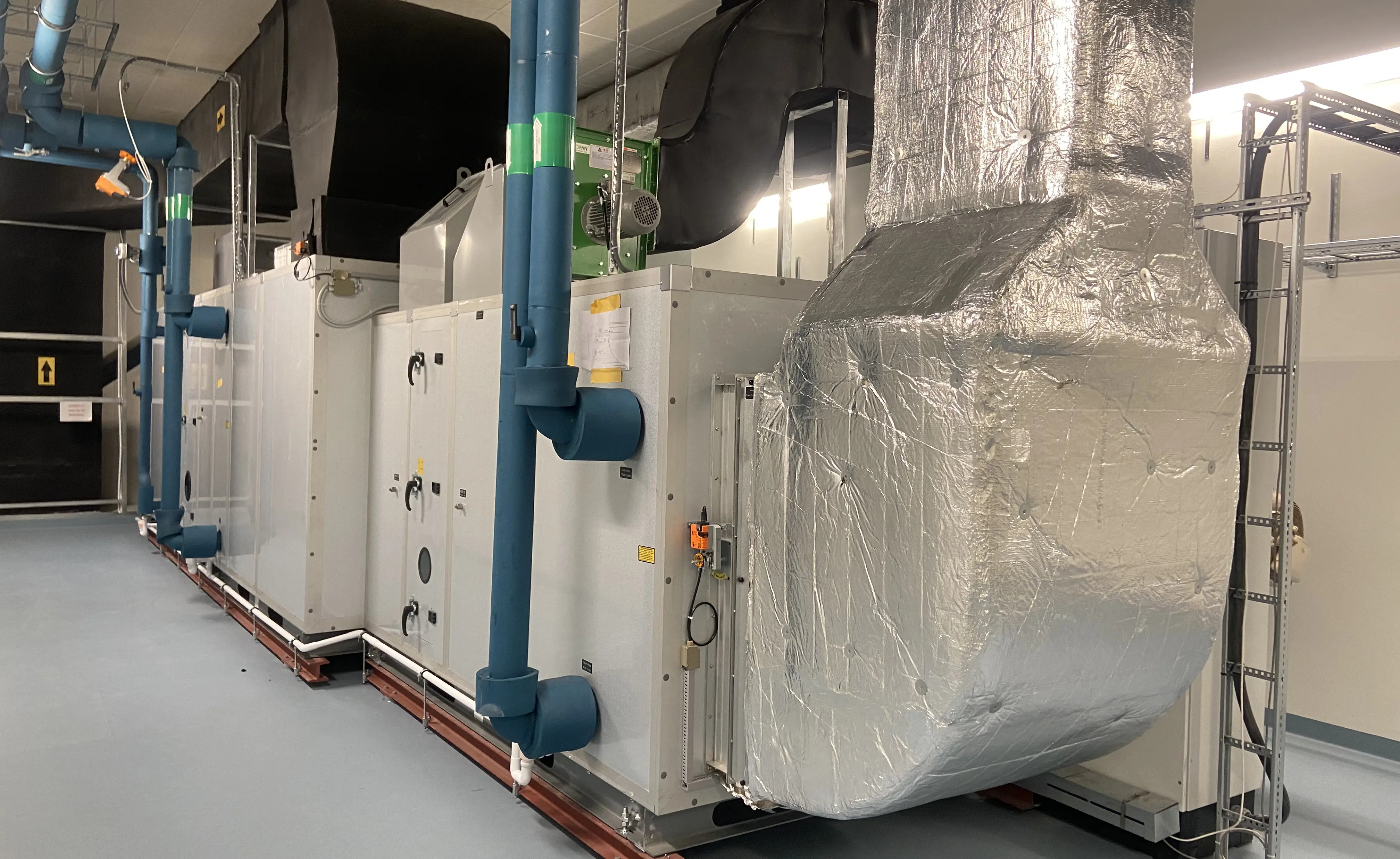
Desiccant Dehumidifier
DHU series rotary desiccant dehumidification systems delivering ultra-low dew points for lithium cell manufacturing and defense applications.
View Specifications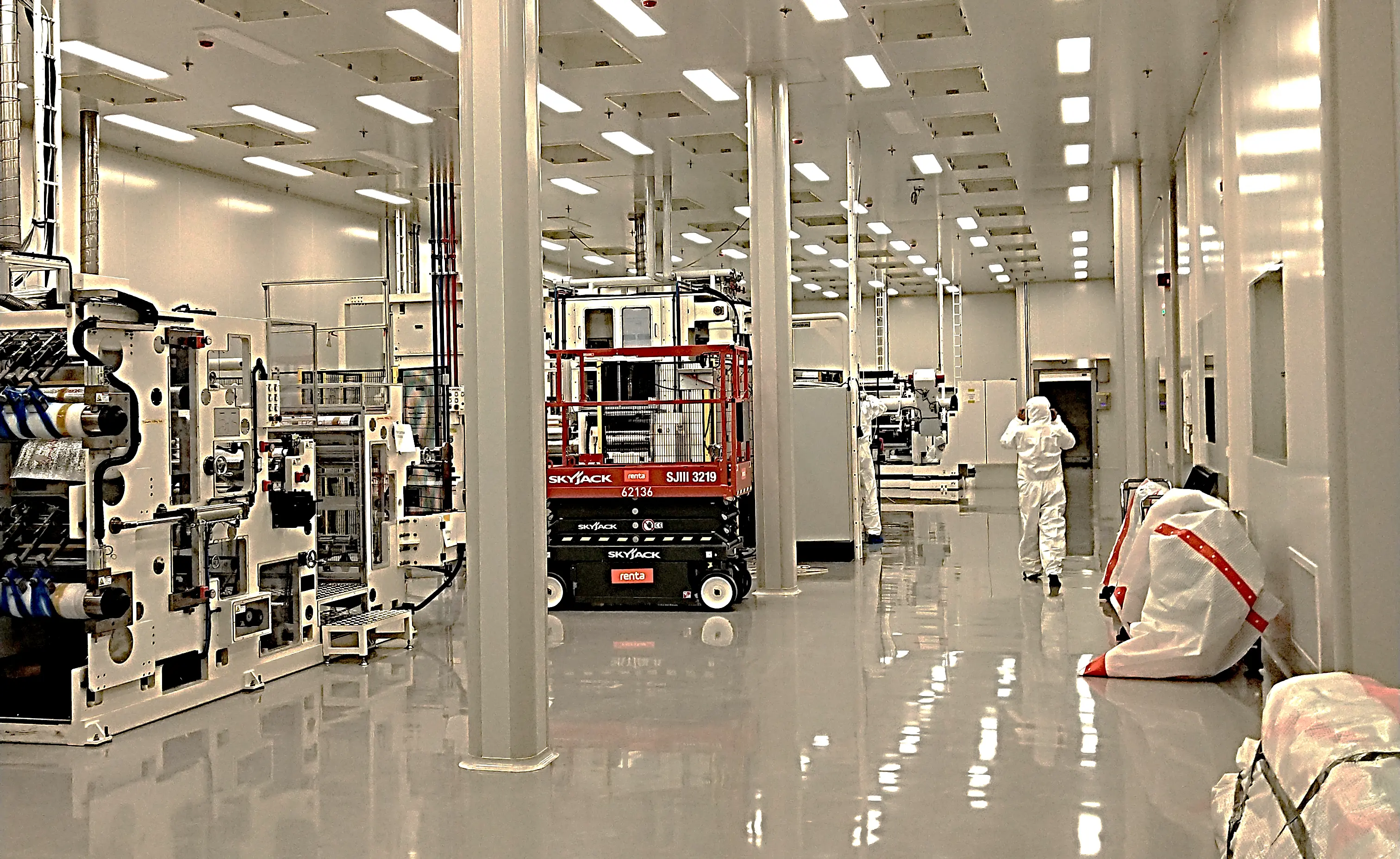
Turn-key Dry Room System
Integrated envelope enclosures, high-efficiency ductwork, psychrometric load balances, and automated multi-tier PLC monitoring stations.
Explore Dry Rooms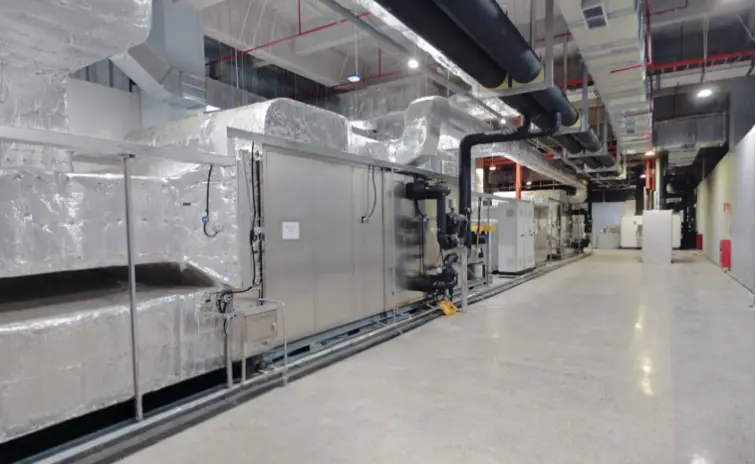
NMP Recovery System
Closed-loop condensation recovery designed to recapture N-Methyl-2-pyrrolidone solvent from battery cathode coating ovens safely.
Learn More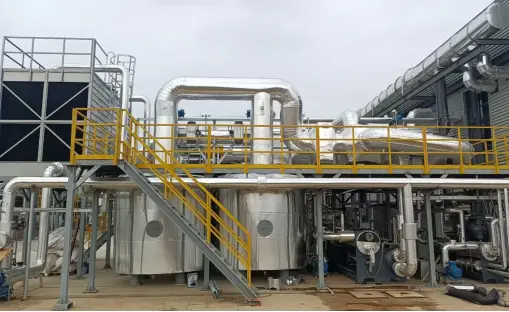
VOC Abatement System
Advanced deep-cooling condensation alongside regenerative thermal oxidation to destroy hazardous airborne organic pollutants.
Learn More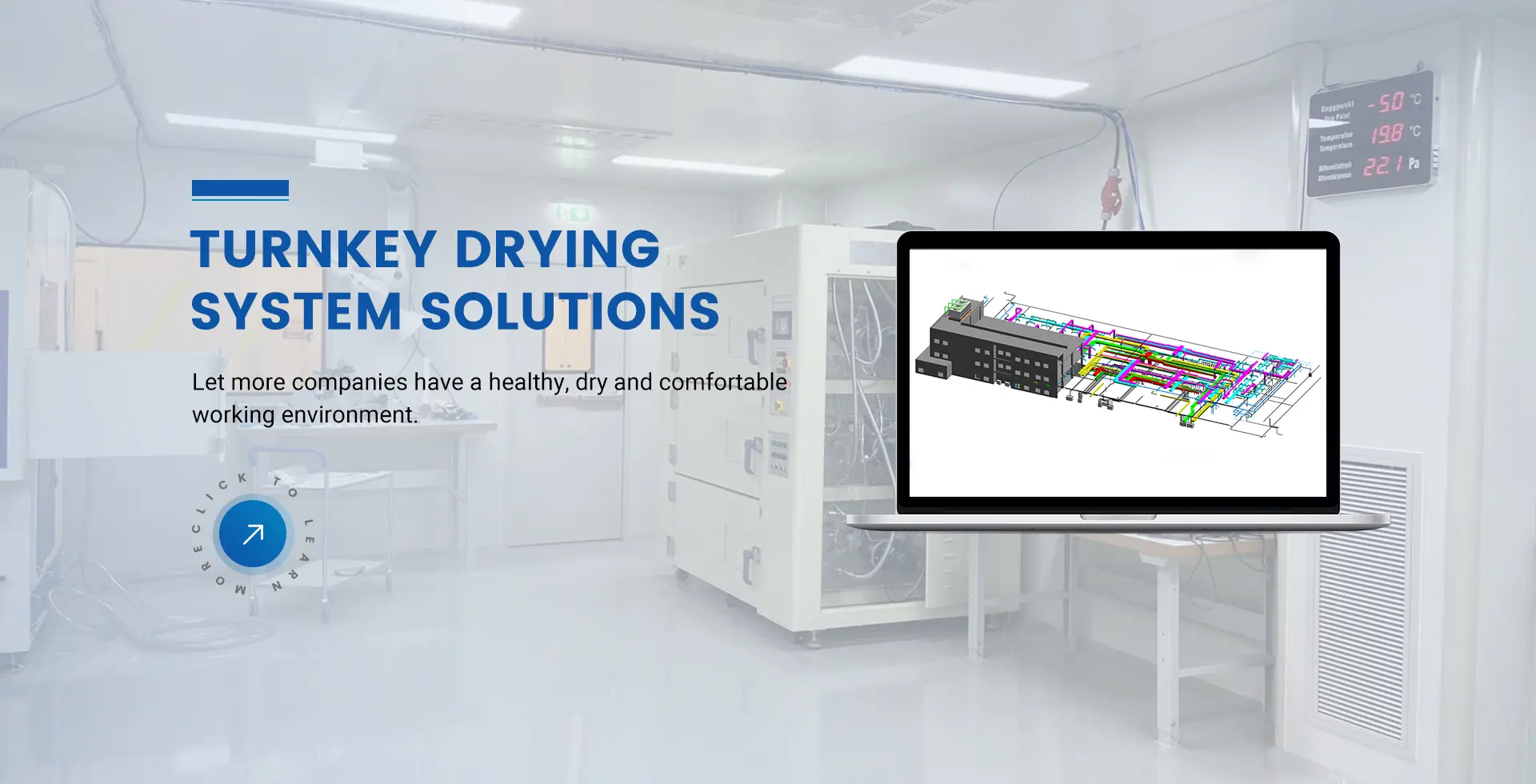
Refrigerative Dehumidifier
High-capacity mechanical refrigeration dehumidifiers engineered for general commercial warehousing, bulk storage, and pre-cooling cycles.
Learn More
Ultra-Dry Air Handling Unit
Combined cascade cooling coils and dual-rotor desiccant matrix delivering ultra-dry clean air for sensitive automated production corridors.
View Specifications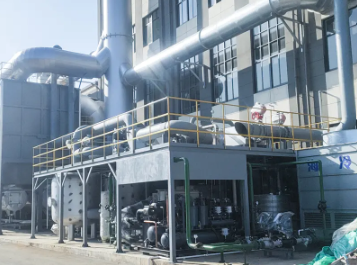
Oil & Gas Vapor Recovery Unit
Cryogenic condensing systems for bulk liquid terminals, marine loading facilities, and chemical petrochemical tank farms.
Learn More
Military Environmental Unit
Ruggedized mobile and stationary climate protection hardware engineered to rigorous national defense storage parameters.
Explore ProductsDehumidification from Air: The Macro Evolution & China Supply Chain
How deep industrial desiccation transformed from simple ambient conditioning into an existential prerequisite for gigawatt battery manufacturing and specialized synthetic chemistry.
Technological Evolution
The industrial dehumidification sector has bifurcated from basic comfort HVAC. Modern processes demand chemical moisture extraction via solid desiccant rotors composed of cellular ceramic substrates impregnated with active silica gel or synthesized 3Å/4Å molecular sieves. These systems routinely isolate air down to vapor pressures below 0.001 mbar, matching the stringent requirements of solid-state lithium metal chemistries.
The China Supply Advantage
Procuring industrial dehumidification hardware from China has transformed from a labor-cost arbitrage play into an engineering imperative. Chinese manufacturers sit adjacent to over 75% of global lithium cell production, fostering continuous iteration cycles, vast operational validation datasets, robust tier-one supply chains, and unprecedented economies of scale that slash capital lead times by up to 50%.
Thermodynamic Efficiency
Operating a -70°C dew point dry room is among the most energy-intensive manufacturing loads, consuming upwards of 35-43% of total cell assembly plant energy. Contemporary engineering paradigms integrate multi-zone sensible purge sectors, exhaust latent heat recuperators, and variable medium-pressure steam regeneration to suppress electrical operational expenditures by 28-35% annually.
Executive Engineering Consensus: Moisture control within gigawatt assembly lines is no longer categorized as an auxiliary plant utility. It functions as an active yield-determining component. Atmospheric moisture in excess of 1 ppm reacts irreversibly with LiPF6 electrolyte salts, forming volatile hydrofluoric acid (HF) that compromises cathode structures, causes early cell swelling, and sparks severe thermal runaway vulnerabilities.
Global Enterprise Sourcing Architecture
When tier-one electric vehicle manufacturers, multinational pharmaceutical syndicates, and aerospace primes evaluate industrial air dehumidification suppliers from China, evaluation protocols rest upon six non-negotiable vectors.
Hermetic Envelope Integrity
Specifying engineers prioritize casing leakage classifications. High-performing Chinese export equipment relies on thermally broken, double-skin polyurethane injected cassettes featuring EN 1886 mechanical strength class D1 and air leakage rating L1, mitigating parasitic moisture ingress under severe negative plant pressure differentials.
Auditable Psychrometric Curves
Procurement teams demand audited psychrometric simulation models validating moisture mass balances across diverse ambient regimes—from the humid monsoon environments of Southeast Asia to the sub-zero continental climates of Northern and Central Europe.
Rotor Desiccant Chemistry
Evaluation mandates inspection of the adsorption media. High-performance rotors incorporate synthesized composite silica-zeolite matrices boasting active desiccant percentages exceeding 82%, completely precluding dust shedding, airborne salt leaching, and catastrophic matrix degradation at elevated reactivation temperatures (140°C–170°C).
Turnkey EPC Accountability
International buyers seek Single-Source Contracting models. Splitting dehumidifier manufacturing from cleanroom enclosure panelization and chilled water balancing creates warranty disputes. Full-scope delivery mitigates operational handoff bottlenecks entirely.
Standardized Automation Layers
Integration with enterprise SCADA systems demands open protocol architectures. Native industrial Ethernet protocols (Profinet, EtherNet/IP, Modbus TCP) alongside Siemens S7-1500 or Allen-Bradley PLCs ensure effortless plant-level telemetry, preventative rotor tracking, and automatic dew point feedback regulation.
Supply Chain Redundancy
Factory assessments focus on component tiering. Global procurement mandates top-tier mechanical components: FläktGroup or Nicotra fans, ABB or Siemens IE4 motors, and Festo or SMC pneumatic actuators, guaranteeing low Mean Time to Repair (MTTR) regardless of installation country.
Domain-Specific Moisture Control & Recovery Profiles
Different industrial processes exhibit unique vapor pressure tolerances. Below is the technical specification benchmark for global plants.
| Target Sector / Application | Critical Moisture Contaminant | Psychrometric Control Specification | Technological Configuration | Primary Operational Risk Mitigated |
|---|---|---|---|---|
| Lithium-Ion Battery Cell Assembly | Water Vapor (>0.05 g/kg dry air) | -40°C to -60°C Dew Point | Dual-Rotor Desiccant System + DX Deep Chilling | HF Acid generation, electrolyte breakdown & swelling |
| Next-Gen Solid State & Li-Metal | Moisture Traces (>0.005 g/kg) | Down to -70°C Dew Point (<2 ppm) | Zeolite Molecular Sieve Rotor + Deep Cryo Condensation | Spontaneous exothermic oxidation of raw metallic lithium |
| Cathode Electrode Coater Exhaust | Volatile NMP Solvents (C5H9NO) | ≥99% Solvent Recovery Efficiency | Two-Stage Chill Condensation + Fluidized Bed Scrubbing | Stack emission non-compliance, expensive solvent purchase loss |
| Pharmaceutical Tablet Compression | Ambient Relative Humidity | 10% to 25% RH @ 21°C | Rotary Desiccant Dehumidifier with Post-Cooling Coils | Powder caking, hydraulic punch jamming, product microbial growth |
| Defense Armament & Avionics Storage | Atmospheric Condensation | ≤35% to 40% RH (Ambient) | Modular Ruggedized Rotary Dehumidifier (GJB Standard) | Electrochemical contact corrosion, propellant chemical degradation |
| Semiconductor Photolithography | Micro-Humidity Variance | ±0.5% RH Precision Tolerance | Ultra-Clean Desiccant AHU with Chemical Carbon Adsorption | Reticle hazing, photoresist adhesion degradation, wafer defects |
Engineering Mastery Born from Industrial Transformation
Founded in 2010 within Hangzhou's Qingshan National Industrial Park, Hangzhou DryAir Treatment Co., Ltd. has spent over a decade establishing itself among China’s top three desiccant dehumidification manufacturing pioneers. We bridge technical psychrometric physics with comprehensive, enterprise-level industrial execution.
Our engineering division comprises 74 specialized HVAC engineers, doctoral researchers, and senior technical architects. We maintain dedicated testing centers validating full air volume, thermodynamic performance, and air tightness prior to freight departure.
DryAir's systems power the manufacturing lines of the world's most demanding gigawatt cell producers, including CATL, ATL, BYD, EVE Energy, Farasis, Envision, and SVOLT. Across Europe and the Americas, our equipment guarantees uninterrupted environmental stability for Tier-1 technology companies like Tesla, Northvolt, and TTI.

Global Support Infrastructure & Multi-Jurisdictional Compliance
Mitigating deployment friction for overseas capital projects through deep localized certification and continuous operational lifecycle assurance.
Harmonized Regional Codes
Export configurations are built strictly compliant with end-destination statutory requirements. Electrical integration conforms to NFPA 79 and UL 508A in North American jurisdictions, while European deployments satisfy EN 60204-1, ATEX Zone 1/Zone 2 directives, and F-Gas regulatory phasedowns.
Field Engineering Teams
DryAir backs all international deliveries with experienced field service technicians. We oversee installation verification, duct pressure leakage testing, automated balancing, sensor calibration, and site acceptance testing (SAT) ensuring smooth commissioning handoffs.
Extended SLA Protocols
Overseas clients have access to an optional two-year comprehensive service agreement. This encompasses direct cloud telemetry for predictive health checks, guaranteed consignments for critical spares, and 24-hour remote response windows from senior system designers.
Technological Roadmap: The Next Decade in Industrial Desiccation
How DryAir engineers solve tomorrow's high-efficiency, zero-carbon gigawatt plant demands.
Heat Pump Hybrid Regeneration
Transitioning away from carbon-heavy electric heaters or steam boilers toward high-temperature industrial CO2 (R744) and transcritical water heat pumps capable of reaching 140°C desiccant reactivation, cutting regeneration electrical inputs by up to 45%.
Advanced Solid Adsorbents (MOFs)
Collaborating with material science institutions to commercialize Metal-Organic Frameworks (MOFs) in desiccant rotor matrices. These materials enable targeted water sorption profiles regenerable at temperatures as low as 75°C using industrial low-grade waste heat.
AI Psychrometric Twin Control
Deploying neural network controllers that model envelope thermal shifts, shifting factory occupancy, and outdoor atmospheric vapor fronts in real-time to adjust rotor speeds and chilling valves dynamically, preventing costly dew point overshoot.
Frequently Asked Technical Questions
Direct answers to the common specification, warranty, and commissioning queries posed by corporate engineering and procurement teams.
What is the absolute lowest dew point achievable with DryAir rotary desiccant systems?
Can DryAir deliver complete, turnkey dry room EPC projects outside of China?
What statutory certifications are provided for export into European and American territories?
How does the ZJRH series achieve a ≥99% NMP recovery rate?
What lifecycle and after-sales support frameworks exist for global facilities?
How does desiccant dehumidification compare against mechanical refrigeration for drying air?
Engineering White Papers & Field Case Studies
Practical system design considerations, solvent recovery schematics, and cleanroom air handling architectures from our staff engineers.
How Does an Oil Gas Condensation Recovery System Work
An in-depth thermodynamic review of how high-boiling-point hydrocarbons are condensed through multi-stage refrigeration cooling loops during bulk hydrocarbon transfers.
Read Engineering Paper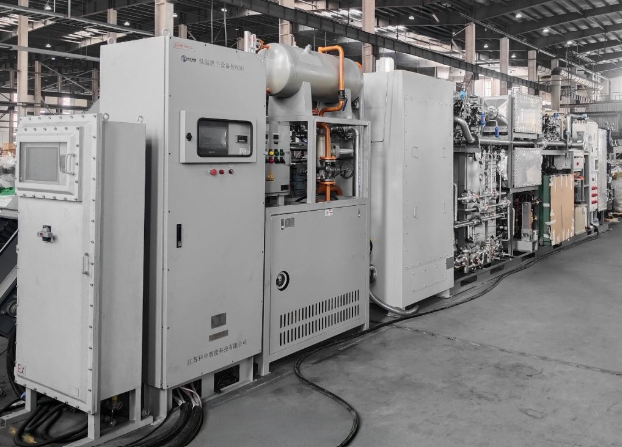
Maintaining Stable NMP Recovery Across Continuous Operation
Addressing the root causes of efficiency drop-off in continuous cathode coating runs, including condensation temperature management and automated purge cycle tuning.
Read Engineering PaperManaging Excess Humidity in Solid Dosage Formulations
Quantifying yield loss across blending, fluid-bed granulation, tablet pressing, and encapsulation when ambient relative humidity fluctuates outside GMP baselines.
Read Engineering PaperExplore Complete DryAir Industrial Hardware Lines
Verify performance specifications, sizing criteria, and order models directly matching your plant's air treatment parameters.
DHU Desiccant Dehumidifier
High-capacity rotary desiccant units built with honeycomb silica/molecular matrices for critical environments down to -70°C DP.
View Specifications
Turnkey Dry Room System
End-to-end engineered dry rooms with guaranteed airtight envelopes, custom floor finishes, low DP airlocks, and integrated controls.
Explore Dry Rooms
ZJRH NMP Recovery System
Advanced condensing towers capturing greater than 99% of evaporated NMP solvent from battery electrode coating ovens.
Learn More
JEN VOC Abatement System
Regenerative thermal oxidizers combined with pre-condensation scrubbers for complete industrial VOC elimination and odor control.
Learn More
Refrigerative Dehumidifier
Heavy-duty, compressor-based refrigerant condensing dehumidifiers engineered for commercial warehousing and process pre-cooling.
Learn More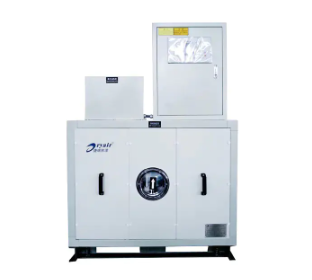
Pharma Cleanroom Dehumidifier
Sanitary stainless-steel construction air handling systems configured to satisfy cGMP cleanroom environmental and RH parameters.
View Specifications
Hydrocarbon Vapor Recovery
Custom vapor condensation systems engineered for chemical transfer depots, storage terminals, and bulk marine loading racks.
Learn More
GJB Military Air Systems
Mil-spec dehumidification consoles designed for weapon arsenal storage, tactical avionics hangers, and corrosive marine vessels.
Explore Products