
Primary Air Purification & Dehumidification Systems
Standardized engineered modular configurations designed for direct global deployment and low-dew-point operations.
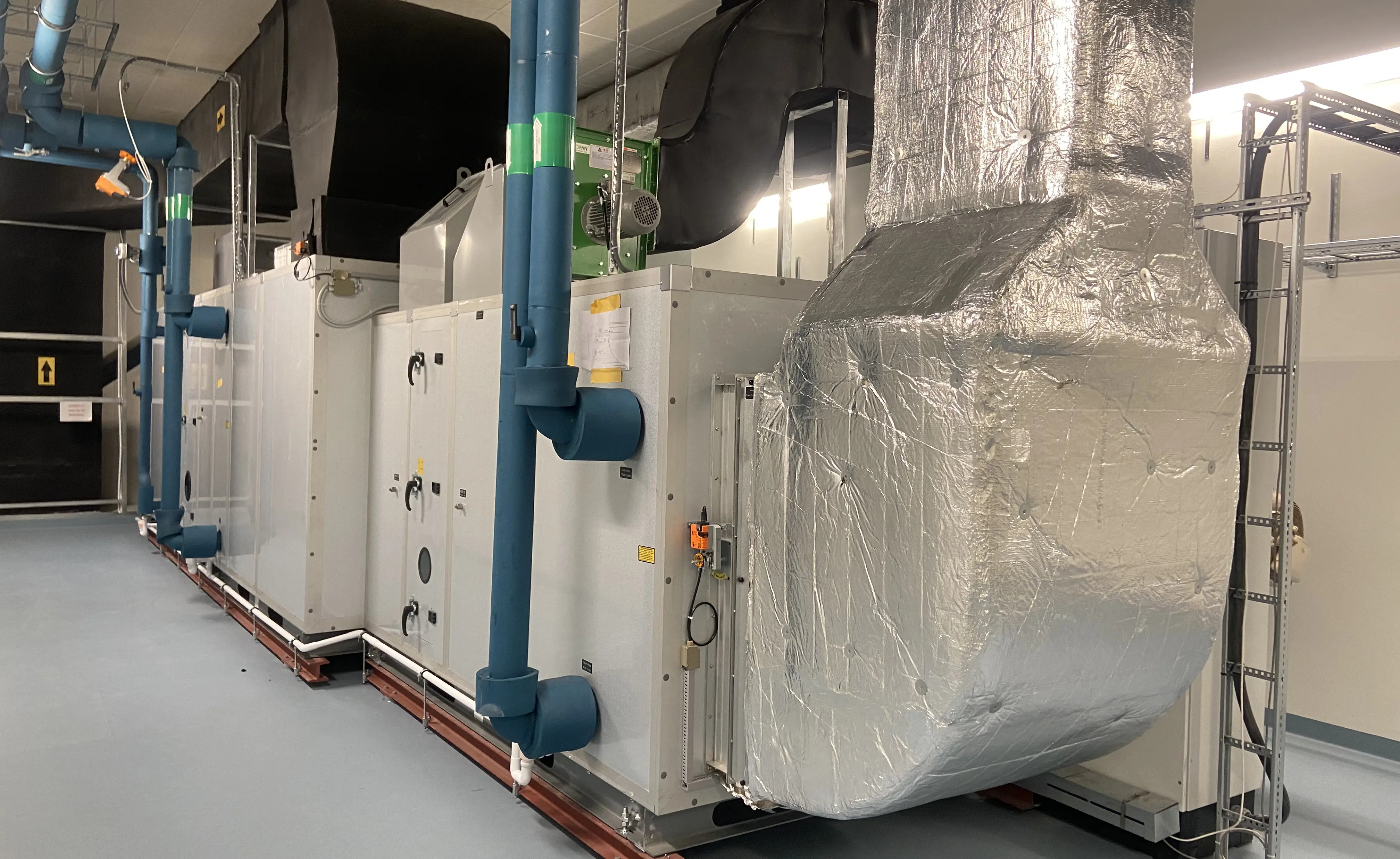
Desiccant Dehumidifier
DHU series heavy-duty rotary silica gel and molecular sieve dehumidifiers providing deep continuous drying.
View Specifications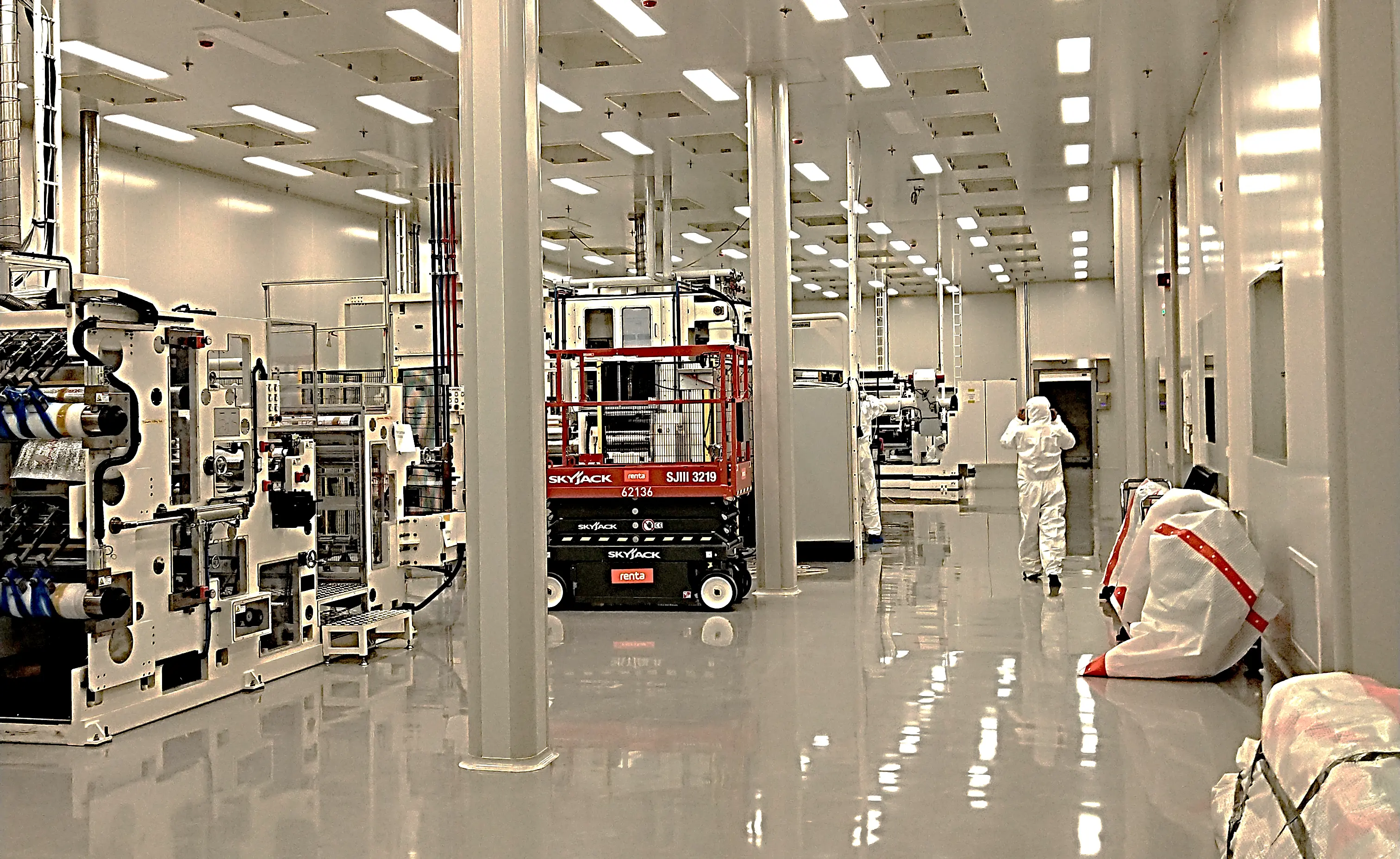
Turn-key Dry Room System
Complete hermetic modular enclosure, dynamic airlocks, precision AHU, and automated dew point validation.
Explore Dry Rooms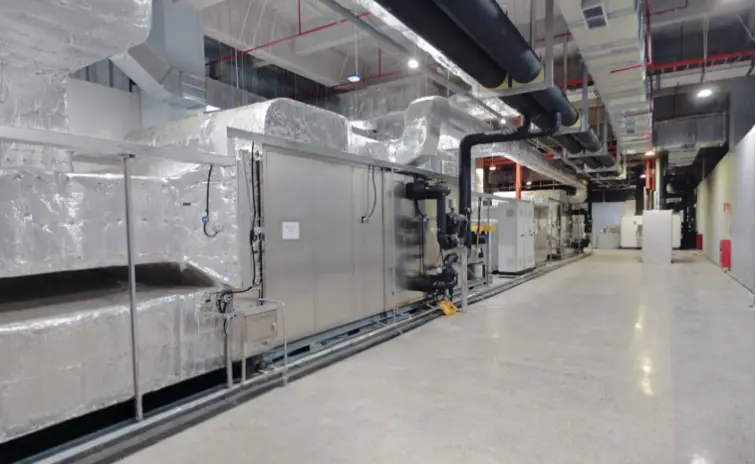
NMP Recovery System
ZJRH condensation and zeolite adsorption architecture capturing high-purity N-Methyl-2-pyrrolidone solvent.
Learn Recovery Tech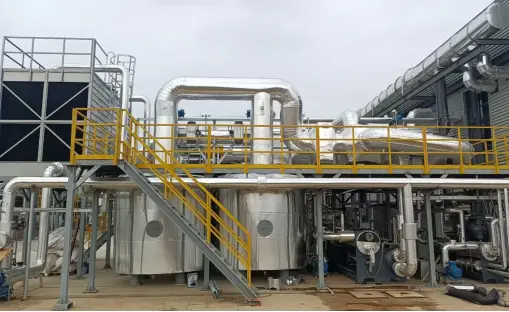
VOC Abatement System
Deep-cooling cryo-condensation combined with Regenerative Thermal Oxidation (RTO) for VOC abatement.
Explore Abatement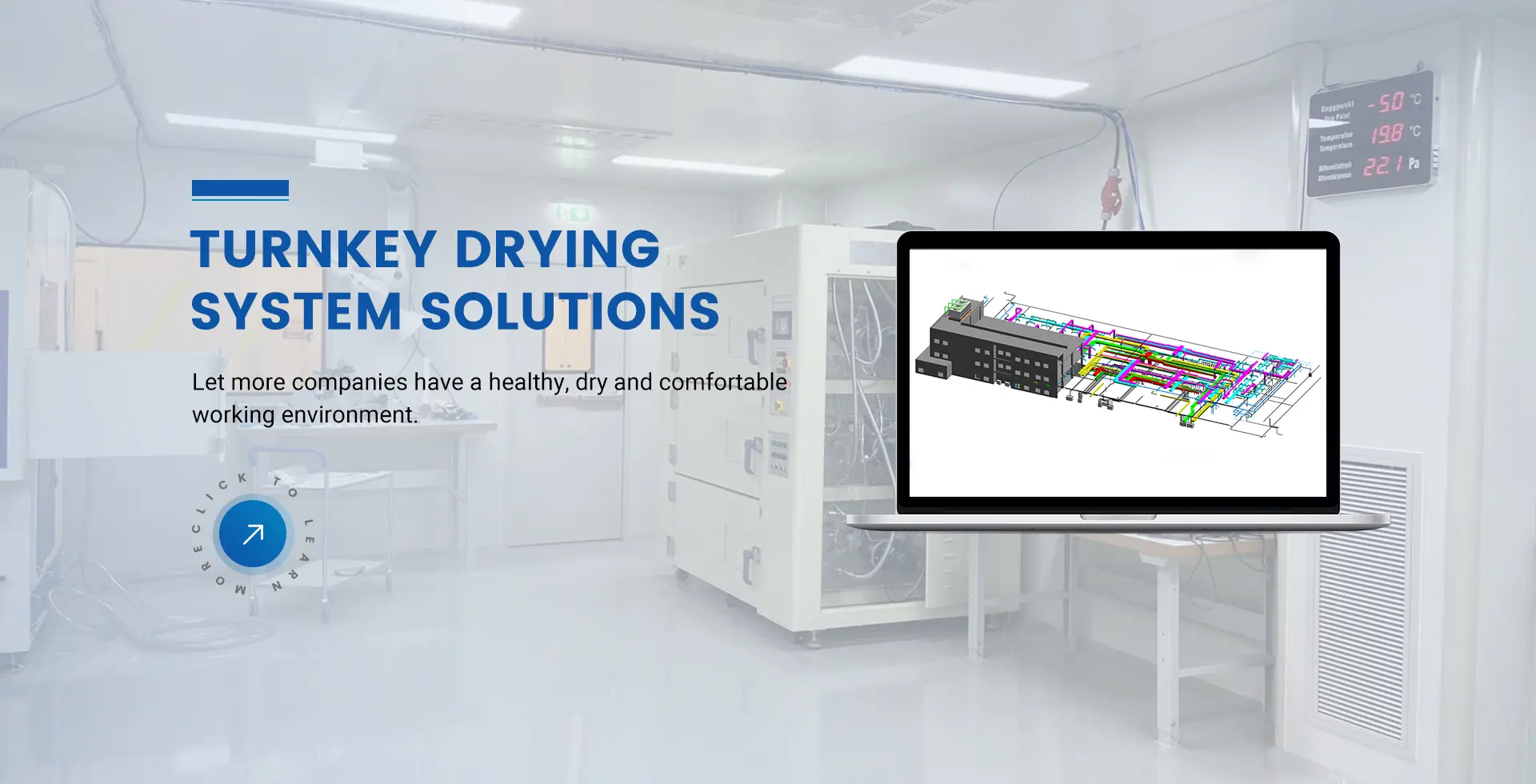
Refrigerative Dehumidifier
High-efficiency mechanical refrigeration pre-cooling units balancing bulk latent heat prior to desiccant intake.
Examine Equipment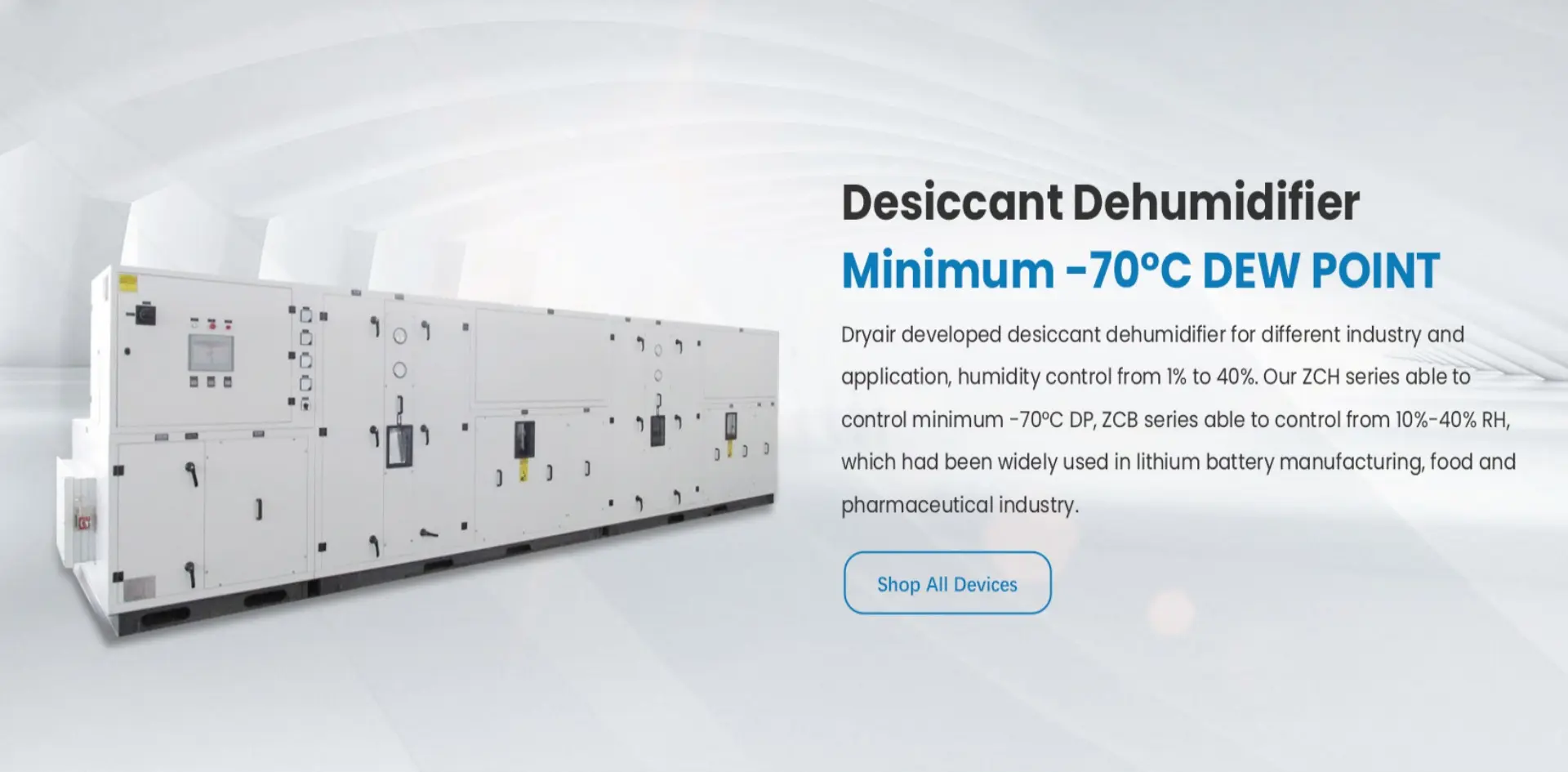
Solid-State Cell Dry Enclosure
Extreme -70°C dew point environments designed for next-gen lithium metal and solid electrolyte handling.
Review Engineering
Aerospace Preservation Unit
GJB national defense standard certified anti-corrosion dehumidifier skids engineered for mission systems.
Inspect Military Units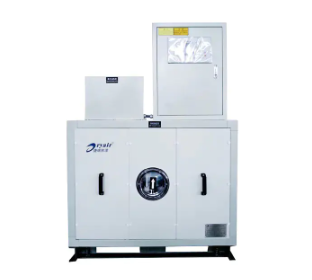
Biopharma Air Purifier Skid
Combined dry air sanitization and desiccant wheel skids engineered for cleanrooms, API, and gelatin processing.
Access Pharma SpecsGlobal Landscape: Why Ultra-Dry Air Purification Determines Modern Manufacturing Yields
The shift toward precision electromechanical fabrication, advanced battery chemistry, and biopharmaceutical synthesis has raised moisture control from an HVAC detail to a core determinant of manufacturing yield.
Battery Gigafactories & Electrolyte Hydrolysis
Lithium hexafluorophosphate (LiPF6) in battery electrolytes reacts irreversibly with ambient moisture (H2O), producing hazardous hydrofluoric acid (HF). This degradation leads to cell swelling, internal micro-shorts, and capacity loss. Modern production lines require continuous moisture levels below -40°C to -60°C dew point, while solid-state cells with lithium-metal anodes require supply air at -70°C dew point.
Pharmaceutical Hygroscopicity & Sterility
Active Pharmaceutical Ingredients (APIs), effervescent formulations, and lyophilized powders are sensitive to ambient relative humidity above 15-20%. Uncontrolled humidity causes powder agglomeration, clogs high-speed tableting dies, and accelerates hydrolysis of active compounds. Dehumidifiers integrated with terminal HEPA filtration maintain cleanroom air quality down to ISO Class 5 while preventing bacterial growth.
Defense, Aerospace & Semiconductor Cleanrooms
Micro-corrosion on avionics, guided-missile propellants, and sub-nanometer wafer lithography systems can occur when relative humidity fluctuates above 30%. Operating under the GJB national military standard, specialized desiccant purification prevents atmospheric oxidation, moisture-induced delamination in composite layers, and optical haze across vacuum ultraviolet mirror arrays.
Top 10 Global Exporters & Manufacturers Analysis
An engineering-level benchmark evaluating market presence, minimum dew point limits, heat regeneration recovery efficiency, export qualifications, and full turnkey capacity.
| Brand / Exporter | Origin / Regional Footprint | Lowest Verified DP | Regeneration Heat Recovery | Turnkey Dry Room (EPC) | Export Compliance |
|---|---|---|---|---|---|
| DryAir (Hangzhou DryAir) | China (Global Exporter) | -70°C Dew Point | Waste-heat run-around & dual-wheel bypass (≥35% savings) | Complete Turnkey (Consulting to Validation) | CE, UL, CSA, ASME, EAC, ISO9001, GJB |
| Munters | Sweden (Global Multi-Facility) | -70°C Dew Point | Green Power desorption, Puracore integration | High (Modular System Architecture) | CE, UL, ISO14001, AHRI |
| Bry-Air | India / North America | -65°C Dew Point | EcoDry, GreenDry desiccant wheel matrices | Medium to High (Process Dehumidification) | CE, UL, ISO9001 |
| DST Seibu Giken | Sweden / Japan | -60°C Dew Point | SSCR silica-gel synthetic molecular rotor | Component & Skid Integration | CE, UL, JIS |
| Condair Group | Switzerland | -40°C Dew Point | Standard condensation & secondary sorption coils | Commercial & Industrial Cleanrooms | CE, VDI6022, ISO9001 |
| Stulz Industrial | Germany | -45°C Dew Point | Dynamic precision free-cooling cycles | Mission-Critical HVAC Modules | CE, UL, Eurovent |
| Desiccant Technologies Group | Lithuania (EU) | -50°C Dew Point | Electric, steam, and direct-fired gas regeneration | Modular Dry Air Handling Units | CE, EAC |
| Airwatergreen | Sweden | -30°C Dew Point | Condensation desiccant hybridation | Decentralized Unit Skids | CE |
| FläktGroup | Germany / Global | -40°C Dew Point | Econet thermodynamic run-around coils | Turnkey Building Air Filtration | CE, Eurovent, VDI |
| Atlas Copco (Industrial Air) | Belgium / Sweden | -70°C (Compressed Air) | Desiccant purge-loss optimization valves | In-line Pipeline Purifying Only | ASME, CE, CRN |
Rotary Desiccant Dehumidification: Principles & Energy Architecture
Achieving an ultra-low dew point of -70°C requires more than raw thermal power. It relies on a multi-stage approach combining mechanical pre-cooling, molecular sieve rotor adsorption, and recovered heat desorptive regeneration.
1. Multi-Stage Moisture Decoupling
Incoming air often carries a heavy latent load. DryAir systems first pass air through chilled-water coils (6°C–10°C) to mechanically condense out bulk moisture down to a 7°C–9°C dew point. This protects the desiccant rotor from moisture saturation, reducing the thermal load needed for reactivation.
2. Synthesis Rotor Chemisorption
The core uses a corrugated fiberglass matrix synthesized with active silica gel and custom 3A/4A/13X molecular sieves. The honeycomb architecture maximizes surface contact while keeping pressure drop low. As the wheel slowly turns (6–12 rph), vapor molecules are drawn into microscopic pores via capillary condensation.
3. High-Temperature Reactivation Loop
A counter-flow air stream, heated to 110°C–140°C, passes continuously through the regeneration sector. It drives off adsorbed water vapor and purges it outdoors. Precision silicone seals isolate the process stream from the hot reactivation zone, preventing moisture carry-over.
4. Closed-Loop Heat Recovery
Desiccant reactivation requires significant thermal energy. DryAir designs use air-to-air plate heat exchangers and heat-pipe loops to preheat incoming reactivation air using the hot reactivation exhaust, recovering 30% to 45% of waste heat and reducing overall plant operating costs.
5. Integrated Solvent Purification
On electrode coating lines, moisture control is closely tied to solvent management. The ZJRH NMP Recovery System uses deep condensation and zeolite rotor adsorption to capture volatile N-Methyl-2-pyrrolidone at efficiencies above 99%, keeping cleanroom air pure while recovering solvent for reuse.
6. Hermetic Sealing Architecture
Even small air leaks can disrupt low-dew-point performance. DryAir dry rooms use insulated panel walls with silicone-gasket joints, continuous positive-pressure cascades (+20 to +50 Pa), and dynamic buffer airlocks to maintain stable -70°C conditions around the clock.
Localized Application Scenarios & Operating Demands
Industrial humidity needs vary by climate and process requirements. Below are typical field-proven operating profiles across distinct manufacturing environments.
High-Latitude Cold Climates (Nordics / North America)
Sub-zero outdoor air contains little moisture by weight, but winter ventilation can drop indoor relative humidity dangerously low, creating electrostatic hazards during electrode handling. System design balances sensible pre-heating with dual-rotor desiccant loops to maintain a consistent -50°C dew point without over-drying the air.
High-Humidity Tropical Zones (Southeast Asia)
Facilities in tropical locations face outdoor temperatures above 35°C and relative humidity exceeding 85%, creating high latent moisture loads. Systems use a two-stage direct expansion (DX) pre-cooling stage to strip water before it reaches the desiccant rotor, preventing wheel saturation.
Sterile Bio-Pharma Cleanrooms (EU / North America)
Pharmaceutical applications require clean, sanitary air handling under FDA 21 CFR Part 11 and cGMP standards. Units feature 304/316 stainless-steel interiors, drainable sloping pans, and terminal HEPA filters to deliver dry air while maintaining ISO Class 5 particulate levels.
Supply Chain Resilience & Chinese Manufacturing Advantages
Hangzhou DryAir brings together in-house design, component sourcing, and high-volume production to support fast-track gigafactory rollouts worldwide.
In-House Manufacturing Control
From sheet-metal laser cutting to structural welding, coil assembly, and electrical control panel wiring, production remains fully in-house. This prevents supply bottlenecks, controls component tolerances, and keeps lead times predictable.
Direct Factory Testing & Verification
Every unit passes a multi-point inspection inside an on-site testing chamber before shipping. Psychrometric performance, seal integrity, fan balance, and dew point stability are fully verified and documented to reduce commissioning time on site.
Experienced Engineering Team
With 74 dedicated technical specialists—including HVAC engineers, senior technicians, and materials researchers—DryAir handles projects from initial psychrometric modeling to on-site commissioning around the world.
Five-Stage Project Delivery Framework
A single engineering team manages every phase of the project, keeping design, manufacturing, and validation aligned under one contract.
Load Evaluation
Calculate sensible and latent heat loads, infiltration rates, personnel counts, and target room dew points.
System Engineering
Complete psychrometric calculations, duct layouts, CFD air velocity models, and energy recovery designs.
Precision Fabrication
Build desiccant air handlers, assemble panels, integrate PLC systems, and conduct factory testing.
On-Site Installation
Assemble modular enclosures, erect ductwork, hook up utilities, balance airflows, and pull down room dew points.
Validation & Service
Document dew point testing, train maintenance staff, establish remote monitoring, and provide local spare parts.
Application Dew Point & System Configuration Guide
Setting the right moisture specification is essential: an oversized system wastes energy, while an undersized system risks product defects. Use these field-tested targets as a baseline for your engineering design.
| Manufacturing Sector | Critical Process Zone | Target Dew Point / RH | Primary Technical Mechanism |
|---|---|---|---|
| Lithium-Ion Batteries | Cell Assembly & Electrolyte Filling | -40°C to -60°C DP | Dual-rotor desiccant air handler + positive room pressure |
| Solid-State Energy Storage | Lithium-Metal Handling & Stacking | -65°C to -70°C DP | Low-leak enclosures + molecular sieve desiccant skids |
| Cathode Slurry Processing | Coater Line & Drying Flues | ≥99% Solvent Yield | Closed-loop condensation + zeolite rotor NMP recovery |
| Pharmaceutical / API | Sterile Powders, Encapsulation, Blister Lines | 10% to 25% RH (< -15°C DP) | GMP desiccant AHU with terminal HEPA filtration |
| Military & Defense | Avionics, Ordnance Storage, Munitions | ≤35% RH | Ruggedized GJB-spec rotary desiccant dehumidifiers |
| Chemical & Petrochemical | Fuel Storage Terminals & Off-Gas Vents | VOC Limit Compliance | Deep-chilling condensation combined with RTO systems |
| Warehousing & Bulk Storage | Corrosion Prevention & Cold Logistics | 45% to 55% RH | Refrigerative pre-cooling dehumidification units |
Technology Roadmap: Next-Generation Industrial Dehumidification
As gigafactories scale up and carbon rules tighten, industrial drying systems are moving toward closed-loop heat integration and automated control platforms.
Low-Temperature Desorption Materials
Traditional silica gel and molecular sieve wheels require reactivation air heated to 120°C–140°C. Next-generation metal-organic frameworks (MOFs) and structured polymer sorbents can regenerate at 65°C–80°C, opening the door to low-grade industrial waste heat, heat pumps, and solar-thermal sources.
Predictive Psychrometric Modeling & IoT
Modern PLC systems use machine-learning models that monitor outdoor weather forecasts, real-time factory occupancy, and production line speeds. The controller modulates rotor speeds, regeneration heaters, and bypass dampers to prevent dew point swings while cutting energy consumption by up to 22%.
Decarbonized Heat Integration
Electrification of reactivation heating—combined with multi-stage run-around glycol loops, cross-flow heat exchangers, and recovered heat from air compressors—is helping high-volume facilities reduce direct fossil fuel usage and lower factory carbon emissions.
International Standards, Certifications & Field Support
DryAir designs systems to meet the electrical, pressure vessel, and environmental standards required across North American, European, and Asian markets.
Regional Code Compliance
Export equipment can be configured to comply with CE (Machinery & Low Voltage Directives), UL 508A for industrial control panels, CSA standards for Canadian installations, ASME Section VIII for pressure vessels, and EAC declarations for the Eurasian Economic Union.
Comprehensive Quality Systems
Hangzhou DryAir manufactures under an ISO 9001 certified quality management system and the GJB national military standard framework, ensuring full material traceability, certified weld procedures, and documented electrical safety testing across all builds.
On-Site Commissioning & Service
International clients can draw on on-site commissioning by experienced field engineers, remote PLC diagnostics, local spare-parts packages, and optional extended two-year warranty programs to keep production lines running smoothly.
Frequently Asked Technical & Procurement Questions
Clear answers to common questions about dew point performance, overseas turnkey projects, certifications, and operational support.
What is the lowest dew point a DryAir desiccant dehumidifier can achieve?
Does DryAir deliver complete turnkey dry rooms outside of China?
Which certifications are available for international export markets?
What recovery rate does the DryAir NMP recovery system achieve?
What after-sales and warranty support is available for overseas buyers?
Industrial Solution Configurations & Certified Models
Field-proven dehumidification and VOC purification equipment designed to match specific process and environmental requirements.
Standard DHU Series Skid
Reliable desiccant dehumidifiers engineered for pharmaceutical cleanrooms and electronics dry storage.
Explore DHU Models
Large Battery Dry Room AHU
High-airflow low-dew-point air handling units designed for multi-gigawatt battery production facilities.
View Battery Skids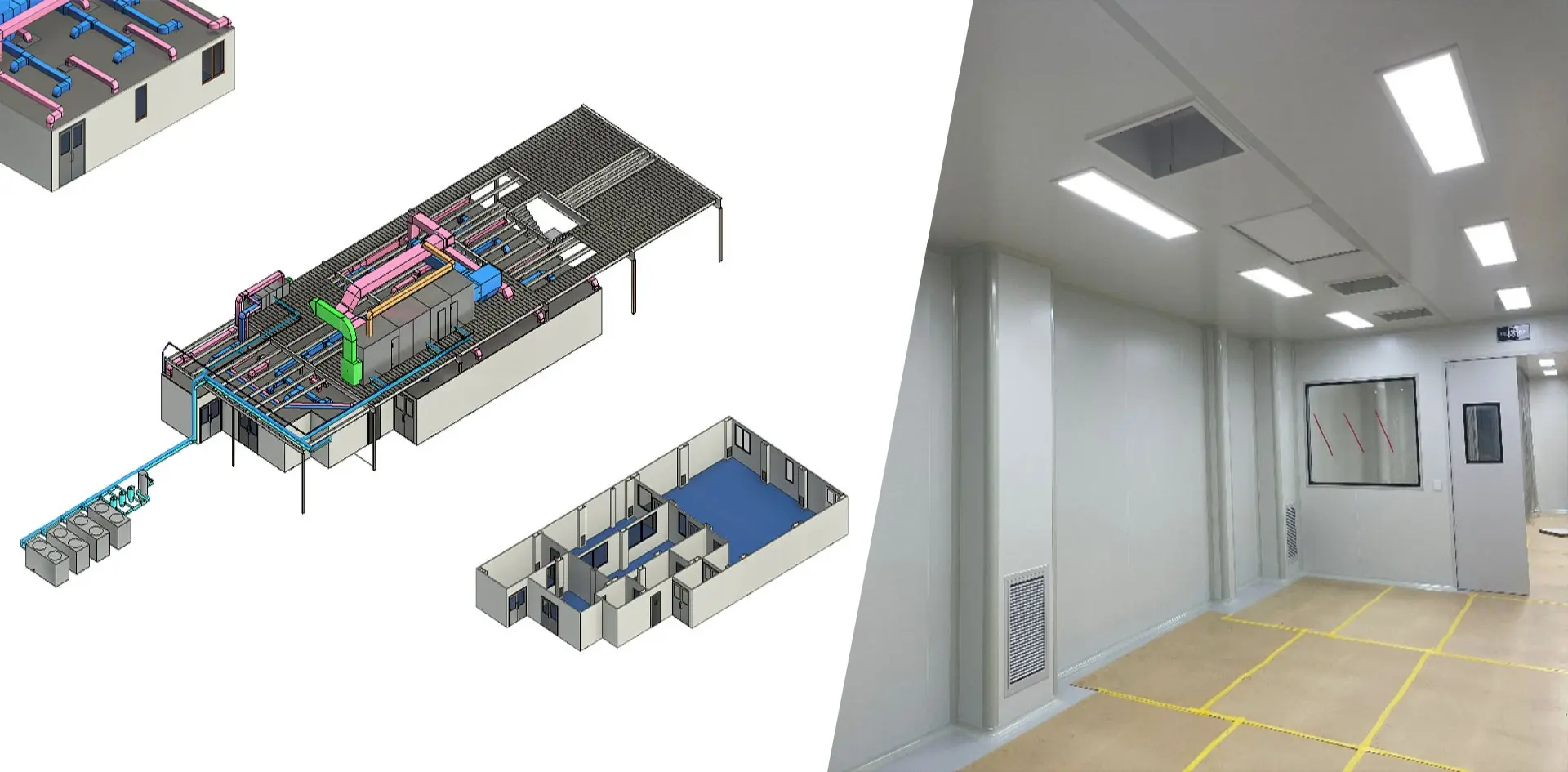
ZJRH Solvent System
High-efficiency solvent condensation recovery systems designed for battery electrode coating operations.
View ZJRH Data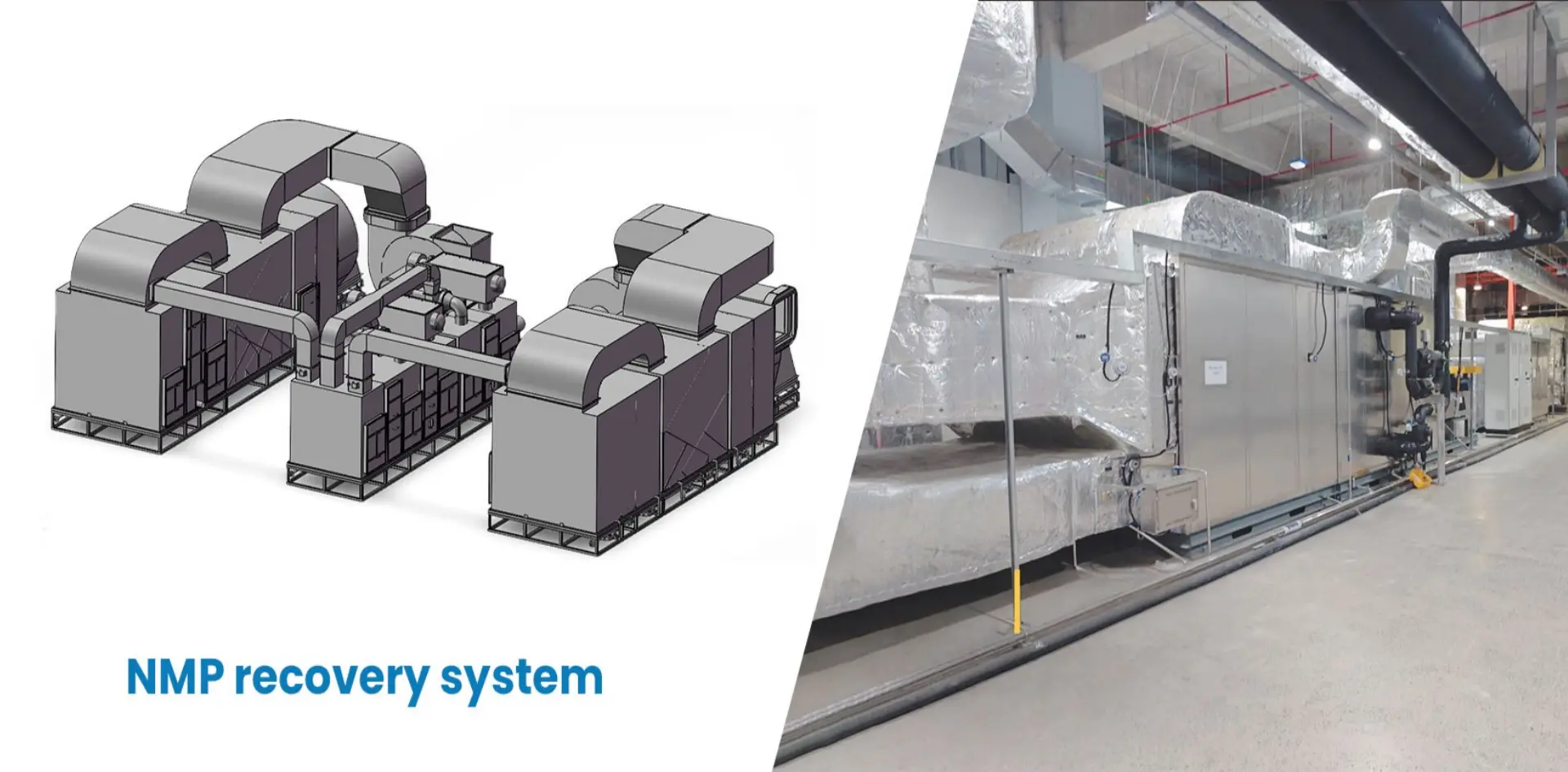
JEN Series VOC Thermal Skid
Integrated cooling condensation and regenerative oxidation skids for industrial VOC exhaust treatment.
Review VOC Units
Refrigerative Water Separator
Direct expansion refrigeration units for raw warehouse protection and first-stage bulk moisture stripping.
Check Dimensions
Defense Preservation System
Rugged, heavy-duty desiccant units built to national defense standards for long-term corrosion prevention.
View Defense Specs
Hermetic Enclosure Assembly
Modular airtight wall panels, dynamic airlocks, and ceiling grid assemblies designed for ultra-dry rooms.
Explore Enclosures
Petrochemical Condensation Skid
Specialized oil-gas condensation and vapor-recovery skids for terminal fuel loading and chemical tanks.
Examine Vapor Skids