
Flagship Dehumidification & Recovery Systems
Engineered for mission-critical operations requiring steady ultra-low dew points (-70°C), volatile organic carbon capture, and 99%+ chemical recycling.

Rotary Desiccant Dehumidifier
DHU series rotary desiccant dehumidifiers engineered to supply continuous ultra-dry air down to -70°C dew point for lithium battery manufacturing and defense storage.

Turn-key Dry Room System
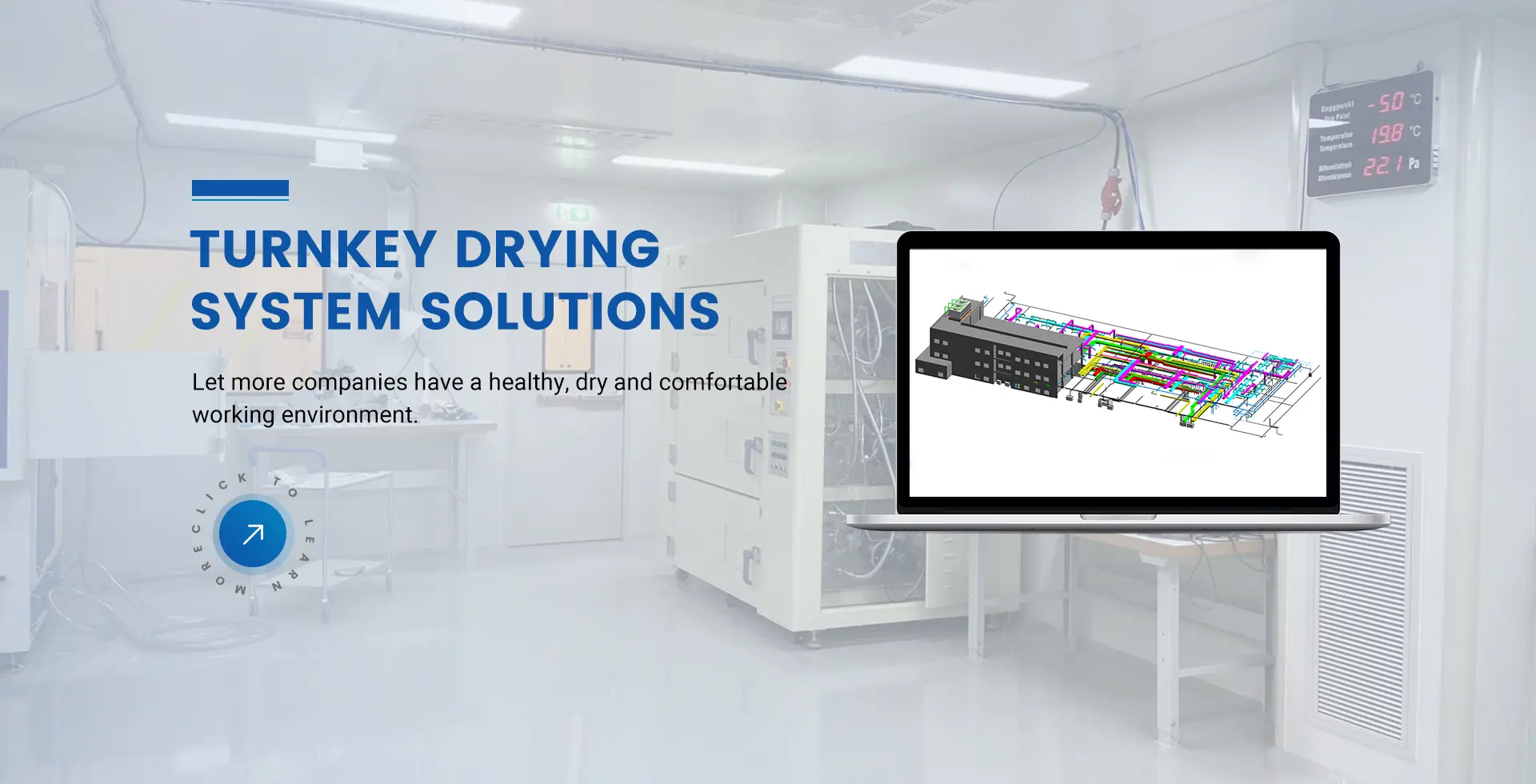
Full envelope design, high-airtightness cleanroom panels, dedicated cascaded desiccant AHU, and closed-loop psychrometric control under single-source EPC delivery.

NMP Recovery System
High-efficiency solvent condensation and concentration systems capturing N-Methyl-2-pyrrolidone from lithium electrode coating ovens with ≥99% return efficiency.

VOC Abatement System
Deep-cooling condensation coupled with Regenerative Thermal Oxidizers (RTO) to abate toxic chemical emissions, heavy solvent vapors, and volatile hydro-carbons.
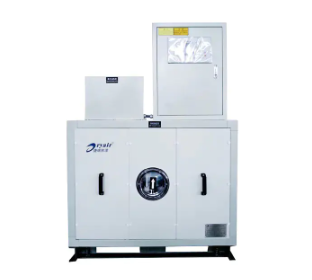
Refrigerative Dehumidifier
Industrial condensing dehumidifiers for moisture stripping in warehouses, clean storage, and high-efficiency pre-cooling stages ahead of chemical desiccant wheels.

Aerospace Climate System
Engineered under the rigorous GJB national military standard to preserve solid fuel propellants, avionic radar hangars, and precision navigation systems from moisture decay.
Pharma Cleanroom Dehumidifier
Hygroscopic active pharmaceutical ingredient (API) processing units preventing powder agglutination, microbial growth, and gelatin capsule collapse in GMP facilities.
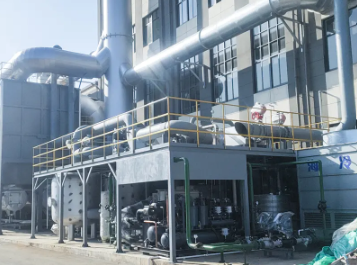
Oil Gas Recovery System
Specialized vapor balance and high-pressure condensation systems designed to capture fugitive petroleum emissions during terminal fuel transfer and chemical bunkering.
Global Industrial Landscape of Desiccant Rotor Dehumidifiers
The transition from consumer-grade moisture extraction to heavy industrial air treatment has created a multi-billion-dollar global demand for advanced rotary desiccant systems.
Supply Chain Concentration
Over 65% of global rotary desiccant dehumidification equipment manufacturing now originates in China, propelled by domestic gigafactory scaling from battery giants such as CATL, BYD, and EVE Energy. Chinese building suppliers have mastered high-volume synthesis of metal-silicate rotors, structural AHU chassis design, and custom heat recovery integrations.
Energy Paradox & Heat Sinks
Industrial rotary dehumidifiers consume up to 35-45% of the total thermal and electrical energy within cleanroom battery plants. Global buyers require low-temperature regeneration solutions utilizing waste steam, heat pumps, and combined heat and power (CHP) integration, moving beyond traditional resistive electrical heating.
Global Engineering Compliance
International industrial EPC firms demand strict harmonization with global electrical and mechanical standards. Tier-one manufacturers must hold CE, UL, CSA, ASME, and EAC certifications alongside strict national military standards (such as GJB) to operate across European, North American, and Asian facilities.
Top 10 Brands of China Building Desiccant Rotor Dehumidifier Suppliers
A rigorous engineering benchmark based on thermodynamic performance, proprietary rotor matrix synthesis, global patent holdings, and multi-gigawatt turnkey execution history.
| Rank & Brand Entity | Primary Market Tier | Core Rotor Synthesis | Minimum Supply Air Dew Point | Global EPC & Export Compliance | Key Industrial References |
|---|---|---|---|---|---|
| 01. Hangzhou DryAir Treatment Co., Ltd. | Industry Leader | Dual-zone composite molecular sieve & active silica gel | -70°C Dew Point | CE, UL, CSA, ASME, EAC, GJB Military, ISO 9001 | Tesla, Northvolt, CATL, ATL, BYD, EVE Energy, SVOLT, TTI |
| 02. Munters (China Facility) | Tier 1 Multinational | Proprietary AirPro & Green Power Rotor | -60°C to -65°C DP | ISO 9001, CE, UL | Global Pharma, Food Processing, Automotive EV |
| 03. Hangzhou Jiebao Dehumidifier | Tier 1 Domestic | High-porosity silica rotor assembly | -50°C to -60°C DP | ISO 9001, CE | Electronic Components, Lithium Storage, Seed Warehouses |
| 04. Wuxi Songjing Environmental | Tier 1 Domestic | Ceramic fiber honeycombed desiccant matrix | -55°C DP | CE, ISO 9001 | Textiles, Commercial Construction, Lithium Battery Cells |
| 05. Bry-Air (Asia Engineering) | Tier 1 Multinational | EcoDry chemical rotor substrates | -60°C DP | CE, UL, ISO 14001 | Plastics Drying, Cold Storage, Defense Munitions |
| 06. Guangdong Head-Power Air Conditioning | Tier 2 Commercial/Ind. | Combined chilled water & silica rotor | -40°C to -50°C DP | CE, ISO 9001 | Marine Offshore, Pharmaceutical Cleanrooms, Commercial HVAC |
| 07. Guangzhou Deye Dehumidifying Equipment | Tier 2 Domestic | Silica gel honeycomb rotor | -35°C to -45°C DP | 3C, CE, CB | Commercial Basements, Precision Warehousing, Precision Parts |
| 08. Seibu Giken DST (China Engineering) | Tier 1 Joint Venture | Zeolite composite matrix wheel | -60°C to -65°C DP | ISO 9001, CE | Semiconductor Fabs, Chemical Synthetics, EV Battery Rooms |
| 09. Shanghai Shenglin M&E Technology | Tier 2 Domestic | Silica ceramic wheel substrate | -40°C to -50°C DP | CE, RoHS | Food Preservation, Bridge Cable Protection, Printing Plants |
| 10. Jiangsu Dongrun Dehumidification | Tier 2 Domestic | Cellular desiccant rotor assembly | -45°C DP | ISO 9001 | Military Warehouses, Chemical Storage, Glass Lamination |
Hangzhou DryAir Treatment Co., Ltd. Capability Dashboard
Operational data and manufacturing benchmarks verified across tier-one international industrial projects.
Specialized Industrial Application Scenarios
Moisture chemistry is process-specific. Discover how desiccant rotor integration prevents chemical degradation and guarantees production stability.
Lithium-ion Battery Dry Rooms
Electrolyte filling and cell winding processes demand environments with dew points between -40°C and -70°C. In the presence of ambient humidity (H2O), LiPF6 salt decomposes rapidly into corrosive Hydrofluoric Acid (HF), destroying separator membranes and triggering thermal runaway risks. Continuous rotor dehumidification eliminates moisture down to single-digit parts per million (PPM).
Pharmaceutical & Biotechnology
Processing hygroscopic antibiotics, effervescent tablets, and gelatin soft capsules requires relative humidity strictly clamped at 10%–20% RH. Moisture absorption causes powder clumping, uneven die-filling during high-speed tableting, and active ingredient degradation. Rotor systems ensure compliance with cGMP, FDA, and WHO sanitary guidelines.
Defense & Strategic Storage
Constructed in strict accordance with the GJB national military standard, defense dehumidification plants preserve military hardware, guided missile guidance systems, ammunition depots, and submarine electronics. Lowering humidity below 35% RH arrests electrochemical oxidization of steel, brass, and composite avionics permanently.
Petrochemical & Vapor Recovery
Bulk hydrocarbon tank farms and refinery loading racks generate heavy volatile organic compounds (VOC) and explosive vapor air mixtures. Condensation recovery systems and Regenerative Thermal Oxidizers (RTO) achieve closed-loop solvent separation, preventing hazardous emissions while reclaiming valuable hydrocarbons.
Semiconductor Cleanrooms
Photolithography and vacuum deposition equipment within modern microelectronics fabrication units require absolute dew point stability within ±0.2°C. Fluctuations cause microscopic wafer condensation, photoresist adhesion failure, and circuit bridging at sub-nanometer geometries.
Commercial Building Envelopes
Large-scale building dehumidification protects ice arenas, aquatic facilities, archival libraries, and hospital surgical suites. Dedicated outdoor air systems (DOAS) with integrated desiccant rotors strip latent humidity before fresh air enters the building, avoiding sick building syndrome and indoor mold proliferation.
Desiccant Rotor Technology Roadmap & Future Outlook
Next-generation advancements shaping thermal efficiency, material chemistry, and AI-driven automation in rotary dehumidification equipment.
Metal-Organic Frameworks (MOFs)
Replacing conventional amorphous silica gels with crystalline MOF and Zeolite composite structures that possess tailored pore sizes. This allows high water vapor adsorption at low relative humidity while dropping regeneration temperatures from 140°C down to 70°C–80°C.
Multi-Stage Heat Pump Integration
Implementing closed-loop CO2 (R744) heat pumps to supply both deep evaporator chilling (2°C–4°C) for initial pre-cooling condensation and condenser waste heat (80°C–120°C) for desiccant wheel regeneration, dropping facility OPEX by over 40%.
Psychrometric Digital Twins
Edge IoT sensors feeding cloud AI neural networks that dynamically modulate rotor rotation RPM, face velocity, and regeneration heater output in real time based on ambient exterior weather forecasts and internal occupancy heat/moisture spikes.
Net-Zero Solar Thermal Coupling
Direct integration of concentrating solar collectors and industrial waste steam recovery manifolds into the regeneration plenum, enabling zero-carbon dry room operations in compliant EU and North American gigafactories.
Turnkey EPC Delivery: From Psychrometric Modeling to Commissioning
A unified five-stage lifecycle protocol guaranteeing dew point delivery, structural air tightness, and validated uptime.
01. Psychrometric Load Audit
Rigorous mathematical modeling of air infiltration, latent respiration loads from cleanroom personnel, door airlocks, transfer cart movements, and chemical process exhaust volumes to calculate peak moisture removal loads in kg/h.
02. Dual-Rotor System Architecture
Custom design of cascaded rotary systems featuring high-capacity primary silica gel rotors coupled with secondary low-temperature molecular sieve wheels to achieve the required -50°C to -70°C dew point supply air gradient.
03. Factory Enclosure Fabrication
Thermal-break modular double-skin cleanroom air handling unit casing with low air leakage (Class L1 compliance according to EN 1886) to prevent atmospheric moisture infiltration through panel joints and structural seams.
04. On-Site Erection & Airtight Balancing
Installation of specialized vapor barriers, high-pressure negative/positive pressure balancing, and high-precision chilled water piping connections by certified cleanroom HVAC technicians.
05. Dew Point Sensor Validation
Full 72-hour continuous psychrometric stress testing using chilled-mirror hygrometers and trace moisture sensors across all cleanroom quadrants to certify stable -50°C to -70°C dew point compliance before battery slurry introduction.
06. Global Lifecycle & Service SLA
Overseas factory service contracts including optional 2-year warranty extension packages, remote real-time PLC diagnostic telemetry, rapid spare rotor dispatch, and localized field engineering support.
Frequently Asked Questions on Desiccant Dehumidification
Technical answers to common thermodynamic, psychrometric, and procurement inquiries from international engineering directors.
What thermodynamic mechanisms allow Hangzhou DryAir systems to reach a -70°C dew point?
How do Chinese desiccant rotor suppliers compare with European brands like Munters or DST?
What heat sources can be utilized for desiccant wheel regeneration?
How does the NMP Recovery System achieve ≥99% solvent capture from electrode coaters?
What certifications are mandatory when exporting industrial desiccant AHUs to the US and EU?
What ongoing maintenance is required to ensure long desiccant rotor operating life?
Explore Turnkey Humidity Control Equipment
Direct supply contracts, factory-tested reliability, and turnkey engineering solutions for mission-critical industrial manufacturing plants.
Industrial Desiccant Dehumidifier
High air volume DHU series featuring custom energy recovery wheels, low-leakage casing, and supply air dew point stability down to -70°C.
Turn-key Battery Dry Room
Single-contract responsibility for complete battery dry rooms from cleanroom structural panels to HVAC air handling and validation.
NMP Recovery System
Electrode coater condensation and recovery systems reducing solvent purchasing costs and environmental stack emissions significantly.
VOC Abatement Plant
Dual-stage cooling condensation and regenerative thermal oxidizers to eliminate volatile organic emissions in chemical production.

Refrigerative Dehumidifier
Industrial refrigeration dehumidifier designed for high latent heat extraction in manufacturing facilities, warehouses, and clean storage.
Defense & Munitions Protection
Specialized low dew point environmental systems built to GJB military requirements to prevent corrosion in critical electronic and munitions depots.
GMP Pharmaceutical AHU
Hygroscopic formulation and blister-pack low RH humidity control preventing microbial growth and powder clumping in pharmaceutical lines.
Oil & Gas Vapor Condenser
Deep refrigeration condensation plants engineered for petrochemical tank farms, marine berths, and refinery loading terminals.
Initiate Your Low Dew Point Cleanroom Specification
Connect with our senior HVAC application engineers for psychrometric calculations, rotor dimensioning, energy heat-recovery modeling, and quotation turnaround within 24 hours.