
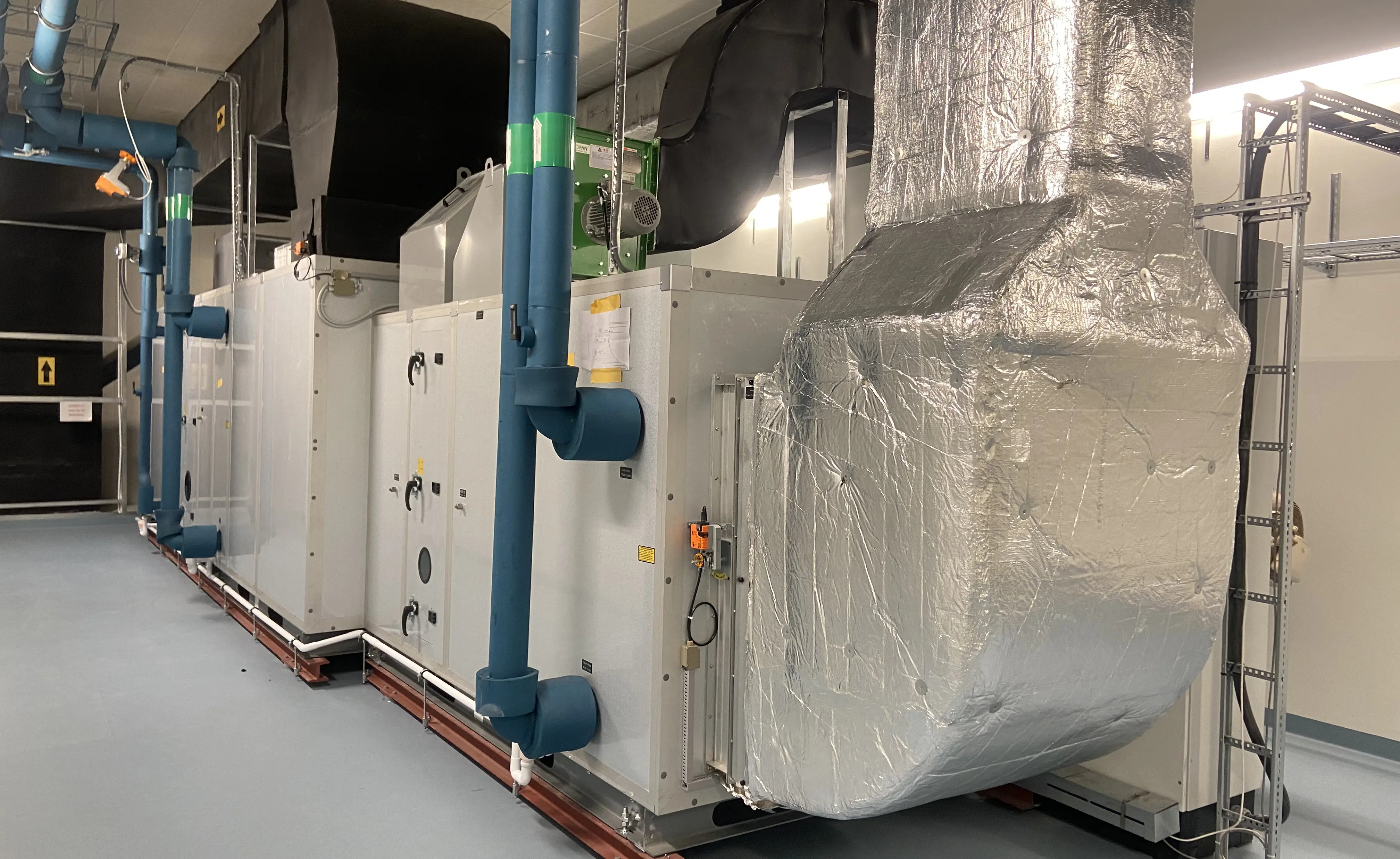
 -70°C Dew Point
DHU Series Desiccant Dehumidifier
Controls supply air down to -70°C dew point using dual-rotor silica gel technology, preventing micro-scale contamination.
View SpecificationsEngineered to eliminate moisture degradation in mission-critical applications: battery cleanrooms, semiconductor manufacturing, and defense storage.
-70°C Dew Point
Controls supply air down to -70°C dew point using dual-rotor silica gel technology, preventing micro-scale contamination.
View Specifications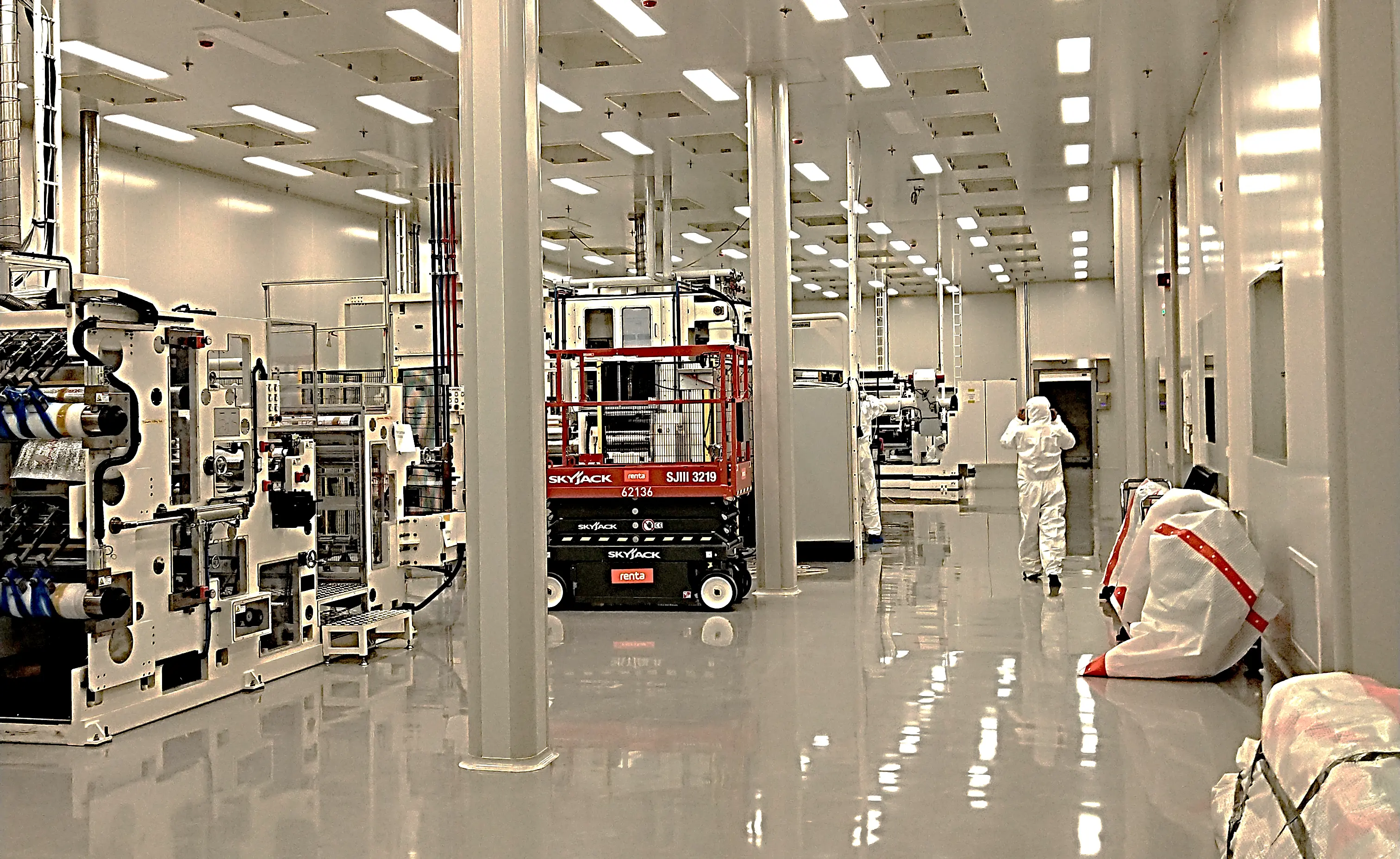 Turnkey EPC
End-to-end controlled atmospheric enclosure integrating insulated wall panels, laminar air routing, and HVAC controls.
Explore Solutions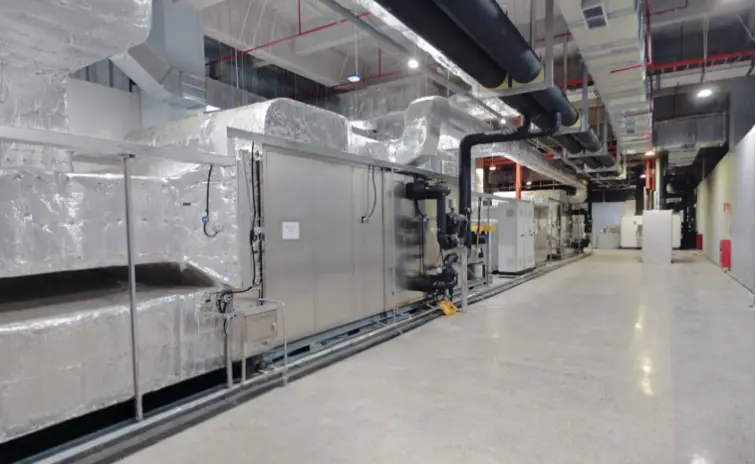 ≥99% Efficiency
Advanced condensation capture recovery system designed for electrode coating lines, minimizing emissions and solvent loss.
Check Parameters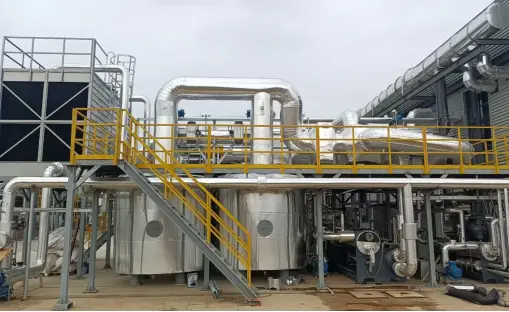 Cooling + RTO
Integrates deep-chilling condensation with regenerative thermal oxidation (RTO) for VOC abatement and compliance.
Learn Details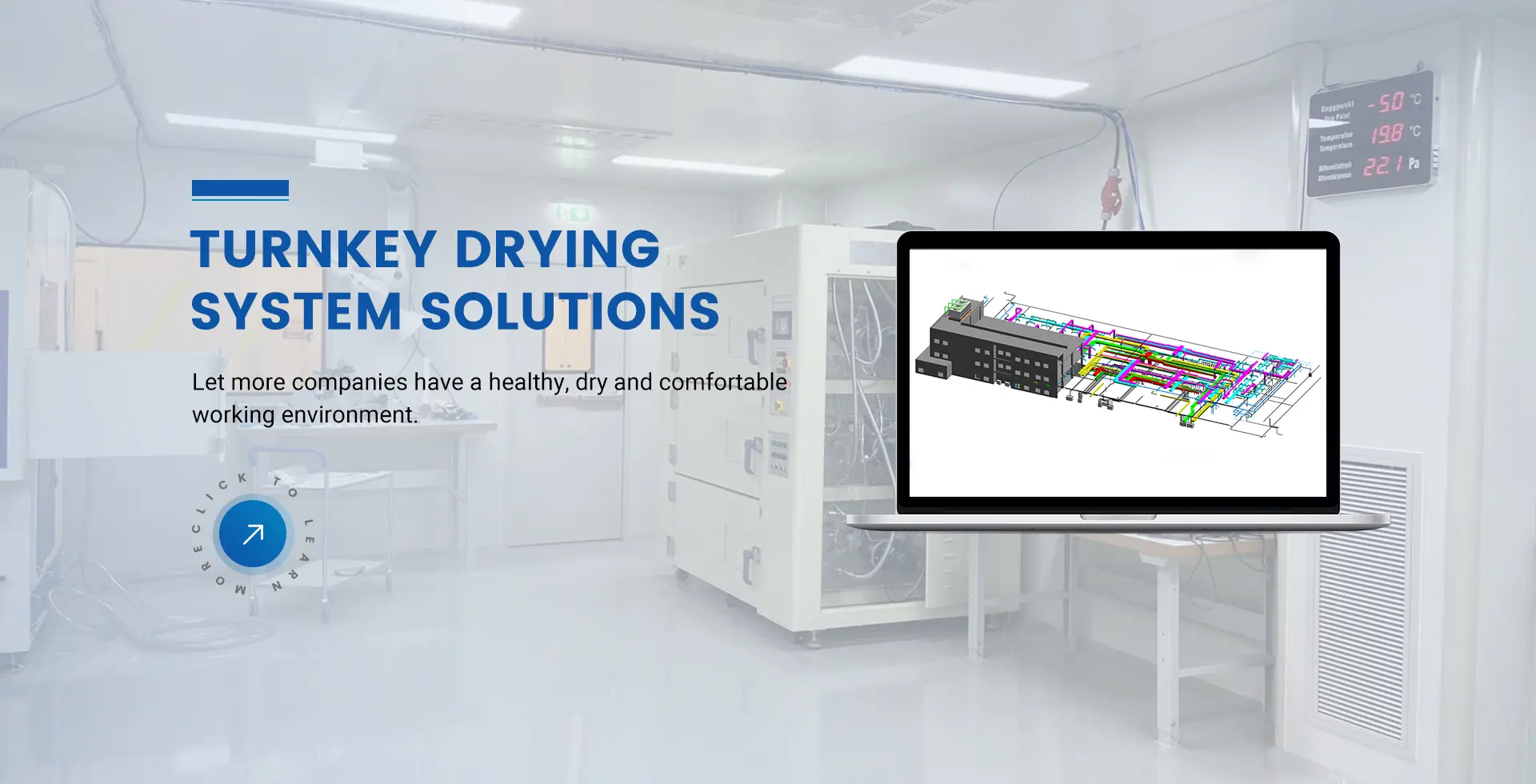 Modular Design
Custom-engineered central plant units providing stable dry environments across extensive electronics manufacturing lines.
System Schematics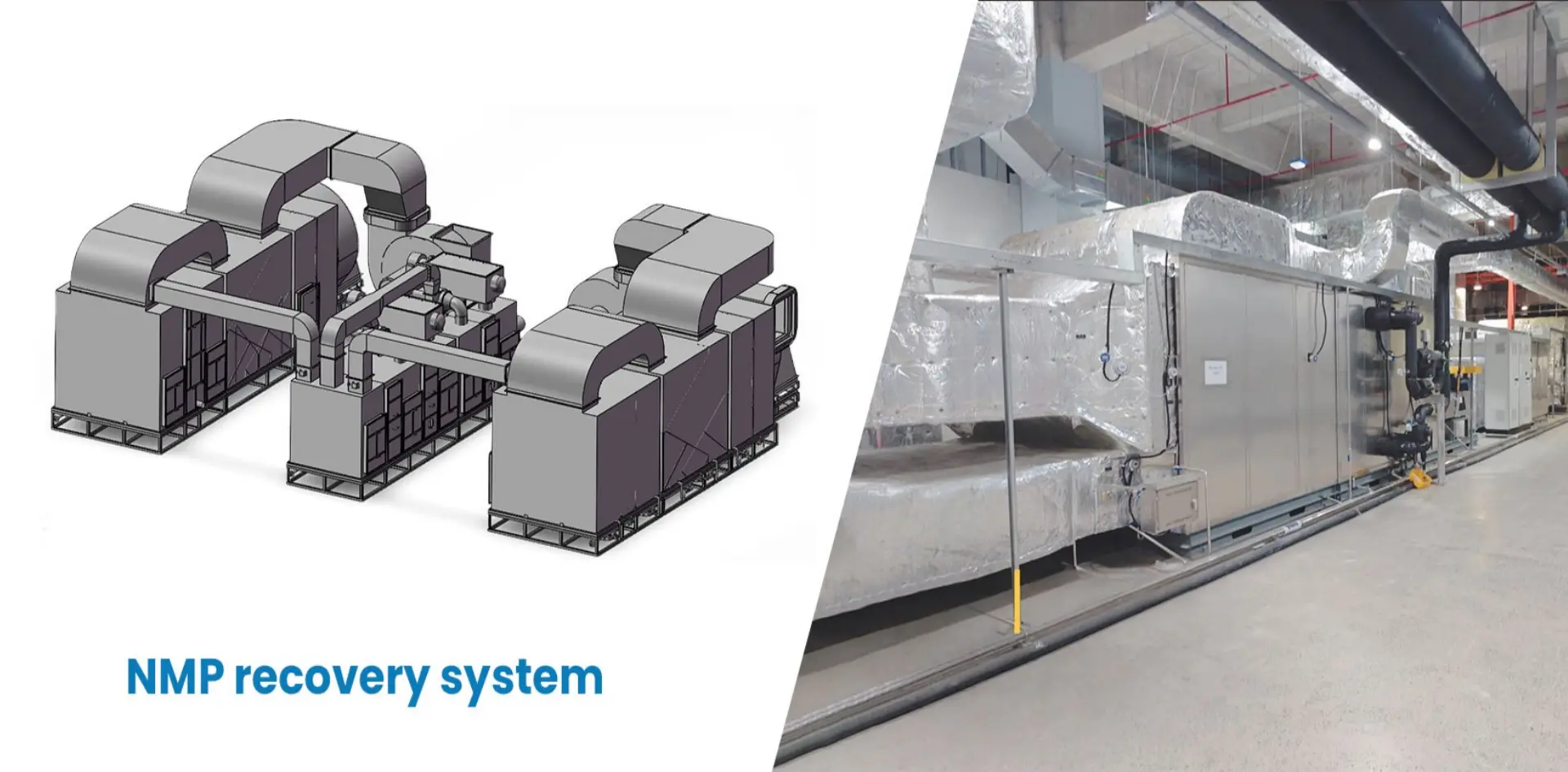 High Thermal COP
High-efficiency precooling dehumidifier lowering air temperature and extracting primary condensation before desiccant treatment.
Explore Equipment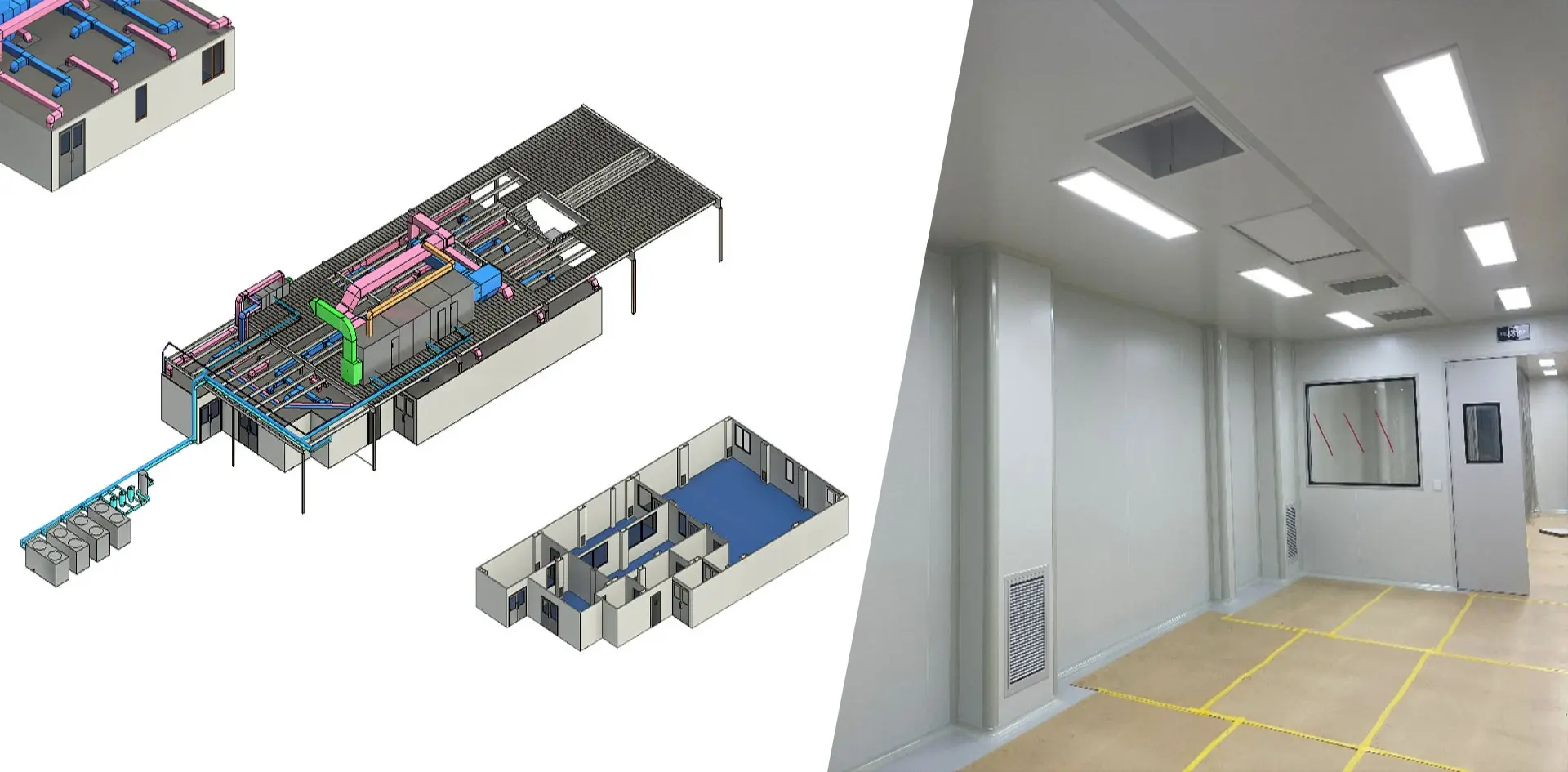 Zero Leakage
Engineered for high-volume gigafactory lines to trap volatiles, purify gases, and deliver sustainable circular solvent use.
Operational Data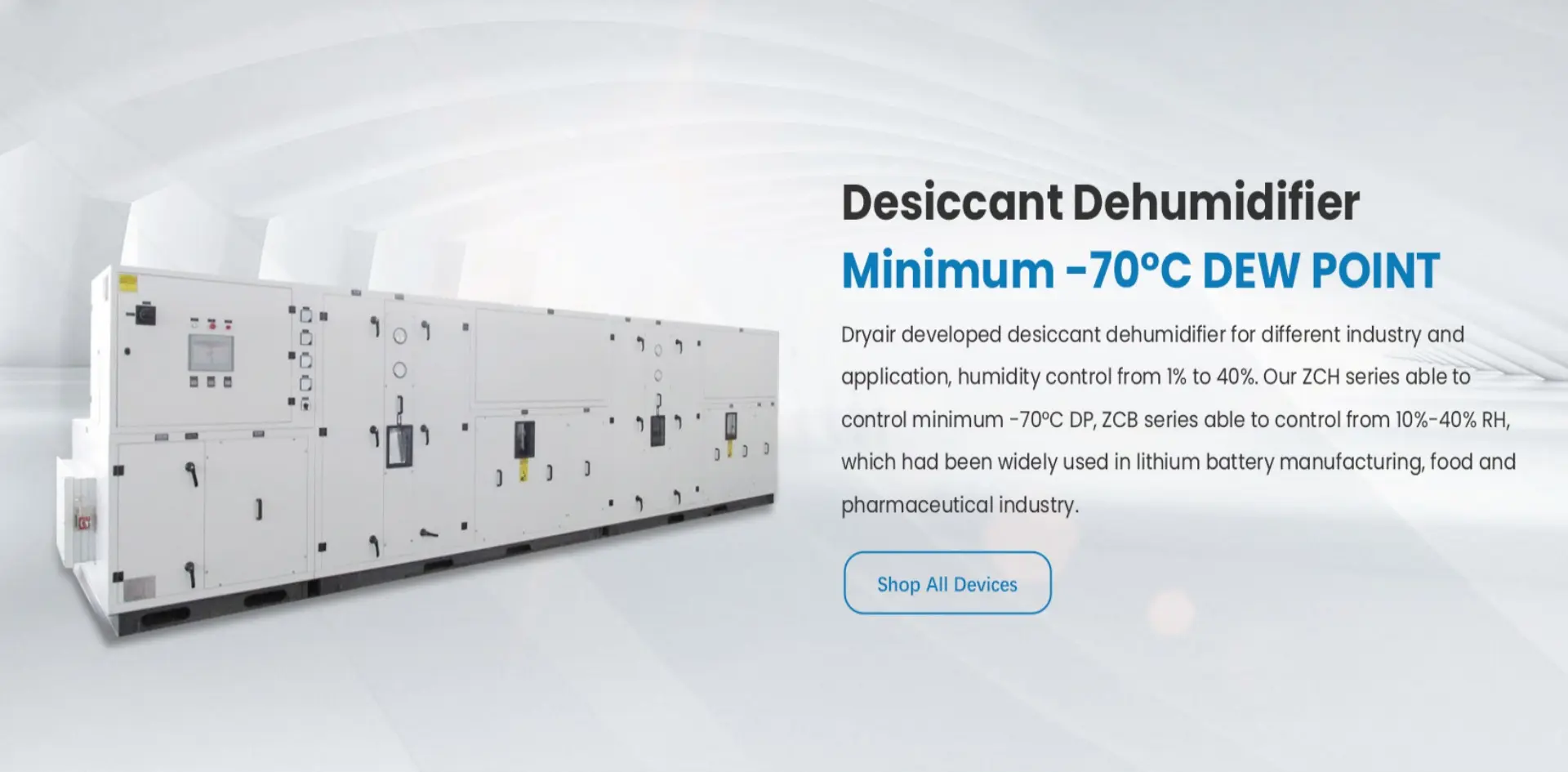 ISO Class 1-5
Precision hermetic cabinet system for solid-state electrolyte raw material storage with continuous dew point telemetry.
Cabinet OverviewHow the exponential expansion of EV battery manufacturing and ultra-deep submicron semiconductor nodes transformed the industrial desiccant cabinet sector into a strategic manufacturing ecosystem.
Modern advanced materials are vulnerable to trace ambient humidity. In lithium-ion battery assembly, water vapor contacts volatile electrolyte salts like LiPF6, triggering rapid hydrolysis into hazardous Hydrofluoric Acid (HF). This degradation mechanism leads to micro-cracking in cathode structures and shortens cycle life.
Consequently, storage cabinets and handling rooms must operate under stringent parameters: dew points below -40°C to -70°C, corresponding to absolute water vapor concentrations well below 0.01 g/kg of dry air.
Legacy humidity control depended on passive desiccant bags or standard Peltier condensing systems, which fail when relative humidity drops below 20% RH. China's top dry cabinet manufacturers replaced these with active continuous-duty rotary adsorption systems.
Utilizing synthesized ceramic honeycomb rotors embedded with metal silicates, modern dry cabinets achieve complete regeneration in dynamic air cycles without interrupting chamber conditions.
International industrial procurement teams require verifiable trace calibration and zero data dropouts. Industry 4.0 dry cabinets integrate chilled-mirror hygrometer interfaces, multi-channel Modbus/BACnet communications, and automated door-opening dew point recovery cycles.
Whenever doors open for material access, dynamic micro-blowers boost desiccant bypass streams, returning the enclosure to a -50°C DP baseline within 180 seconds.
A deep-dive technical comparison evaluating core competencies, dew point limits, export certifications, and engineering capabilities.
Primary Core Focus: Ultra-low dew point desiccant systems down to -70°C DP, turnkey battery dry room systems, and high-recovery NMP solvent abatement (≥99%). DryAir maintains over 30% of China's domestic gigafactory rotary dehumidification market share and outputs 200+ major systems monthly.
Engineering Distinction: Employs 74 technical specialists, including registered HVAC engineers and material PhDs. Units are certified to CE, UL, CSA, ASME, and EAC standards, backed by in-house psychrometric validation chambers.
Focuses primarily on automated nitrogen-purged electronic desiccator cabinets for semiconductor packaging and wafer fab cleanrooms. Features fast-purge mass flow controllers and electrostatic discharge (ESD) safe surface coatings.
Recognized for compact modular desiccant dry storage units capable of holding <0.5% relative humidity for MSD (Moisture Sensitive Device) component preservation according to IPC/JEDEC J-STD-033C standards.
Supplies temperature and humidity controlled cabinets for institutional laboratories, biochemical facilities, and digital imaging archives across Asia and Europe.
Focuses on large-volume custom environmental chambers, marine anti-corrosion cabinets, and industrial warehouse dehumidifiers with integrated cooling coils.
Delivers precision climate cabinets combining process cooling water regulation with medium-range desiccant wheels for pharmaceutical pill preparation.
Produces specialized nitrogen purging cabinets and walk-in dry vaults tailored for aviation titanium alloy sheet storage and carbon composite preparation rooms.
Known for constant temperature and humidity chambers combined with dry preservation drawers for electronic accelerated burn-in reliability analysis.
Focuses on integrating desiccant dehumidification cassettes directly into modular cleanroom wall panels and pass-through airlocks.
Builds large automated storage and retrieval dry vaults (ASRS) holding tens of thousands of surface-mount component reels at less than 5% RH.
Why international EPC contractors and gigafactory builders source rotary desiccant systems and dry storage chambers from Chinese manufacturing hubs.
Hangzhou and the Yangtze River Delta house a complete supply ecosystem for low-dew-point HVAC. From honeycomb silica rotor synthesizers to precision welded stainless-steel double-skin casings and hermetic EC centrifugal fans, sourcing lead times are cut by 40-60% compared to Western European suppliers.
This localized supply chain avoids cross-border component bottlenecks and reduces the capital expenditure of large dehumidification plants by 30% to 45% without sacrificing technical quality.
Standardized off-the-shelf dry cabinets often fail to fit existing battery production layouts. Chinese manufacturers excel at rapid mechanical engineering, customizing duct configurations, air volume distribution plenums, integrated NMP condensers, and ATEX explosion-proof options within brief 2-3 week engineering design sprints.
Engineers provide customized 3D BIM models and psychrometric analysis to coordinate early with architectural contractors.
Having supplied major battery manufacturers like CATL, BYD, and EVE Energy through multi-gigawatt line expansions, leading factories have tested their systems under continuous operational loads. Design weaknesses—such as thermal bypass leakage, rotor peripheral seal wear, and sensor drift—are engineered out.
This real-world experience gives international buyers dependable, field-tested system designs.
Specifying moisture control levels is critical for industrial facilities: overly broad tolerances compromise product yields, while overly strict parameters unnecessarily increase operational energy expenses.
| Target Industrial Process | Required Dew Point / RH Range | Critical Risk Mitigation | Recommended System Configuration |
|---|---|---|---|
| Lithium-ion Cell Assembly & Electrolyte Filling | -40°C to -60°C DP (<0.5% RH) | Prevents Hydrofluoric Acid (HF) formation and electrolyte gas venting | Dual-Rotor Desiccant Dehumidifier + Sealed Enclosure |
| Solid-State & Lithium-Metal Battery Research | -60°C to -70°C DP (Ultra-Trace Dew Point) | Prevents metallic lithium surface tarnishing and violent passivation | Ultra-Low DP System with Chilled De-Humidification Stage |
| Electrode Slurry Coating & Solvent Drying Stack | ≥99% Recovery Efficiency | Captures airborne toxic VOCs and recycles volatile solvent mixtures | Condensation + Deep Chilling NMP Recovery Unit |
| Semiconductor Photolithography & Reticle Storage | <1% RH (N2 Inert Atmosphere) | Eliminates copper lead oxidation, haze formation, and ESD failure | Auto-Purging Nitrogen Dry Cabinet with Static Dissipation |
| Hygroscopic Pharma Powders, Gelatins & Effervescents | 10% to 25% RH @ 20°C | Stops powder agglomeration, clumping, and capsule deformation | Continuous Rotary Desiccant Dehumidifier with Heat Recovery |
| Military Ordnance, Missiles & Avionics Storage | ≤35% RH to ≤40% RH | Stops propellant degradation, corrosion, and circuit failure | GJB Military-Compliant Central Desiccant System |
| General Industrial Warehousing & Pre-Cooling Intake | 45% to 60% RH | Prevents moisture damage, surface sweating, and mold formation | High-Efficiency Commercial Refrigerative Dehumidifier |
Factory Acceptance Testing (FAT), pressure certification, and export standards applied by top-tier Chinese manufacturers.
Export equipment must comply with regional electrical and safety codes. Top manufacturers engineer control panels around UL 508A and CSA C22.2 standards for North America, CE Low Voltage and Machinery Directives for the EU, and EAC certification for Eurasian trade zones.
Components utilize global brands (Siemens, Schneider, ABB) for straightforward parts sourcing across destination facilities.
Heat exchangers, condenser cooling loops, and high-pressure steam regeneration units require compliance with ASME Section VIII and European Pressure Equipment Directives (PED 2014/68/EU).
Double-skin insulated wall structures are leak-tested with helium mass spectrometers to achieve Class A low-leakage performance under high static pressures.
To reduce procurement travel expenses, manufacturers provide digital Factory Acceptance Testing (FAT). High-definition multi-camera live video streams allow buyers to witness run tests, dew point stabilization, electrical trips, and vibration measurements in real time.
Comprehensive FAT packages include calibration certificates, material trace sheets, and complete psychrometric logs.
Tier-1 exporters provide bilingual field service engineers deployed globally to oversee on-site erection, duct balancing, and cleanroom commissioning. Customers can also choose extended 2-year service agreements.
Dedicated remote diagnostics teams offer 24/7 telemetry monitoring via secure cloud gateways to assist plant engineers before issues escalate.
Key technical advances redefining operational efficiency, environmental performance, and climate engineering through 2030.
Traditional regeneration consumes extensive power, heating reactivating airflows up to 120°C-140°C. New systems use advanced metal-organic frameworks (MOFs) and high-sorption zeolites that regenerate with low-grade thermal waste (60°C-80°C) from compressor cooling jackets and solar arrays.
This drop in required regeneration temperatures decreases overall facility operational costs by up to 35%.
Modern plants are replacing simple PID loops with AI predictive analytics. Machine-learning algorithms process ambient weather trends, door usage metrics, shift changes, and equipment heat outputs to continuously adjust fan speeds and reactivation energy.
These predictive adjustments smooth out dew point spikes and prevent the system from over-drying the air, reducing wear on key components.
Driven by the Kigali Amendment and European F-Gas regulations, Chinese manufacturers are redesigning their precooling systems to phase out high-GWP hydrofluorocarbons (HFCs). Leading units now use low-GWP refrigerants like R454C, R32, and natural refrigerants like R290 (propane) and CO2 (R744).
These transitions keep installations ahead of tightening environmental import regulations across target markets.
Direct technical answers addressing system integration, export logistics, warranty coverage, and performance validation.
Review engineering specifications, airflow capacities, and technical documentation across our primary dehumidification and solvent recovery portfolio.
Adsorption Core
Designed for battery dry rooms, electronics storage, and defense facilities requiring reliable -70°C dew point control.
Product Specs
Complete Turnkey
Engineered cleanroom suites with integrated humidity control, tailored for gigafactory pouch and prismatic cell assembly.
Dry Room Plans
≥99% Capture
Captures exhaust solvent from electrode coaters, recycling clean NMP and keeping facility stack emissions within regulatory limits.
Recovery Data
Thermal RTO
Combines condensation chiller arrays with thermal oxidation to neutralize chemical process vapors and factory emissions.
System Details Dual Wheel System
Features paired silica honeycomb wheels to remove moisture under high outdoor ambient humidity conditions.
Request Brochure
Energy Saver
Cost-effective ambient moisture reduction for raw material warehouses and the intake cooling stages of desiccant systems.
View Equipment
Continuous Cycle
Specialized recovery solution for hazardous VOC streams, combining automated chiller controls with zero-spark safety systems.
Operational Specs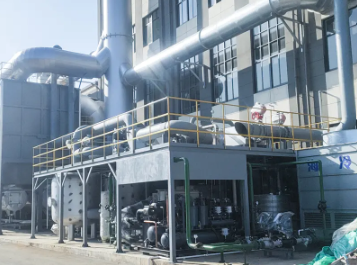 Deep Condensation
Captures hydrocarbon emissions during fuel offloading and solvent bulk storage, meeting strict air quality regulations.
View Parameters