Featured Commercial & Industrial Solutions
Discover our certified humidity elimination and environmental control systems engineered to maintain extreme micro-climates down to -70°C dew point with verifiable energy recovery.
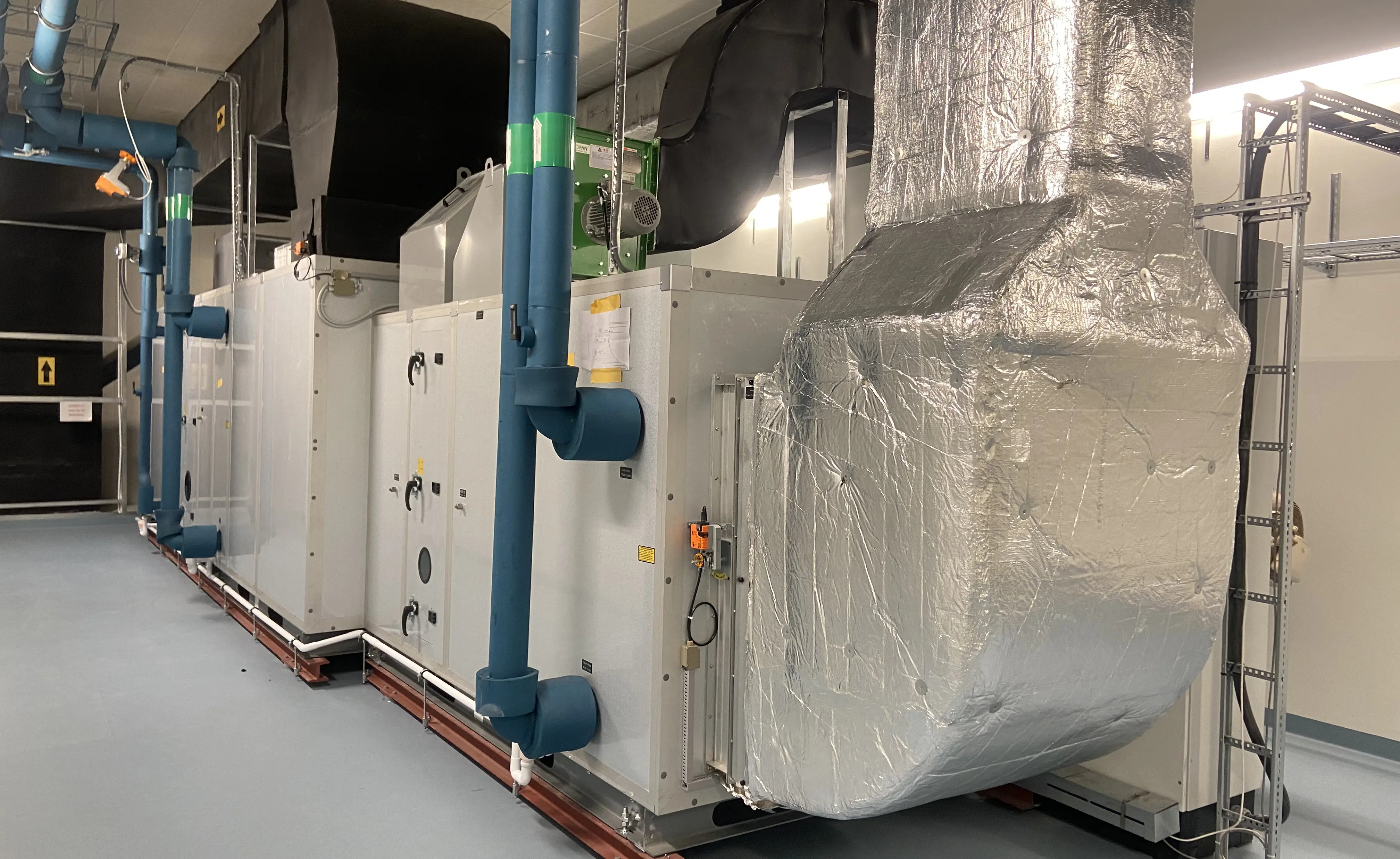 Dew Point: -70°C
Rotary Desiccant Dehumidifier
DHU series engineered for deep low dew point supply air in gigafactory battery workshops and precision laboratories.
- Controllable supply dew point to -70°C
- PPS / Silica Gel / Molecular Sieve options
- Integrated sensible heat recovery wheel
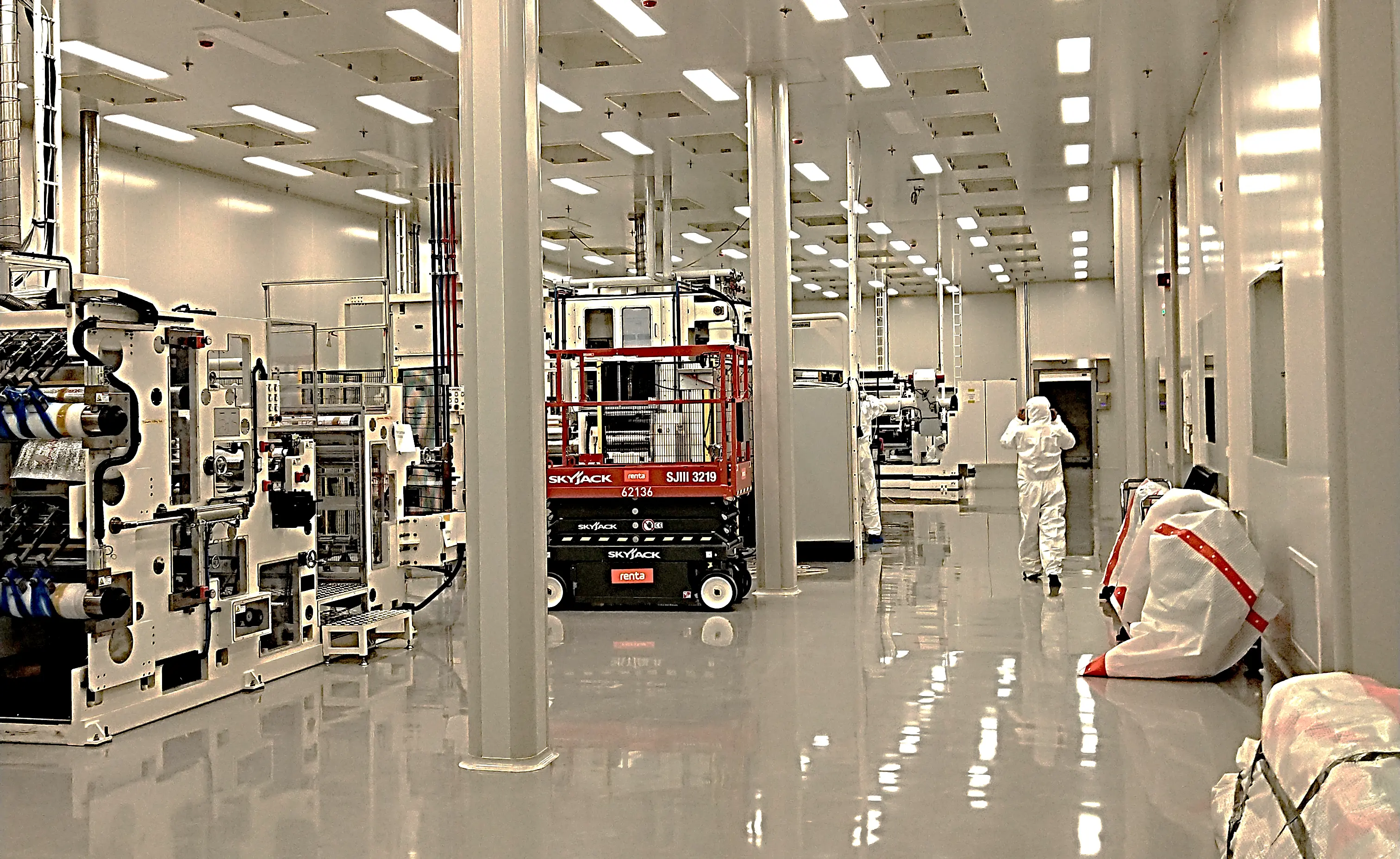 Scope: Full EPC Turnkey
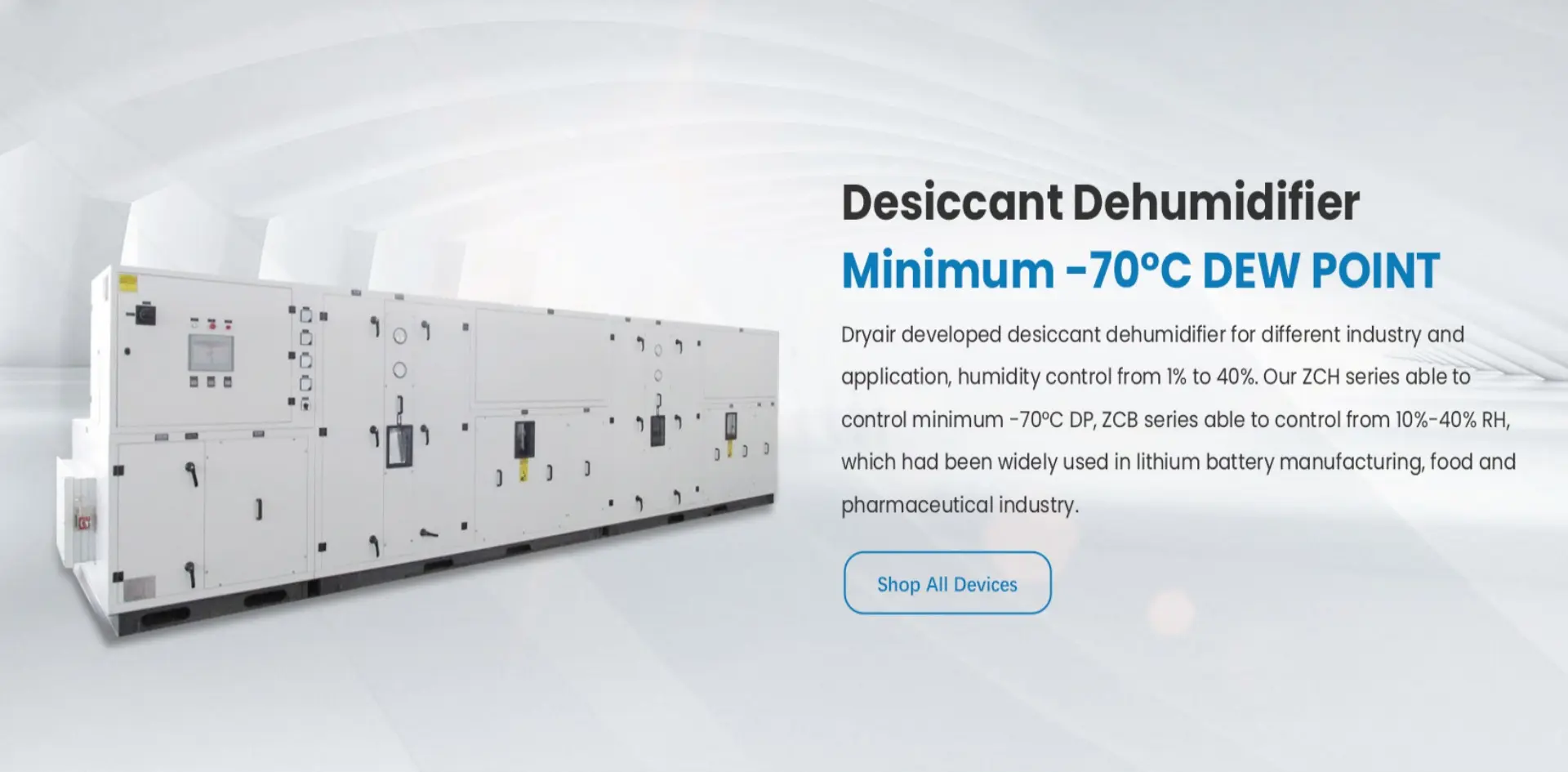
Turn-key Dry Room System
Full enclosure, envelope design, airlocks, dynamic HVAC ductwork, and automated environmental validation under one contract.
- Certified for CATL, Tesla, Northvolt plants
- Zero-leakage modular cleanroom wall panels
- End-to-end dew point stability testing
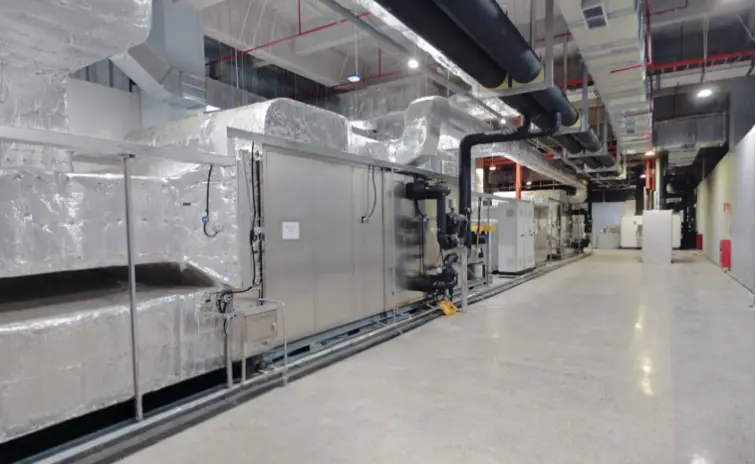 Recovery: ≥99.0%
NMP Solvent Recovery System
ZJRH series recycles N-Methyl-2-pyrrolidone from lithium electrode coating exhaust, cutting raw chemical consumption.
- Solvent recovery rate proven over 99%
- Deep condensation & multi-stage chillers
- Real-time VOC concentration sensors
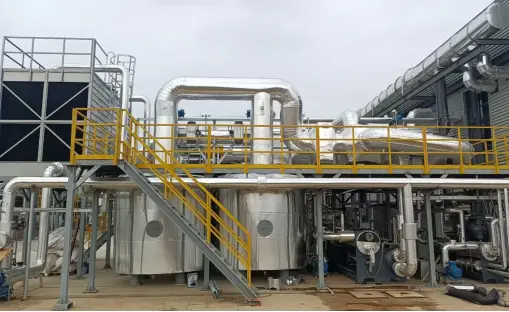 Process: Condensation + RTO
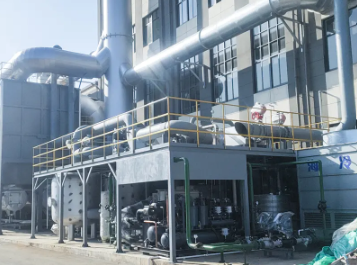
VOC Abatement System
Integrated deep refrigeration condensation and regenerative thermal oxidizers to neutralize hydrocarbon emissions.
- Complies with EPA, EU-IED, and GB standards
- Thermal energy recycling into plant heating
- Automated safety purge and flame arrestors
 Safety: ATEX / Ex-Proof
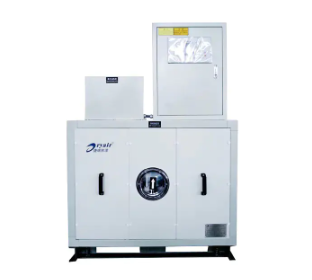
Oil Gas Vapor Condensation Unit
Specialized hydrocarbon vapor containment unit designed for tank farms, marine fuel loading, and refinery bulk terminals.
- Explosion-proof classification for Zone 1 / 2
- Multi-stage cold trap condensation cycle
- Continuous non-methane VOC scrubbing
 Standard: GMP / FDA Grade
Pharma-Grade Desiccant Dehumidifier
Sanitary-spec stainless steel housing with anti-microbial rotor for tablet compression, capsule filling, and packing lines.
- Relative humidity controlled between 10%–30%
- HEPA filtration terminal compatibility
- Full validation dossiers (DQ / IQ / OQ / PQ)
 Efficiency: Dual Energy Save
Commercial Refrigerative Dehumidifier
High-capacity scroll compressor-based moisture extraction for high-bay logistics centers, cold chain depots, and archive storage.
- Stable ambient RH maintained at 45%–60%
- Pre-cooling stage ahead of desiccant wheels
- Low noise aerodynamic centrifugal impellers
 Standard: GJB Military Spec
Defense Anti-Corrosion Air Handler
GJB-compliant ruggedized dehumidification units safeguarding avionics, ammunition vaults, radars, and naval storage against moisture oxidation.
- Hermetically sealed against salt fog and vibration
- RH locked below 40% continuously
- Autonomous PLC with remote telemetry
Global Industrial Dehumidification Landscape & The China Manufacturing Advantage
As international manufacturing shifts toward high-precision clean energy, EV battery gigafactories, and biopharma synthesis, controlling atmospheric moisture is no longer a luxury HVAC utility—it is a critical yield determinant.
The global commercial and industrial dehumidifier market has entered a structural super-cycle. Rapid expansion in lithium-ion battery production, microelectronics, advanced composites, and strict Good Manufacturing Practice (GMP) regulations for pharmaceuticals have driven double-digit growth worldwide. Traditional mechanical cooling dehumidifiers can barely achieve a 7°C to 10°C dew point without severe coil frost and efficiency collapse. Consequently, advanced rotary desiccant dehumidification systems operating down to -40°C, -60°C, and -70°C dew points have become indispensable across Europe, North America, and the Asia-Pacific region.
Engineering Gain: In EV battery dry rooms, moisture serves as an aggressive catalyst. Even minute ambient water vapor reacts with electrolyte salts (such as LiPF6) to generate hydrofluoric acid (HF), inducing irreversible cathode degradation, micro-short circuits, and thermal runaway hazards. Sourcing a dependable, continuous-duty desiccant system with proven -70°C dew point capability is essential for operational survival.
Why Global Tier-1 Manufacturers Consolidate Sourcing in China
Over the past decade, China has transitioned from a component supplier to the epicenter of precision environmental engineering. The Yangtze River Delta cluster—anchored by specialized manufacturers such as Hangzhou DryAir Treatment Co., Ltd. (established in 2010)—delivers distinct structural advantages that European and American procurement executives actively leverage:
Hyper-Clustered Supply Chains
Direct domestic sourcing of high-density honeycomb desiccant rotors, precision scroll compressors, backward-curved EC fans, and ASME-rated heat exchangers eliminates multi-tier markups and slashes project lead times by 40%.
40% Shorter Lead TimesMass Gigafactory Stress-Testing
Chinese manufacturers have battle-tested their equipment on massive scale for the world's leading battery producers (CATL, BYD, EVE Energy, SVOLT, ATL). Equipment designs have been refined over millions of continuous operating hours.
Proven at Multi-GWh ScaleFavorable Total Cost of Ownership (TCO)
Lower capital expenditures (CAPEX) paired with state-of-the-art waste-heat regeneration loops deliver up to 35% lower lifetime operational costs (OPEX) compared to legacy Western European suppliers.
35% Lower OPEXTop 10 China Commercial Use Dehumidifier Suppliers & Engineering Matrix
A definitive comparative breakdown for international EPC contractors, facility directors, and procurement leaders seeking qualified Chinese manufacturing partners.
Hangzhou DryAir Treatment Co., Ltd. (DryAir)
Established in 2010 in Lin'an, Hangzhou, DryAir ranks consistently among China's top three desiccant dehumidifier manufacturers, commanding over 30% market share in ultra-low dew point systems. Boasting a monthly throughput exceeding 200 units and 74 dedicated technical specialists (including registered national HVAC engineers and PhDs), DryAir specializes in rotary desiccant units down to -70°C dew point, turnkey lithium dry rooms, NMP solvent recovery (≥99%), and VOC abatement. Certified under CE, UL, CSA, ASME, EAC, ISO 9001, and GJB national military standards, DryAir serves Tesla, Northvolt, CATL, ATL, BYD, EVE Energy, Envision, SVOLT, and TTI globally.
Munters Air Treatment (China Operations)
A benchmark Swedish-invested pioneer operating large manufacturing hubs in China, specializing in high-performance desiccant air treatment systems primarily oriented toward international aerospace and pharmaceutical enterprises.
Parkoo Electrical Co., Ltd.
Focused broadly on commercial refrigeration-type dehumidification, ceiling-mounted units, and warehouse ambient moisture extraction with extensive domestic distribution across consumer and light commercial channels.
Guangzhou Dongao Electrical Co., Ltd. (Deye Commercial Division)
Renowned for high-volume manufacturing of standard commercial refrigerative dehumidifiers, building basement drying units, and commercial heat pumps with strong price competitiveness in general building services.
Seibu Giken DST (China Hub)
Leveraging Japanese rotor technology, this joint production presence focuses on precision rotary desiccant units catering to semiconductor processing, cleanrooms, and food dehydration facilities.
Hangzhou Songjing Electrical Co., Ltd.
A veteran Zhejiang-based supplier specializing in industrial-grade refrigeration dehumidifiers for tobacco aging, agricultural drying, archive preservation, and regional warehouse logistics.
Shenzhen Senling Environmental Tech
Specializes in environmental chambers, modular cleanroom desiccant air handlers, and marine rust-prevention systems with specific focus on southern China electronics exporters.
Wuxi Jierui Environmental Equipment Co., Ltd.
Known for desiccant rotor manufacturing and industrial chemical environmental systems, focusing on custom process drying towers and pharmaceutical granulation environments.
Shanghai Pute Refrigeration Equipment
Offers combined direct-expansion refrigeration and medium-dew-point desiccant packaging, frequently deployed across municipal waterworks, pipe galleries, and power utility substations.
Zhejiang Ximeng Environmental Equipment
Focuses on modular desiccant dehumidifiers for swimming pools, public indoor sports venues, marine dry docks, and general commercial indoor air quality remediation.
Industrial Application Matrix & Psychrometric Dew Point Targets
Specifying incorrect humidity metrics is the single most costly error in industrial HVAC engineering tenders. Sizing must be dictated by chemical reactions, moisture regain kinetics, and latent personnel loads.
| Industry Sector | Specific Critical Process Zone | Psychrometric Target Spec | Recommended Technology Platform | Primary Failure Risk Avoided |
|---|---|---|---|---|
| Lithium-Ion Battery | Cell Assembly & Electrolyte Injection | -40°C to -60°C DP | Turn-key Low Dew Point Dry Room | HF Acid formation, internal cell swelling, cathode degradation |
| Next-Gen Solid State Battery | Lithium-Metal Handling & Stacking | Down to -70°C DP | DHU Dual-Rotor Desiccant System | Violent alkali metal ignition, dendrite growth, passivation loss |
| Electrode Slurry Coating | Continuous Drying Oven Exhaust | ≥99% Solvent Recovery | ZJRH Series NMP Recovery System | Toxic emissions non-compliance, heavy solvent waste overhead |
| Pharmaceutical / GMP | Effervescent Tablets, Hard Gelatin Capsules | 10% – 30% RH (DP < -10°C) | Sanitary Stainless Desiccant Unit | Powder clumping, capsule shell softening, packaging machine jams |
| Aerospace & Defense | Missile Guidance, Radar Vaults, Ammunition | ≤40% RH (GJB Certified) | GJB Standard Integrated Desiccant Dehumidifier | Micro-galvanic corrosion, propellant degradation, optical fogging |
| Semiconductor & Optronics | Wafer Photolithography & Clean Storage | 30% – 45% RH (±1% RH) | Direct-Expansion + Desiccant Polish | Static charge buildup, reticle haze, wafer yield fallout |
| Cold Chain & Logistics | Blast Freezer Ante-rooms, High-Bay Hubs | 45% – 60% RH | Commercial Refrigerative Dehumidifier | Slippery ice buildup on floor runways, evaporator coil icing |
| Fuel Terminals & Petrochem | Tank Breathing, Barge & Rail Loading | EPA/GB Emission Limits | Deep-Cooling Condensation + RTO | Combustible vapor release, catastrophic atmospheric non-compliance |
Psychrometric Insights: Desiccant vs. Mechanical Refrigeration
Selecting between mechanical refrigeration and rotary desiccant sorption is governed by physics. Refrigerative dehumidifiers lower air temperature to condense water vapor across cooling coils. However, when the target dew point falls below 10°C (and especially below 0°C), condensed water freezes on coil surfaces, requiring frequent hot-gas defrost cycles that waste significant energy and cause erratic humidity swings.
Conversely, rotary desiccant technology adsorbs gaseous water molecules directly onto chemically impregnated active honeycomb matrices (such as high-grade silica gel, synthetic zeolites, or molecular sieves). It operates independently of the air temperature and easily pulls dew points down to -40°C, -60°C, or -70°C without freezing. In state-of-the-art DryAir installations, waste heat from air-cooled chillers or thermal oxidizers is channeled into the reactivation zone, drastically minimizing the net kilowatt penalty.
Future Industry Trends & The Overseas Engineering Audit Protocol
Smart IoT control algorithms, zero-carbon regeneration pathways, and rigorous factory acceptance testing (FAT) define modern international dehumidification equipment procurement.
1. AIoT Dynamic Dew Point Modulation
Modern facilities no longer run regeneration heaters at static peak capacity. DryAir integrates predictive AI algorithms that continually monitor outdoor weather enthalpy, shift-worker headcounts, and door interlock duty-cycles, trimming regeneration energy by 22% in real-time.
Smart Regeneration Control2. Waste-Heat & Heat Pump Hybridization
By marrying high-temperature heat pumps (recovering exhaust energy) and steam/hot-water coils directly to the regeneration plenum, DryAir systems drastically reduce direct electric resistance heating, helping multinational factories achieve carbon neutrality.
Decarbonized Sorption3. Strict Western Compliance Validation
Exporting mission-critical machinery to North America and the European Union mandates uncompromising verification. DryAir systems are pre-engineered to conform directly with UL 1995/CSA, CE-Machinery Directive, ASME pressure vessel codes, and EAC certifications.
CE / UL / CSA / ASME / EACInternational Engineering RFQ Audit Checklist
When submitting an RFQ or performing a digital factory audit on a Chinese dehumidification manufacturer, international engineering procurement managers must demand verifiable data across five core pillars:
- Rotor Honeycomb Integrity: Insist on certified third-party testing confirming silica gel or molecular sieve retention (zero dusting or desiccant degradation over 50,000 continuous hours).
- Air Leakage Rating: In low dew point dry rooms, casing leakage compromises the entire process. Verify Class L1 / L2 casing mechanical leakage under DIN EN 1886 standard testing.
- In-House Factory Acceptance Testing (FAT): Ensure the manufacturer operates an enclosed climate-simulation test chamber capable of validating supply air at -70°C dew point before equipment leaves the factory floor.
- Overseas EPC Field Commissioning: Confirm that the engineering supplier provides deployed on-site commissioning teams or local service partners equipped with multi-language HMI and remote VPN diagnostic capabilities.
- Dual-Year Lifecycle Protection: Review available extended warranty and spare parts consignment programs (such as DryAir's optional 2-year overseas technical support agreement).
Frequently Asked Technical & Sourcing Questions
Comprehensive answers to critical queries raised by facility directors, HVAC consultants, and overseas procurement teams when specifying DryAir dehumidification and solvent abatement systems.
What is the lowest controllable dew point a DryAir desiccant dehumidifier can guarantee?
Do you deliver complete turnkey dry rooms outside China, and what does the contract cover?
Which export certifications do DryAir systems hold for European and North American markets?
How does an NMP recovery system work, and what solvent recovery efficiency can be attained?
What after-sales maintenance and emergency response models are available for overseas plants?
How does DryAir's engineering team prevent regeneration energy waste in rotary systems?
Explore Additional Systems & Engineering Services
Select from our extended catalog of desiccant wheels, solvent capture systems, and turnkey EPC packages. Review detailed technical cut-sheets and request formal engineering proposals below.
 Spec: Modular Heavy-Duty
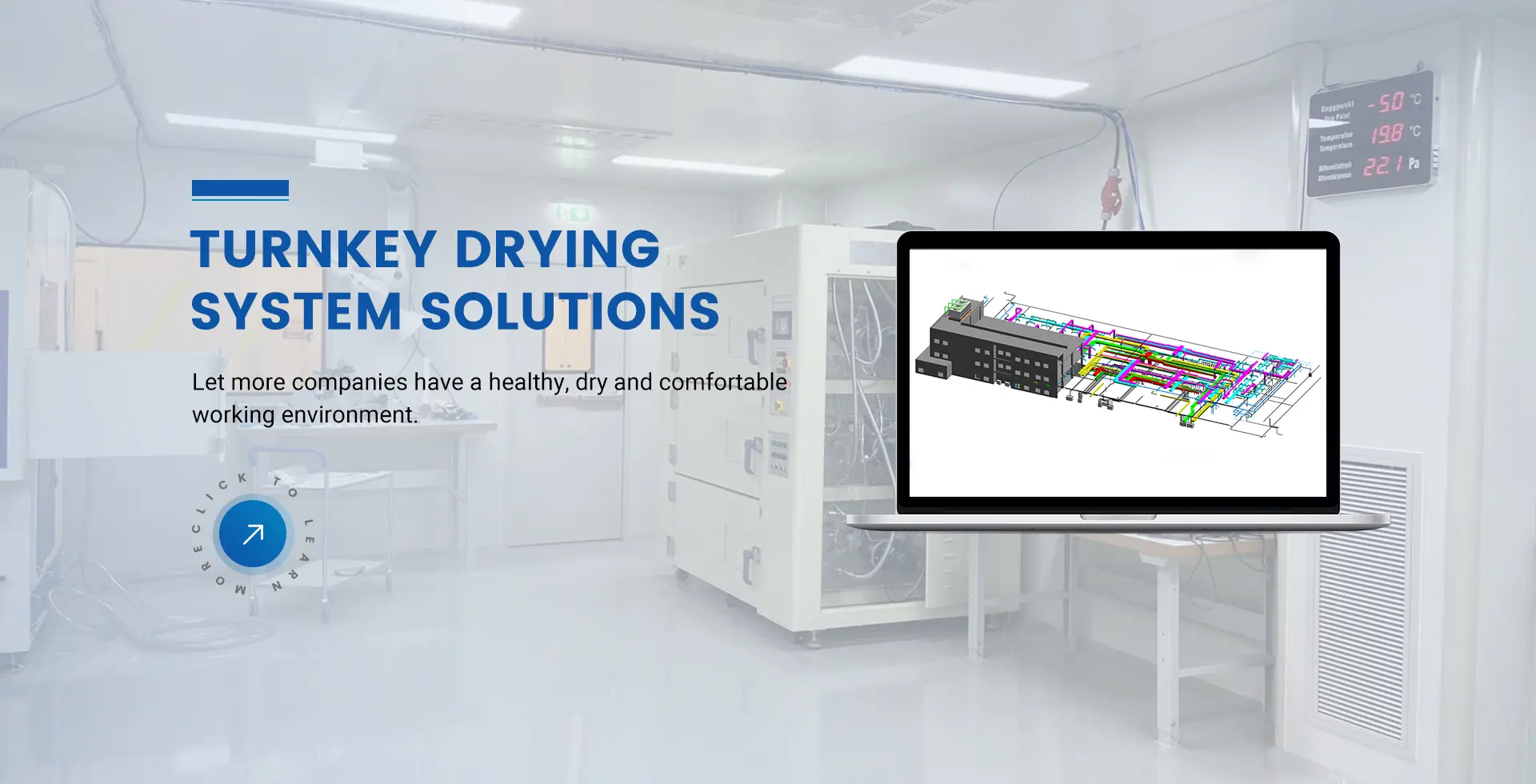
Custom Air Handling Unit (AHU)
Integrated double-skin casing AHUs incorporating cooling coils, desiccant sorption wheels, and HEPA filtration sections.
- Thermal-break aluminum profile framing
- Zero cold-bridge construction (TB1 / T2)
- Modbus / Profinet SCADA integration
 Type: Battery Dry Room
Battery Cell Assembly Dry Enclosure
Class 1,000 to 100,000 cleanrooms designed for electrolyte wetting and cell sealing under ultra-low dew point conditions.
- Continuous DP validation from -50°C to -65°C
- High-efficiency air distribution nozzles
- Heavy personnel airlock transitions
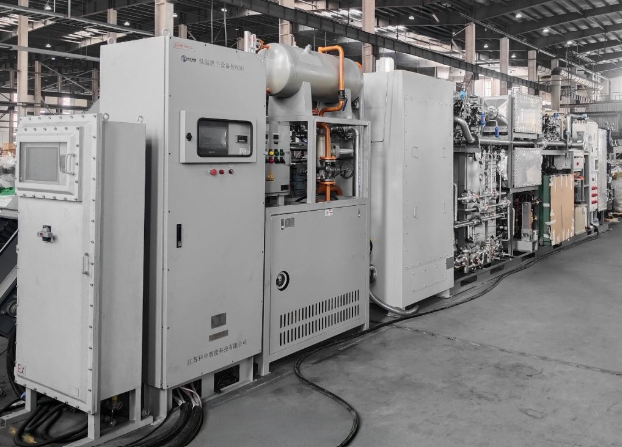 Efficiency: Multi-Stage Chilling
Electrode Coater NMP Condenser
Directly coupled to battery cathode coating machines, capturing vaporized solvent and delivering purified dry return air.
- Closed-loop hot gas recirculation
- Corrosion-resistant titanium / SS316 coils
- Substantially reduces coater heating demand
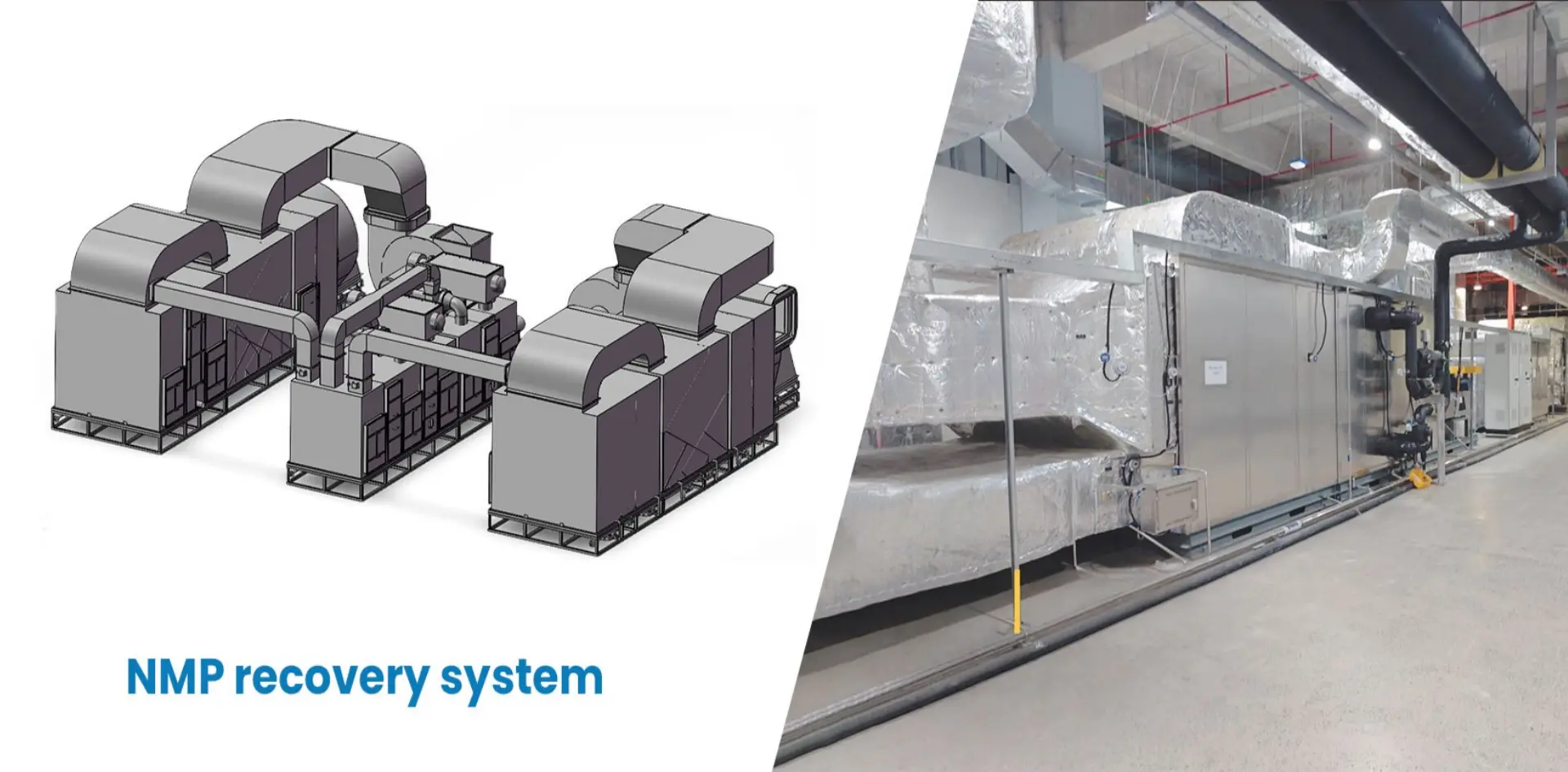 Treatment: Thermal RTO
Regenerative Thermal Oxidizer (RTO)
Destroys volatile organic compounds at 850°C with up to 95% internal thermal energy recovery via ceramic beds.
- Destruction Removal Efficiency (DRE) >99.5%
- Self-sustaining operation at low LEL levels
- Certified for European clean-air directives
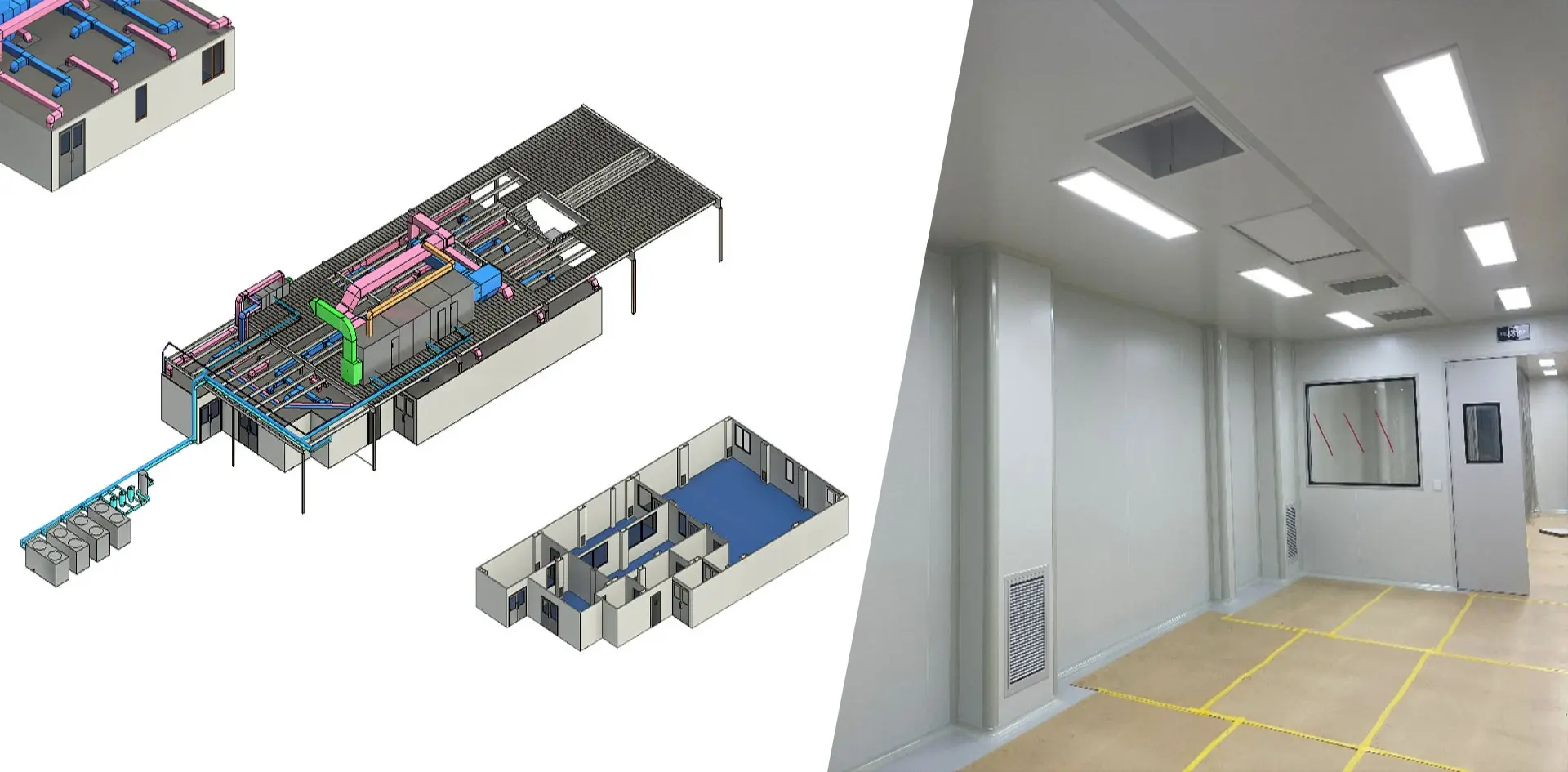 Application: High Flow Exhaust
Centralized NMP Recycling Skid
Centralized multi-line solvent distillation and recovery skid handling exhaust rates exceeding 50,000 m³/h.
- Automated density and purity monitoring
- Explosion-proof instrumentation package
- ASME coded pressure vessels and piping
 Testing: 100% FAT Inspected
In-House Climatic FAT Testing Service
Full performance testing in DryAir's factory environmental chambers, verifying airflow, pressure drop, and dew point before shipping.
- Live video stream audit capability for buyers
- NIST-calibrated chilled-mirror hygrometers
- Certified test reports supplied with dossier
 Coverage: Worldwide Deployment
Global On-Site Installation & EPC
Specialized bilingual installation supervisors and commissioning engineers deploying across Europe, the Americas, and Southeast Asia.
- Rapid mobilization within project schedules
- Duct balancing and aerodynamic tuning
- Local contractor coordination and oversight
 Consulting: Direct to Engineers
Custom Technical Consultation & RFQ
Submit your floor plan, personnel loads, and required room dew point. Receive complete heat balance drawings within 24 business hours.
- Direct communication with HVAC specialists
- No middleman trading agency markups
- Equipment dimensional CAD & BIM models
Audited Technical Authority & Corporate Contacts
Hangzhou DryAir Treatment Co., Ltd. welcomes global engineering clients, procurement auditors, and third-party inspectors to our high-tech manufacturing campus in Zhejiang Province.
Manufacturing Headquarters
No. 2088 Keji Road, Qingshan Industrial Park, Lin'an District, Hangzhou City, Zhejiang Province, China.
Equipped with heavy crane bays, certified cleanroom assembly zones, and environmental testing chambers.
Direct Engineering Inquiries
Telephone: +86-571-8990-5557
Engineering Sales: [email protected]
Response turnaround: Detailed psychrometric load analysis within 24 hours.
Audited Tier-1 References
Trusted delivery partner for Tesla, Northvolt, CATL, ATL, BYD, EVE Energy, Envision AESC, Farasis, SVOLT, and TTI.
ISO 9001 and GJB national military standard quality management systems.