
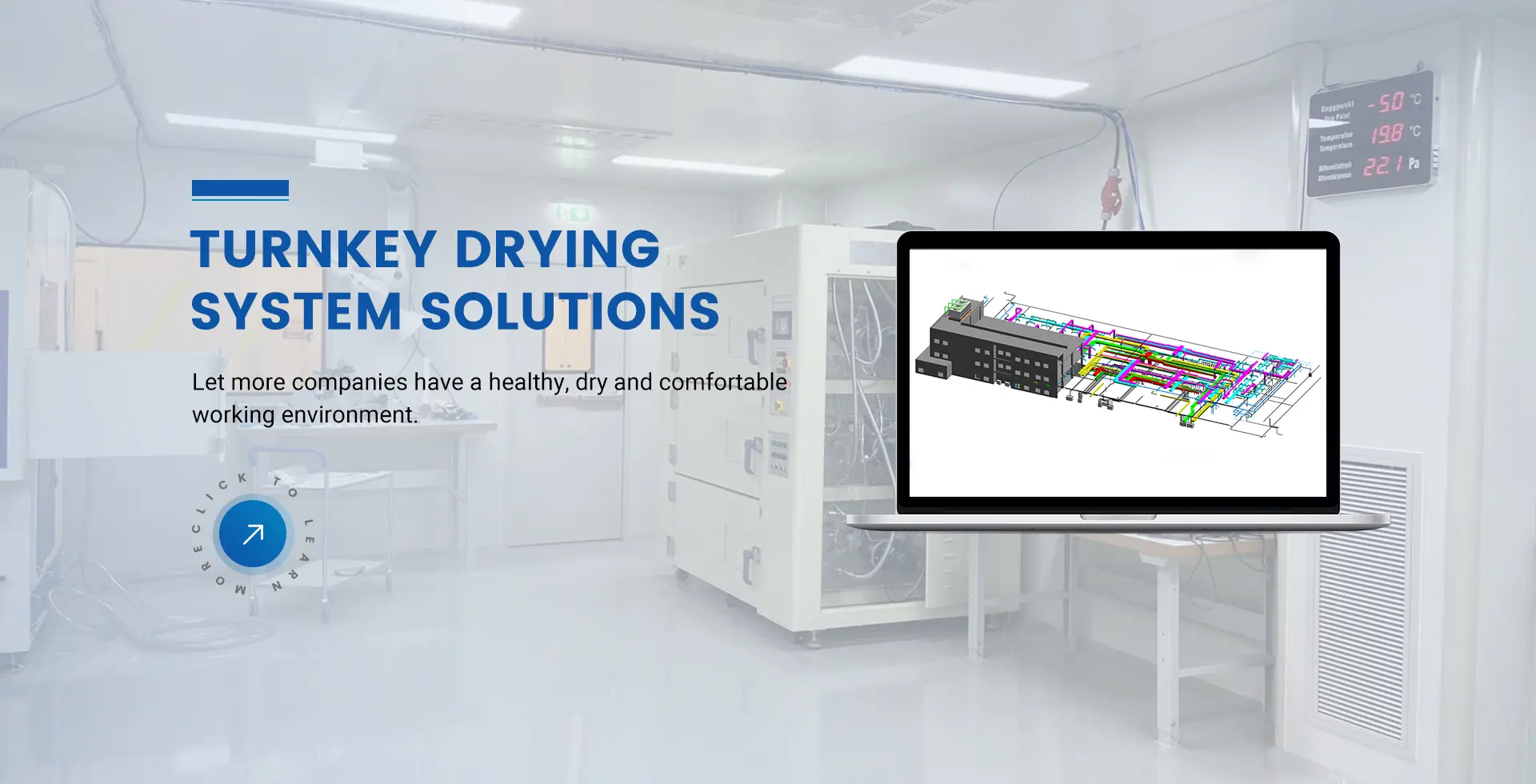
 DP -70°C Control
Ultra-Low DP Rotary Dehumidifier
Engineered for lithium cell assembly and battery pack production, supplying stable moisture-depleted air down to -70°C dew point.
Explore SolutionEngineered to deliver uninterrupted psychrometric precision, our desiccant rotor systems maintain stable operation under severe moisture loads with minimum energy consumption.
DP -70°C Control
Engineered for lithium cell assembly and battery pack production, supplying stable moisture-depleted air down to -70°C dew point.
Explore Solution Turnkey EPC
Complete envelope, airlock management, high-volume air handlers, and specialized ductwork delivered under a single validated EPC contract.
Explore Solution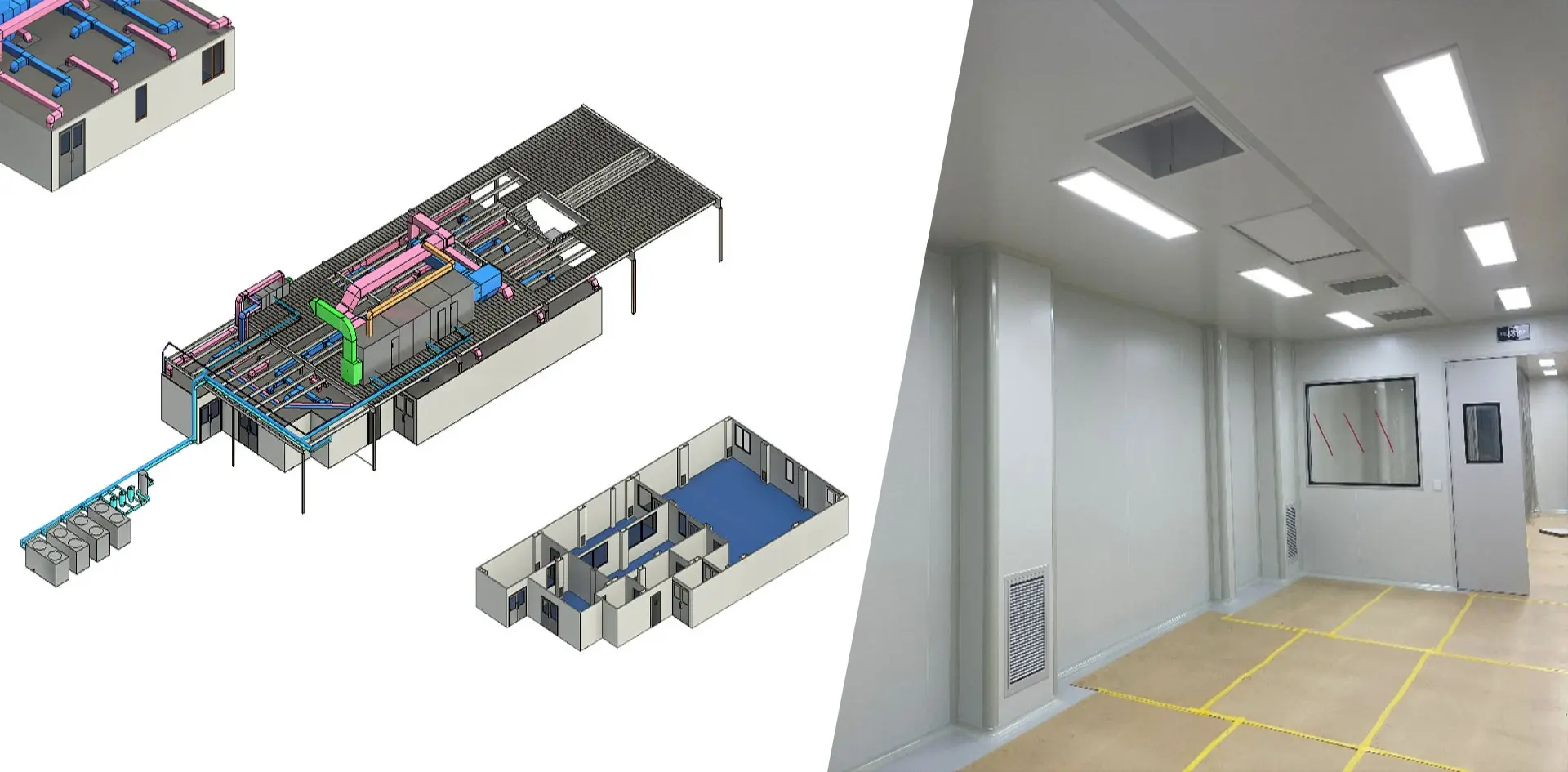 Recovery ≥99%
Recovers high-purity N-Methyl-2-pyrrolidone from continuous coater exhaust lines, mitigating toxic emissions and raw material costs.
Explore Solution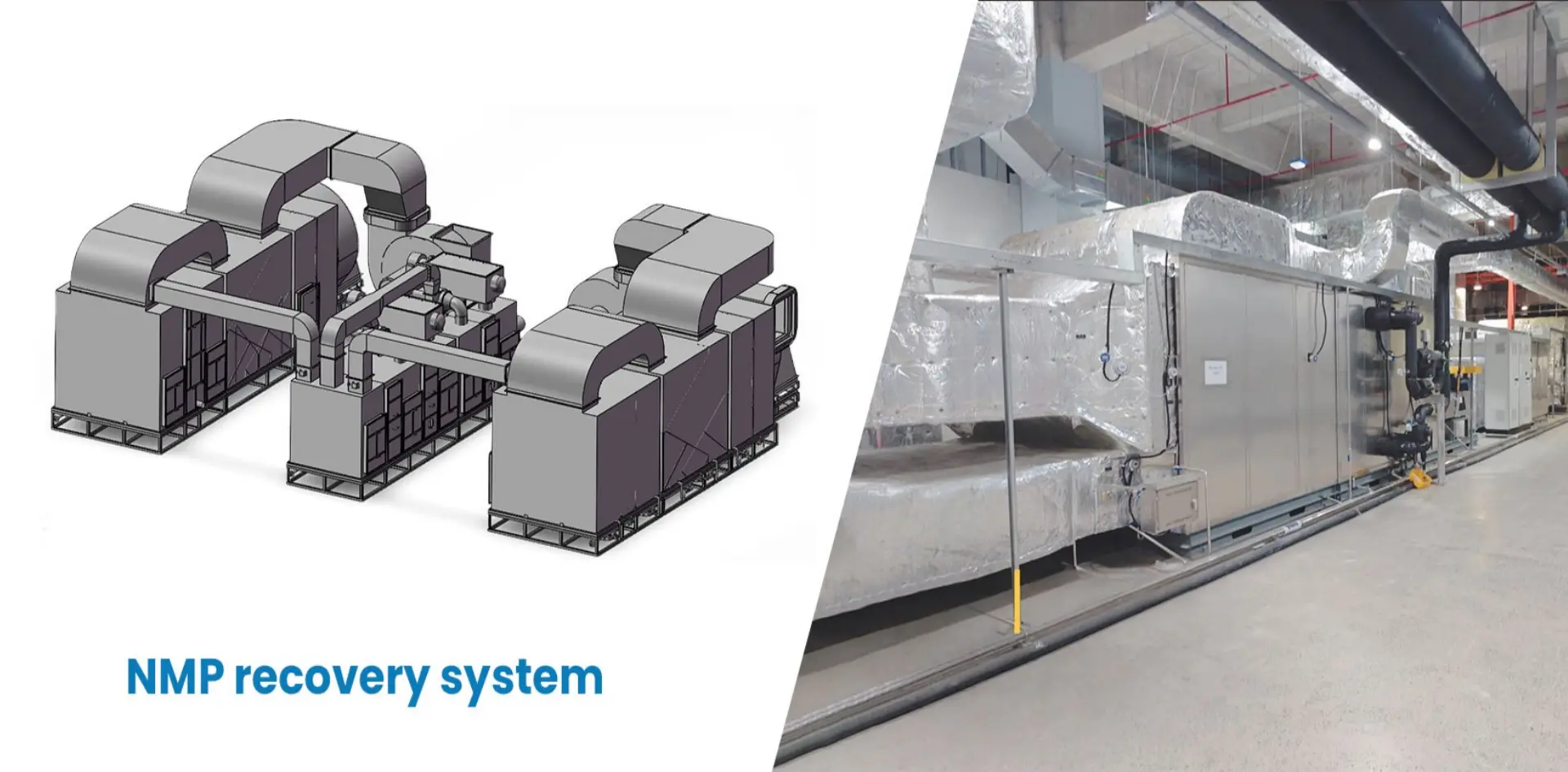 Cooling + RTO
Deep-cooling condensation coupled with Regenerative Thermal Oxidation (RTO) to neutralize hazardous organic exhaust.
Explore Solution DHU Series
High-efficiency honeycomb silica gel and molecular sieve rotors designed for food preservation, pharmaceutical packaging, and marine applications.
Explore Solution Gigafactory Grade
Hermetically sealed modular panelling system with precision air containment designed for multi-gigawatt pouch and cylindrical lines.
Explore Solution Zero-Leakage
Integrates secondary heat recovery stages, ensuring minimal steam/power draw while restoring solvent concentrations to manufacturing standards.
Explore Solution JEN Series
Heavy-duty pre-cooling condensing air driers utilized to handle high moisture loads prior to deep desiccant adsorption stages.
Explore SolutionHow the global expansion of electric mobility, solid-state cell chemistries, and bio-pharmaceutical requirements have reshaped rotary dehumidification performance criteria.
Standard -40°C dew point thresholds are no longer sufficient for next-generation cathode chemistries. High-nickel ternary cathodes and lithium metal anodes react exothermically with minuscule moisture levels, driving industry procurement standards down to continuous -50°C, -60°C, and ultra-critical -70°C DP supply air.
Thermal regeneration of the desiccant rotor accounts for 60%–80% of total HVAC operating expenditure in dry room facilities. High-efficiency systems now utilize multi-stage waste heat integration, combining industrial heat pumps, exhaust air heat exchangers, and condensation pre-treatment to drop electricity demands significantly.
Modern rotors have moved past basic silica gel impregnation. Tier-1 manufacturers integrate synthesized ultra-fine zeolite molecular sieves bonded with synthetic ceramic fibers. This structural synthesis provides higher water-adsorption capacity under minimal relative humidity (<1% RH) and withstands continuous 140°C–180°C regeneration temperatures without structural degradation.
China has become the global epicenter of desiccant rotor manufacturing and turnkey dry room engineering, driven by continuous domestic gigafactory scaling.
Top Chinese manufacturers produce hundreds of modular rotor sections every month, supported by domestic precision sheet metal processing, proprietary casing thermal-break extrusions, and certified rotor imports or indigenous synthesis.
Handling battery lines running over 100 GWh has given leading Chinese suppliers practical insight into latent loads caused by high personnel densities, robotic friction heat, and high seal-break frequencies in cell pass-through airlocks.
Capital equipment investments for low dew point systems engineered in China are approximately 30%–45% more capital-efficient than traditional Western European or Japanese alternatives, with comparable or superior dew point stabilization.
Rather than splitting responsibilities across separate panel providers, dehumidifier builders, and control integrators, top tier-1 suppliers deliver turnkey systems with full validation accountability down to the target dew point.
Accurate baseline sizing helps avoid underspecification (which damages product quality) and overspecification (which inflates CAPEX and operational power draw).
| Industrial Application | Moisture Sensitivity Risks | Target Supply Dew Point / RH | Core Rotor Configuration | Recommended System Line |
|---|---|---|---|---|
| Lithium-Ion Cell Assembly & Filling | Moisture triggers hydrofluoric acid formation in electrolytes; causes capacity degradation. | -40°C to -60°C DP | Two-Stage Rotor (Silica Gel + Molecular Sieve) | Turnkey Dry Room System |
| Solid-State & Lithium Metal Cells | Extreme lithium metal passivation, catastrophic dendrite development, immediate cell degradation. | -60°C to -70°C DP | High-Performance Pure Zeolite Molecular Sieve | Desiccant Dehumidifier Unit |
| Electrode Slurry Coating & Drying | Atmospheric VOC evaporation; solvent losses and hazardous stack releases. | Solvent Recovery ≥99% | Condensing Chill Loop + Zeolite Concentrator Rotor | NMP Recovery System |
| Hygroscopic Pharma & Effervescent Prep | Powder clumping, capsule softening, bacterial growth, degraded active ingredient potency. | 10% to 25% RH (-10°C DP) | Single-Stage Heavy-Duty Silica Gel Rotor | Desiccant Dehumidifier Unit |
| Defense, Ammunition & Avionics Storage | Micro-galvanic corrosion on electronics, propellant oxidation, optic coating failure. | ≤35% to 40% RH | Single-Stage Low-Temperature Reactivation Rotor | Defense Dehumidification Line |
| Bulk Chemical Storage & Petrochem Off-Gas | VOC vapor venting, hazardous emissions, flammability hazards during terminal fluid transfers. | VOC Compliance Level | Deep-Chilling Condensation + RTO Core | VOC Abatement System |
| Large-Scale Pre-Cooling & Raw Warehousing | Surface condensation, packaging degradation, mould propagation, high humidity loads. | 45% to 60% RH | Direct Expansion Mechanical Refrigeration Coils | Refrigerative Dehumidifier |
Operating since 2010, Hangzhou DryAir Treatment Co., Ltd. has grown into one of China's top three industrial rotary desiccant dehumidification system manufacturers. Holding more than 30% market share in the domestic high-end dry room sector, DryAir has supported battery supply chains across Asia, Europe, and North America.
Our engineering team resolves typical design risks before shipping—including casing air leakage (rated Class L1/D1 under EN 1886), thermal bridging, moisture infiltration from operators, and high regeneration energy consumption. With complete in-house assembly, thermal balancing facilities, and dedicated test bays, every unit is certified before site dispatch.

Moisture load modeling covering infiltration, personnel, duct losses, and process equipment dissipation.
3D airflow modeling, bypass design, multi-stage wheel balancing, and regeneration energy recycling loops.
In-house panel foam injection, laser casing cutting, rotor assembly, and performance testing.
Rigging, duct integration, room seal verification, and dew point validation by certified engineers.
24/7 remote performance monitoring, scheduled seal replacements, and local parts support.
Exporting industrial HVAC systems requires adherence to regional electrical, pressure vessel, and environmental safety regulations.
Export units are designed to meet electrical, pressure vessel, and safety standards worldwide without requiring third-party retrofit work:
We deploy senior bilingual field engineers to oversee mechanical installation, ductwork pressure checks, and control calibration:
Prevent unexpected process downtime through proactive overseas warranty coverage and technical support agreements:
Detailed technical answers to common questions regarding system design, dew point stability, energy efficiency, and turnkey delivery.
Hangzhou DryAir rotary desiccant dehumidifiers can control supply air down to a minimum of -70°C dew point (equivalent to less than 0.002 g/kg moisture content). This performance level is designed for high-nickel lithium-ion battery assembly, electrolyte filling, and next-generation solid-state cell manufacturing.
Yes. DryAir delivers end-to-end turnkey dry room installations worldwide. Our scope includes preliminary consulting, room paneling, air handling units, rotor dehumidifiers, automation, testing, and commissioning. We have delivered systems for international customers including Tesla, Northvolt, and TTI.
Depending on the configuration and destination, DryAir systems can be supplied with CE (Machinery & Low Voltage Directives), UL (1995/60335), CSA, ASME boiler code stamps, and EAC certification. Quality assurance follows ISO 9001 and the GJB national military standard.
DryAir ZJRH series NMP recovery systems are engineered to achieve a solvent recovery rate of 99% or higher on electrode coating lines. This enables reuse of recovered N-Methyl-2-pyrrolidone while lowering factory exhaust emissions below regional VOC thresholds.
International clients can access an optional 2-year extended warranty and service agreement. Support covers on-site installation, commissioning by bilingual engineers, fast delivery of replacement parts, and remote diagnostic access via encrypted network interfaces.
A single rotor typically reaches -20°C to -40°C dew point. To reach -70°C DP, DryAir uses a two-stage series configuration: the first rotor (silica gel) removes bulk moisture down to around -20°C DP, after which the second rotor (high-density molecular sieve) strips residual moisture under low vapor pressures.
DryAir systems accommodate electric heating (SCR modulated), indirect natural gas or propane burners, industrial steam coils, thermal oil, and heat-recovery exchangers capturing waste heat from plant compressors or RTO oxidizers.
Our enclosures use interlocking double-tongue-and-groove polyurethane or rockwool cleanroom panels sealed with non-silicone elastomers. In combination with differential pressure cascade controls and high-integrity airlocks, supply leakage is minimized to Class D1 under EN 1886.
Explore our industrial range of rotary desiccant dehumidifiers, battery dry room modules, and process VOC solvent control systems.
DHU Rotary Series
High-efficiency desiccant wheel unit delivering reliable moisture-depleted air for industrial drying and military storage applications.
Explore Solution
Turnkey Dry Room
Fully integrated thermal envelope, air handlers, filtration, and process air balancing for high-output lithium-ion production lines.
Explore Solution
≥99% Recovery
Designed for battery electrode coating lines to reclaim high-grade NMP solvent, reducing emissions and operating costs.
Explore Solution
JEN Thermal Loop
Condensing pre-treatment systems used upstream of desiccant wheels to handle high moisture loads efficiently.
Explore Solution VOC Treatment
Multi-stage regenerative thermal oxidizers and deep-cooling condensation skids for chemical and petrochemical terminal off-gases.
Explore Solution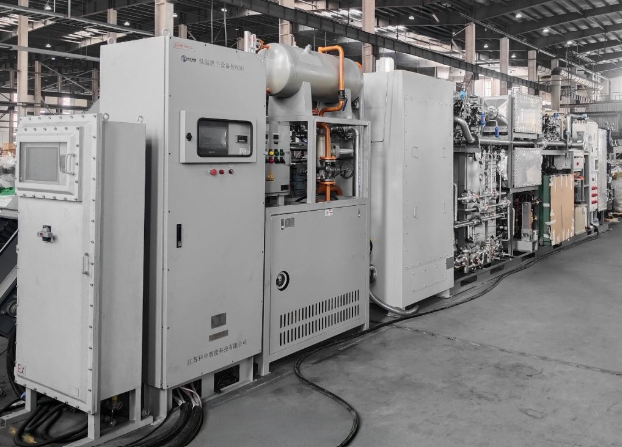 Continuous Loop
Integrated closed-loop systems that maintain stable recovery rates and dry airflow across 24/7 high-speed coating lines.
Explore Solution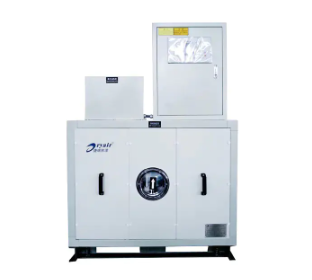 Pharma Grade
Sanitary, wash-down internal structures with HEPA filtration and precise relative humidity control for cleanroom tableting suites.
Explore Solution GJB Military Standard
Rugged environmental control systems built under GJB standards to safeguard munitions, radar suites, and avionics against corrosion.
Explore SolutionWhether configuring a new 20 GWh gigafactory phase or retrofitting a pharmaceutical processing zone, our HVAC engineering specialists can return complete sizing calculations within one business day.