
Precision Humidity & Solvent Treatment Equipment (Part I)
Engineered for mission-critical industrial manufacturing where relative humidity, ultra-low dew points down to -70°C, and VOC zero-leakage compliance govern high-yield production.
 DP -70°C Control
Desiccant Dehumidifier
DHU series rotary desiccant dehumidifiers utilizing composite silica gel and molecular sieve rotors for extreme low dew point dry air stability.
Explore Dehumidifiers Turnkey EPC
Turn-key Dry Room System
End-to-end design, modular air-tight enclosure panelling, low-leakage air distribution ducting, and dynamic dew point control suites.
View Dry Rooms Recovery ≥99%
NMP Recovery System
ZJRH multi-stage chilled condensation and regenerative adsorption recovery system capturing N-Methyl-2-pyrrolidone from electrode coating lines.
Inspect NMP Units Cooling + RTO
VOC Abatement System
JEN series deep-cooling condensation integrated with Regenerative Thermal Oxidation (RTO) for extreme industrial emission compliance.
Check VOC Abatement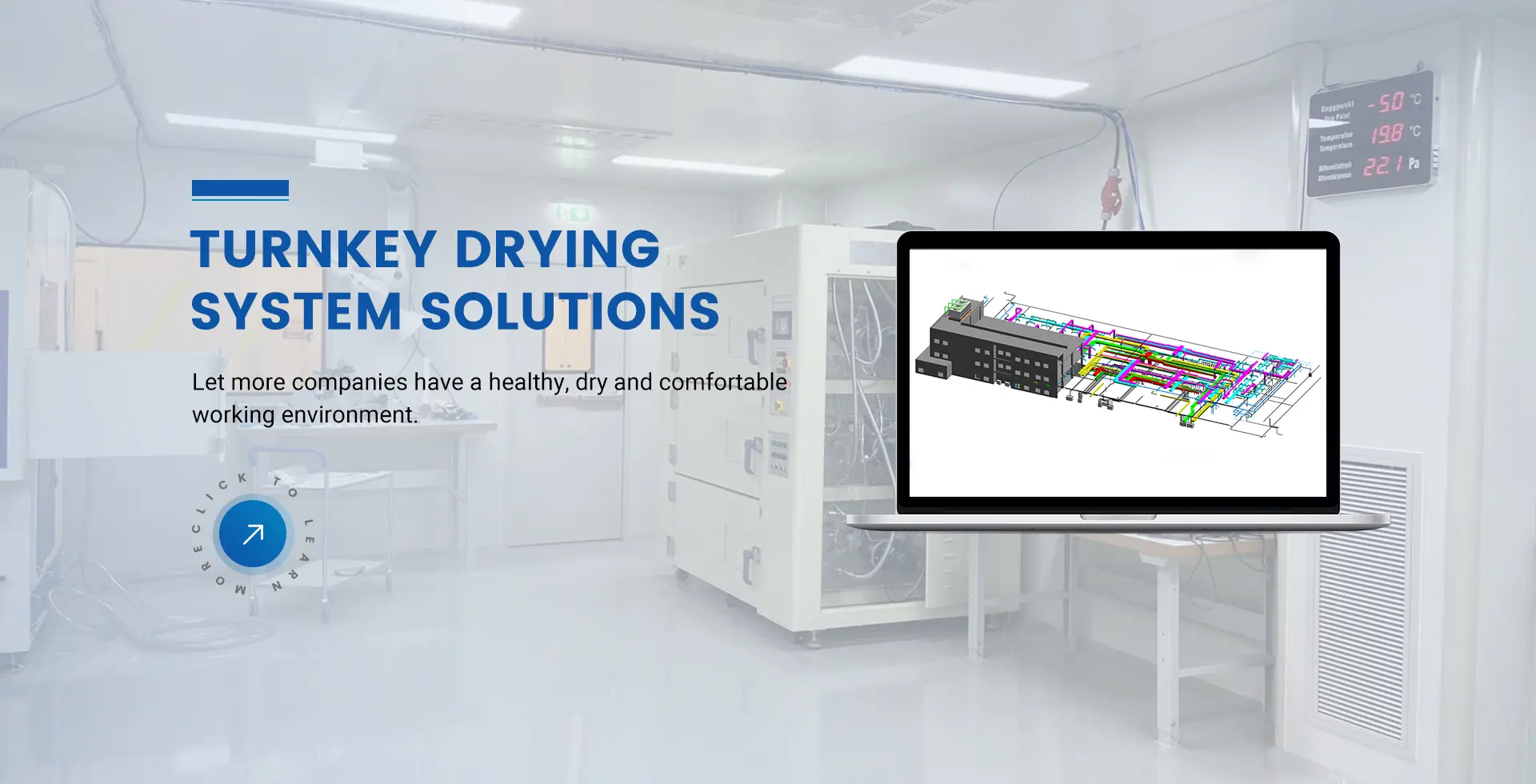 Heavy Industrial
Refrigerative Dehumidifier
Pre-cooling condensing stages and independent ambient dehumidifiers for workshops, warehouses, and primary humidity abatement.
Examine Pre-Coolers Gigafactory Scale
Cell Assembly Dry Enclosures
Engineered clean-dry rooms maintaining Dew Point below -50°C and Class 1,000 cleanroom cleanliness for EV pouch and prismatic battery lines.
View Turnkey Systems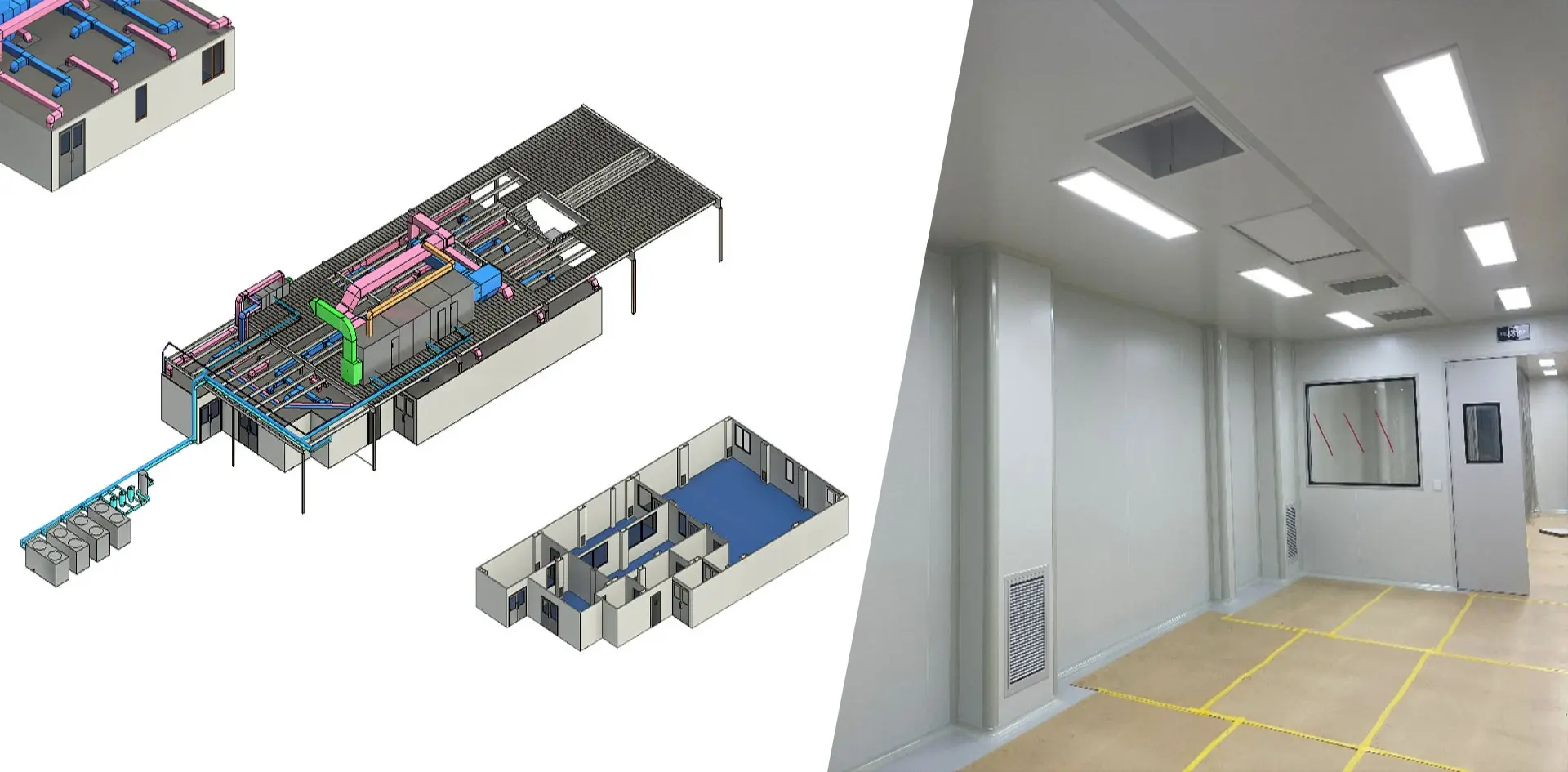 Zero Emissions
Electrode Coater Exhaust System
Closed-loop VOC capture module ensuring continuous NMP reclamation, reducing solvent replenishment expenditures by up to 95%.
Access Recovery Tech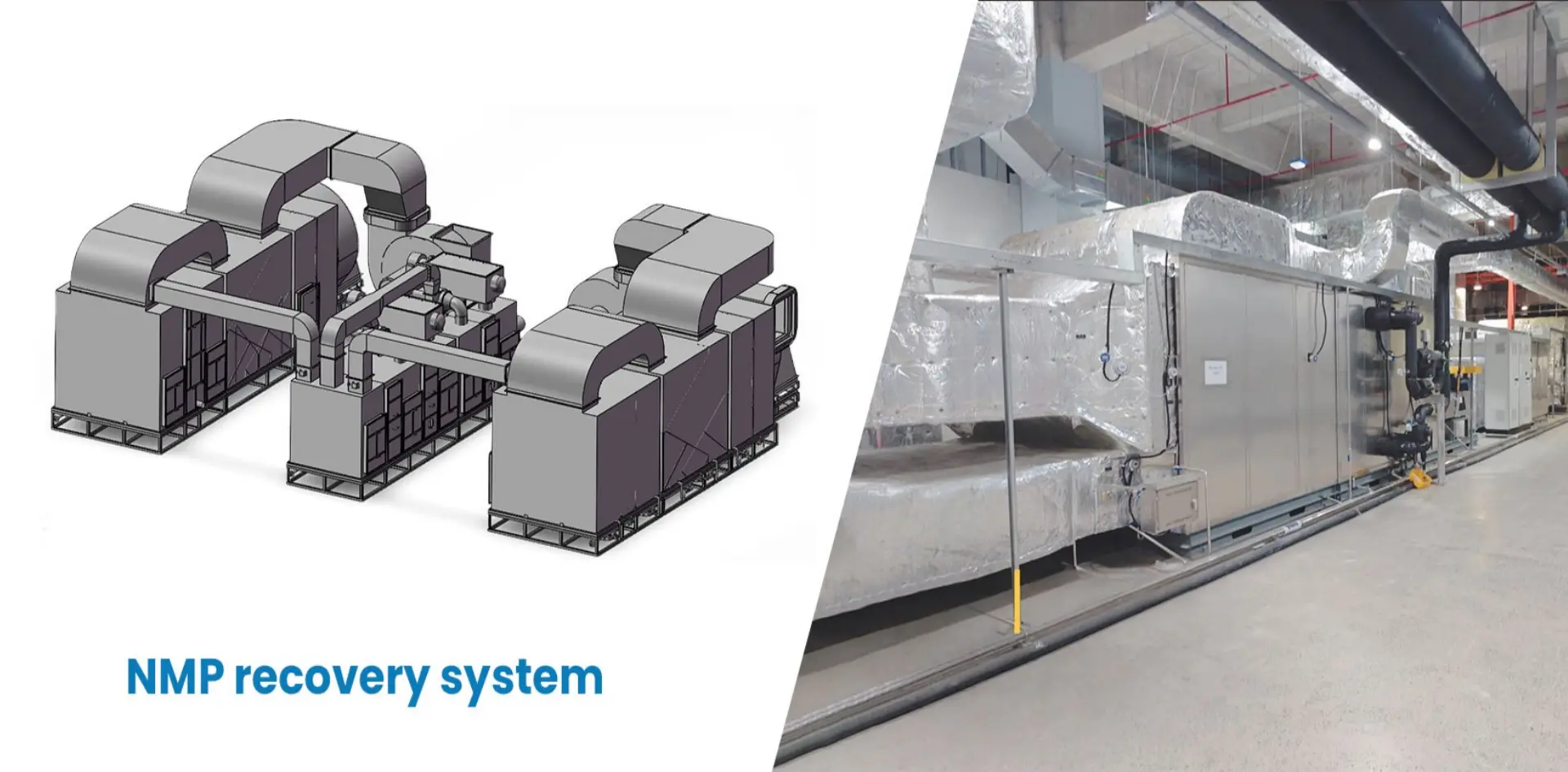 Thermal Oxidation
RTO Thermal Abatement Core
Regenerative thermal oxidizers configured with ceramic honeycomb beds, achieving 99.2% VOC destruction efficiency at minimal operational fuel cost.
View VOC SolutionChina Desiccant Rotor Dehumidifiers: Supply Chain Sovereignty & Engineering Dominance
A granular technical assessment of China's transformation into the world's primary exporter of industrial dehumidification systems, deep dew-point engineering, and turnkey gigafactory air handling.
1. The Paradigm Shift in Global Industrial Psychrometrics
Over the past decade, the rapid escalation of EV battery manufacturing, biopharmaceutical cleanrooms, and high-precision defense electronics has permanently altered the parameters of industrial dehumidification. Conventional mechanical refrigeration, which caps its practical moisture extraction threshold around a +4°C to +7°C dew point due to coil icing constraints, is fundamentally incapable of supporting modern advanced manufacturing. Lithium battery cell chemistry—specifically involving electrolytes containing lithium hexafluorophosphate ($LiPF_6$)—spontaneously decomposes in the presence of trace airborne water molecules to form highly corrosive hydrofluoric acid ($HF$), inducing cathode degradation, internal short-circuiting, and thermal runaway.
Consequently, supply air dew points ranging from -40°C to -70°C (corresponding to less than 0.0033 grams of moisture per kilogram of dry air) have transformed from niche laboratory anomalies into 24/7 round-the-clock production requirements for gigawatt-hour (GWh) scale facilities. In this high-stakes landscape, China's desiccant rotor dehumidifier manufacturers have emerged not merely as cost-effective fabricators, but as global engineering authorities dictating thermal efficiency, rotor composite chemistry, and turnkey delivery standards.
Manufacturing & Supply Chain Advantages of Chinese Exporters
The ascendancy of Chinese desiccant rotor dehumidifier manufacturers stems from a structurally integrated manufacturing ecosystem that Western competitors struggle to match in terms of lead time, bespoke customization, and capital efficiency:
Comprehensive Material Integration
Direct access to high-purity inorganic fiber substrates, synthetic zeolites, and active silica gel synthesis plants within a 150 km industrial radius, mitigating supply chain chokepoints.
Unrivaled Gigafactory Field Validation
China operates over 70% of the world's battery cell capacity. Chinese dehumidifier designs have been rigorously stress-tested across billions of operational hours at CATL, BYD, and EVE Energy facilities.
High-Throughput Modular Capacity
Tier-1 producers such as Hangzhou DryAir maintain dedicated automated fabrication plants capable of assembling over 200 heavy industrial custom air-handling units per month.
International Code Compliance
Factory verification under ISO 9001, GJB military certifications, combined with CE (Machinery & EMC), UL 1995/CSA, ASME pressure vessel codes, and EAC Eurasian stamps.
2. Analytical Evaluation Matrix: Top 10 China Desiccant Rotor Dehumidifier Suppliers
When engineering and procurement directors evaluate Chinese exporters, distinguishing between commercial assembling brokers and Tier-1 engineering powerhouses requires an audit of six core competencies: Maximum Dew Point Depression ($T_{dp}$), Rotor Substrate Technology, Turnkey Enclosure Integration, Energy Recovery Coefficient, In-House Environmental Testing Facilities, and International Field Service Deployment.
Below is the empirical benchmarking table classifying the leading desiccant dehumidifier manufacturers and solutions providers across China:
| Vendor / Tier Rank | Core Technical Focus | Min. Controllable Dew Point | Key Industrial Validation | Global Compliance |
|---|---|---|---|---|
| Hangzhou DryAir (Tier-1 Leader) | Ultra-low dew point dual rotors, Turnkey Battery Dry Rooms, NMP Recovery (≥99%) & VOC Abatement | -70°C Dew Point | Tesla, Northvolt, CATL, BYD, ATL, TTI, SVOLT, EVE | CE, UL, CSA, ASME, EAC, GJB |
| Tier-1 East China Consortia | Commercial HVAC Desiccant Cassettes & Standard Industrial Dehumidifiers | -40°C to -50°C DP | Food drying, commercial archive storage, pharmaceuticals | CE, ISO 9001 |
| Tier-2 Regional OEMs (Guangdong) | Refrigerative condensing dehumidifiers, light industrial rotors | -20°C to -35°C DP | Plastics injection molding, electronics storage | CE, CCC |
| Tier-2 Northern Specialized Fabricators | Defense & marine anti-corrosion desiccant modules | -40°C to -55°C DP | Naval vessel storage, bridge girder preservation | GJB, ISO 9001 |
| Tier-3 Component Assemblers | Rotor cassette housing assembly with third-party components | -20°C to -30°C DP | Agricultural storage, mushroom incubation, light warehousing | ISO 9001 |
Among these suppliers, Hangzhou DryAir Treatment Co., Ltd. (founded 2010) commands an authoritative position, holding over 30% domestic market share in the ultra-low dew point lithium battery sector. DryAir's engineering team—bolstered by 6 master's and PhD researchers, 2 national registered HVAC engineers, 8 senior engineers, and 58 certified technicians—has pioneered closed-loop system design that addresses the entire thermal-psychrometric lifecycle of gigafactories.
Engineering Depth Quantified at Global Scale
Empirical metrics recorded across Hangzhou DryAir's manufacturing facilities and international client commissioning operations.
Macro Industrial Solutions: Sizing for Strict Moisture Limits
Psychrometric control strategies customized around specific process vulnerability, volatile gas abatement, and environmental thermodynamics.
Lithium Battery Gigafactories
Electrode winding, electrolyte injection, and pouch vacuum sealing require unwavering dew points between -40°C and -60°C. In solid-state development with metallic lithium anodes, thresholds deepen to -70°C to prevent exothermic oxidation.
Pharmaceutical GMP Suites
Hygroscopic API powder blending, effervescent tablet pressing, gelatin capsule hardening, and sterile blister packaging. Elevated moisture causes powder clumping, active degradation, and mould growth.
Defense & Aerospace (GJB)
Ammunition preservation, radar avionics depots, missile guidance silos, and naval hangar bays. Built under China's GJB national military standard to eliminate galvanic corrosion and propellant degradation.
NMP & Petrochemical VOC
Recovery of N-Methyl-2-pyrrolidone solvent from drying oven exhausts and condensation treatment of tank farm VOC fumes before atmospheric venting. Integrates condensing chillers with zeolite concentrators and RTO.
Precision Electronics, Optics & Glass Lamination
Semiconductor wafer photolithography suites, surface mount device (SMD) storage, and safety windshield PVB interlayer laminating lines. Prevents micro-bubble entrapment and moisture oxidation on delicate sub-micron copper layers.
Emerging Engineering Trends in Desiccant Dehumidification
How Chinese innovation is reshaping energy consumption, rotor chemistry, and digital twin psychrometric control across global manufacturing hubs.
1. Waste Heat & Heat Pump Regeneration
Desiccant reactivation accounts for 60%–80% of total system operational expenditure. Next-generation systems integrate water-source CO₂ heat pumps and heat pipes capturing thermal exhaust from air compressors, slashing electric heater utilization by up to 45%.
2. Advanced Zeolite & MOF Adsorbents
Moving beyond generic silica gel, Chinese research institutions have formulated hybrid Metal-Organic Frameworks (MOFs) and titanium-substituted silica matrices capable of desorbing water molecules at regeneration temperatures as low as 65°C to 80°C.
3. Digital Twin AI Psychrometric Automation
Integration of predictive load sensors and PLC edge computers. Systems dynamically adjust rotor rotation frequency (RPH), reactivation air heater kilowatt throttling, and chilled water bypass valves according to real-time ambient weather transitions.
4. Solid-State Battery Ultra-Dry Rooms
Sulfide-based solid electrolytes generate toxic hydrogen sulfide ($H_2S$) when exposed to trace moisture. The industry is rapidly migrating toward ultra-sealed enclosure panelling and multi-stage desiccant beds sustaining -75°C dew points continuously.
Global EPC & Buyer's Technical Due Diligence Guide
Critical engineering considerations, psychrometric load verification steps, and vendor qualification protocols for international procurement tenders.
Comprehensive RFQ Checklist for Industrial Dry Room Systems
To avoid underspecifying latent moisture loads or incurring catastrophic regeneration OPEX overruns, engineering teams should evaluate prospective Chinese exporters using the following technical audit checkpoints:
- Internal Latent Load Quantification: Calculate moisture shedding from personnel (typically 50–90 g/h per operator wearing specialized low-porosity cleanroom garments) combined with conveyor slit openings, door ingress air-locks, and product hygroscopic carryover.
- Casing Air Infiltration & Thermal Bridging: Require Class L1/L2 casing leakage verification in compliance with EN 1886 or equivalent ASTM standards. Dual-wall polyurethane (PU) or rockwool insulated panels (minimum 50mm thickness) must incorporate thermal break profiles to eliminate external sweating.
- Rotor Seal Longevity & Chemical Resistance: Confirm silicone or viton perimeter seals capable of enduring continuous 140°C to 180°C regeneration temperatures without elastomer embrittlement or air bypass across process/reactivation sectors.
- Comprehensive Factory Acceptance Testing (FAT): Ensure the manufacturer operates an enclosed psychrometric testing chamber capable of simulating summer ambient conditions (e.g., 38°C dry bulb, 85% RH) to validate supply air dew points before sea container loading.
- Export Electrical & Mechanical Certifications: Require UL 508A certified control panels for North American projects, CE machinery and low-voltage directives for European delivery, and ASME code stamps for high-pressure cooling coils.
Hangzhou DryAir 5-Stage Turnkey EPC Methodology
DryAir eliminates the friction of multi-vendor procurement by consolidating thermodynamic consulting, rotor cassette fabrication, clean enclosure erection, and low-dew-point commissioning under a single accountable contract:
Psychrometric Consulting
Detailed analysis of enthalpy balances, fresh air ratios, sensible/latent room loads, and target dew points.
BIM 3D Engineering
Computational Fluid Dynamics (CFD) airflow modelling, duct sizing, piping layouts, and structural vibration isolation.
Precision Fabrication
CNC laser cutting, automated polyurethane foaming, rotor cassette balance testing, and FAT chamber validation.
Global Commissioning
On-site mechanical assembly, dew point curve verification, air velocity balancing, and operator training.
Lifecycle Support
Remote IoT telemetry diagnostics, critical spare parts inventory, and optional 2-year overseas service SLA.
Precision Humidity & Solvent Treatment Equipment (Part II)
Explore full equipment configurations, export-certified low dew-point units, and closed-loop environmental air systems available for global freight dispatch.
DHU Series
Industrial Rotary Dehumidifier
High air volume process dehumidifier with regeneration energy recovery options, delivering reliable moisture depression for pharma and battery manufacturing.
Download Specifications
Modular Dry Room
Modular Battery Dry Room
Turnkey engineered cleanroom envelope with anti-static flooring, low-dew-point air handling units, and emergency purge systems.
Request Project Estimate
High Efficiency
Cathode Coater NMP Unit
Deep chilling and adsorption bed integration engineered to handle variable solvent exhaust concentrations with continuous liquid return purity.
Inspect Performance Data
EPA / CE Standard
Catalytic & Thermal VOC Unit
Engineered for paint line spraying, chemical storage exhausts, and high-concentration organic compound destruction with sensible heat reuse.
Learn About Compliance Factory Tested
Custom AHU Dehumidification Core
Bespoke integrated air handling unit combining cooling, heating, HEPA filtration, and desiccant cassettes tailored for export container freight.
Request Full Catalog GMP Certified
Pharma Low-RH Dehumidifiers
Hygienic stainless steel internal construction, CIP cleanable surfaces, and antibacterial zeolite wheel design meeting strict FDA/GMP requirements.
View Pharma Systems GJB Defense Grade
Defense & Avionics Dehumidifier
Ruggedized, vibration-resistant environmental climate systems built to military specifications for long-term preservation of critical equipment.
Consult Defense Engineers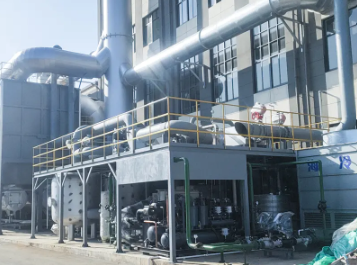 Petrochem Rated
Oil Gas Condensation Recovery
Explosion-proof multi-stage condensation units designed for hydrocarbon fuel transfer terminals, marine loading facilities, and refineries.
Request Technical ProposalEngineering Insights From Field Deployments
In-depth whitepapers authored by DryAir's HVAC specialists covering thermodynamics, solvent condensation, and powder stability.
How Oil Gas Condensation Systems Work
Deep mechanical cooling condenses volatile petroleum vapors into liquid distillates during tank filling and truck loading operations before atmospheric escape.
Read Whitepaper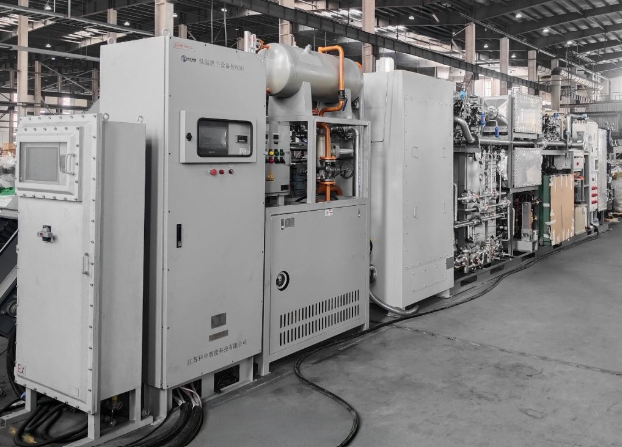
Maintaining Stable NMP Recovery Efficiency
Critical techniques for preventing heat exchanger fouling, optimizing chiller temperature setpoints, and capturing 99%+ of cathode slurrying solvent.
Read Technical ArticleMoisture Vulnerabilities in Oral Solid Dosage
How relative humidity swings during fluid-bed granulation, tablet pressing, and foil sealing trigger deliquescence and fail FDA stability validations.
Read OSD GuideFrequently Asked Questions by International Buyers
Direct answers from Hangzhou DryAir's engineering team regarding design limitations, certifications, lifecycle maintenance, and international commissioning.
What is the minimum controllable dew point a DryAir desiccant dehumidifier can achieve?
Does Hangzhou DryAir deliver complete turnkey dry rooms outside of China?
What export certifications and safety marks do DryAir units hold?
What recovery efficiency does the DryAir NMP recovery system guarantee?
How does DryAir support overseas maintenance and warranty requirements?
Initiate Your Industrial Dehumidification Specification
Submit your cleanroom dimensions, latent moisture heat loads, target dew point requirements, or VOC exhaust parameters. DryAir's engineering team will return a psychrometric balance calculation, CAD layout, and equipment proposal within one business day.