
DP -70°C

DHU Small Desiccant Unit
Compact, high-adsorption solid silica gel honeycomb rotor delivering dependable low dew point control for specialized process enclosures.
Explore Technical SpecsEngineered for mission-critical moisture removal where mechanical vapor compression reaches its psychrometric limits. Discover DryAir's high-efficiency modular range.
Compact, high-adsorption solid silica gel honeycomb rotor delivering dependable low dew point control for specialized process enclosures.
Explore Technical Specs
Comprehensive environmental enclosure with airtight modular paneling, air handling units, and multi-stage desiccant cascading.
View Dry Rooms
Recovers high-purity N-Methyl-2-pyrrolidone solvent from battery cathode coating exhaust, minimizing resource loss and emissions.
Request System Architecture
Integrated cryogenic condensation coupled with regenerative thermal oxidation for volatile organic chemical purification.
Abatement Specs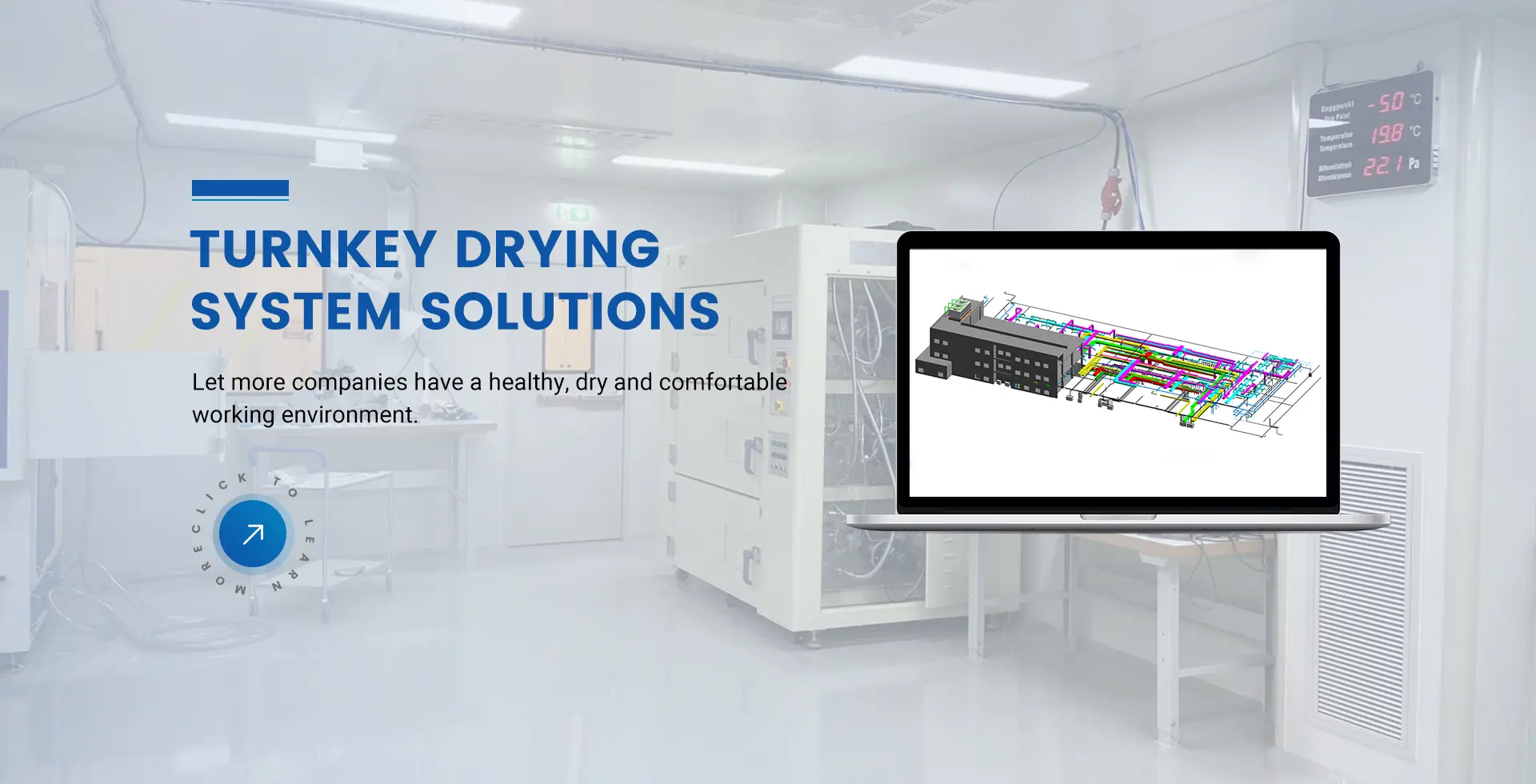
Industrial mechanical pre-cooling units designed to drop latent moisture loads before chemical adsorption stages.
View Energy Metrics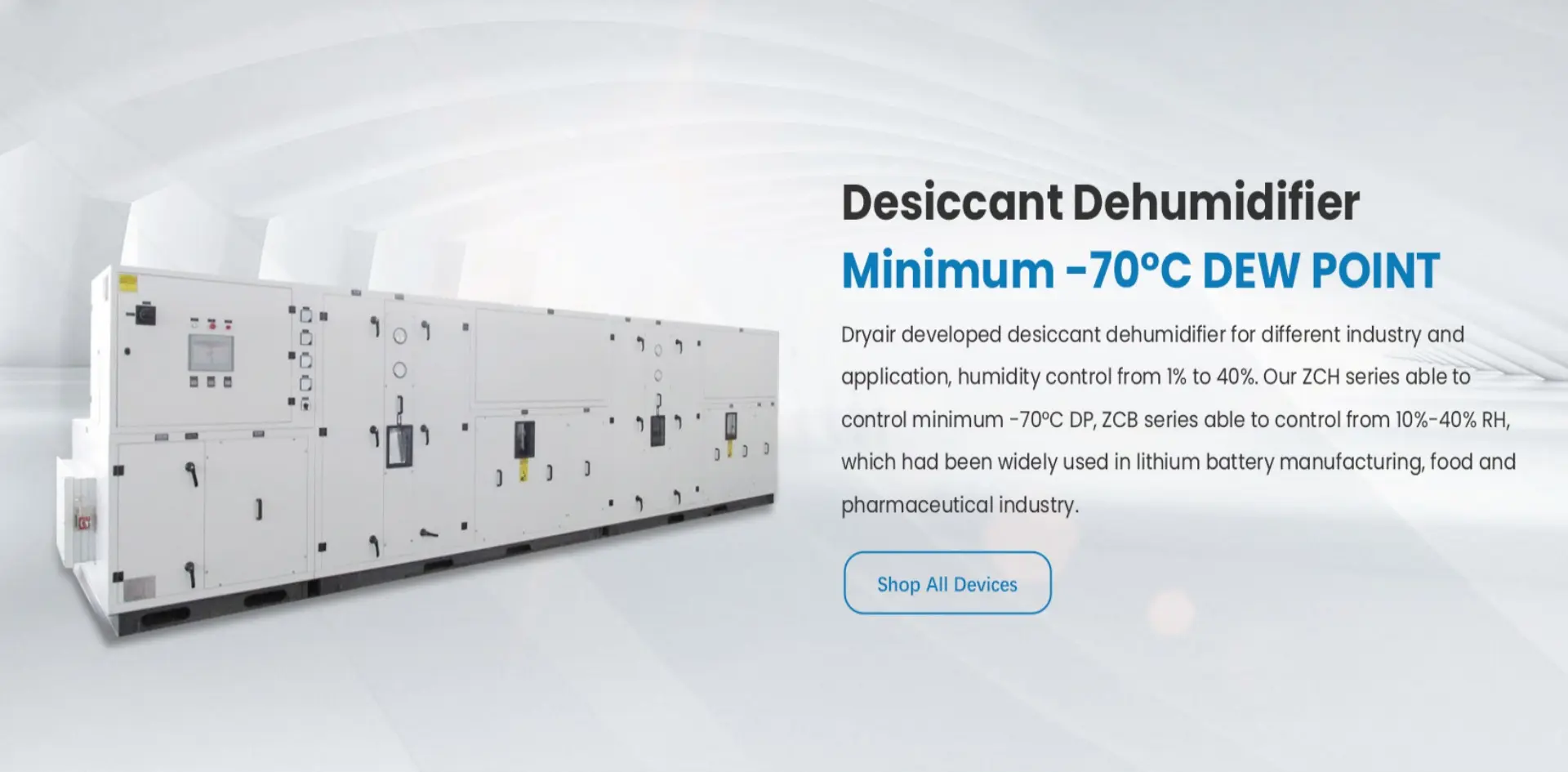
Compact walk-in dry chamber engineered for prototype pilot lines, R&D labs, and medical implant device encapsulation.
View Modular Solutions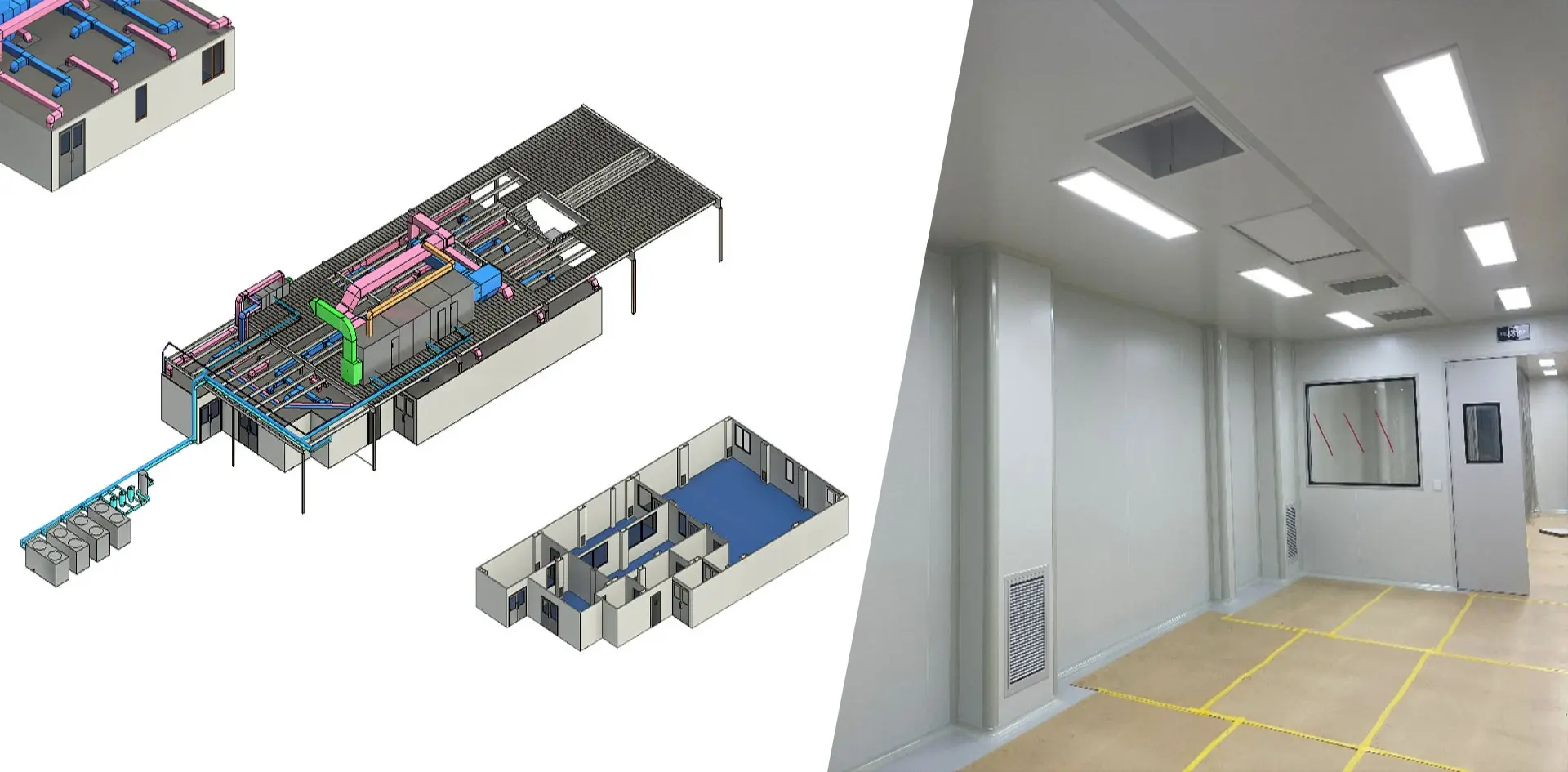
Equipped with thermal reactivation heat exchangers that harvest exhaust purge heat, lowering total operational spending.
Examine Efficiency Ratios
Corrosion-proof, high-vibration resistant compact dehumidifiers developed under GJB guidelines for marine and ammunition silos.
Military Validation DataMechanical refrigeration dehumidification encounters severe physical limitations when air dew points drop below 10°C, leading to evaporator coil icing and steep COP decay. Adsorption chemistry bypasses condensation physics completely.
Small desiccant dehumidifiers utilize active silica gel or molecular sieve matrices synthesized into a micro-fluted fiberglass honeycomb matrix. The system creates an immense differential in partial water vapor pressure between the humid process air and the desiccant pore structure, pulling moisture molecules at an atomic scale without thermal freezing thresholds.
Unlike salt-impregnated media vulnerable to chemical weeping and structural degradation, modern Chinese manufactured desiccant wheels utilize chemical-bonded composite matrices (82% active synthesized metal-silicate silica gel with ceramic binder substrates). This configuration prevents dusting, migration, and thermal shocks during continuous high-temperature regeneration.
By dividing the rotating cylinder into two dynamic operational zones (270° process air adsorption sector, 90° counter-flow regeneration purge sector), internal thermal transfer is maintained. Regeneration air, heated by electric resistance coils, steam circuits, or waste hot water, removes captured moisture vapor without cross-contaminating process air.
While massive central air handlers dominate large gigafactories, small localized desiccant units serve as the core defense against moisture infiltration in critical micro-environments.
Lithium hexafluorophosphate ($LiPF_6$) used in battery electrolyte immediately hydrolyzes when contacting moisture levels above 5 ppm, producing toxic and corrosive hydrofluoric acid ($HF$). Local small desiccant systems sustain glovebox environments at -50°C to -70°C dew point, protecting internal automated pouch sealing and jelly-roll winder enclosures.
Effervescent formulations and hygroscopic active pharmaceutical ingredients (APIs) cake, aggregate, or lose bio-potency under fluctuating room moisture. Small desiccant dehumidifiers directly feed isolated blister-pack tunnels and high-velocity fluid-bed processors at 5% to 15% RH, ensuring strict adherence to FDA 21 CFR Part 211 and EU cGMP norms.
Direct Metal Laser Sintering (DMLS) powders, such as titanium (Ti6Al4V) and aluminum alloys, chemically oxidize and adsorb atmospheric moisture, triggering porosity, spatter, and structural cracking during 3D laser melting. Small point-of-use desiccant units feed storage vaults at sub-zero dew points to preserve metal powder sphericity and reuse cycles.
Moisture bridging causes catastrophic optical hazing, pellicle crystallization, and amine-induced chemical amplification failures during ultra-deep ultraviolet (EUV/DUV) wafer patterning. Our compact systems provide continuous positive-pressure dry purge air (Class 1 Cleanroom compliant) for Front Opening Unified Pods (FOUP) and mask storage cabinets.
Built strictly to China's GJB national military and navel standards, our compact desiccant units protect missile silos, avionics test bays, sub-deck electrical compartments, and coastal radar radomes from dielectric degradation, galvanic corrosion, and mold formation under 99% RH oceanic environments.
Moisture within Sulfur Hexafluoride ($SF_6$) insulated switchgear triggers catastrophic flashovers and corrosive by-products ($SOF_2$, $HF$). Dedicated small desiccant drying trolleys purge substation tanks and high-voltage circuit breakers down to -50°C dew point before gas injection, ensuring long-term dielectric breakdown resistance.
Why Tier-1 international cleanroom contractors and enterprise plant managers partner with Hangzhou DryAir Treatment Co., Ltd. for mission-critical environmental infrastructure.
Situated within Hangzhou's high-tech industrial manufacturing belt, DryAir controls upstream material lead-times with exceptional agility. High-grade silica matrices, precision sheet metals, Siemens and Schneider automated PLC switches, and high-efficiency backward-curved EC fans are sourced within a 100-kilometer radius, slashing equipment production delivery lead-times by over 45% compared to Western counterparts.
DryAir does not operate as an assembly jobber. Our internal R&D facility houses 74 technical specialists, including 6 master's and doctoral degree holders, 2 national registered HVAC engineers, and 8 senior thermal scientists. We utilize fluid-dynamic CFD computer simulations and finite element air leakage analysis on every customized unit configuration prior to physical build.
Operating out of our advanced plant in Lin'an, Hangzhou, our manufacturing facility delivers over 200+ precision dehumidification units monthly. This scale allows DryAir to supply massive parallel expansion projects for gigafactories without extending product delivery cycles, providing rapid scaling support for tier-1 OEMs globally.
Avoid expensive operational expenditures from over-specification, and prevent catastrophic product yield degradation from undersized drying capability.
| Operational Sector | Typical Dew Point / RH | Critical Risk Mitigated | Optimal DryAir System Solution |
|---|---|---|---|
| Lithium-Ion Battery Cell Assembly | -40°C to -60°C DP | Prevents Hydrofluoric Acid ($HF$) generation & electrolyte deterioration | Turn-key Low Dew Point Dry Room System |
| Solid-State Battery & Lithium Anode Lines | -60°C to -70°C DP | Avoids rapid violent passivation of pure metallic lithium foils | DHU Dual-Rotor Ultra-Low Desiccant Unit |
| Cathode Coating & Solvent Recovery | ≥99% Recovery Rate | Volatile organic compound emissions and toxic NMP exhaustion | ZJRH Series NMP Solvent Recovery Skid |
| Gelatin Capsule & Effervescent Tablets | 10% to 25% RH (-10°C DP) | Powder agglomeration, die-sticking, capsule softening, mold proliferation | Standard DHU Series Desiccant Dehumidifier |
| Military Missile Warehouses & Radar Pods | ≤35% RH (Ambient DP) | Dielectric decay, micro-circuit corrosion, propellant cracking | GJB-Compliant Small Military Desiccant Machine |
| Semiconductor Photomask Cabinets | -20°C to -40°C DP | Haze crystal growth on reticle glass, photochemical degradation | High-Purity Cleanroom Modular Desiccant Purger |
| Raw Industrial Storage & Logistics Depots | 45% to 55% RH | Condensation spotting, structural rust, carton box collapse | Industrial Refrigerative Dehumidifier |
As industrial automation deepens and net-zero sustainability mandates reshape global production, desiccant technology is transforming from passive mechanical drying to data-driven thermal architectures.
Hangzhou DryAir is actively deploying next-generation edge-computing IoT algorithms across its small desiccant platforms. By analyzing real-time ambient psychrometric trends, indoor personnel occupancy shifts, and production cycling schedules, the system's dynamic control architecture continuously modulates rotor rotation RPM and thermal reactivation energy inputs. This closes the gap between operational stability and energy waste, yielding up to a verified 32% reduction in lifecycle parasitic power consumption.
The technical challenge of desiccant dehumidification remains its thermal regeneration energy profile. DryAir’s technological roadmap couples high-performance multi-port heat-pipe exchangers, high-temperature heat pump scavenging circuits, and industrial waste-steam harvesting coils. By recapturing sensible heat from the reactivation exhaust and channeling waste cooling from primary chillers, our equipment sets a high benchmark for operational decarbonization.
In partnership with advanced materials research institutes, DryAir's engineering roadmap explores crystalline Metal-Organic Frameworks (MOFs) and structured zeolites. These porous nano-materials feature tailor-designed water-adsorption isotherms that desorb completely at temperatures under 75°C—a fundamental leap forward from traditional desiccant chemistry requiring 120°C to 140°C regeneration profiles, facilitating direct low-grade thermal water integration.
The global shift toward high-energy-density batteries, advanced node microchips, and biologics manufacturing has transformed ultra-low dew point engineering from a niche specification into a critical manufacturing enabler.
With billions of dollars deployed via the US Inflation Reduction Act (IRA) and the EU Critical Raw Materials Act, battery gigafactories and advanced packaging foundries are scaling rapidly across North America and Europe. However, regional procurement teams face lengthy equipment lead-times (often 12–18 months) from legacy Western HVAC builders. DryAir bridges this critical operational timeline by supplying rapid-build, fully export-certified systems that integrate directly into local factory architectures.
As consumer electronics and automotive OEMs transition from traditional liquid-electrolyte batteries to solid-state sulfide and halide chemistries, dew point requirements have shifted from -40°C down to strict, uncompromising -60°C to -70°C levels. Atmospheric moisture reacts with sulfide solid electrolytes to liberate dangerous hydrogen sulfide ($H_2S$) gas. Small desiccant dehumidifiers with dual-rotor cascading setups have become the mandatory standard for protecting these production lines.
Electricity consumption accounts for up to 40% of cleanroom and dry room ongoing operational expenditure over a 10-year machine lifespan. Industrial procurement decision-makers are actively moving away from low-efficiency machines with high parasitic energy loads. By integrating smart SCR heating controls and high-capacity desiccant matrices, DryAir offers measurable reductions in ongoing lifecycle utility consumption.
Exporting complex industrial HVAC and desiccant infrastructure demands deep, audited alignment with regional regulatory frameworks, safety directives, and robust on-site support.
Our small desiccant dehumidifiers and modular air systems are custom-built to comply with target destination safety requirements. We supply electrical panels built under UL 508A and NFPA 79 standards for North America, CE Machinery & Low Voltage Directives (EN 60204-1) for Europe, CSA C22.2 for Canada, ASME Section VIII for pressure containment vessels, and EAC TR CU codes for Eurasian customs zones.
We deploy factory-certified field service commissioning teams directly to your site across the Americas, Europe, Southeast Asia, and the Middle East. International buyers benefit from an optional comprehensive Two-Year Overseas Service Agreement, encompassing remote IoT diagnostics, priority replacement parts dispatch within 48 hours, and on-site balancing of air volume, static pressure, and dew points.
Hangzhou DryAir holds a verified track record delivering mission-critical projects for blue-chip companies including Tesla, Northvolt, and TTI, alongside leading domestic energy giants such as CATL, ATL, BYD, EVE Energy, Farasis, Envision, and SVOLT. Our engineering teams possess the procedural know-how to interface smoothly with international EPC firms, cleanroom architects, and third-party inspectors.
Critical specifications, installation factors, and engineering parameters addressed by Hangzhou DryAir's technical team.
Explore our complete range of specialized equipment engineered to maintain tight moisture parameters across various industrial operating environments.
Direct mechanical coupling, compact profile, and low noise levels engineered for pharmaceutical pilot packaging and micro-electronics cleanrooms.
Request Engineering CAD
Comprehensive engineering including airtight walls, desiccant machinery, secondary refrigeration, and continuous dew-point telemetry monitoring.
Explore EPC Projects
High-efficiency closed-loop condensation system capable of recycling electrode coater exhaust gas with recovery efficiencies exceeding 99%.
View Recovery Data
Combines multi-stage cryo-condensation with high-temperature regenerative thermal oxidizers (RTO) to capture and break down hazardous fumes.
View Compliance Specs
High-efficiency mechanical cooling skids engineered to drop moisture loads ahead of desiccant wheels, lowering system OPEX.
Download Specifications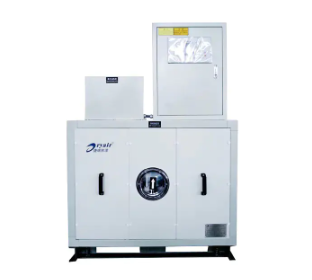
Stainless steel double-skin casing with internal HEPA filtration profiles matching ISO Class 5 / Class 7 pharmaceutical air compliance.
GMP Regulatory Specs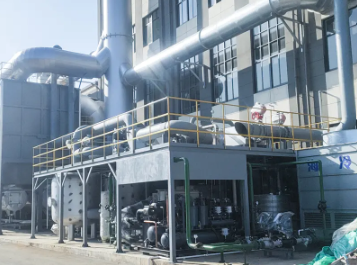
Engineered for petrochemical loading docks, maritime tankers, and fuel storage plants to capture volatile hydrocarbon vapors.
View Industrial Case Studies
Anti-fungal, salt-spray protected compact desiccant units built to protect offshore switchgear, radar stations, and military storage.
View Defense Standard ProofShare your target air volume (CFM/CMH), moisture load parameters, and target dew point. Our technical team returns psychrometric load balances and tailored system schematics within one business day.