
High-Efficiency Dehumidification Systems for Nigerian Infrastructure
Industrial rotary desiccant architectures and environmental scrubbers certified to CE, UL, CSA, ASME, and EAC standards.
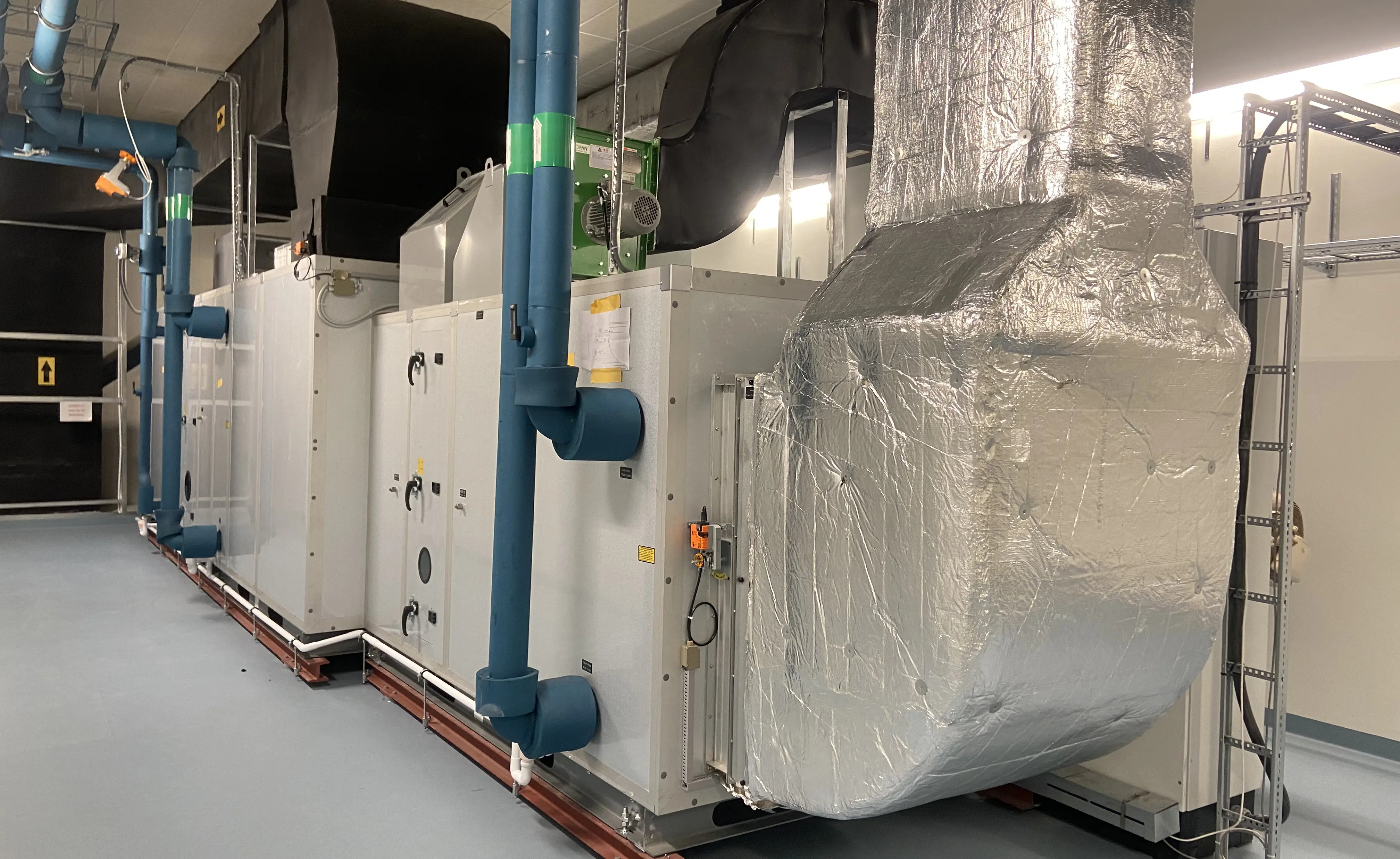 DP -70°C
Desiccant Dehumidifier
DHU series rotary desiccant dehumidifiers deliver stable low-dew-point air where refrigeration alone cannot reach — from battery dry rooms to military storage in Nigeria.
- Minimum -70°C dew point control
- Heat-recovery regeneration options
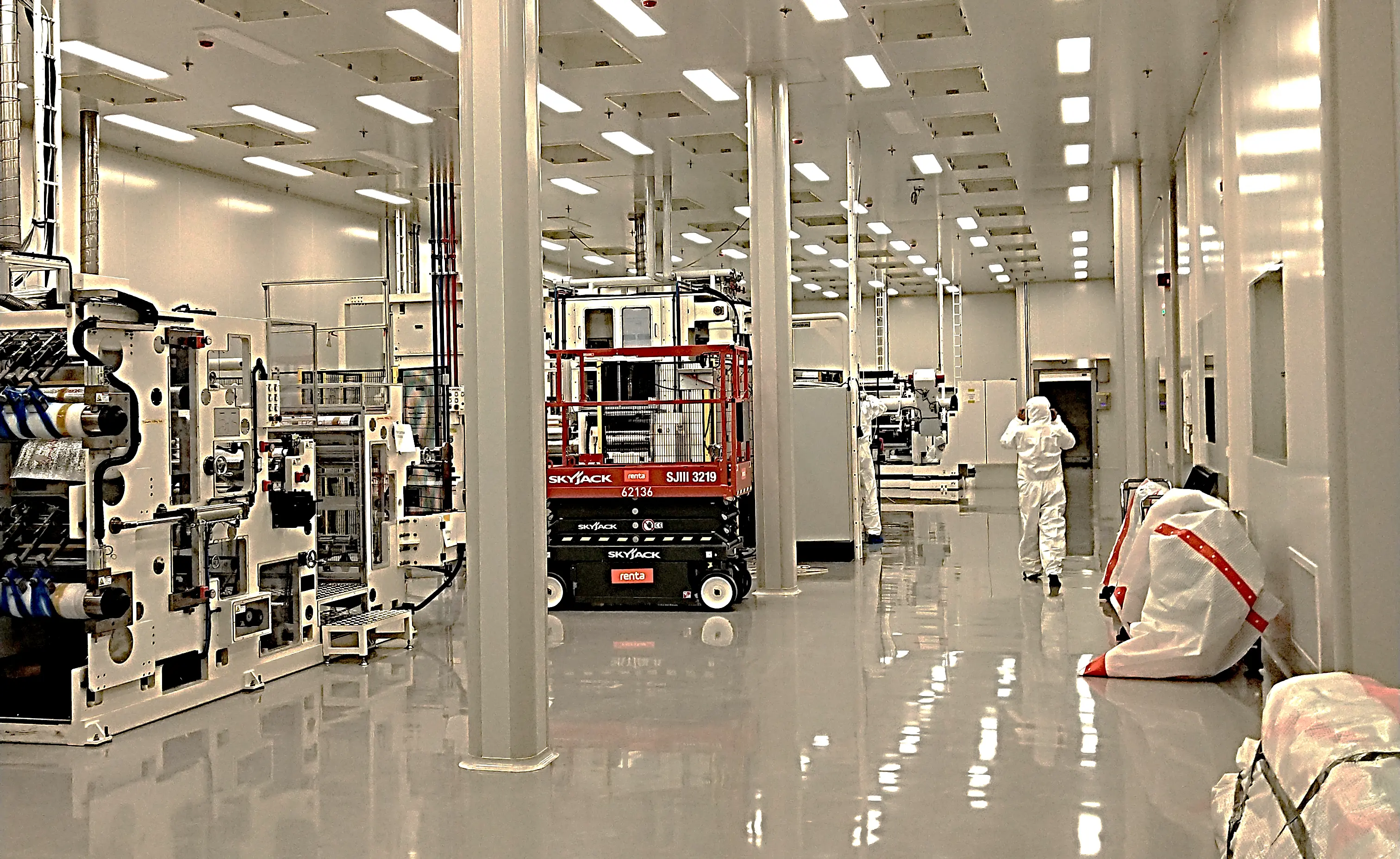 Turnkey EPC
Turn-key Dry Room System
Complete humidity-controlled rooms — enclosure, air handling, dehumidification, controls, and validation — delivered under a single EPC contract.
- Pre-sales to commissioning
- Proven gigafactory reliability
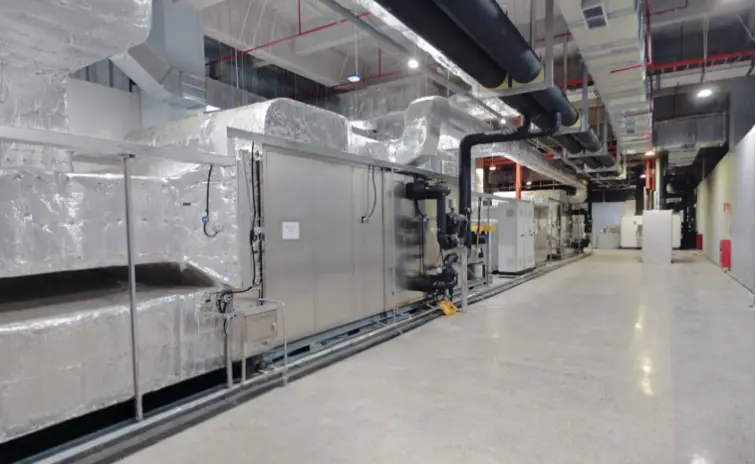 Recovery ≥99%
NMP Recovery System
Captures N-Methyl-2-pyrrolidone from electrode coater exhaust for reuse, cutting solvent spend and stack emissions drastically.
- ≥99% real solvent recovery
- Low maintenance closed loop
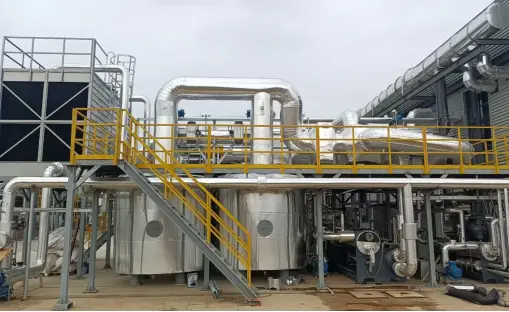 Cooling + RTO
VOC Abatement System
Deep-cooling condensation and regenerative thermal oxidation to treat VOC waste gas and recover oil vapors across volatile chemical plants.
- Dual condensation + RTO
- Environmental compliance
Nigeria Field Application: Overcoming Tropical Moisture Challenges
Navigating the intersection of persistent 85%+ coastal humidity, volatile grid infrastructure, and rapid industrialization in West Africa.
Lagos & Niger Delta Extreme Enthalpy
The Gulf of Guinea presents some of the world's most aggressive ambient moisture envelopes. Lagos, Port Harcourt, and Warri frequently sustain absolute moisture ratios exceeding 22–26 g/kg of dry air. Conventional HVAC systems fail due to continuous coil freezing and massive re-heat penalties.
Critical Power Grid Resilience
Unscheduled power variations and transient spikes require resilient electrical architectures. DryAir rotary desiccant systems for Nigeria integrate dual-fuel regenerative burners (natural gas / LPG) and soft-start PLC interfaces designed to interface with captive diesel-gas turbine setups.
Anti-Corrosive Coastal Package
Marine atmospheric salt air causes micro-pitting in standard HVAC condensers. DryAir deploys marine-grade C5-M polyurethane coatings, 316L stainless steel air-side casings, and sealed composite desiccant rotor seals to prevent premature structural failure in maritime industrial parks.
Macro-Industry Solutions for Nigeria’s High-Growth Sectors
Application-specific dehumidification engineering engineered to guarantee uncompromised product integrity and compliance.
Nigeria Lithium & Battery Manufacturing
Nigeria’s emerging mining-to-chemical transition (lithium ore processing in Nasarawa, Kogi, and Kaduna) requires dry rooms with dew points between -40°C and -60°C. Our systems eliminate toxic Hydrofluoric Acid (HF) formation during cell stacking and electrolyte dosing.
NAFDAC-Compliant Pharmaceuticals
Eliminate hygroscopic powder agglomeration, active pharmaceutical ingredient (API) hydrolysis, and gelatin capsule deformation. DryAir provides cleanroom-integrated desiccant air handlers with HEPA filtration and smooth-interior sanitizable casings.
Offshore & Hydrocarbon Preservation
Protect deepwater FPSO spare parts, pipeline fabrication zones, and turbine halls from dew condensation corrosion. Desiccant preservation keeps the relative humidity below 40% RH, halting rust and saving millions in asset replacement costs.
Agro-Allied & Cocoa Storage
Nigeria's massive agricultural exports (cocoa, cashews, grain silos) face severe fungal propagation and aflatoxin contamination. DryAir precise moisture containment stops microbial germination during prolonged warehouse storage cycles.
Automotive Assembly & Electronics
Protect high-impedance electronics, PCB wave soldering lines, and robotic automated welding cells from moisture-induced dendrite shorts and pinhole oxidation in humid assembly zones across Ogun and Kano.
Need Custom Sizing for Nigeria?
Our registered HVAC engineers simulate latent moisture loads based on local wet-bulb data.
Send Inquiry NowEngineering Evolution: The Next Generation of Sub-Tropical Control
Anticipating energy restrictions and operational challenges through advanced materials science and smart IoT diagnostics.
Phase 1: Hybrid Enthalpy Pre-Cooling
Integrating indirect evaporative cooling and magnetic-bearing chillers prior to the desiccant wheel. This pre-strips up to 65% of raw moisture mass from coastal Nigerian intake air, reducing rotor heating energy requirements by nearly 38%.
Phase 2: Metal-Organic Frameworks (MOFs)
R&D shift towards low-temperature desiccant rotors infused with advanced MOFs. These synthesize adsorption pores that desorb moisture at only 60°C to 75°C, making complete solar thermal or factory waste heat regeneration viable in tropical locations.
Phase 3: AI Predictive Moisture Control
Integration of cloud-connected edge PLCs running predictive algorithms. The system correlates localized Nigerian weather fronts and grid load balancing to dynamically modulate desiccant wheel RPM and reactivation heat before ambient surges hit.
China Industry 4.0: Factory Resilience and Scale for Nigeria
Combining world-class production precision, rigorous military-grade quality management, and cost-effective turnaround times.
High-Capacity Manufacturing & Testing Facility
Hangzhou DryAir operates an automated 200+ unit per month fabrication line equipped with precision fiber lasers, automated foaming jigs, and an in-house national psychrometric test room. Every machine bound for Africa undergoes complete simulated tropical stress-testing (40°C ambient at 90% RH) to certify zero moisture bypass before port dispatch.
Military GJB & Stringent International Certifications
Governed by strict ISO 9001 and China GJB military-quality protocols, our desiccant solutions are engineered with airtight structural casings (EN 1886 standard L1 leakage and T2 thermal break). Equipment arrives in Nigeria pre-commissioned, saving extensive labor hours and reducing on-site installation snags.
| Application Sector | Target Humidity / Dew Point | Core System Architecture | Critical Benefit for Nigeria |
|---|---|---|---|
| Lithium Battery Cell Assembly | -40°C to -60°C DP | Dual-Rotor Ultra-Low DP Desiccant Unit | Prevents HF generation and cell degradation |
| Solid-State / Li-Metal Research | Down to -70°C DP | Four-Stage Cascaded Chemical Adsorption | Guarantees zero micro-moisture contamination |
| API & Pharmaceutical Cleanrooms | 10% - 25% RH | Hygienic Desiccant AHU + HEPA System | Eliminates clumping; complies with NAFDAC / WHO GMP |
| Hydrocarbon Tankers & Offshore Pipes | < 35% RH | Corrosion-Proof Heavy-Duty Mobile Unit | Stops oxidation and micro-pitting in salt air |
| Agricultural Seed & Grain Preservation | 35% - 45% RH | Direct Expansion + Desiccant Hybrid Unit | Prevents fungal growth and mold mycotoxins |
Nigeria Field Support, SONCAP Compliance, and Turnkey SLA
Comprehensive risk mitigation from import clearance to long-term lifecycle assurance across Nigerian trade routes.
SONCAP & MANCAP Compliance
DryAir fully assists international and Nigerian procurement managers with pre-shipment Standards Organisation of Nigeria (SONCAP) documentation, Form M processing, and Customs clearance validation, ensuring rapid clearance through Apapa and Tin Can Island ports without demurrage.
Field Engineering & Commissioning
Our senior engineers deploy on-site to Lagos, Abuja, Port Harcourt, and regional manufacturing nodes. We manage rigging, ductwork pressure matching, PLC balancing, and factory acceptance test (FAT) verification against defined dew points.
2-Year Comprehensive Service Plan
Overseas projects qualify for an optional extended 2-year maintenance warranty. We provide critical rotating spare packages (drive belts, silicone seals, filter media, heating banks) in-country to eliminate logistics downtime.
Expert Engineering FAQ: Industrial Humidity Control in Nigeria
Answers to real-world procurement and technical inquiries from plant engineers and EPC project directors.
What makes desiccant dehumidifiers superior to refrigerative systems in tropical Nigeria?
Refrigerative dehumidifiers rely on cooling air below its dew point to condense water. In extreme tropical conditions (ambient air at 35°C and 85% RH), pushing relative humidity below 45% or reaching dew points below 10°C causes evaporator coils to freeze over, requiring frequent energy-draining defrost cycles. Rotary desiccant dehumidifiers utilize chemical adsorption through synthesized silica gel or molecular sieve rotors, allowing them to pull moisture independently of air temperature and effortlessly reach deep dew points down to -70°C without freezing.
How does DryAir ensure uninterrupted operation during Nigerian power fluctuations?
DryAir customizes the power-handling and electrical protection panels for projects across Africa. We utilize broad-tolerance Schneider or Siemens switchgear, transient voltage surge suppressors (TVSS), and phase protection relays. Additionally, our industrial control systems feature memory backup that auto-resumes configured psychrometric operation curves immediately after diesel generator auto-switchover.
Can DryAir desiccant systems utilize natural gas or steam for regeneration in Nigeria?
Yes. Because electricity costs can be high in Nigeria, DryAir provides multi-fuel reactivation options including direct-fired natural gas burners, indirect-fired burners, high-pressure steam coils, or co-generation thermal fluid loops. This flexibility significantly lowers continuous OPEX in industrial clusters like Ikeja, Agbara, or Lekki Free Zone where natural gas pipelines are accessible.
How is product export and delivery handled to Nigerian project sites?
We supply under CIF, CFR, or FOB terms with complete export packing using fumigated seaworthy wooden crates with internal vapor barrier sealing. We provide all requisite technical document packs to support CCVO (Combined Certificate of Value and Origin), SONCAP certification, and Form M clearance for smooth entry through Nigerian seaports.
Complete Cleanroom & Industrial Conditioning Line for Nigeria
Explore our complete spectrum of low-dew-point environmental control systems engineered for international facilities.
Standard -70°C
Industrial Desiccant Dehumidifier
Engineered for high latent load removal in pharmaceutical, chemical, and battery cleanrooms across Nigeria.
View Unit
Turnkey Modular
Turnkey Dry Room Architecture
Total modular low-humidity rooms with airtight enclosures, integrated HVAC, and continuous PLC monitoring.
View System
High Purity
Industrial NMP Solvent Recovery
Recovers expensive cathode coating solvents with ≥99% efficiency for closed-loop sustainability.
View System
Clean Exhaust
VOC Condensation & RTO Abatement
Eliminates volatile organics, hydrocarbon pollutants, and chemical exhausts safely and efficiently.
View SystemRefrigerative Industrial Dehumidifier
Cost-effective moisture removal for warehousing, logistics centers, and primary stage pre-cooling.
View Unit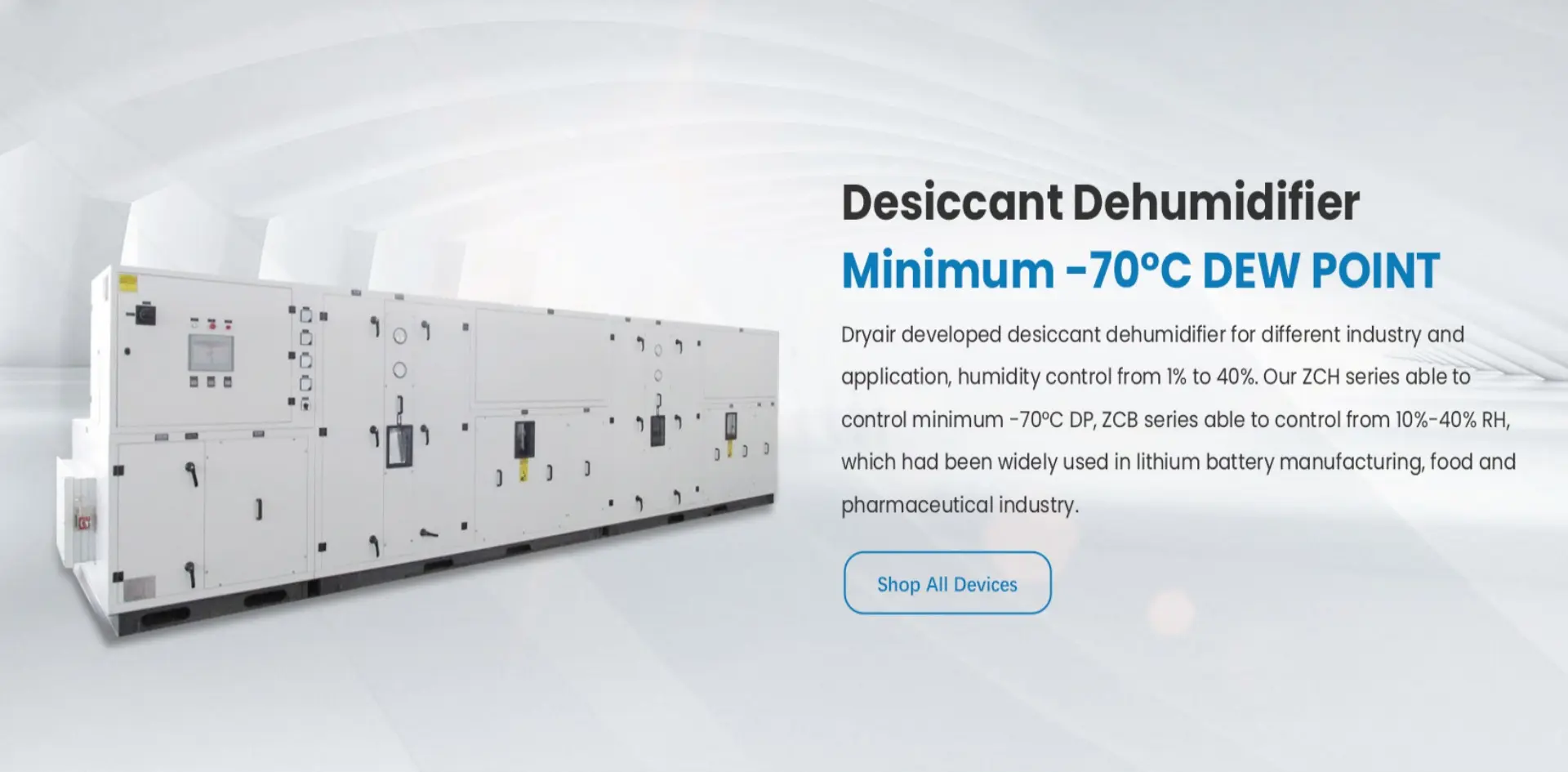 Ultra Dry
Sub-Zero Dew Point Assembly Units
Engineered for lithium cell packaging and pouch sealing zones requiring ultra-clean, moisture-free conditions.
View Unit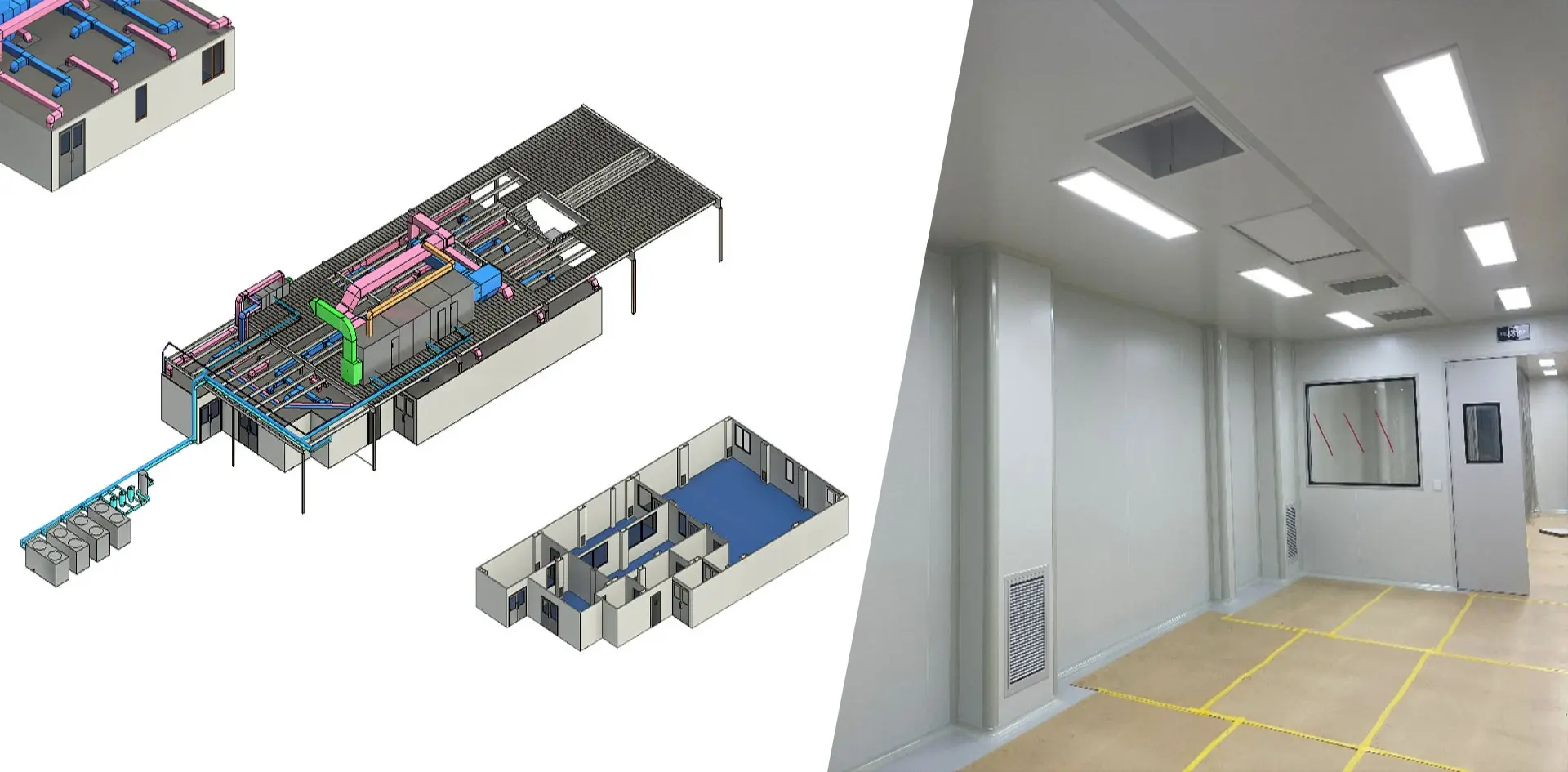 Closed Loop
Chemical Coating Exhaust Processor
High-efficiency solvent condensation designed for severe round-the-clock chemical operations.
View Unit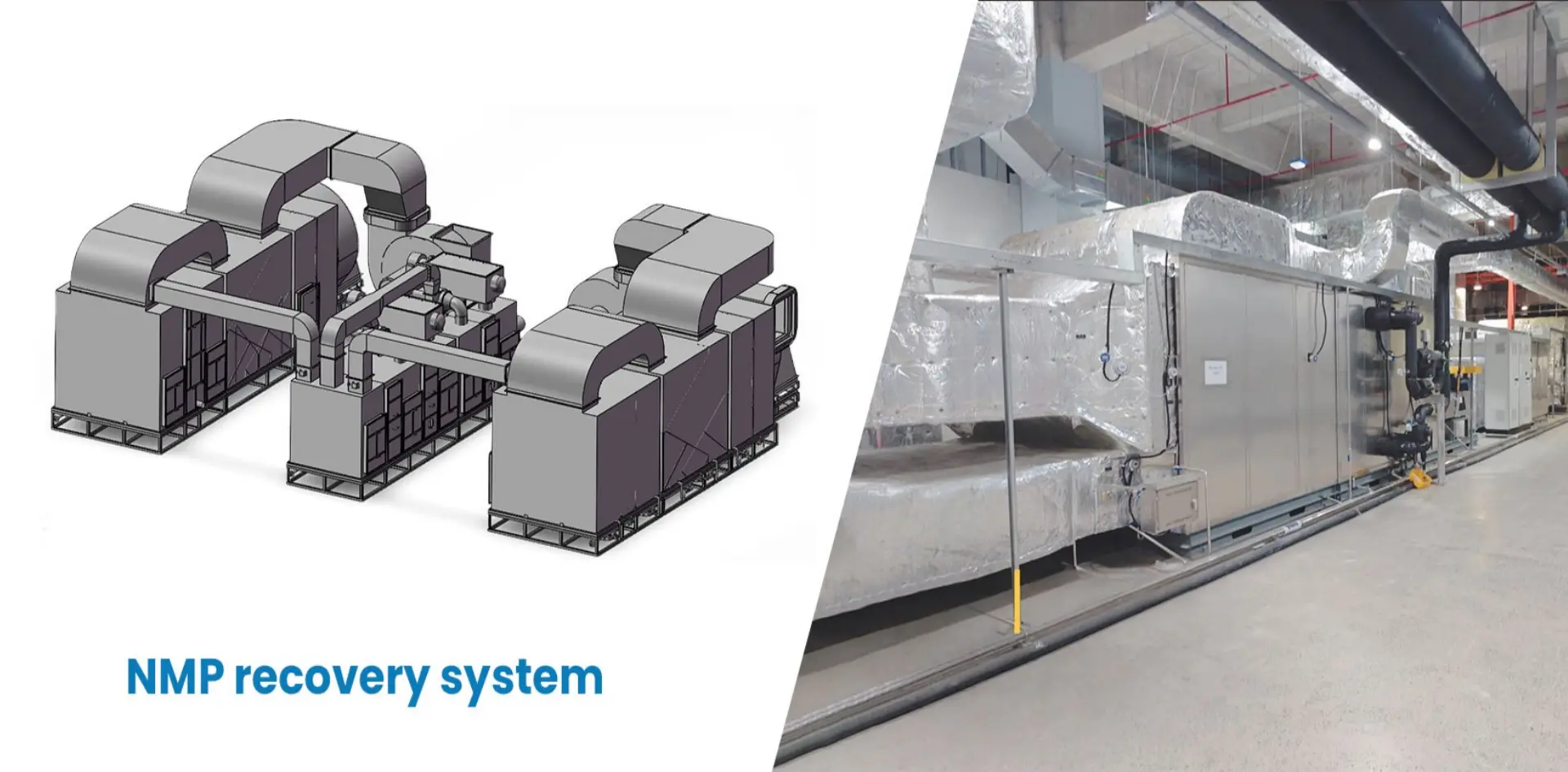 ASME Certified
Oil Gas Condensation System
Vapor recovery units for oil tank farms, refineries, and fuel transfer terminals across West Africa.
View UnitContact Our Engineering Team for Nigeria Operations
Connect directly with registered psychrometric engineers to review your plant layouts, compute moisture mass balance, and formulate an energy-efficient proposal.