

Desiccant Dehumidifier
DHU series rotary desiccant units engineered for deep drying where vapor pressure is lower than refrigerative systems can reach alone.
Explore SpecificationsFour mission-critical dehumidification and solvent recovery platforms calibrated for precision automotive, electronic components, and advanced battery gigafactories across Greater Nagoya and the Chubu manufacturing corridor.
DHU series rotary desiccant units engineered for deep drying where vapor pressure is lower than refrigerative systems can reach alone.
Explore Specifications
Complete humidity-regulated cleanrooms encompassing enclosure architecture, continuous HVAC balancing, and validation up to gigafactory scales.
View Dry Rooms
High-recovery closed-loop condensation modules capturing solvent from electrode coater lines, minimizing Aichi emissions liabilities.
View NMP Systems
Combines deep chilling refrigeration and regenerative thermal oxidation to treat volatile industrial exhaust with optimal thermal efficiency.
Explore VOC UnitsA technical assessment of psychrometric challenges within Japan's largest industrial manufacturing belt and the global transition toward decarbonized refrigeration.
As the economic epicenter of Aichi Prefecture, Greater Nagoya accounts for over 40% of Japan's automotive, robotics, and aerospace output. With extreme summer marine humidity along Ise Bay (averaging >80% RH at 34°C dry bulb), industrial facilities face heavy latent moisture loads that jeopardize powder metallurgy, automotive coating chambers, and battery cell manufacturing lines.
Worldwide industrial refrigeration is transitioning rapidly away from high Global Warming Potential (GWP) synthetic fluorocarbons. Under Japan's Fluorocarbons Emission Control Act, plants in Nagoya require next-generation refrigerative dehumidifiers running low-GWP refrigerants (R454C, R513A, CO2) paired with variable speed scroll compressors to cut kWh consumption by over 32%.
Modern engineering economics dictate that standalone desiccant drying is thermally prohibitive for high-ambient fresh air intake. In Nagoya's industrial parks, cutting-edge installations utilize mechanical refrigerative dehumidifiers for initial bulk water stripping down to 10°C dew point, radically slashing the regeneration energy of desiccant rotors down-stream.
Engineered moisture management configurations responding directly to process sensitivities across Toyota City, Kariya, Yokkaichi, and Komaki industrial zones.
Preventing solvent micro-blistering, amine blush, and flash rust on stamped steel assemblies during the intense July–September humidity peaks common in Aichi automotive production plants.
Providing the critical primary cooling and condenser-stage condensation dehumidification required before outdoor air enters dry room rotors maintaining dew points between -40°C and -70°C.
Ensuring dimensional stability, resin curing integrity, and condensation mitigation for carbon-fiber reinforced polymers (CFRP) manufactured in Komaki and Nagoya aerospace facilities.
Eliminating mold sweat and vapor condensation during rapid water-cooling cycles in high-precision aluminum casting and CNC machine shops across Mikawa and Owari.
Engineered data architecture comparing mechanical cooling condensation versus rotary desiccant sorption across typical Nagoya plant operating conditions.
| Target Application | Typical Nagoya Dew Point Demand | Optimal Dehumidification Topology | Efficiency Class / COP Index | Direct Solution Reference |
|---|---|---|---|---|
| Warehouse & Logistic Hubs (Port of Nagoya) | 45% – 60% RH (8°C to 12°C DP) | Direct Expansion Refrigerative Dehumidifier | COP 3.2 – 3.8 (Ultra High) | Refrigerative Dehumidifier |
| EV Battery Cell Assembly & Electrolyte Injection | -40°C to -60°C DP | Turnkey Integrated Dry Room (Chiller + Dual Rotor) | Combined System Thermal Balance | Turn-key Dry Room System |
| Solid-State Lithium & Advanced Chemistry Labs | -60°C to -70°C DP | Low Dew Point Deep Rotary Desiccant Array | High Sorption Desorption Rate | Desiccant Dehumidifier |
| Cathode Slurry Coating & Solvent Evaporation | NMP Vapor Recovery (≥99%) | Deep Cooling Condensation + Recovery Scrubber | 99.2% Capture Efficiency | NMP Recovery System |
| Automotive Paint Shop & Tank Loading Exhaust | METI Regulated Emission Limit | Cryogenic Condensation + Regenerative Thermal Oxidizer | ≥98.5% Thermal Recovery | VOC Abatement System |
Our senior HVAC engineers provide custom latent load calculations, psychrometric curves, and equipment sizing within 24 hours.
Combining over a decade of low-dew-point specialization with international manufacturing rigor, delivering audited equipment globally and locally across Japan.
Operating under certified ISO 9001 quality management alongside the GJB national military defense standard system. Every refrigerative and desiccant chassis undergoes comprehensive performance validation in our in-house environmental test chambers before export.
Our complete machinery and control systems can be fully configured to satisfy CE, UL, CSA, ASME, and EAC standards, ensuring seamless electrical and mechanical integration into Japanese industrial parks with optional JIS-compliant electrical panels and sensors.
Trusted across global gigafactory projects by market leaders such as Tesla, Northvolt, CATL, ATL, BYD, EVE Energy, Farasis, Envision, SVOLT, and TTI. Our systems safeguard millions of square meters of mission-critical manufacturing floor space daily.
Transparent engineering insights covering equipment selection, energy optimization, and international turnkey project support.
Explore DryAir's complete range of specialized equipment, engineered to handle moisture control, turnkey cleanroom environments, solvent recycling, and emission compliance.
Delivers stable low dew point air down to -70°C for sensitive battery cell and pharmaceutical packaging applications.
Learn More
Integrated envelope structure, ducting, refrigeration, and desiccant balancing delivered under one single accountability contract.
Learn More
Captures volatile N-Methyl-2-pyrrolidone from coater oven exhaust, returning clean air while recovering solvent at ≥99% efficiency.
Learn More
Cryogenic condensing coils paired with regenerative thermal oxidizers to neutralize hydrocarbon emissions in chemical plants.
Learn MoreHigh-efficiency mechanical condensation moisture extractors for industrial storehouses, production halls, and pre-cooling stages.
Learn More
Engineered air management systems configured for continuous paint booth humidity control across Greater Nagoya vehicle assembly lines.
Learn More
Built under the GJB military quality standard to safeguard radar components, airframes, and composite storage from moisture decay.
Learn More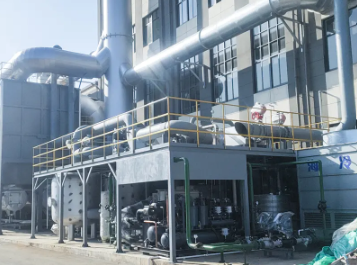
Deep chilling condensation technology designed for tank farm vents, fuel loading racks, and petrochemical processing hubs.
Learn MoreConnect directly with our engineering sales division for detailed psychrometric calculations, CAD layouts, and commercial quotations.