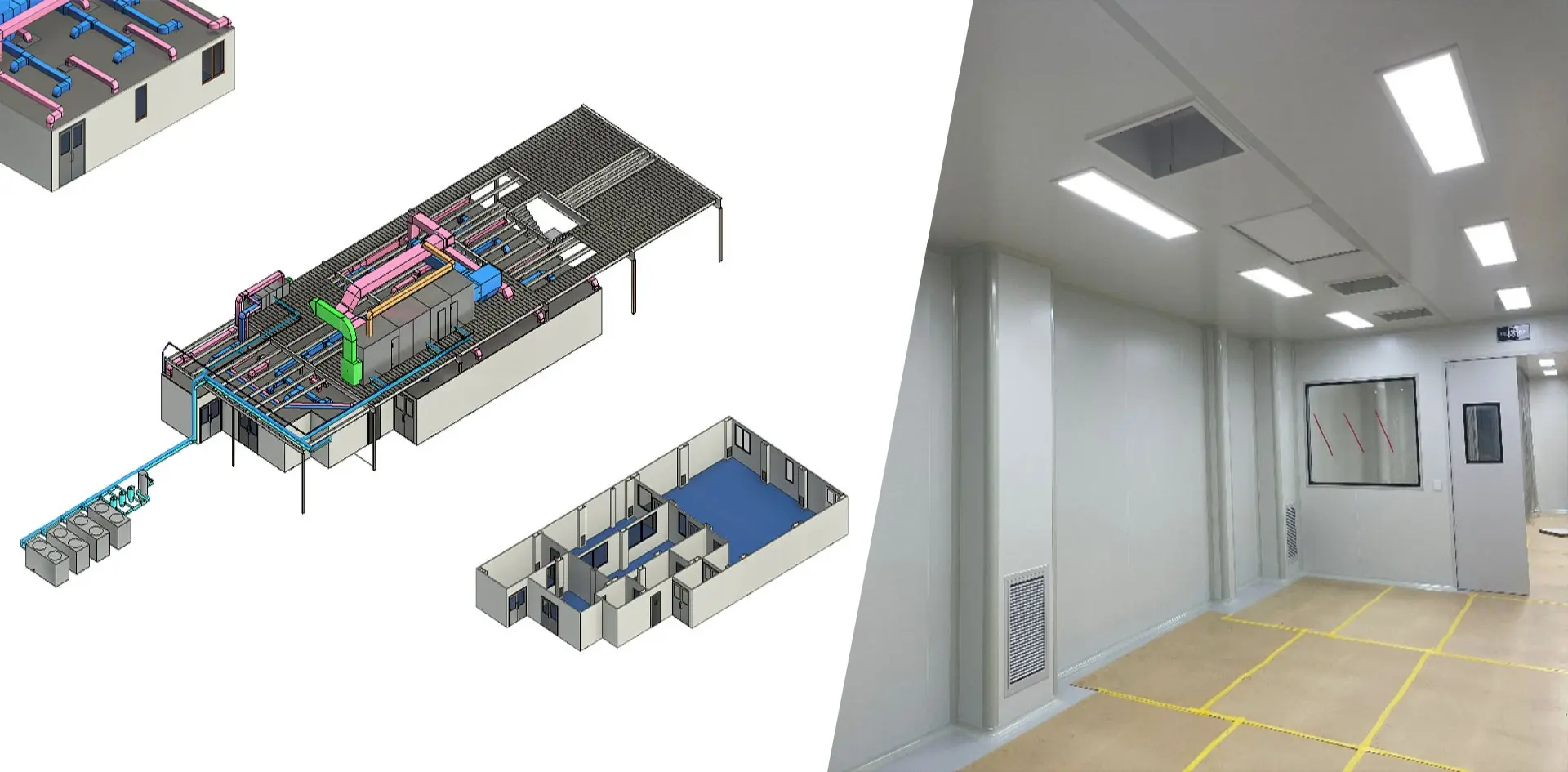
The Free and Hanseatic City of Hamburg represents one of Europe's most critical manufacturing and commercial junctions. Beyond housing the third-largest container port on the continent, the Hamburg Metropolitan Region (Metropolregion Hamburg) serves as Northern Germany's undisputed capital of clean mobility, maritime green propulsion, aviation assembly (Airbus Finkenwerder cluster), and green hydrogen pilot infrastructure. As Germany accelerates its Energiewende and local OEMs pioneer high-nickel NMC, lithium-iron-phosphate (LFP), and solid-state cell packaging, the demand for precision atmospheric control has shifted from an auxiliary HVAC concern to a core thermodynamic manufacturing threshold.
Engineering Reality: In Northern Germany's maritime temperate climate (Köppen: Cfb), relative ambient humidity near the Elbe River regularly surges between 80% and 92% throughout summer and transitional autumn months. Maintaining an interior cell-assembly dew point of -40°C to -70°C DP (a moisture content of less than 0.01 g/kg of dry air) requires profound engineering depth. Ordinary industrial cleanrooms fail because latent loads from ventilation makeup air, personnel perspiration, and material airlocks quickly overwhelm conventional single-rotor desiccant units.
The Thermodynamic Challenge: Overcoming Hamburg’s Maritime Moisture Infiltration
Process engineers designing dry rooms in Hamburg face severe envelope leakage risks and energy penalties under the German Building Energy Act (Gebäudeenergiegesetz - GEG). In lithium cell assembly, the presence of even trace moisture triggers a violent chemical reaction with lithium hexafluorophosphate (LiPF₆) salts in the electrolyte, synthesizing hazardous hydrofluoric acid (HF). Hydrofluoric acid not only deteriorates cell capacity and prompts severe internal resistance spikes, but it also causes micro-delamination of active cathode binders, permanently compromising battery cycle life and thermal runaway safety.
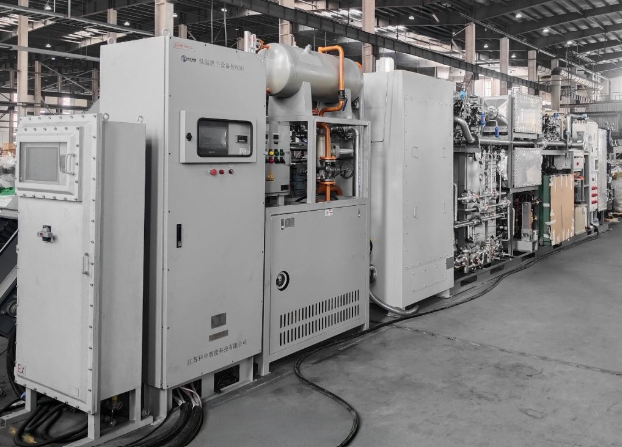
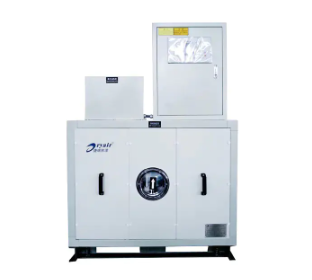
To maintain an interior supply dew point of -70°C, Hangzhou DryAir deploys a dual-rotor cascading desiccant system coupled with intermediate brine chilling stages. By pre-cooling incoming raw maritime air to 6°C using economizer chillers, up to 75% of atmospheric water vapor is condensed out before air ever encounters the primary desiccant matrix. Our high-efficiency honeycomb rotors, impregnated with synthetic zeolite and chemically stabilized silica gel, then adsorb the remaining moisture in series.
-70°C
Supply Air Dew Point
≥99%
NMP Solvent Recovery
30%+
China Market Leadership
200+
Units Fabricated / Month
Global Megatrends & Procurement Drivers for European Gigafactories
European battery production is moving decisively away from fragmented, multi-contractor approaches toward fully integrated Turnkey EPC (Engineering, Procurement, Construction) delivery models. When battery manufacturers in Germany, Scandinavia, and Central Europe source envelope panels from one vendor, air handling units (AHUs) from another, and desiccant wheels from a third party, accountability evaporates the moment an airlock leaks or the return air dew point drifts from -50°C to -38°C during peak shift changes.
DryAir delivers a single-source responsibility matrix. Under a unified contract, our teams take total ownership of:
- Hermetic Building Enclosure: Continuous vapor-sealed, double-tongue-and-groove PIR panels with anti-microbial coatings, high structural deflection tolerances, and custom pass-through airlocks with active low-dew-point purging.
- Process Dehumidification: Custom AHUs with zero-bypass rotor seals, variable frequency drives (VFDs), and advanced waste-heat heat exchanger wheels that capture up to 35% of rotor regeneration thermal energy.
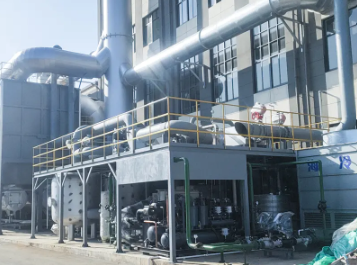
- Integrated Solvent Management: Closed-loop NMP recovery systems operating downstream of slot-die coating machines, preventing toxic emissions and yielding purified solvent ready for industrial redistillation.
- Digital Twin & Automation: Industrial Ethernet / Profinet SCADA integration compatible with European plant management protocols, delivering real-time psychrometric monitoring, dew point trend prediction, and proactive filter saturation alerts.

 Dew Point: -70°C