
 DP -70°C
Toronto Desiccant Dehumidifier
DHU series rotary systems engineered for continuous ultra-low dew point air supply in advanced pharmaceutical manufacturing and cold-chain operations.
View SpecificationsAdvanced rotary adsorption and process environmental equipment configured to withstand Southern Ontario's extreme summer-to-winter climate shifts.
DP -70°C
DHU series rotary systems engineered for continuous ultra-low dew point air supply in advanced pharmaceutical manufacturing and cold-chain operations.
View Specifications Turnkey EPC
Comprehensive environmental enclosure and deep-drying air-handling architecture built to ISO Class 1-8 cleanroom and EV battery assembly tolerances.
Explore Dry Rooms Efficiency ≥99%
High-efficiency solvent condensation and capture loops designed to meet Ontario Ministry of the Environment, Conservation and Parks (MECP) standards.
Learn More Cooling + RTO
Integrated deep-cooling and Regenerative Thermal Oxidation (RTO) arrays ensuring pure exhaust streams and thermal energy reuse for industrial facilities.
Learn MoreThe Greater Toronto Area (GTA) combines aggressive manufacturing revitalization with severe climatic psychrometric swings that challenge uncalibrated HVAC systems.
As Canada’s primary manufacturing corridor, Toronto, Mississauga, Vaughan, and Brampton operate at the intersection of high-density production and unique environmental friction. Proximity to Lake Ontario induces extreme psychrometric divergence: ambient summer humidity frequently pushes relative humidity (RH) above 85% at 32°C dry bulb, while winter conditions deliver dry, freezing air as low as -20°C. Conventional commercial HVAC and direct-expansion (DX) refrigeration systems struggle with latent loads during summer spikes, leading to moisture carry-over, coil icing, and process instability.
Across Ontario’s emerging "Automotive & Battery Innovation Corridor", lithium-ion battery pilot plants, food processing automation facilities, and life-science cleanrooms require stable dew points from -20°C to -70°C. In these mission-critical facilities, moisture is an active contaminant: trace water vapor causes toxic hydrofluoric acid (HF) formation during battery electrolyte filling and accelerates hydrolysis in active pharmaceutical ingredient (API) powder milling. Industrial desiccant dehumidifiers provide continuous, stable adsorption, decoupling moisture control from sensible temperature management.
Summer thermal buffering near Lake Ontario injects high latent grain loads into manufacturing air loops. Desiccant rotors adsorb moisture directly via synthetic silica gel and molecular sieves without coil freezing risks.
Local field service demands compliance with CSA C22.2 standards, ASME pressure vessel protocols, and Ontario Fire Code guidelines for industrial solvent and drying chambers.
Ontario's Industrial Conservation Initiative (ICI) penalizes unmanaged peak consumption. Our variable-frequency thermal regeneration loops cut thermal OPEX by over 32% during Global Adjustment peaks.
From gigawatt-hour battery gigafactories to biologics synthesis, corporate procurement protocols have shifted from purchasing standalone chillers to auditing integrated psychrometric lifecycle platforms.
Worldwide industrial dehumidification is undergoing a paradigm shift driven by the transition to electric mobility, next-generation semiconductor lithography, and high-potency API synthesis. Previously, dew points of -20°C to -40°C were sufficient for standard production lines. Modern solid-state lithium battery chemistries, silicon anode coating, and high-efficiency electrode manufacturing now routinely mandate continuous operation at -60°C to -70°C dew points.
Consequently, global procurement teams at Fortune 500 manufacturers evaluate total life-cycle costs rather than initial capital equipment bids. Because desiccant regeneration consumes significant thermal energy, specifications demand sensible heat exchangers, internal heat recovery loops, and integrated purge zones to reclaim 25% to 40% of regeneration waste heat.
| Industry Vertical | Target Dew Point | Operational Vulnerability |
|---|---|---|
| Li-ion Cell Assembly | -40°C to -60°C DP | HF acid generation, thermal runaway risk |
| Solid-State Battery R&D | -65°C to -70°C DP | Sulfide electrolyte decomposition |
| Bio-Pharmaceuticals | 10% to 20% RH | Agglomeration in high-speed pill pressing |
| Food Freeze-Drying | -15°C to -30°C DP | Moisture re-absorption during automated packaging |
Minimum supply air dew point control capability
NMP recovery rate across high-speed electrode coating
Market share across premier Tier-1 cell gigafactories
Custom-engineered systems manufactured per month
Combining world-class vertical supply chains, intelligent CNC fabrication, and rigorous pre-testing to de-risk international capital investments.
Hangzhou DryAir manufactures desiccant core assemblies, structural thermal-break panels, casing frames, and control modules in-house. This shields our clients from external supply disruption and ensures rapid delivery for major expansions.
Every desiccant unit undergoes complete pre-commissioning inside our environmental test simulation lab. We simulate high-load Toronto summer psychrometric profiles to verify that dew point targets and air leakage rates meet project guarantees.
Equipment is engineered for seamless regional compliance across North America and Europe, with CE, UL, CSA, ASME, and EAC certifications backed by strict ISO 9001 and GJB quality standards.
Tailored engineering configurations designed to solve specific operational challenges across key regional industry clusters.
Concentrated along the Golden Horseshoe, EV battery pilot lines, cathode synthesis laboratories, and cell recycling facilities require stable -50°C to -70°C dew points. Our custom enclosures integrate double-bubble silicone gasketing and airlock transitions to minimize moisture infiltration from nearby outdoor lake winds.
Mississauga’s "Pill Hill" houses large pharmaceutical research and compounding hubs. Our desiccant systems regulate fluid-bed drying, effervescent tableting, and softgel encapsulating suites at an exact 15–20% RH, preventing batch clumping and meeting Health Canada GMP standards.
High-throughput frozen distribution hubs in Vaughan and Brampton suffer from severe air infiltration at dock doors during humid summer months. DryAir desiccant systems eliminate overhead evaporator frosting, slippery floors, and sensor failures by maintaining low dew points at building portals.
Key technical and logistics guidance for engineering, procurement, and operations teams managing installations in Toronto and overseas.
Explore our complete range of rotary desiccant systems, turnkey environmental chambers, and solvent abatement architectures.
Dew Point -70°C
High-capacity rotary adsorption system engineered for ultra-low humidity processing environments.
View Specifications
Turnkey Modular
End-to-end dry room installation with tight thermal, particle, and humidity control.
Explore Dry Rooms
Solvent Reuse ≥99%
Closed-loop condenser system recovering high-purity N-Methyl-2-pyrrolidone solvent from exhausts.
Learn More
Thermal Oxidation
Regenerative thermal oxidation (RTO) array destroying hazardous VOC emissions safely.
Learn More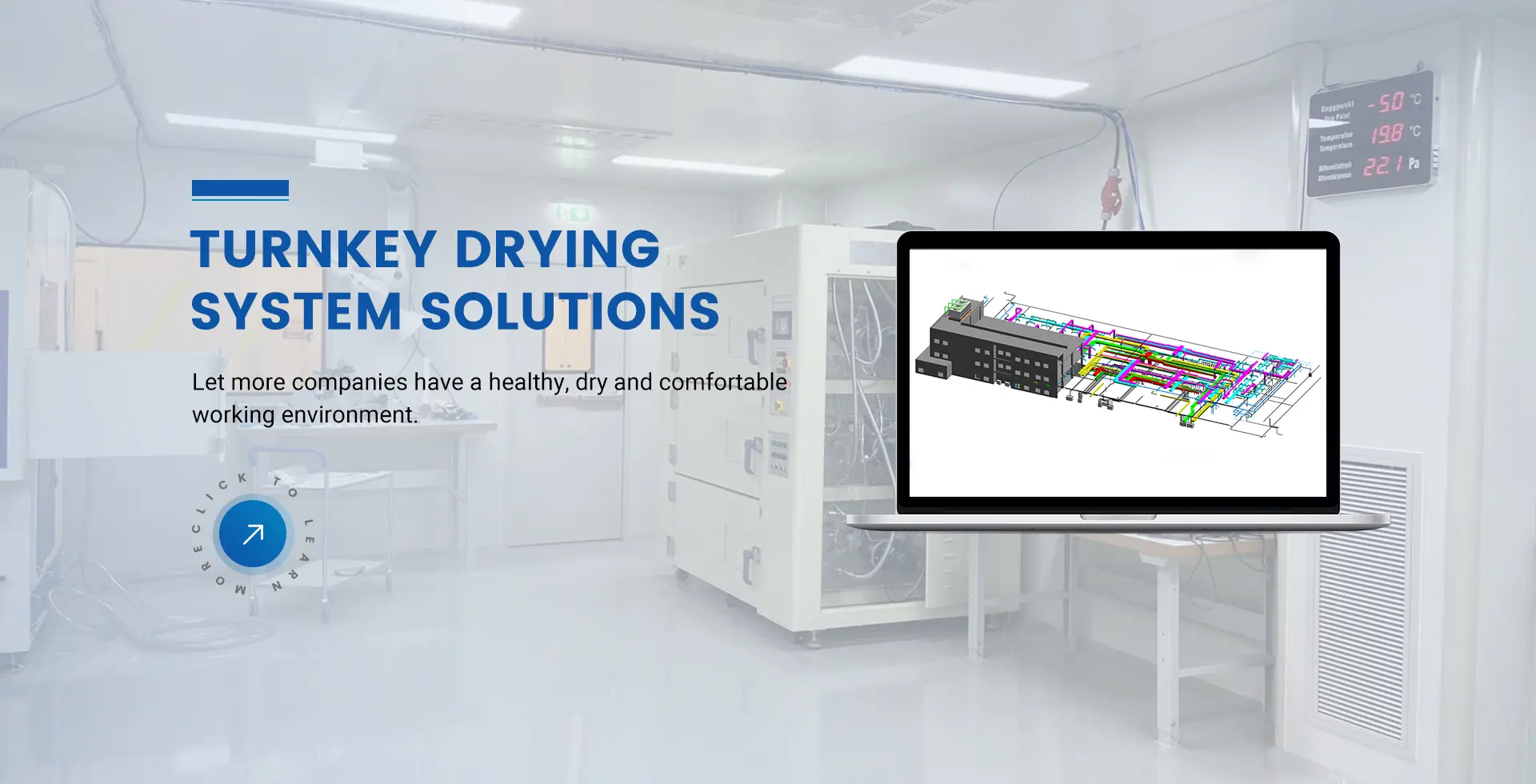 Rugged Casing
Designed for large volume manufacturing plants needing reliable, year-round moisture removal.
View Specifications Gigafactory Scale
Field-proven dry room installations designed for gigawatt-hour battery assembly and storage.
Explore Dry Rooms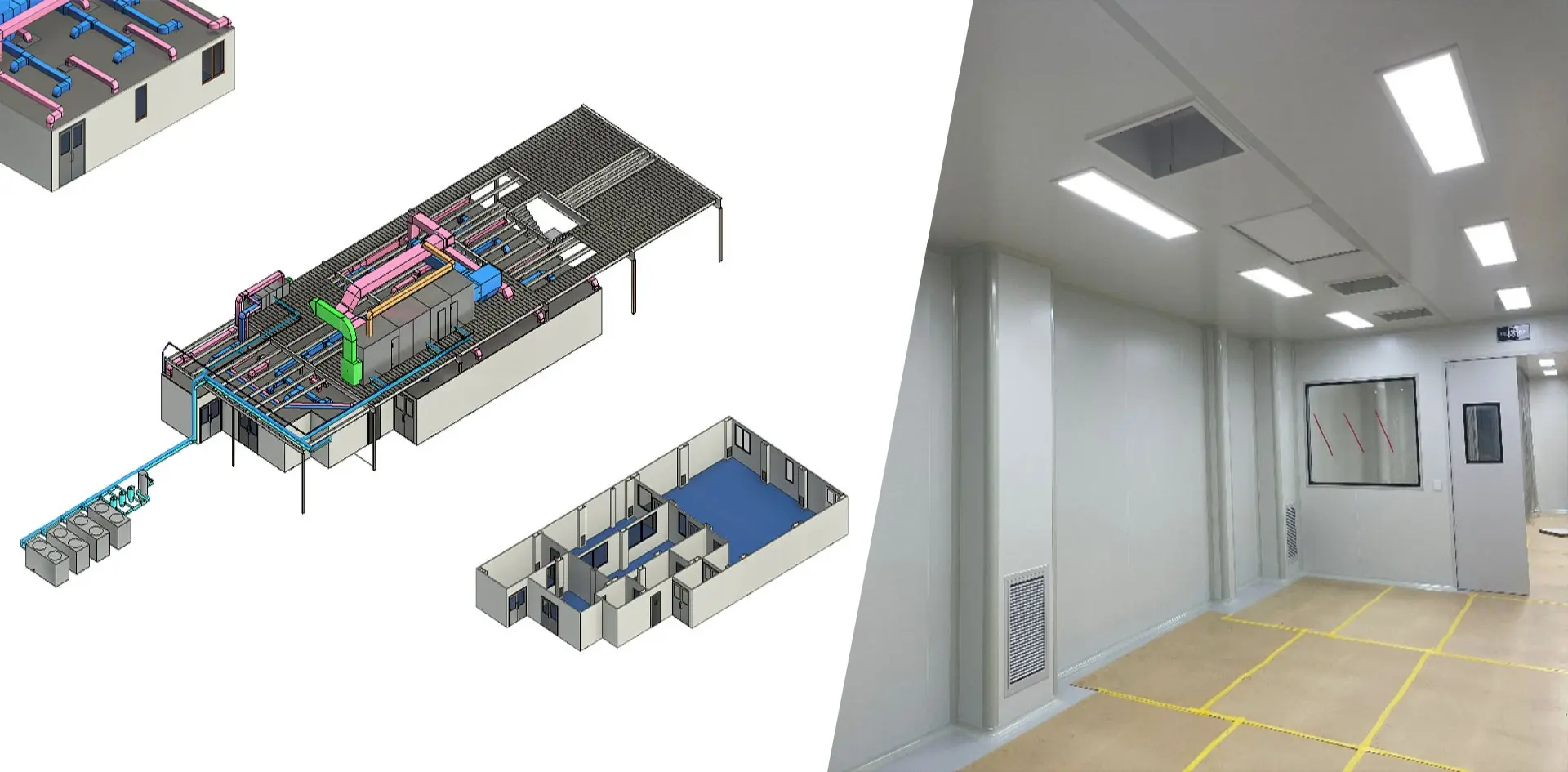 VOC Abatement
Advanced condensation cooling unit for electrode coating lines, reducing chemical purchase costs.
Learn More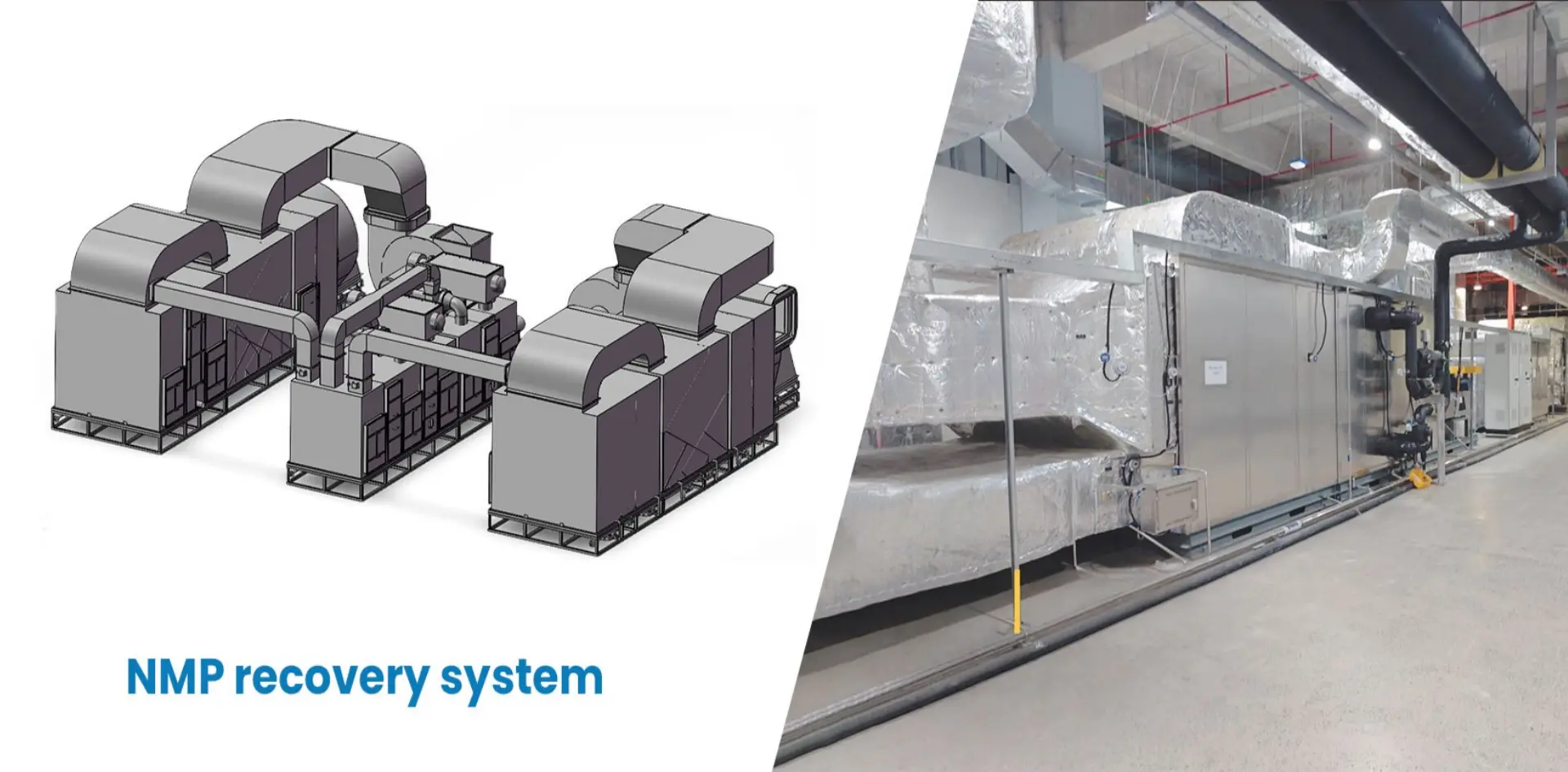 Energy Efficient
Economical bulk moisture removal system for warehouse conditioning and desiccant pre-cooling stages.
Learn MoreShare your room dimensions, target dew point, personnel loads, and exhaust specifications. We will deliver a psychrometric analysis and system quote within 24 hours.