
 Dew Point: -70°C
Desiccant Dehumidifier Solutions
Rotary desiccant technology designed for continuous ultra-dry air environments in EV battery production, pharmaceuticals, and specialized London chemical labs.
Explore SpecificationsEngineered to satisfy stringent CE, ASME, CSA, and UKCA standards with ≥99% solvent recovery and down to -70°C dew point control.
Dew Point: -70°C
Rotary desiccant technology designed for continuous ultra-dry air environments in EV battery production, pharmaceuticals, and specialized London chemical labs.
Explore Specifications EPC Turnkey
End-to-end design, enclosure modular walls, HVAC psychrometrics, and low dew point automation built specifically for gigafactory cell assembly.
View Dry Rooms Recovery ≥99%
Multi-stage condensation, waste-heat recycling, and VOC scrubbers capturing NMP exhaust from electrode coating lines for closed-loop purity.
NMP Systems RTO + Cooling
Cryogenic condensing integrated with Regenerative Thermal Oxidizers (RTO) for total VOC destruction complying with Greater London and EU emissions directives.
View VOC SystemsAs the United Kingdom accelerates toward its statutory Net Zero 2050 target and reinforces industrial decarbonization under the UK Critical Minerals Strategy and the UK Battery Strategy, chemical resource circularity has transitioned from an operational bonus to an uncompromising regulatory baseline. N-Methyl-2-pyrrolidone (NMP, C5H9NO) sits at the critical center of modern energy storage. It acts as the primary dipolar aprotic solvent required to disperse cathode active chemistries—such as Nickel Manganese Cobalt (NMC) and Lithium Iron Phosphate (LFP)—alongside polyvinylidene fluoride (PVDF) binders during electrode slurry coating.
However, NMP is both costly and chemically hazardous. Classified as a Substance of Very High Concern (SVHC) under retained UK REACH regulations and strictly governed across Greater London by the Control of Substances Hazardous to Health (COSHH) regulations and the Environment Agency's Industrial Emissions Directive (IED), uncontained NMP vapor discharges pose severe occupational toxicity risks and high photochemical ozone formation potential. For industrial operators across London, the Thames Estuary Industrial clusters, and the wider UK gigafactory network, partnering with an established NMP recovery system manufacturer in China provides the winning formula: cutting-edge solvent closed-loop recovery (≥99%) matched with deep supply chain efficiencies and proven gigafactory scale.
Technical Insight: Recovering 1 ton of high-grade NMP not only eliminates over 2.4 tons of indirect scope 1 & 3 CO2 equivalent manufacturing emissions, but also shields battery manufacturers from volatile spot-market petrochemical price swings.
While heavy raw cathode smelting does not occur within the M25 orbital corridor, the Greater London metropolitan region and its peripheral technological corridors (including Cambridge, Oxfordshire, and the Thames Estuary) have evolved into the UK's paramount innovation engines for next-generation solid-state batteries, pilot manufacturing lines, aerospace coatings, and specialized pharmaceutical chemical syntheses.
Industrial sites within London face intense physical and legislative constraints:
Worldwide demand for lithium-ion batteries is projected to exceed 3.5 TWh by 2030. In standard high-speed coating machinery, every gigawatt-hour (GWh) of production throughput requires continuous processing of between 800 and 1,200 metric tons of raw NMP. On a global scale, unchecked solvent consumption is commercially unsustainable.
North American and European regulatory frameworks—led by the European Union Battery Regulation (EU 2023/1542) and UK environmental charters—now mandate rigorous life-cycle assessments (LCA) and strict recycled content quotas. This has converted NMP recovery units from standalone peripheral scrubbers into interconnected, mission-critical thermodynamic processing nodes operating 24 hours a day, 365 days a year.
Hangzhou DryAir Treatment Co., Ltd. sits at the heart of the world’s most developed battery manufacturing ecosystem. Supplying world-leading giants like CATL, BYD, EVE Energy, SVOLT, and transatlantic players including Tesla and Northvolt, Chinese manufacturing offers decisive strategic advantages:
When engineering NMP systems for pilot labs in London or commercial battery coaters abroad, selecting the correct recovery pathway is essential to balancing electrical consumption, system recovery yield, and exhaust purity:
| Performance Metric | DryAir Multi-Stage Deep Condensation | Zeolite Rotor + Dual Condensation | Standard Water Absorption Scrubbing |
|---|---|---|---|
| Solvent Recovery Rate | ≥99.0% | ≥99.5% | 90.0% – 95.0% |
| Exhaust Concentration | <10 mg/Nm³ | <1 mg/Nm³ (Ultra-Low London Spec) | >50 mg/Nm³ (Requires extra treatment) |
| Recovered NMP Concentration | ≥85% - 90% Raw Liquid | ≥80% - 90% Raw Liquid | 10% - 20% Diluted aqueous mixture |
| Distillation Energy Demand | Low (Direct High Purity) | Moderate | High (Massive Water Evaporation Load) |
| Heat Recovery Efficiency | Up to 75% returned to oven | Up to 80% returned to oven | Zero energy recovery |
| Compliance Verification | CE, ASME, UKCA, ATEX Ready | CE, UL, CSA, UKCA, ATEX | Variable Compliance Risks |
DryAir systems are configured to integrate seamlessly with the unique technical demands of British advanced manufacturing:
Balancing high fluid dynamics, precision condensation, and intelligent automation for total lifecycle dependability.
Our integrated air-to-air heat exchangers capture thermal energy directly from the coating oven exhaust, cutting up to 65% of electrical heater regeneration loads.
Redundant Lower Explosive Limit (LEL) catalytic and infrared sensors ensure solvent vapors in the drying chamber remain well below 25% LEL at all operating times.
Condensate from our systems is fed into continuous automated rectification units, returning industrial-grade raw NMP back to >99.8% purity with water content <100 ppm.
For ultra-low residual concentration applications, our hydrophobic inorganic zeolite rotors polish exhaust streams down to trace levels undetectable by municipal emission sniffers.
DryAir backs international shipments with factory-trained field service engineers for turnkey on-site assembly, piping hookups, SAT validation, and operator training.
Cloud-connected PLC telematics monitor chiller temperatures, mass flow rates, differential pressures, and condensation rates in real time, alerting teams to fouling before it impacts output.
A structural methodology for evaluating Chinese NMP recovery plant bids against UK and international engineering specifications.
When evaluating offshore equipment proposals for installation in Greater London or broader European hubs, procurement executives and principal process engineers should demand written verification on the following four technical dimensions:
Hot NMP vapor can degrade standard carbon steels and low-grade polymers. Insist on SS304/SS316L contact piping, non-reactive fluoropolymer gaskets (PTFE/FFKM), and full passivated orbital welding documentation.
Equipment must be ATEX Zone 1 / Zone 2 compliant or meet UKEX and IECEx standards. Variable frequency drives, blower motors, and sensor transmitters must hold verifiable third-party certification stamps.
Evaluate the true Coefficient of Performance (COP). Top-tier Chinese systems combine chilling circuits with coater exhaust sensible-heat exchangers, reducing total operating kilowatts per liter of recovered solvent.
Ensure the OEM guarantees Site Acceptance Testing (SAT) parameters down to <5 ppm stack discharge, supported by a 2-year overseas parts warranty and fast-response engineer dispatch.
Hangzhou DryAir's senior engineering team delivers complete psychrometric airflow simulations, PID schematics, and accurate factory-direct quotes tailored to UK regulatory standards.
Detailed technical answers addressing environmental safety, supply chain timelines, and system integration.
Explore DryAir's integrated catalog of high-efficiency dehumidification, environmental drying, and solvent purification platforms.
Dew Point: -70°C
DHU Series dual-rotor desiccant units providing ultra-stable dry air for lithium cell assembly, aerospace storage, and defense production in the UK.
Explore Specs
Turnkey Modular
Custom structural sandwich panels, hermetic airlocks, fire-rated insulation, and precision psychrometric air handling delivered as an integrated EPC contract.
View Dry Rooms
Efficiency ≥99%
Direct condensation, energy recovery exchangers, and adsorption rotors engineered specifically for continuous roll-to-roll electrode coating lines.
NMP Systems
Deep Condensation
Multi-stage refrigeration and regenerative thermal oxidizers (RTO) capturing high and low-volatility hydrocarbons from petrochemical and coater exhausts.
View VOC SystemsEconomical moisture extraction for general industrial warehouses, pharmaceutical packaging halls, and precooling stages preceding desiccant wheels.
Learn More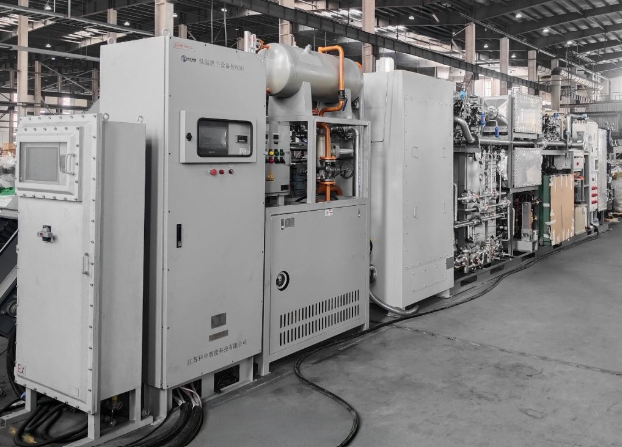 Water <100ppm
Automated fractional distillation columns producing battery-grade solvent purity ready for closed-loop cathode slurry re-injection.
Distillation Details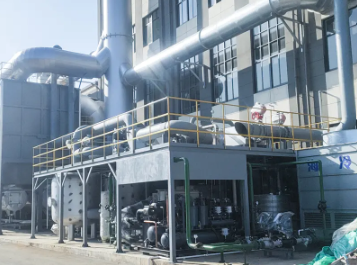 ATEX Compliant
Cryogenic condensing systems capturing fugitive hydrocarbon vapors during chemical loading, fuel bunkering, and terminal storage across London ports.
Vapor Recovery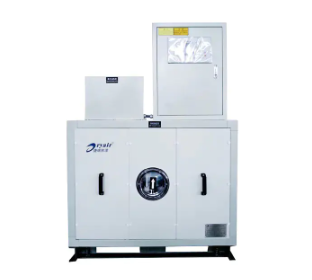 GMP / Cleanroom
Hygroscopic moisture control for active pharmaceutical ingredient (API) synthesis, blister packaging, and softgel capsule production lines.
Pharma DehumidifiersWhether you require a pilot NMP condensation skid for an R&D center in London or a gigafactory turnkey dry room installation abroad, our engineers deliver audited performance and certified quality.