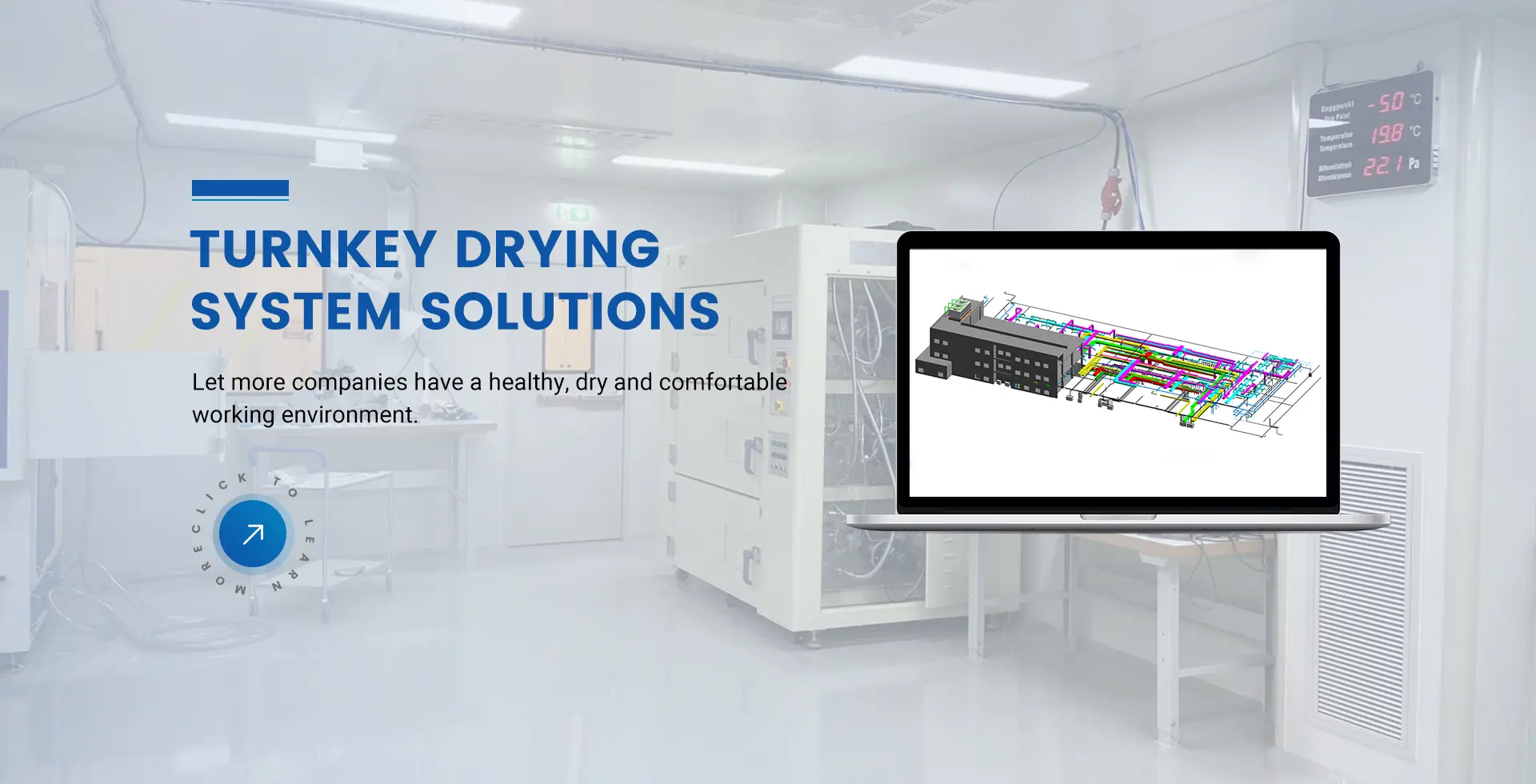
Turnkey gas processing, humidity reduction, and solvent conservation units engineered for extreme ambient climates and high-load industrial operations.
-70°C DP
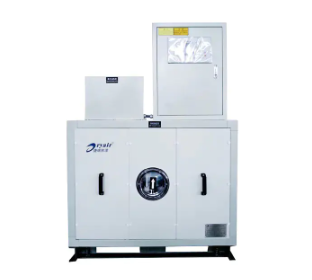
Kuwait Rotary Desiccant Dehumidifiers
DHU Series rotary units designed for harsh desert-to-marine humidity variances, delivering continuous dew points down to -70°C for chemical processing and battery dry rooms.
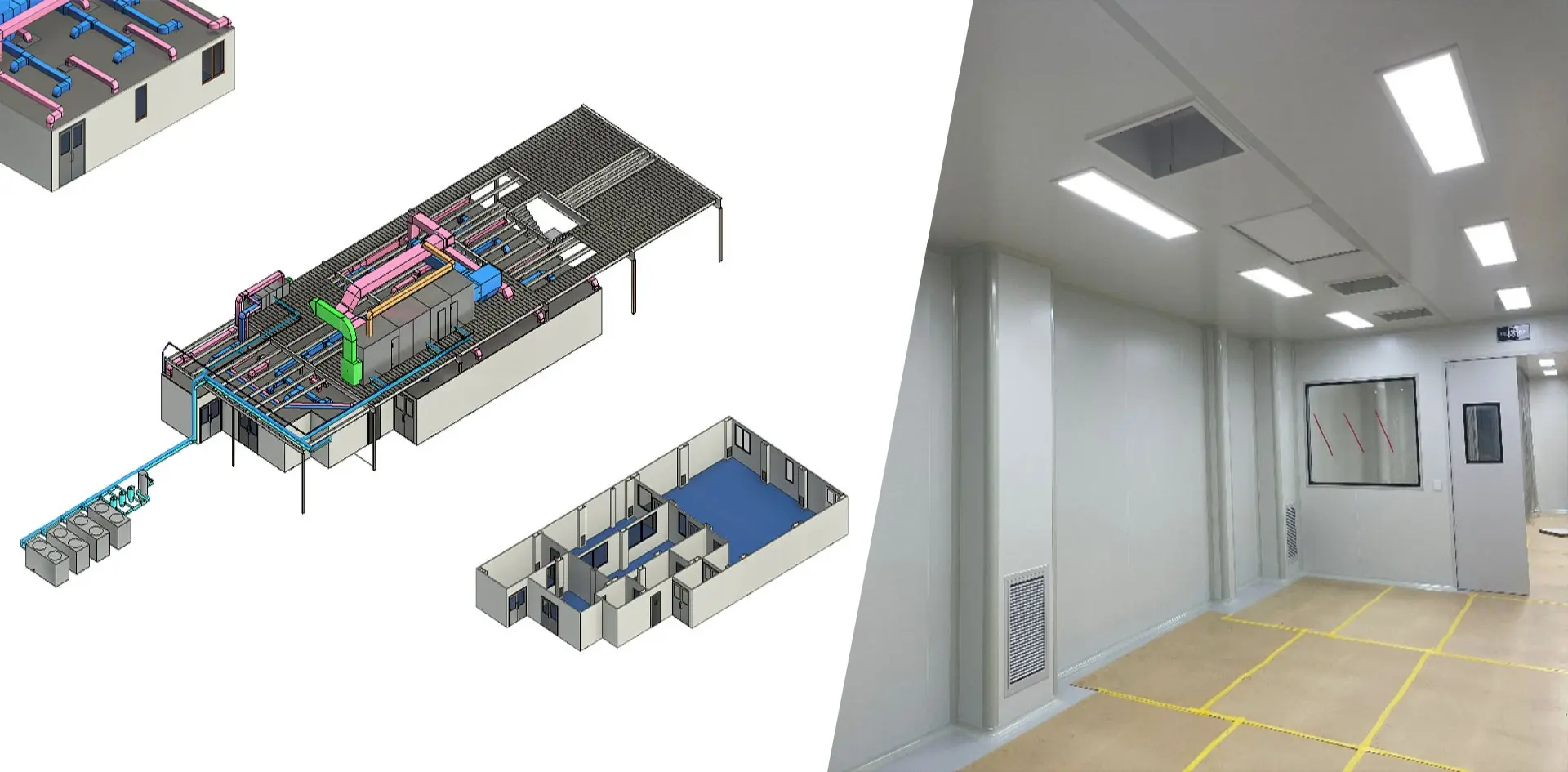
Fully sealed architectural enclosures, industrial air handlers, and smart monitoring controls tailored to support Kuwait's new energy and advanced electronics initiatives.
Under the ambitious frameworks of Kuwait Vision 2035 (New Kuwait), the State of Kuwait is systematically diversifying its downstream hydrocarbon processing, specialty polymer engineering, and local advanced industrial capacity. Amid these national-scale shifts, solvent lifecycle management—specifically regarding high-value polar aprotic solvents such as N-Methyl-2-pyrrolidone (NMP)—has evolved from an operational after-thought into a core pillar of production economics and environmental compliance.
Kuwait presents a distinctly challenging operating environment. Ambient summer temperatures regularly breach 50°C (122°F), accompanied by marine air incursions from the Persian Gulf that introduce high latent heat loads and saline humidity. Standard condensing assemblies engineered for temperate European or East Asian climates fail prematurely or suffer dramatic efficiency collapses under such extreme condenser approach temperatures.
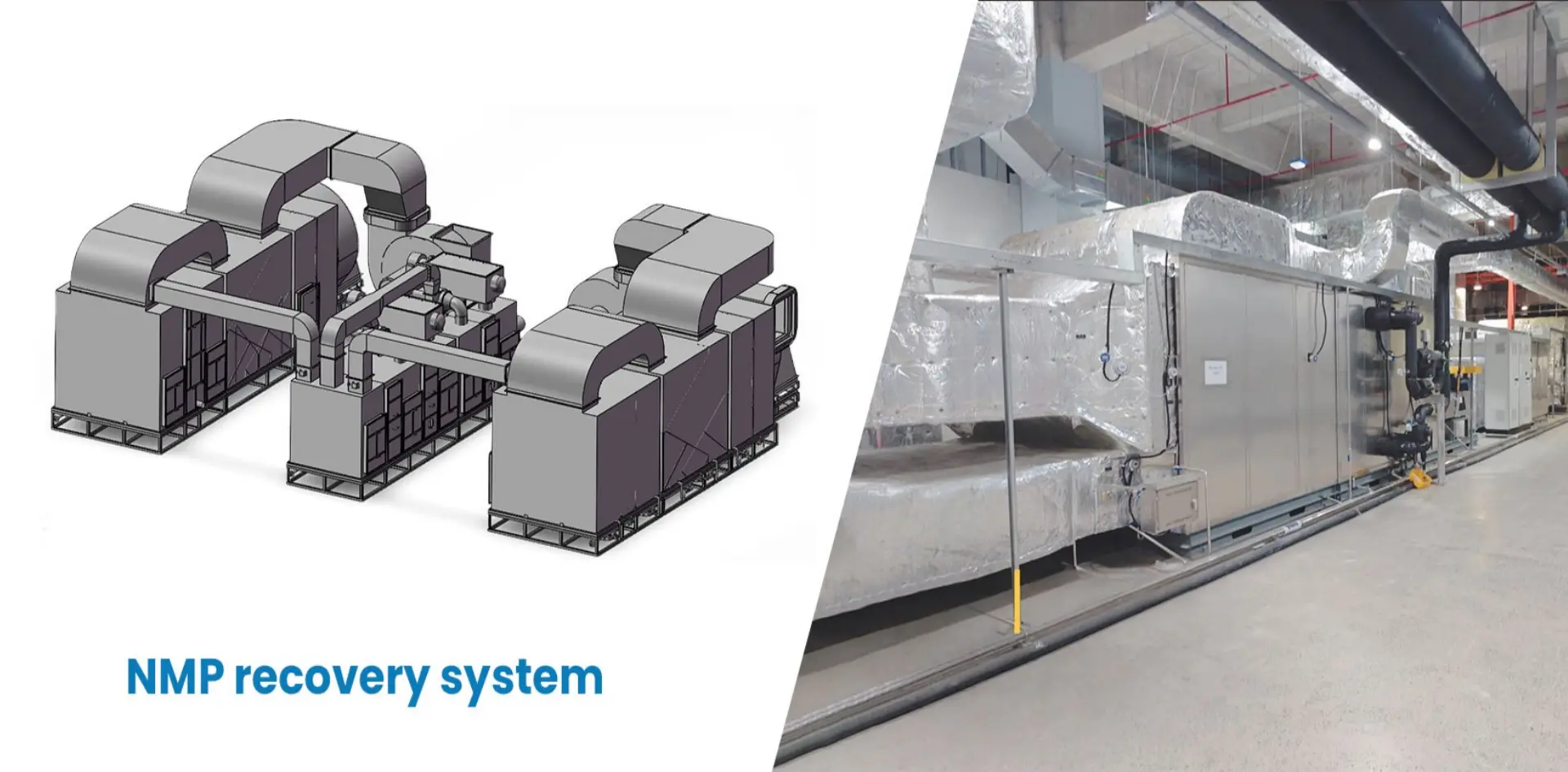
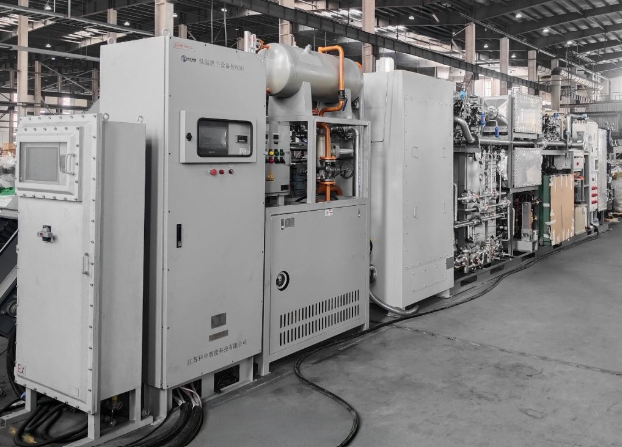
To address these parameters, leading Chinese manufacturers, backed by over a decade of Tier-1 Gigafactory project deployments, have introduced advanced thermodynamic cycles. By pairing multistage deep-refrigeration chillers with hydrophobic zeolite rotary concentrators, Chinese NMP recovery architectures ensure consistent recoveries above 99%, shielding operators from international solvent market volatility and supply disruption.
Global Procurement Realities & CAPEX/OPEX Rationalization
Global engineering, procurement, and construction (EPC) contractors serving Kuwait's Mina Al-Ahmadi, Shuaiba, and emerging technological manufacturing parks are increasingly standardizing on Chinese equipment portfolios. The rationale rests on three verified market vectors:
1. Supply Chain Scalability: Chinese producers command over 80% of global lithium battery machinery and industrial solvent treatment components, ensuring that replacement rotors, fractional distillation columns, and PLC control modules can be dispatched with minimum lead times.
2. Total Cost of Ownership (TCO): Compared with North American and Western European competitors, Chinese systems deliver between 35% and 45% CAPEX savings while simultaneously exhibiting higher energy coefficient of performance (COP) metrics through integrated run-around heat pipe exchangers.
3. Rigorous Material Specs: Chinese systems engineered for export feature SS316L/Titanium wet-path construction and explosion-proof Ex d IIB T4 / ATEX-compliant electrical cabinets capable of handling aggressive solvent condensates in heavy industrial atmospheres.
Kuwait Market Metrics
Target Application Sectors
Polyimide membrane spinning, petrochemical refinery off-gas, Li-ion battery coating pilot lines, and specialty electronics cleaning.
Key Environmental Mandate
Kuwait Environment Public Authority (KEPA) ambient air standards limiting ambient VOC discharge to <20 mg/Nm³.
Engineering Depth, Manufacturing Might & Global Trust
Supplying verified clean air, dehumidification, and chemical recovery machinery globally since 2010.
-70°C
Controllable Dew Point
≥99%
NMP Recovery Efficiency
200+
Units Fabricated Monthly
30%+
China Domestic Market Share
Accredited under ISO 9001, GJB National Standards, and offering full CE, UL, CSA, ASME, and EAC export compliance. Trusted directly across Tier-1 battery and clean-tech leaders including CATL, BYD, Tesla, Northvolt, ATL, and SVOLT.
Operating an NMP Recovery System in the Kuwait climate requires dedicated engineering countermeasures against sand ingress, high ambient condensation pressure, and rapid thermal cycling. Standard units encounter rapid clogging of filter media and elevated condensing head pressures that trigger safety shutdowns.
1. Multistage Sand and Particulate Filtration
Kuwait's dust storm dynamics demand automated reverse-pulse jet pre-filtration systems ahead of primary VOC recovery air-handling loops. Units entering Middle Eastern industrial zones utilize a three-stage mechanical filtration cascade (G4 coarse filtration, F8 fine particulate barriers, and H13 HEPA arrays) to ensure zero particulate contamination of downstream adsorption zeolite wheels and copper-nickel heat exchangers.
2. Heat Exchanger Metallurgical Engineering
Given the proximity of Kuwait's major industrial complexes to the Persian Gulf (Shuaiba and Mina Abdulla industrial clusters), corrosive chloride and sulfide-laden air represents a severe risk for condenser assemblies. Our systems employ electro-coated fins, hot-dip galvanized steel frames, and options for Cu/Ni or titanium tube bundles that withstand continuous exposure to coastal industrial emissions without thermal conductivity loss.
3. AI-Driven Smart Variable Load Balancing
Production schedules in regional polymer and coating facilities frequently shift between batch processing and continuous runs. DryAir integrates an adaptive neural-network PLC control platform that modulates compressor speeds, regeneration heating power, and chilled water bypass valves in real time based on inlet VOC gas concentration sensors. This slashes system operating energy consumption by up to 28% during part-load operating regimes.
Kuwait Compliance Support
Ex d IIB T4 Explosion-Proofing
Electrical, motor, and sensing components built to international ATEX/IECEx standards for Zone 1 and Zone 2 solvent loading risks.
KEPA Continuous Emission Monitoring
Seamless integration with continuous emission monitoring systems (CEMS) uploading directly to environmental authorities.
On-Site Commissioning by DryAir Field Engineers
Factory-trained field engineers provide complete site assembly oversight, duct integration, balancing, and test-run validation.
Optional 2-Year International Service Plan
Includes periodic vibration analysis, desiccant rotor moisture retention testing, refrigerant replacement, and 24/7 cloud diagnostics.
Frequently Asked Questions: NMP Recovery & Dehumidification in Kuwait
Expert engineering insights covering performance guarantees, local Gulf operating conditions, and logistics protocols.
Why is an NMP recovery system essential for advanced production plants in Kuwait?
N-Methyl-2-pyrrolidone (NMP) is a toxic, high-boiling solvent widely used in electrode coating and specialty polymer production. Given Kuwait's geographic distance from prime solvent production hubs, importing fresh NMP represents heavy freight tariffs and extended procurement lead times. A recovery rate of ≥99% allows facilities to reuse solvent in a closed loop, drastically cutting operating costs while complying with Kuwait Environment Public Authority (KEPA) exhaust mandates.
How do DryAir NMP recovery and dehumidifier systems endure Kuwait’s ambient temperatures exceeding 50°C?
Systems destined for the Middle East feature oversized heat exchangers, specialized high-ambient condensing fans, dual-stage chillers, and corrosion-resistant coatings designed for severe desert-marine atmospheres. Air-handling assemblies include specialized sand-trap louvers and pulse-cleaning filtration to prevent desert particulate from blocking critical cooling matrices.
What solvent purity can be achieved by DryAir’s recovered NMP?
Through condensation and filtration, collected liquid NMP generally achieves 80–85% concentration. When paired with our downstream continuous distillation tower modules, the recovered NMP reaches over 99.8% purity with water content below 100 ppm, enabling direct reuse in sensitive battery slurry preparation without degrading cell performance.
Can DryAir provide full turnkey installation and on-site commissioning within Kuwait?
Yes. DryAir provides turnkey EPC services globally. Our deployment program encompasses structural design, international crating and shipping, field installation, ducting connections, PLC integration, and formal dew-point / emission validation on site in Kuwait. We also provide comprehensive operator training and an optional two-year overseas service agreement.
What international safety and equipment certifications are provided?
DryAir systems are certified according to project requirements with CE, UL, CSA, ASME, and EAC standards. System enclosures and electrical control gear adhere strictly to ATEX and IECEx specifications for explosive VOC solvent environments (Ex d IIB T4), and manufacturing takes place under certified ISO 9001 and military-grade GJB quality management protocols.
Ready to Engineer Your Clean Air or Solvent Recovery Facility in Kuwait?
Consult with our lead psychrometric and environmental engineers to receive customized load calculations, airflow layouts, and commercial quotations within 24 hours.

 -70°C DP