
 DP -70°C
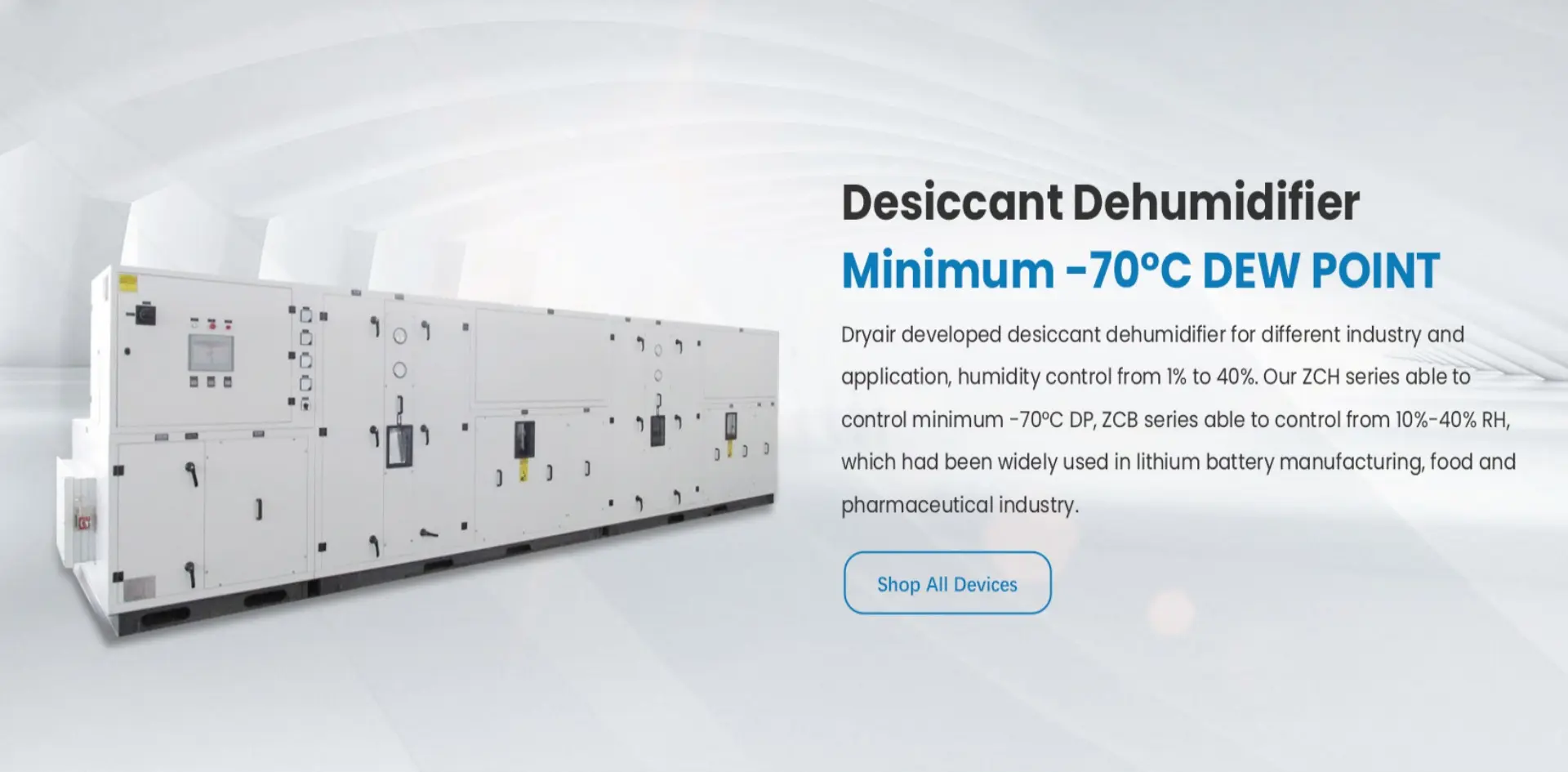
Melbourne Desiccant Dehumidifier
DHU series rotary desiccant dehumidifiers engineered for Melbourne's precision testing, medical storage, and sub-zero humidity operations.
Four core industrial equipment lines optimized for zero moisture ingress, thermal cycling efficiency, and strict emissions compliance across Victoria.
DP -70°C
DHU series rotary desiccant dehumidifiers engineered for Melbourne's precision testing, medical storage, and sub-zero humidity operations.
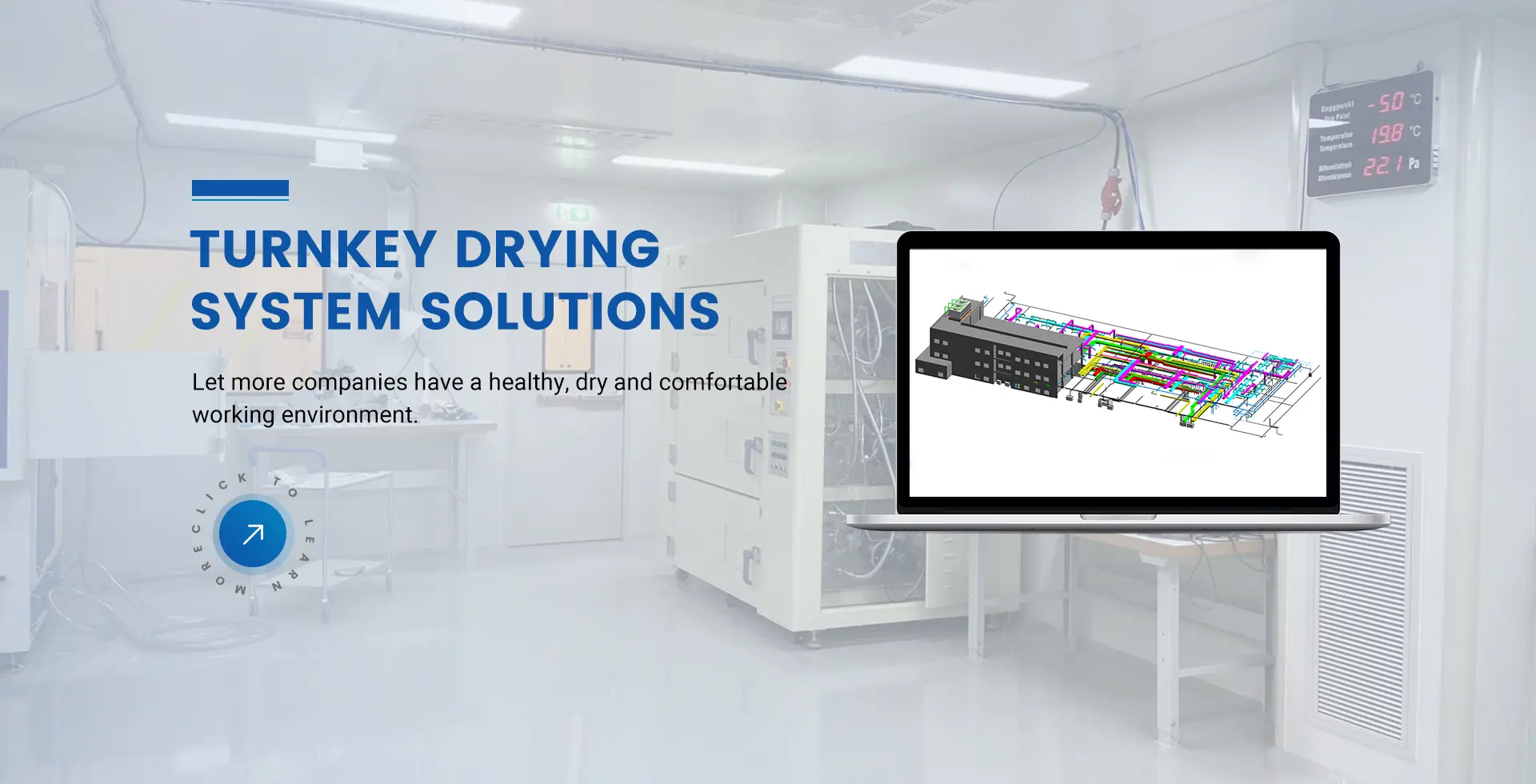
 Turnkey EPC
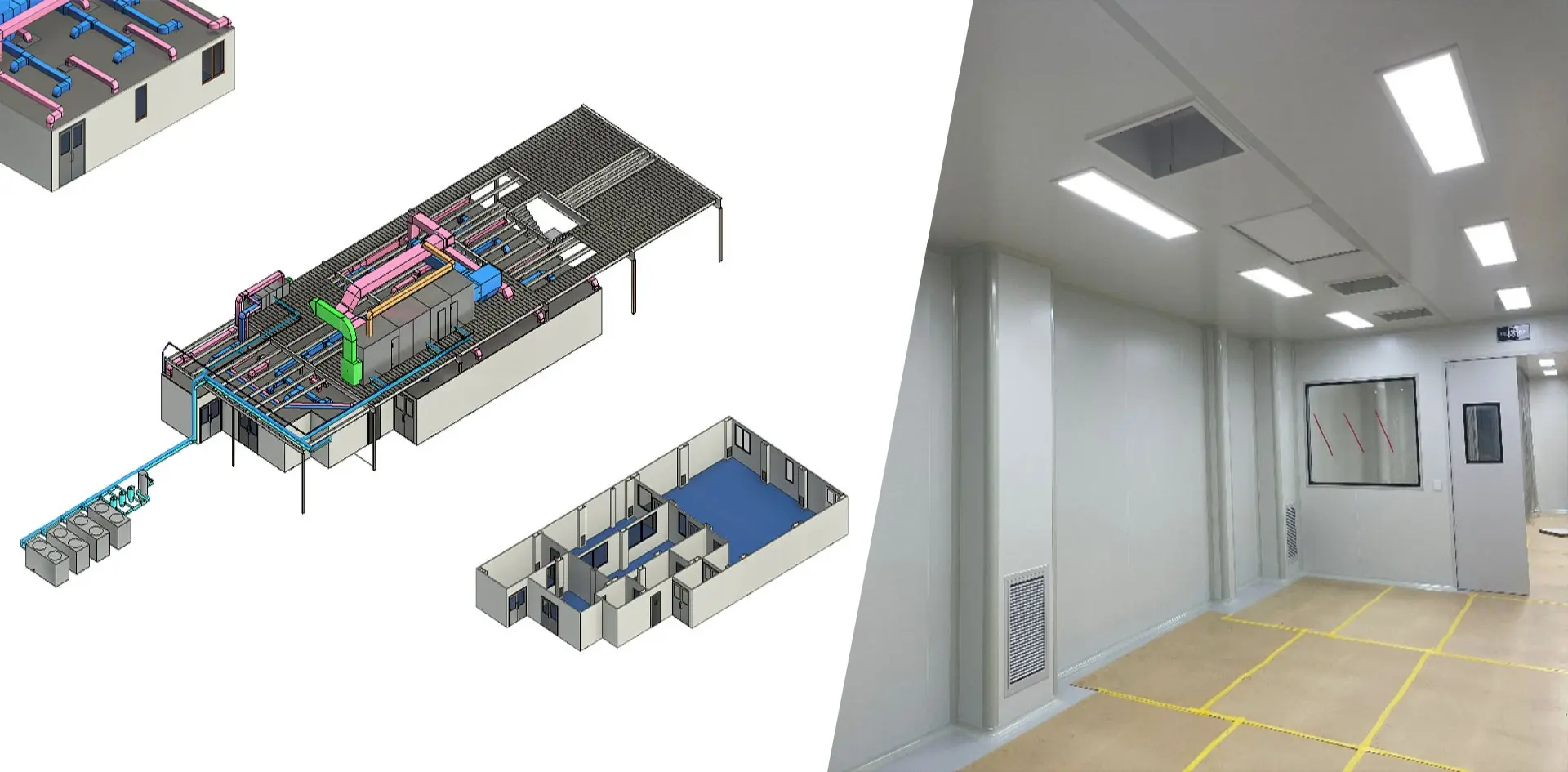
End-to-end design, modular cleanroom panels, high-pressure HVAC, and dew point validation deployed seamlessly across Victoria sites.
 Recovery ≥99%
Captures hazardous N-Methyl-2-pyrrolidone solvent vapors on lithium battery coating lines, achieving ≥99% recycling efficiency.
 Cooling + RTO
Deep condensation and Regenerative Thermal Oxidation (RTO) mitigating airborne hydrocarbons to meet EPA Victoria emission caps.
Greater Melbourne and the Victorian industrial corridor—stretching from Dandenong South and Campbellfield to the Geelong manufacturing hub—are undergoing a massive industrial renaissance. Driven by national sovereignty mandates in critical minerals, battery cell pilot prototyping, quantum semiconductor research, and biomedical innovation, the requirement for ultra-dry process envelopes has surpassed historic benchmarks.
Melbourne's volatile maritime climate presents a notorious engineering challenge: "four seasons in one day." Summer ambient temperatures can reach 42°C with rapidly shifting absolute moisture content, followed within hours by cold frontal deluges. Conventional commercial cleanroom HVAC architectures crumble under these wild psychrometric swings, causing dew point spikes within dry envelopes.
Hangzhou DryAir's turnkey installations mitigate this through active multi-stage cascade cooling and bypass-coupled desiccant rotors. By conditioning incoming air across specialized lithium chloride or silica-gel substrates with high thermal inertia, our systems guarantee a continuous ≤ -50°C to -70°C dew point regardless of Port Phillip Bay's outdoor atmospheric shifts.
Globally, the transition to high-nickel cathodes (NMC 811) and lithium-metal solid-state electrolytes has redefined acceptable moisture exposure limits. In standard cleanrooms, ambient humidity (typically 40-50% RH) violently reacts with LiPF6 in battery electrolyte, generating hazardous hydrofluoric acid (HF) that compromises cathode integrity, accelerates cell swelling, and prompts thermal runaway risks.
The global battery manufacturing industry demands turnkey EPC delivery where building envelopes, airtight airlock vestibules, laminar airflow supply plenums, and low-dew-point desiccant cores are integrated into a single unified thermal loop. With over 30% market share in the tier-one gigafactory space, DryAir sets the worldwide standard for high-reliability dry rooms.
Engineered around specific humidity sensitivities across Melbourne's rapidly diversifying high-tech manufacturing parks.
Supporting Victoria’s clean transport transitions. Critical for pouch, prismatic, and cylindrical cell assembly, electrolyte filling, and vacuum degas lines where environmental humidity must remain strictly below -50°C DP (equivalent to < 0.5% RH at 20°C).
In Parkville and Clayton biotech precincts, effervescent tablets, inhalable dry powders, and hard gelatin capsules demand constant moisture caps between 10% and 20% RH. Our dry rooms prevent rapid product clumping, degradation, and bio-burden accumulation.
Engineered to GJB and MIL-STD benchmarks. Ultra-low humidity envelopes protect optical assemblies, missile telemetry systems, munitions propellant filling, and composite prepregs from corrosion and destructive moisture migration.
As power density accelerates and the Australian industrial grid faces elevated electricity tariffs, dry room lifecycle energy reduction forms our core R&D focus.
Traditional regeneration relies heavily on high-temperature electric heating banks. DryAir’s latest generation integrates waste heat recovery manifolds from plant chillers and co-located RTO systems, cutting rotor regeneration energy by up to 38%.
Edge PLCs coupled with sensor networks monitor real-time door open-close cycles, personnel latent loads, and outdoor humidity forecasts to continuously optimize rotor rpm, fan variable-frequency drives (VFDs), and chilled water valves.
Engineered with interlocking PIR / Rockwool fire-rated panels and zero-cold-bridge silicone barriers. High-differential airtight positive pressures (>25–45 Pa) effectively eliminate outdoor moisture infiltration under turbulent Melbourne winds.
A transparent, stage-gated workflow aligning procurement, mechanical engineering, cleanroom civil trades, and commissioning teams.
Comprehensive process audit, moisture infiltration budget, personnel load modeling, and target dew point profiling.
Detailed psychrometric modeling, airflow dynamic layout, BIM cleanroom integration, and Australian code compliance.
In-house system fabrication, rotor casing precision CNC assembly, and factory test-cell dew point burn-in before export dispatch.
On-site wall panel erection, duct balancing, chilled water coupling, electrical hookup, and cold commissioning in Victoria.
Calibrated chilled-mirror dew point certification, remote diagnostics, spare parts delivery, and optional multi-year SLA.
Selecting precise operational targets avoids both premature battery degradation and bloated HVAC capital expenditures.
| Application Scenario | Required Dew Point / Target | Recommended System | Action |
|---|---|---|---|
| Lithium-ion Battery Assembly & Electrolyte Filling | -40°C to -60°C DP | Turn-key Dry Room System | Explore Dry Rooms |
| Solid-State & Lithium-Metal Cell Prototypes | Down to -70°C DP | Dual-Rotor Desiccant Dehumidifier | View Dehumidifiers |
| Battery Electrode Coating Line Solvent Exhaust | ≥99% NMP Recovery | NMP Solvent Recovery System | View Recovery |
| Hygroscopic Pharma APIs & Softgels (GMP Cleanrooms) | 10% – 30% RH (DP -10°C) | Pharmaceutical Desiccant Unit | View Specifications |
| Aerospace Electronics & Munitions Storage | ≤40% RH (Corrosion-Proof) | Military Standard Environmental Dehumidifier | View Products |
| Melbourne Raw Material Warehousing & Pre-cooling | 45% – 60% RH | Industrial Refrigerative Dehumidifier | View Refrigerative |
| Petrochemical & Fuel Vapor Exhaust (Victoria Port) | EPA Victoria Abatement | Deep-Cooling + RTO VOC System | View VOC Systems |
Actionable white papers authored by our HVAC specialists to safeguard low-dew-point operations.
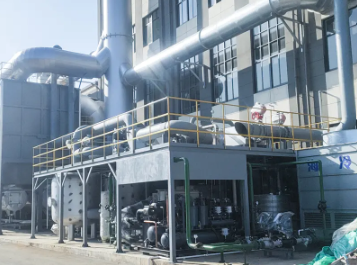 VOC Treatment
Oil gas condensation recovery systems help fuel storage and handling facilities capture oil vapors during tank filling, loading and unloading before they are released into the atmosphere.
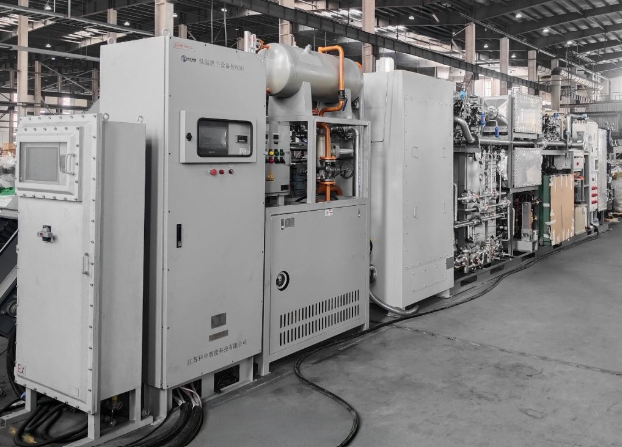 NMP Recovery
NMP is widely used in electrode slurry preparation and coating. Learn how to keep recovery efficiency stable, reduce solvent loss and control emissions in round-the-clock production.
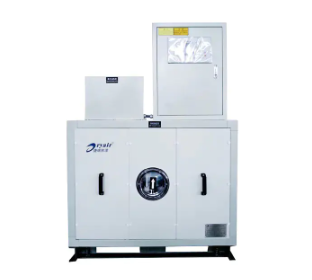 Pharmaceutical
From powder processing to tablet compression, capsule filling and packaging, excess moisture affects product quality and efficiency. Here is how to identify and prevent the risks.
Direct technical and procurement facts addressing design criteria, compliance standards, and local integration.
Browse our eight primary industrial system configurations engineered for gigafactories, cleanrooms, and solvent abatement.
-70°C DP
Rotary desiccant core delivering continuous low-dew-point dry air where mechanical refrigeration reaches physical limits.
Turnkey Cleanroom
Complete turnkey envelope, air handling, low dew point control, and automated instrumentation delivered under single-source liability.
NMP ≥99%
Recovers precious NMP carrier fluid on battery cathode coating lines, lowering fresh chemical procurement costs.
RTO Thermal
Regenerative thermal oxidation and cryo-condensation capturing toxic solvent off-gases across Victoria chemical complexes.
Energy-efficient primary moisture reduction for packaging halls, dry goods logistics, and first-stage desiccant preconditioning.
 Gigafactory Spec
Multi-rotor parallel setups tailored for multi-gigawatt-hour cell assembly complexes requiring uninterrupted airflow volume.
 ISO 5 Cleanroom
Combines class 100/ISO 5 HEPA filtration with a continuous -60°C dew point for next-generation pilot manufacturing lines.
 Zero Waste
Secondary exhaust condensation stage guaranteeing total hydrocarbon containment and pure solvent distillate returns.
From preliminary psychrometric sizing and moisture load calculation to full turnkey cleanroom fabrication and site commissioning, Hangzhou DryAir's engineering team is ready to assist your team.