
 BAT Compliant
VOC Abatement System
Integrated deep-cooling condensation and Regenerative Thermal Oxidation (RTO) engineered for complex industrial hydrocarbons and oil-vapor reclamation.
Explore VOC SystemsEngineered by Hangzhou DryAir to guarantee maximum emission destruction efficiency (DRE > 99.5%) across volatile organic process exhausts.
BAT Compliant
Integrated deep-cooling condensation and Regenerative Thermal Oxidation (RTO) engineered for complex industrial hydrocarbons and oil-vapor reclamation.
Explore VOC Systems ≥99% Recovery
Captures N-Methyl-2-pyrrolidone solvent from electrode coating exhaust, optimizing solvent cost and satisfying rigorous stack discharge regulations.
Explore NMP Recovery -70°C Dew Point
DHU rotary desiccant units providing ultra-stable sub-zero dew points for advanced cleanroom environments where humidity failure risks process yields.
Explore Dehumidifiers Turnkey EPC
Total modular cleanroom containment with end-to-end HVAC balancing, airtight structural shells, and integrated VOC filtration for gigafactory operations.
Explore Dry RoomsManaging volatile compounds in an arid, highly regulated, and densely populated technological ecosystem.
The industrial geography of Israel presents a rare convergence of high environmental vigilance and intense technological manufacturing. Concentrated industrial hubs such as the Haifa Bay petrochemical cluster, the Ramat Hovav (Ne’ot Hovav) eco-industrial park in the Negev, and the high-tech semiconductor corridors spanning Kiryat Gat, Migdal HaEmek, and Yokneam operate under strict public and regulatory scrutiny. The Israeli Ministry of Environmental Protection (MoEP) enforces emission thresholds benchmarked directly against the European Union’s Industrial Emissions Directive (IED 2010/75/EU) and Best Available Techniques (BAT) Reference Documents (BREFs).
Under Israeli Clean Air Law, industrial operators emitting hazardous volatile organic compounds (VOCs)—including benzene, toluene, xylene (BTX), halogenated solvents, and specialty siloxanes—must deploy abatement architectures with verified Destruction and Removal Efficiency (DRE) consistently reaching 99% or higher. Simultaneously, Israel's Mediterranean and arid climate zones demand air pollution control machinery capable of tolerating extreme ambient summer temperatures (exceeding 45°C in the Southern District) alongside elevated coastal salt-air salinity without thermal destabilization or accelerated housing corrosion.
Strict continuous emission monitoring system (CEMS) mandates dictate fail-safe VOC destruction with zero bypass tolerance in municipal proximity.
Given regional natural gas and electricity pricing dynamics in Israel, thermal recovery efficiency (TER) in RTO systems must exceed 95% to maintain operational viability.
Coastal production lines demand 316L stainless steel wet sections, C5-M anti-corrosion barrier coatings, and insulated pre-filtration modules.
Navigating tight project delivery windows with integrated structural fabrication and comprehensive pre-commissioning.
In high-stakes manufacturing environments—ranging from EV battery research facilities to precision photolithography suites—delays in environmental abatement equipment hold plant licensing hostage. European OEMs often struggle with lead times ranging from 40 to 60 weeks for regenerative thermal equipment, aggravated by localized supply chain bottlenecks. Hangzhou DryAir, anchored within the world's most resilient industrial manufacturing cluster in Zhejiang, breaks this constraint through a vertically integrated pipeline.
Operating under rigorous ISO 9001 and national GJB military-grade manufacturing protocols, DryAir maintains fully in-house sheet-metal bending, robotic laser welding, refractory ceramic lining assembly, and integrated control cabinet wiring. Every system undergoes pressure drop testing, burner loop simulation, and heat-loss verification in our dedicated test bays prior to overseas container loading. For Israel’s rapid-growth cleantech initiatives, this guarantees equipment delivery within 12 to 18 weeks, supported by dual-route shipping redundancy to Haifa and Ashdod ports.
Configuring abatement configurations tailored to target chemical compounds, flow rates, and concentrations.
Locations: Migdal HaEmek, Kiryat Gat
Primary Pollutants: Isopropyl Alcohol (IPA), Acetone, Propylene Glycol Monomethyl Ether Acetate (PGMEA).
Architectural Solution: Hydrophobic Zeolite Concentration Rotor coupled with a compact secondary RTO. Concentrates massive volumes of low-concentration exhaust (10,000–100,000 Nm³/h) by 15:1 to 25:1, slashing downstream fuel usage by over 80%.
Locations: Haifa Port Terminal, Ashdod Energy Terminal
Primary Pollutants: Heavy hydrocarbons, BTX aromatics, volatile alkanes.
Architectural Solution: Multi-stage Cryogenic Deep-Cooling Condensation followed by secondary activated carbon or catalytic oxidation. Recovers valuable product directly back to liquid storage tanks before polishing residual streams to <20 mg/Nm³.
Locations: Ne’ot Hovav, Central Coastal Plain
Primary Pollutants: Chlorinated hydrocarbons, methylene chloride, ethanol, ethyl acetate.
Architectural Solution: High-temperature RTO fitted with acid-gas quench towers and caustic scrubbers. Ceramic structured media ensures high chemical resistance against acidic combustion byproducts (HCl) with zero media slumping.
Conforming directly to Israeli technical statutory expectations, ATEX explosion-proof requirements, and SIL safety loops.
Industrial installations in Israel require seamless compliance validation for both municipal planning permissions and property insurance standards (such as FM Global). DryAir’s emission containment and abatement equipment is engineered to fulfill European harmonized directives and North American safety standards:
Our commitment extends beyond factory departure. International engineering contracts benefit from remote telemetry diagnostic modules, enabling our Hangzhou central command to monitor delta-P drops across media beds, thermocouple thermal trends, and valve cycling speed in real time, coordinating directly with local Israeli mechanical engineering contractors.
Clarifying technical trade-offs, operational expenditures, and local integration mechanics for Israeli enterprise plants.
Engineered to support cleanroom air conditioning, solvent separation, and environmental scrubbing at scale.
-70°C DP
High-efficiency rotary desiccant system delivering precise moisture reduction down to -70°C dew point for demanding industrial production lines.
View Specifications
Turnkey Modular
Single-source EPC dry rooms engineered with structural airtightness, precision thermal stability, and integrated HVAC air handlers.
View Specifications
≥99% Yield
ZJRH series dual-stage condensation and recovery units designed specifically for high-throughput cathode drying exhausts.
View Specifications
RTO + Cooling
Deep-cooling condensation coupled with multi-bed regenerative thermal oxidation to treat volatile streams and mitigate environmental exposure.
View Specifications Gigafactory Scale
Ultra-low dew point air conditioning suites tailored for lithium-metal, solid-state, and conventional pouch/cylindrical cell fabrication.
View Specifications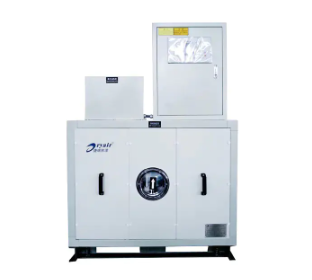 GMP Qualified
Compliant climate regulation equipment preventing moisture agglomeration, powder clumping, and degradation in cleanroom packaging.
View Specifications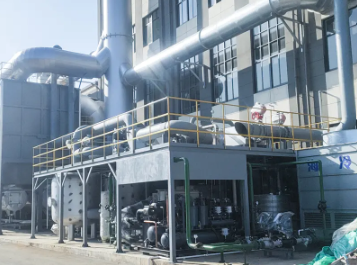 Terminal Scrubbing
Vapor recovery units (VRU) capturing volatile petroleum and petrochemical emissions during bulk truck, barge, and tank storage cycles.
View SpecificationsCost-effective moisture extraction skids serving industrial warehouses, material stockrooms, and pre-cooling stages ahead of rotary wheels.
View SpecificationsWhether you are planning a semiconductor facility retrofit in Migdal HaEmek, an API chemical expansion in Ne’ot Hovav, or a battery pilot line, our engineering team supplies full psychrometric and DRE calculations within 24 business hours.